
Every year, Cannes becomes the forum for debates that have been stirring long before attendees hit the fiery hot Croisette. This year it was AI versus craft. Technology-heavy, AI-forward work on one side. Traditional, human-driven creative on the other. It showed up in the sessions, in the parties, in the presentations — and honestly, it showed up in a lot of the work itself, which tended to fall cleanly into one camp or the other.
We spent the week increasingly convinced that this is the wrong debate to be having.
The least interesting use of AI
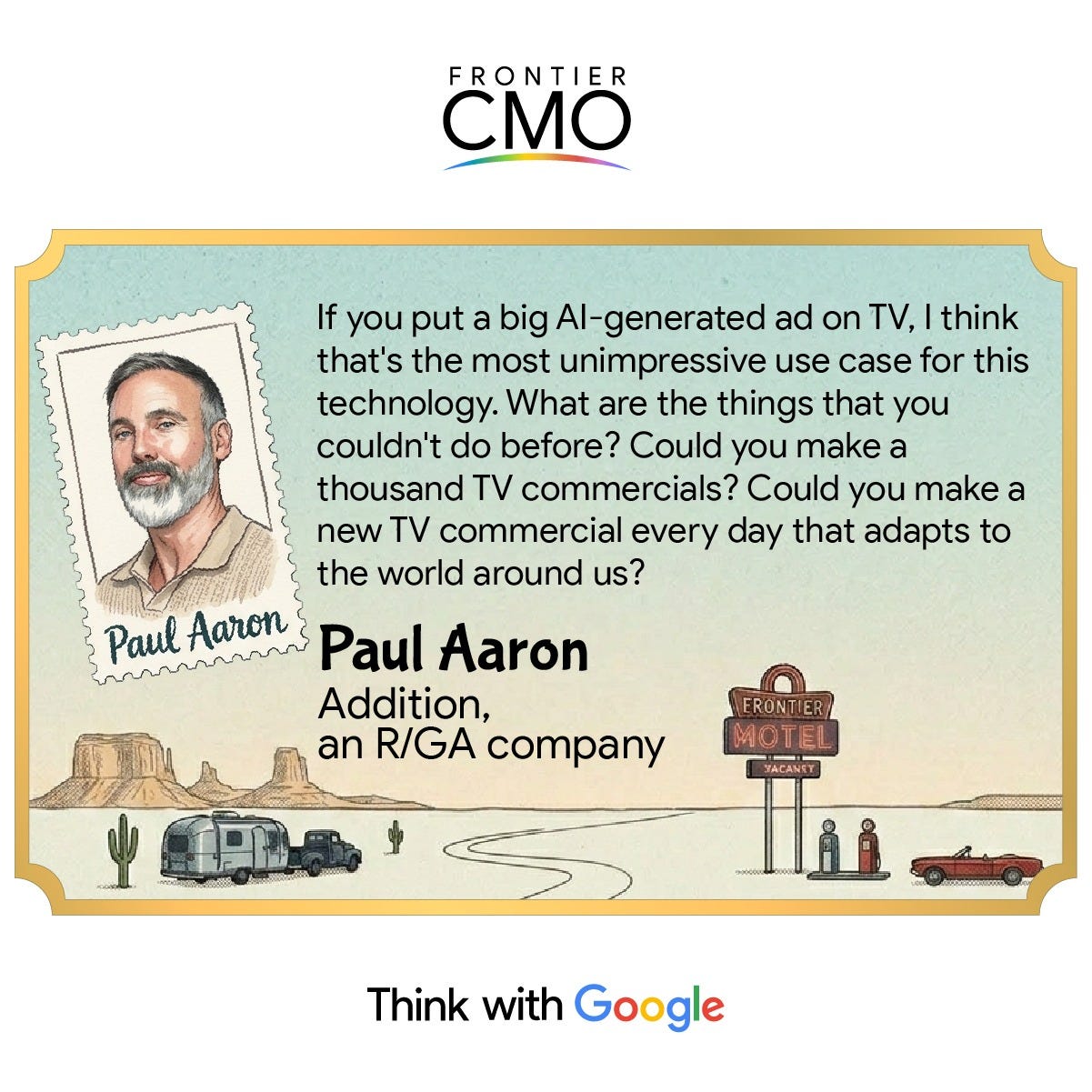
Addition’s Paul Aaron put this plainly in a recent conversation with Think with Google’s Frontier CMO series:
“If you put a big AI-generated ad on TV, I think that’s the most unimpressive use case for this technology. What are the things that you couldn’t do before? Could you make a thousand TV commercials? Could you make a new TV commercial every day that adapts to the world around us?”
That’s the line we keep coming back to. The industry’s current AI conversation is mostly about substitution — using AI to make the same ad, cheaper or faster, with a person or a process removed from the middle, efficiency. That’s a real use case, but it’s a small one, and it’s the one driving most of the anxiety and most of the underwhelming work on display right now.
The more interesting question is additive, not substitutional: what can you build now that simply wasn’t possible before, at any budget, with any amount of craft? Not a faster version of the old ad. A different kind of thing entirely — a thousand versions instead of three, a campaign that reacts to a live game instead of running the same thirty seconds on a loop.
What we saw at Cannes
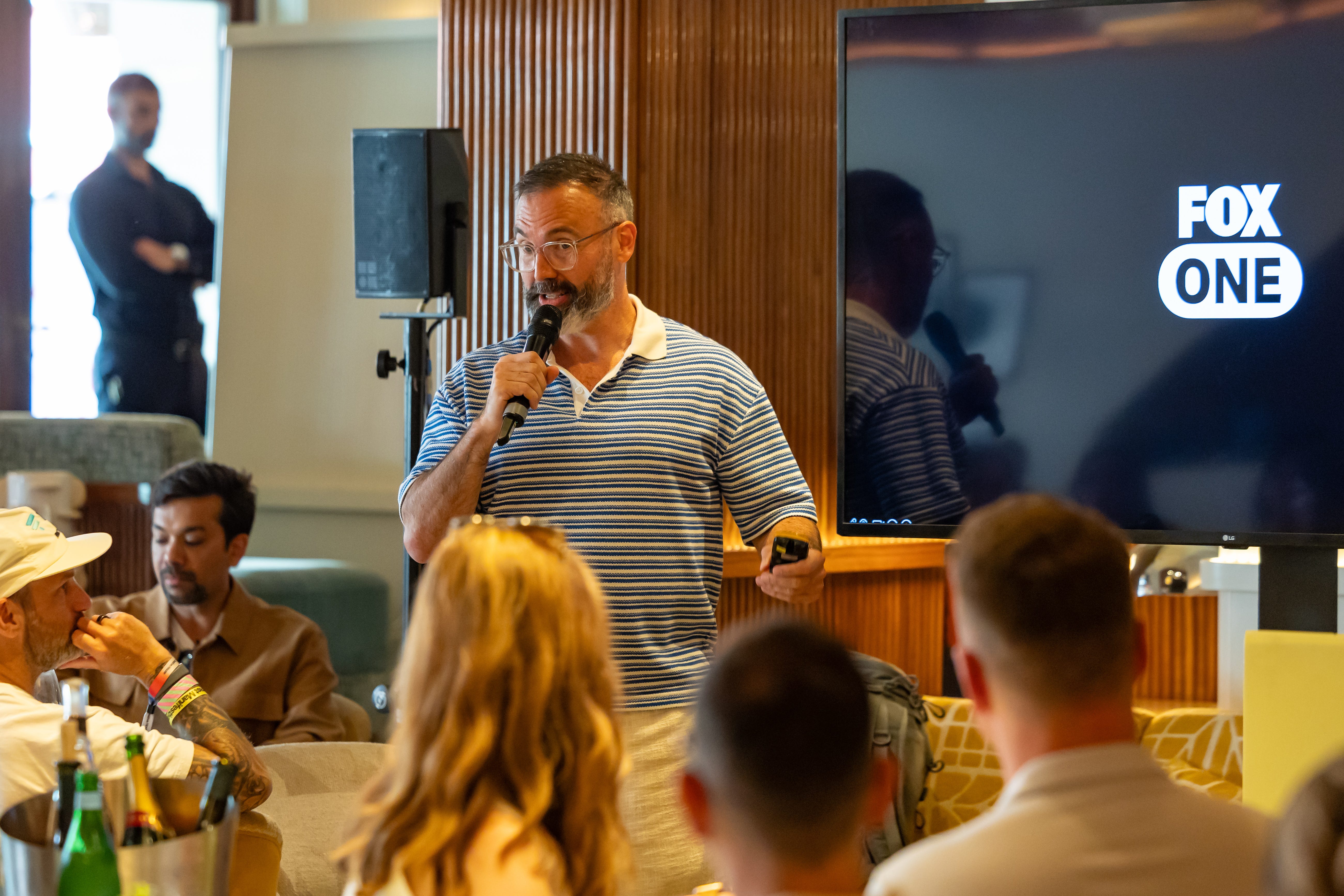
Some of the best conversations we had all week weren’t in the sessions. They were at drinks, in hallways, at a dinner where the talk drifted, as it always does, into where all of this is actually heading — past the panel-safe talking points and into what people are genuinely building, worried about, and betting on.
What came out of those conversations, more than any stage talk, was a quiet consensus that the AI-versus-craft framing is a false one. The people doing work that’s actually good — technically ambitious and emotionally resonant — aren’t choosing a side. They’re using AI to expand what’s possible and then applying the same rigor, taste, and editorial judgment that’s always separated good creative from noise.
That distinction, gimmick or capability, is really what separates the work people remember from the work that just made noise for a quarter.
Craft aimed at a bigger canvas
We think about this in terms of scale of ambition, not tools. A big AI-generated TV spot, on its own, is not the goal — it’s a demo. The goal is closer to what Paul described: real-time, adaptive, work that still holds up to the same standard as the best work in the category. That requires exactly the craft instincts the “traditional” side of the debate is worried about losing, just empowered to occupy a much larger and faster-moving canvas.
It’s also, not coincidentally, the kind of thing we already got to build. During the Daytona 500 with Fox, we put a system on the broadcast that watched the race as it happened — race leader changes, cautions, restarts — and turned each one into ad copy within seconds. An editor approved each line in a lightweight queue, and it went straight into a live banner running alongside the stream.
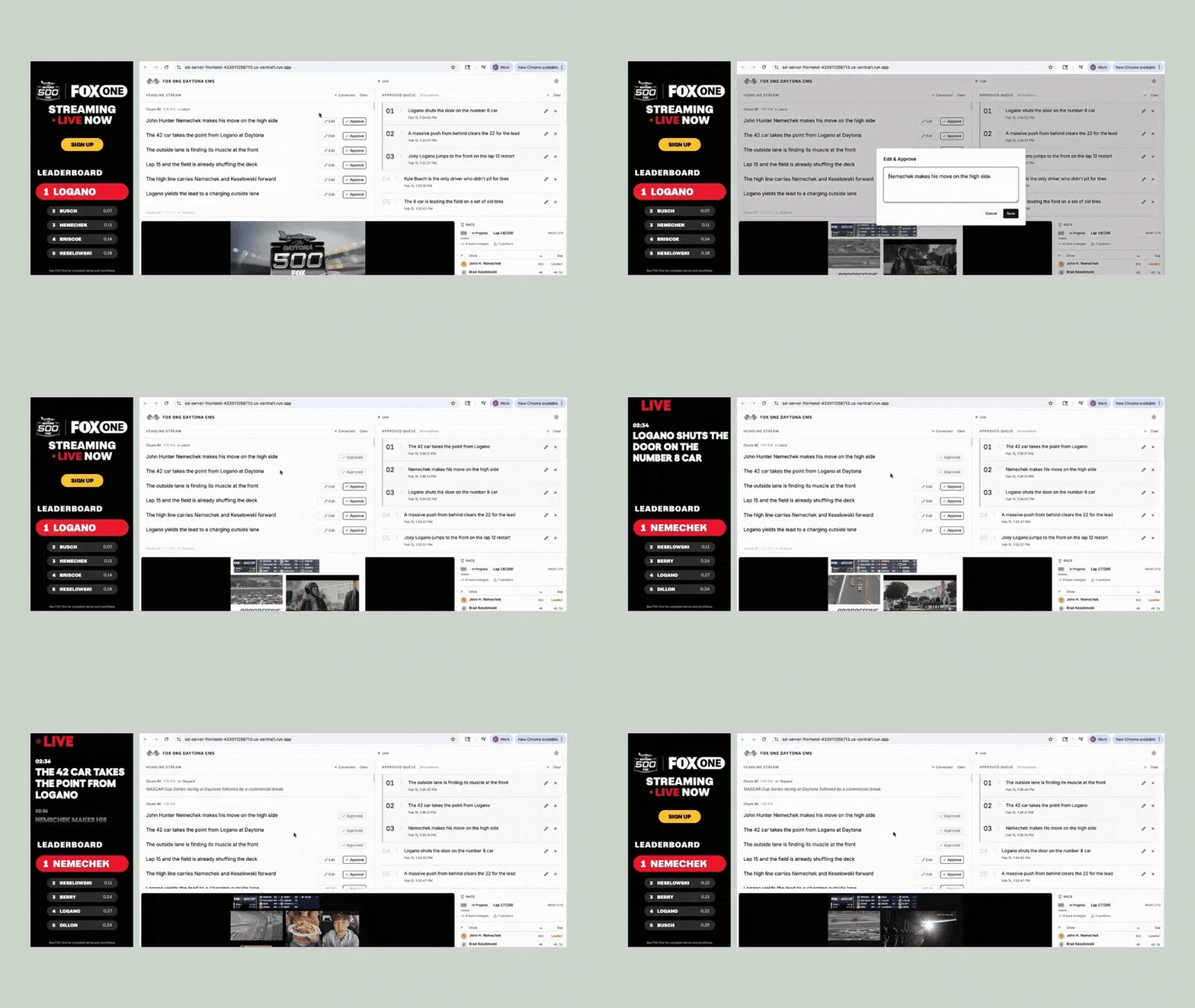
GIF: Look under the hood — approval queue and live banner side by side
That same banner, carrying a live leaderboard, ran embedded on motorsport sites reading the race in real time rather than refreshing on a fixed schedule.
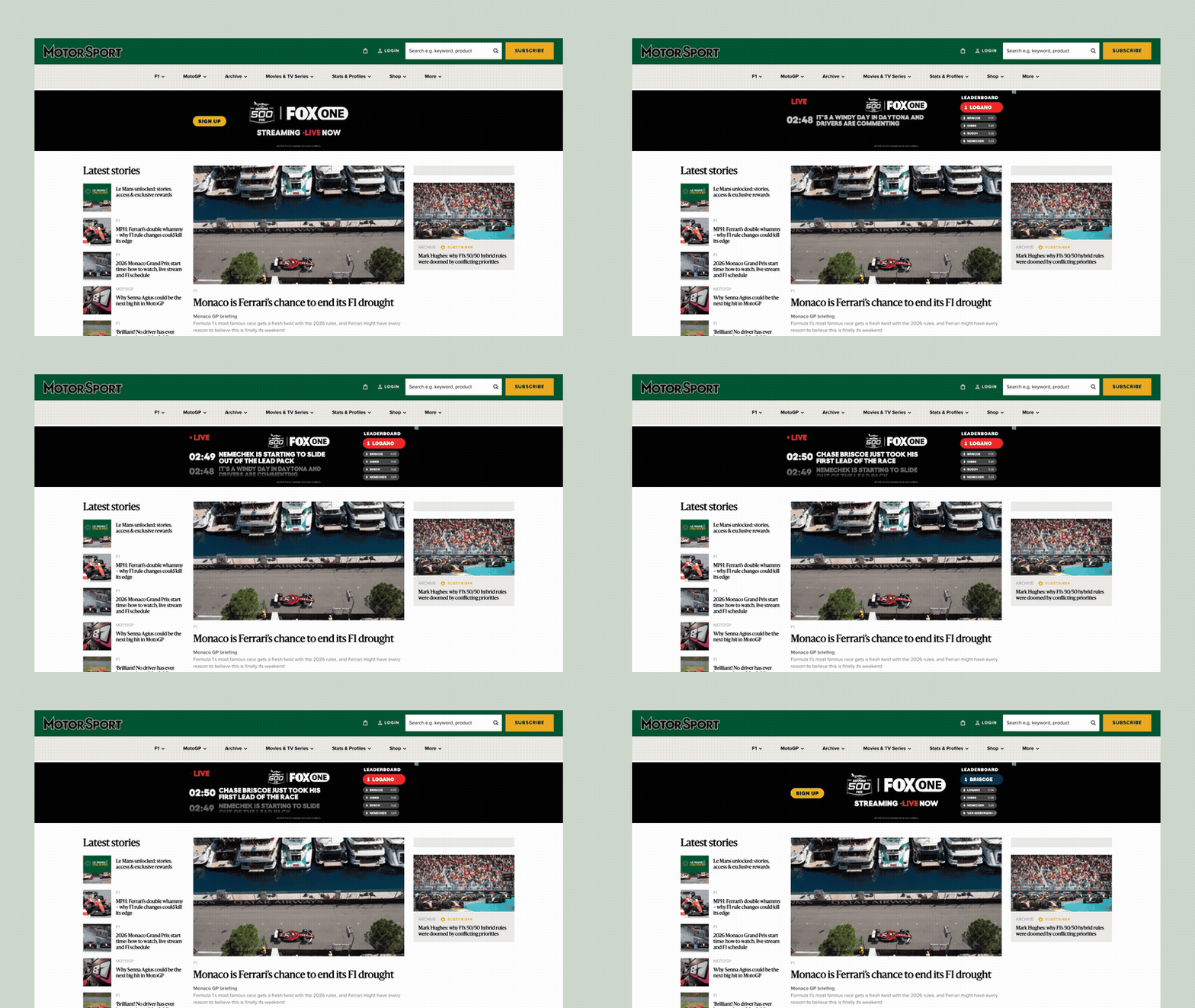
GIF: The banner in the wild, on a motorsport site
It pulled six times the click-through rate of anything the team had produced before. Not because the creative was flashier — because the ad was moving at the same speed as the race.
The bet
So, we didn’t come back from Cannes with a side to declare. We came back more convinced that the interesting work in the next few years will come from people who refuse to pick one — who treat AI as a way to ask bigger questions, and craft as the thing that keeps the answers honest.
That’s the bet we’re making.
No posts
Comments
Nothing yet. Say the first thing.
Sign in to join the conversation.