
The following is the first in a series of interviews with friends and colleagues who, like me, chose to pursue theater professionally beginning in their teens and early 20s. I hope these conversations will be an interesting expansion on the themes I’ve been writing about here for the past couple years: what it means to have a career, to be successful, to prioritize your art, to prioritize things outside your art. I’m interested in what drew each person to a life in the theater, and what their creative work looks like now, as they approach middle age. They are deep dives — longer than my usual posts. I hope they will warrant leisurely reading.
This first conversation is with Mary Rochford, who I met about ten years ago when I started dating her brother, Rory. We were both in the ensemble theater world at the time, and I was immediately curious about her. I remember finding her impossibly glamorous and self-assured, with moments of zanyness mixed in. We have now witnessed each other’s artistic journeys over many years, as we have become family.
ADDIE: Okay, let me make sure I can make this screen dark and it’s still recording… Yep.
MARY Hello? Do you want me to... (soft spooky voice) This is Mary… (giggles) …like ASMR?
ADDIE Yes, please. Not distracting at all. Okay, sooooo… my first question is: what words do you use to describe yourself, professionally?
MARY These days I just use the word artist. I say I’m an artist. And then I tell people I work in disability policy, which is my work outside of the arts.
ADDIE And that is your day job. You have a full-time job in disability policy.
MARY I do.
ADDIE How would you describe your current creative practice, both in terms of what you make and also how it fits into your life?
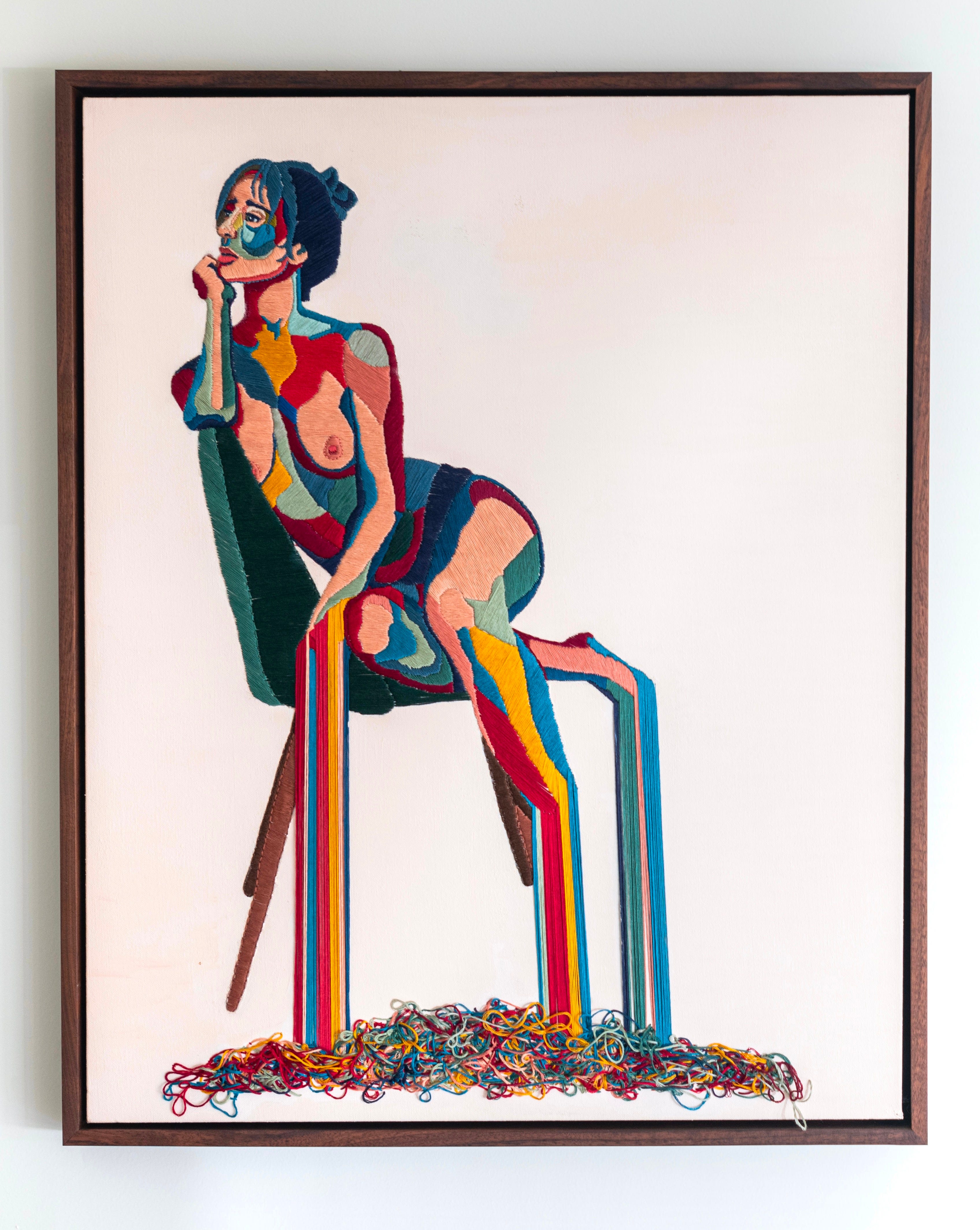
MARY So, I do large-scale embroidery work. I also paint. All of my work is figurative and almost all of it is focused on women. I’m making art almost every day. If I’m not working on a piece, it’s because I’m, like, making myself not make anything. So it’s like purposeful rest.
I bounce back and forth between painting and working with embroidery thread, usually based on which one I’m more interested in. Having two mediums is really good for me because I burn out on them. So I’ll burn out on one, switch to the other, do that for four months, burn out on it, switch back. I try to carve out maybe, like, 2 to 5 hours of work every day?
ADDIE Oh wow! That’s a lot.
MARY But it’s very– it sounds like so much, but it’s so interwoven into my day. That might just be taking a lunch hour to doodle something. Or it might be – because embroidery is such a time-specific art – it might be like, I’m working on a piece for a show or a commission, so I have to do four hours every night, because I only have x number of weeks to get through a 300-hour piece. But no weekends. I’m not crazy! (laughs)
ADDIE So 2 to 5 hours Monday through Friday.
MARY Monday through Friday. For the most part.
ADDIE How do you know when it’s time for a self-imposed rest?
MARY I feel it. I just feel tired, or I don’t want to do it. Again, this isn’t my full-time job. I’m not financially dependent on this at all. So if I feel tired and I feel like I don’t want to do it, usually I let myself not do it. Another indicator to me is I don’t have any ideas. Often, especially when I’m falling asleep at night, I’ll daydream some images and that’s usually how I conjure the work that I’m going to make. When that well is dry, and there’re just no images coming to my brain, that’s usually an indicator for me that I need to let myself take a step back, just live my life.
ADDIE Obviously we won’t be able to cover your whole life story in this interview, [MARY: But it’s sooo interesting!] but what I’d like to do is put a few points on the map. So what we’ve been talking about is the first point: the present. Now I’ll ask you to think back to around the time when we met. We didn’t meet making theater, but we were both in our 20s at that time, and were on similar paths. Can you describe yourself of ten years ago? What kind of work were you making, and what were your goals?
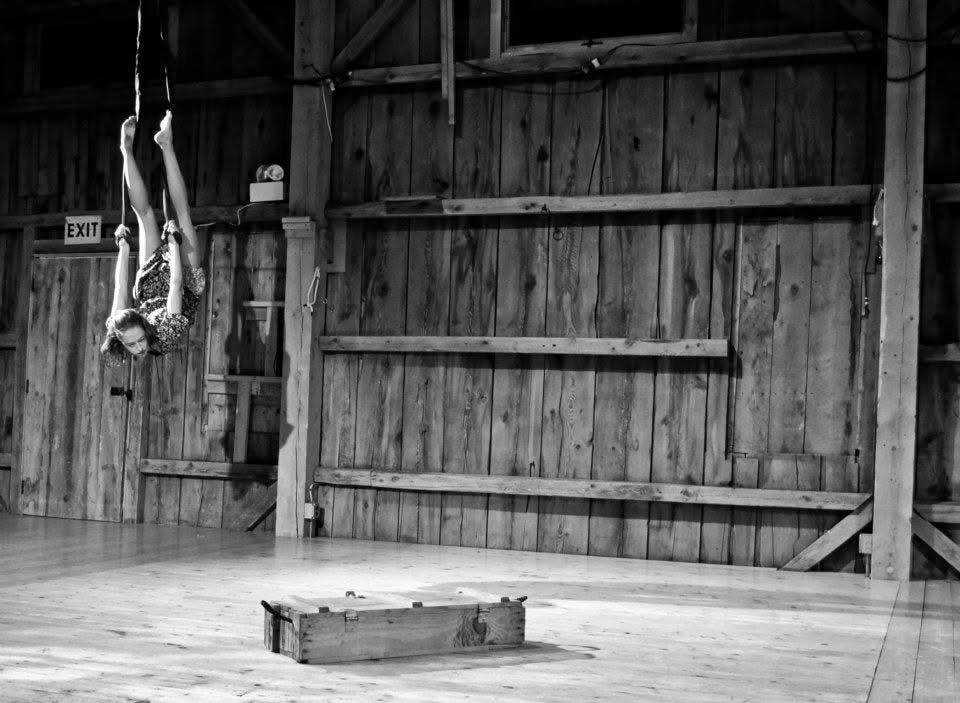
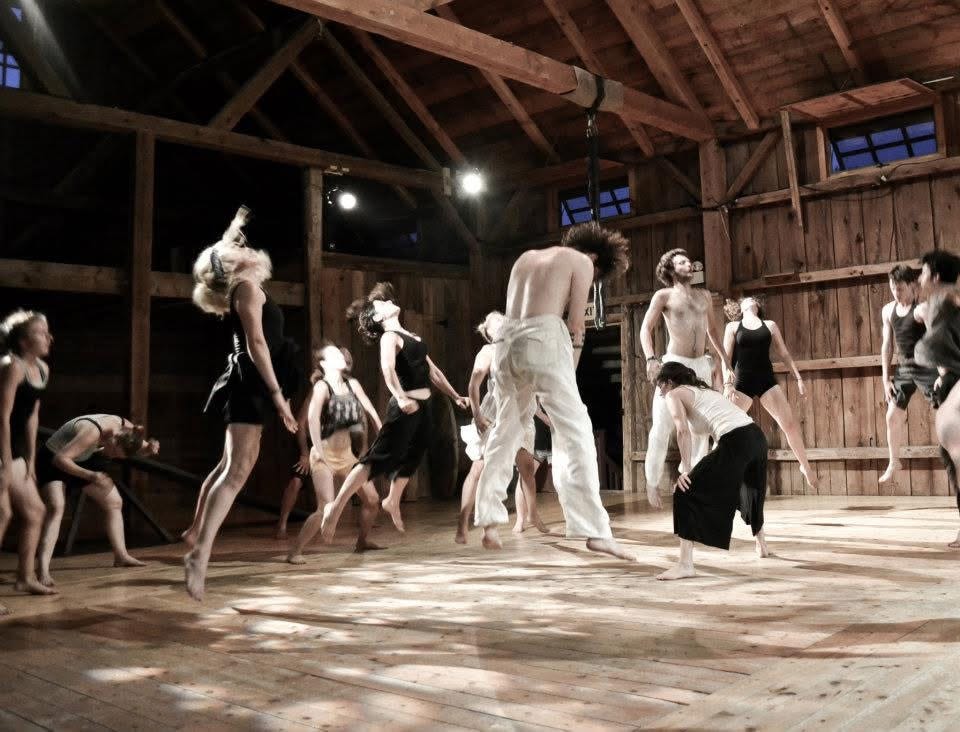
MARY I was a couple years out of college. I had recently finished working with Double Edge Theater, which is a weird connection we have.
ADDIE Yeah, when Rory and I started dating, he was shocked to meet someone else who had trained at the same theater cult in the woods as his sister…
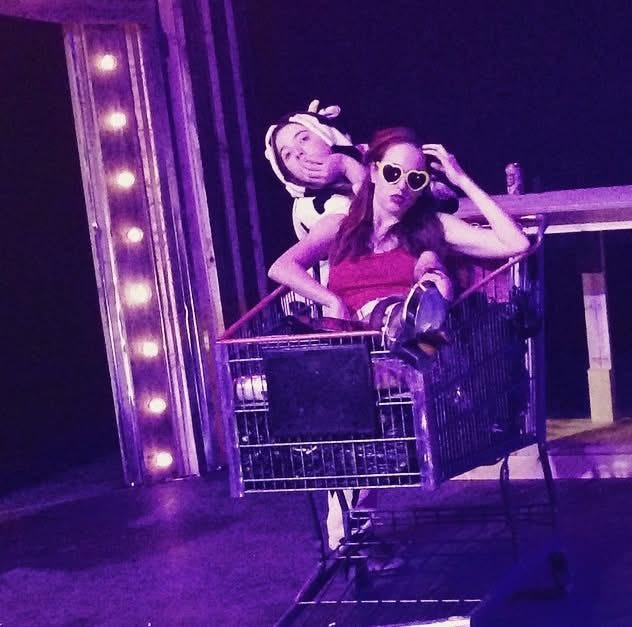
MARY So, I moved to Austin, and Double Edge told me, “Hey, we have a few alumni who live in Austin. You should connect with them.” So that got me into the devised theater scene here. I also was going and auditioning as much as possible. So I was doing both devised and scripted work, doing maybe 2-3 shows a year.
ADDIE And you had moved back to Austin primarily because of family?
MARY Not really. I wanted to be back in Texas, mostly because I was cold in Boston, and I was just like, I need to be back in the warmth. I was looking at Austin and Dallas. At that time, Texas had pretty good tax breaks with, like, film…? I forget what the term is for that, but there were 4 or 5 shows filming in Austin at that time. So choosing to be here didn’t feel crazy. Though I was realizing that everybody I went to school with was like: New York, LA, maybe Chicago. That’s where everybody was going. And I kind of already recognized in myself that I didn’t love the business of hustling to try to get film work. I was interested in making weird small plays. Austin felt like a smaller pool, and I thought maybe that would give me more control over the kind of work I made.
ADDIE And what would you say your vision was, at that time, for your career? What was your goal?
MARY Honestly, when I look back on it, I realize I didn’t have one. (laughs)
I wanted to do plays. I wanted to be in live staged theater. I was going out for auditions, and I was getting parts, and that felt great because that’s what I wanted to be doing and I was doing it. I think it was like, oh, sure, it would be great if I was really successful in this, but that didn’t even really mean anything to me. I wasn’t sure what success looked like. But I was having fun and I was making art, so I felt very fulfilled.
ADDIE That’s so comforting to hear! Because I remember feeling exactly the same in my 20s. I remember looking at New York, and regional theater, and not feeling like any of it quite embodied what I was aiming for. And not being sure what the alternative was. So I was like, well, I guess I’m just going to focus on what I’m making where I am, and see what happens.
MARY Right. And for me, I guess when I was a teenager I was like… Broadway?? Because I was from El Paso, Texas, where I wasn’t connected to anything on a professional scale at all. But once I was in college, I knew, like, I don’t want to live in New York. I want to make weird little plays. And that just felt more obtainable by going to a smaller place.
ADDIE Let’s put a third point on the map, which is you at 17 or 18, when you’re making the decision to study theater. I’m interested in that moment of clarity that, like, this is more than something fun I do, it’s something I want to shape my life around.
MARY Do you mind if I go a little farther back? When I was in middle school, I was very, very shy. I was deeply nerded out. I had trouble socially with other kids. And I had this teacher in the 6th grade who kind of identified me and was like, “You would love theater.” She put me in these really big roles in our classroom plays, and I really flourished under that. I met friends through that, and I gained a lot of confidence. So that was kind of my first realization of, oh, this is a tool that I could have. This tool is helping me gain friends. It’s helping me be more confident in myself. So that was the initial... spark.
And then in high school it was like, oh, I could actually be good at this. And I was really lucky in that I had parents who did not balk at all when I was like, “I think I want to do an acting degree.”
ADDIE You went to Emerson.
MARY I had one college in mind. It was Emerson College. My sister was going to college in Boston, so my mom and I toured a few of the colleges in Boston that had good theater programs. And I just really liked Emerson. I don’t know what it was. I think my parents must have been so nervous at the time because it was SO not going to happen for me! It was competitive. They were taking about 30 people for the program. It was the only actually big audition I’d ever done in my life. And I just got it. I was like, “Fabulous!” (laughter) “I guess I’m ready, I’m due for success!”
Of course, when I went to Emerson, I was really behind a lot of the students there, who had gone to conservatory-style high schools. I felt very on the bottom of the ladder, because my experience was from small public schools. But I was just like, okay, I’m on the right path. And again – it goes back to that idea I’ve always had about the creative arts, which is that I have a tool, and this tool is a key. And if I’m good enough at this thing, then it unlocks experiences for me. That’s how I always felt about acting. I love doing the thing, but I also really love how it opens your life up for experiences. So I remember thinking, at 17, I get to live in downtown Boston because I’m good enough at acting.
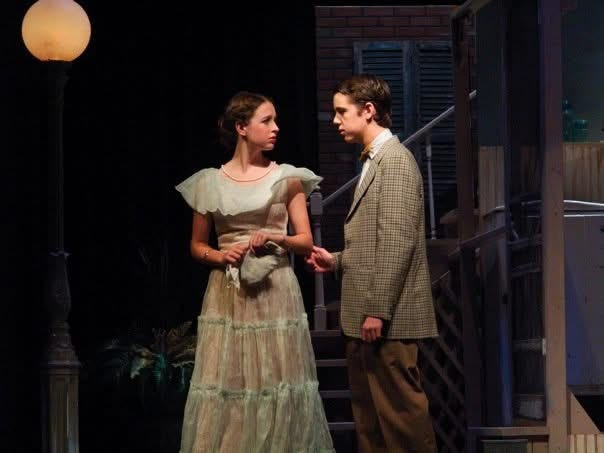
ADDIE Both of your parents are artists, which I’m sure really shaped your perspective.
MARY Hugely.
ADDIE Do you feel like this tool idea is something you inherited from them?
MARY No, I think that’s my own thing. But I will say, growing up in a household where I was surrounded by art supplies — I watched my dad perform, I watched my mom make art, or even just, like, my dad’s also a woodworker, and I would watch him make stuff in the garage – I think that influences how my daily practice is now. Like, you can go and make a table in the garage and then come in for dinner and then go to your day job. It’s all interwoven. Art is just kind of something that’s always lying around and there’s almost always a project going on.
ADDIE Before we move on from your teenage self, I want to ask a bit more about the feeling, the vision, of being an artist that you had at that time. Because I think that’s important to this conversation. What was the longing you were following? What was the romantic ideal?
MARY Oh, sure, yeah. (thinks) I mean I just loved...
I loved studying people, studying behavior and why people act the way they do. And I loved the idea of being able to blur into a role, really embody it. I think I was into the idea of losing myself into a role.
Then the lifestyle of it, it’s like, the people. I loved the strange, creative, fun people that it put me in the same room as. I imagined I would have all of these friends who are also artists and strange and wonderful and good at what they do. And so, in my mind, it’s this blur of, like, martinis and eccentricities and art. (laughter) I think that’s what my guiding light was at 17.
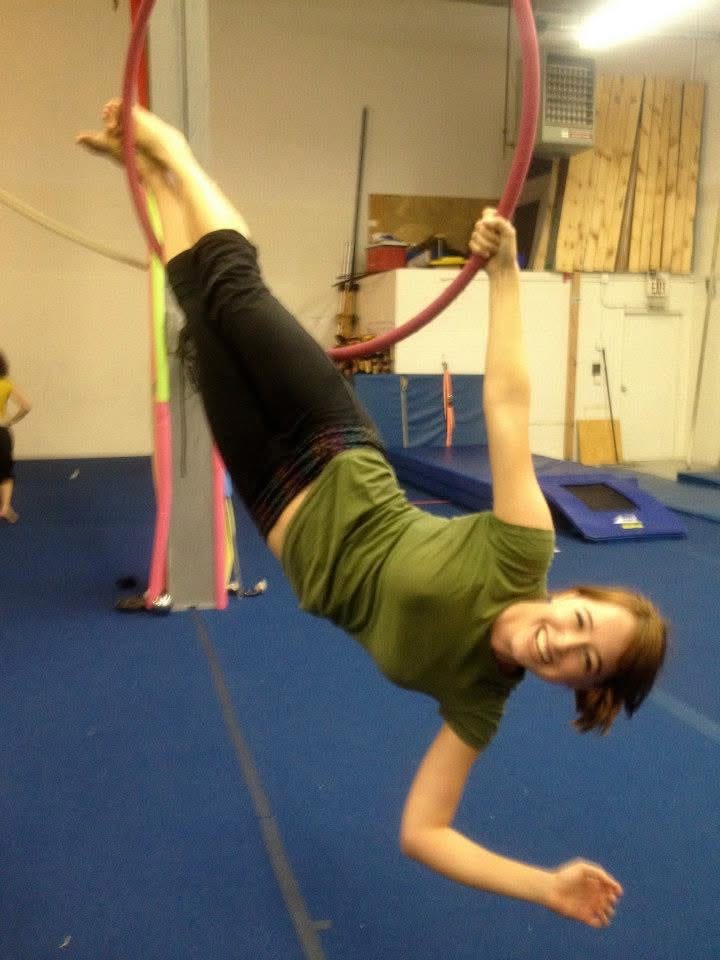
ADDIE Alright. We have three marks on the map: you at 17, 22 and 34. So now, if you were to sketch in one or two moments between these marks that were important turning points or moments of decision, what would they be?
MARY Yeah. Hm… I think one of those turning points was in my mid 20s when I was tired of working odd jobs in order to do only acting. I wanted to have a job that I felt proud of, something other than, “I will bring you food.” At that time, acting felt like something I did for myself. And that was beginning to bother me. I wanted to feel like I was doing work that was helpful in some way to society. I think that some actors are helpful to the greater society, but I didn’t feel like one of those actors at that point. When I got my first job in disability advocacy, I felt really proud of that. And I did have to make some sacrifices then. I was like, okay, well, I can’t just go to an audition whenever I want any more. But I think it was also around that time that I was beginning to understand that acting wouldn’t be my only thing. And that felt okay, but I did have to make room for other things.
And then another big point was when I kind of stopped acting altogether. When I was 26 or 27? Around that time. I had done a show in the fall of 2019. And I was really burned out on acting. Theater is a group project, and I was– I was tired of the group project! I was ready to have more control over the work I was making.
I had started drawing a lot in the evenings while I watched TV or whatever. I was really into visual art when I was, like, elementary age, but I had not drawn seriously since I was 10 years old. So I was about at the skill level of a good 10 year old. But I just liked it, and I liked that I didn’t have to ask for permission to do it. I didn’t have to audition for anybody. I didn’t have to compromise with a director or work with a scene partner or do any of that. I just got to have an idea and make it. And for better or worse, it was totally mine. And then 2020 happened, so it was like, okay, well, I’m not going to be doing a ton of stage theater right now anyway, so let’s really dive into this visual art.
So for the last, now, 6-7 years, I’ve really just dived into that. I’m doing multiple shows a year, and I’m doing commissions often. It started getting more serious as my skills grew. I started making more connections. Again, I felt like it was a tool I could use to have experiences. Like, oh, I get to do this artist residency, and live somewhere interesting for this amount of time because they liked my art.
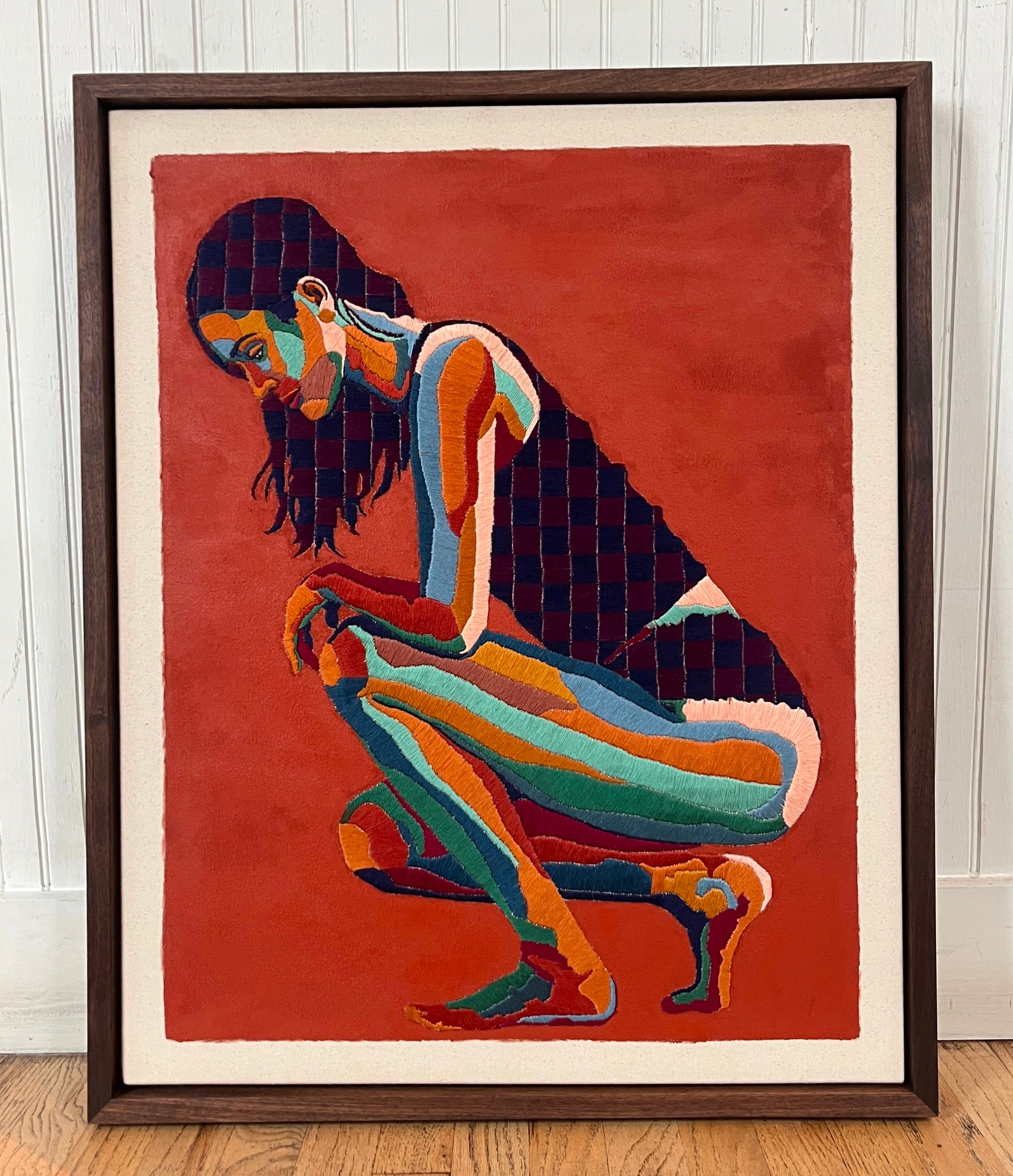
ADDIE Reflecting on your trajectory so far, in all its many parts, where are areas of sadness? These don’t have to be regrets, just things that have been heavy, or hard, or haven’t gone the way you hoped.
MARY I know some really talented, very deserving artists, and I have sometimes seen their successes and… felt lesser. Because it’s like, oh, there’s a very obvious success. For a long time, I had a bunch of friends who were all landing regular spots on big TV shows, getting prominent art shows, working with famous people. And I was like, “Am I just somebody that talented people want to hang out with? Am I just, like, these really talented people’s fun friend?” And it’s funny because it would happen even with things I don’t want – life paths I actively chose not to pursue. You see someone else getting it and you think, but look at how shiny that is. For the most part, I think I’m able to not be threatened by other people’s successes. I actually pride myself in that. But it doesn’t come without some moments of like, am I worthy of that as well?
ADDIE And what are some things you’re really proud of, in terms of the path you’ve chosen and the choices you’ve made?
MARY I am really proud that I am now very confident in being able to tell people, “I am an artist.” And that is true. It’s a true statement. I’ve done it in a way that I’m able to feel calm and comfortable in my life, and I’m really proud that I’ve built out this weird puzzle piece thing that feels right for me. I’m proud of the work that I make. I don’t have to make it. Nobody’s asking me to. I’m proud that I continue to seek out those visuals as I’m falling asleep, and I work really hard to make those visions a reality. I think it’s really easy at 34 years old to stop doing those things.
ADDIE Is there a goal or a vision that you’re organizing the next phase of your work around?
MARY It’s funny, I’m both very ambitious at times and also very, like, ethereal about where I’m going. It would be great if the world just opened up to me and lauded me as this incredible artist of my time — again, I like having my key. I like my key to open doors for me and I want to have as many experiences as I can. So if I can use these tools to unlock experiences, I will do that. That’s the ambitious side. Then there’s another side that’s just like, my goal is to continue making art. Because on the smallest scale, it makes me happy. It improves my life. And I am in the business of improving my life.
ADDIE I have heard a family rumor that you might be… acting again?
MARY I am in an acting class right now, because I wanted to see if I would have fun with it and I’m having so much fun with it! It’s so fun. And I’ve started doing auditions again. For a long time, not acting felt really good. I was like, yes, I need a break from all this. But I have been feeling a little bit of an ache towards it, of just wanting, again, the people.
What I’m realizing, that feels really good, is that I’m just an artist. I like making stuff. Sometimes it’ll look different ways. And I think opening up those labels helps me have permission that, like, it’s all my work.
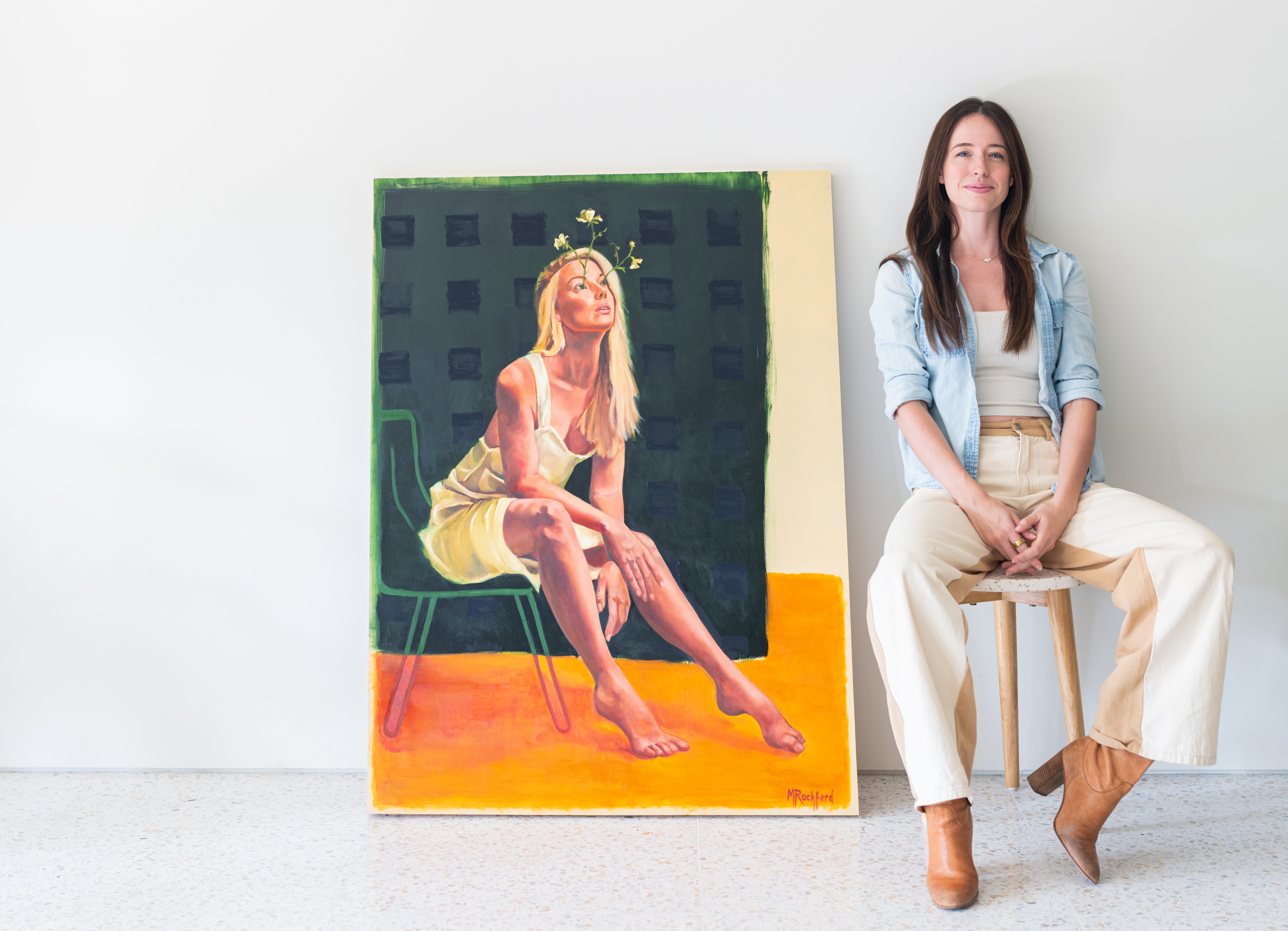
A few weeks after our conversation, while editing the transcript and looking through the photos Mary had provided me, I found myself wishing I had asked her more questions about bodies. I was struck by the trajectory of being an actor – a very public, looked-at body – to being a figure painter, the one who does the looking. Mary’s acting resume is peppered with ingenues and romantic leads, women and girl characters who, even when written with depth, are sexualized in some way. I scrolled again through the images of her artwork she’d sent me: strikingly beautiful women, almost always alone. I called her up and asked her about it.
“Do people think the women in your paintings are sexy?” I asked. “How do you choose the women you portray?” We talked about the complications of choosing bodies to become subjects but also objects – paintings to be sold. She reflected that the experience of being a young woman, both on stage and off, involves the awareness of being watched. She thinks many of her paintings contain that awareness. “But,” she said, “it’s funny, [my work] is figurative, but the actual body isn’t that important. I’m more interested in the human experience than the figure itself. I’m interested in showing quiet moments, moments where the body is still, but there are a lot of inner currents going on.”
I hung up the phone, and sat thinking about that description of what she’s after: the instant where you can see an emotion inhabit a body. I know this moment most intimately from working with actors. The boundaries of a person fall away – the ones your mind has set based on what they look like, their type – and they become something stranger and more raw, a channel for this emotion moving through them. It’s beautiful, every time.
You can find more of Mary’s work on instagram (@mary.rochford.art) and on her website: www.maryrochfordart.com
No posts
Comments
Nothing yet. Say the first thing.
Sign in to join the conversation.