
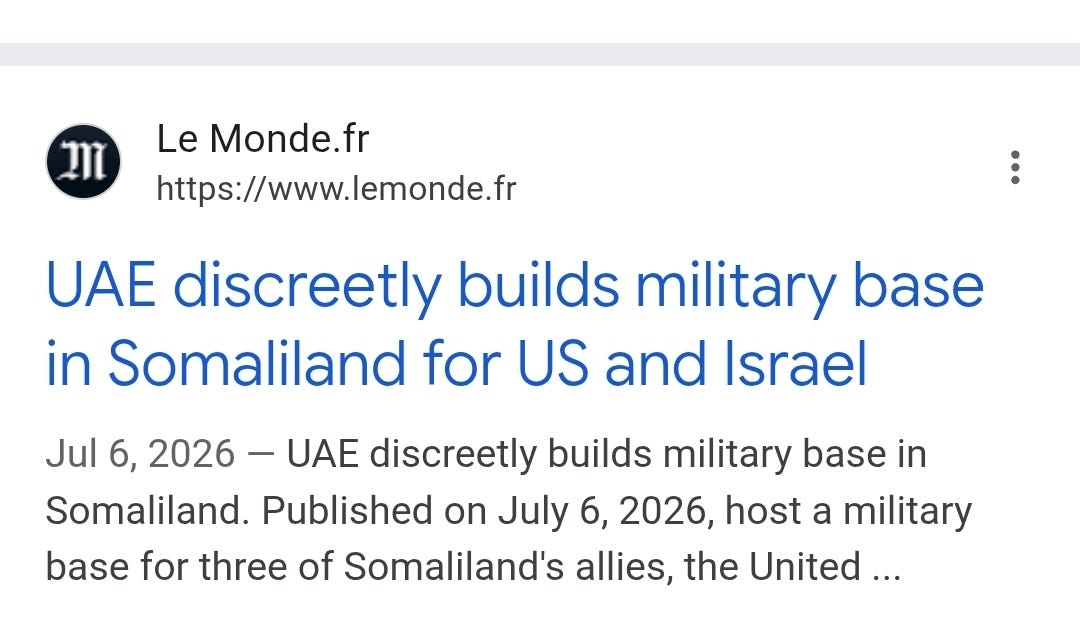
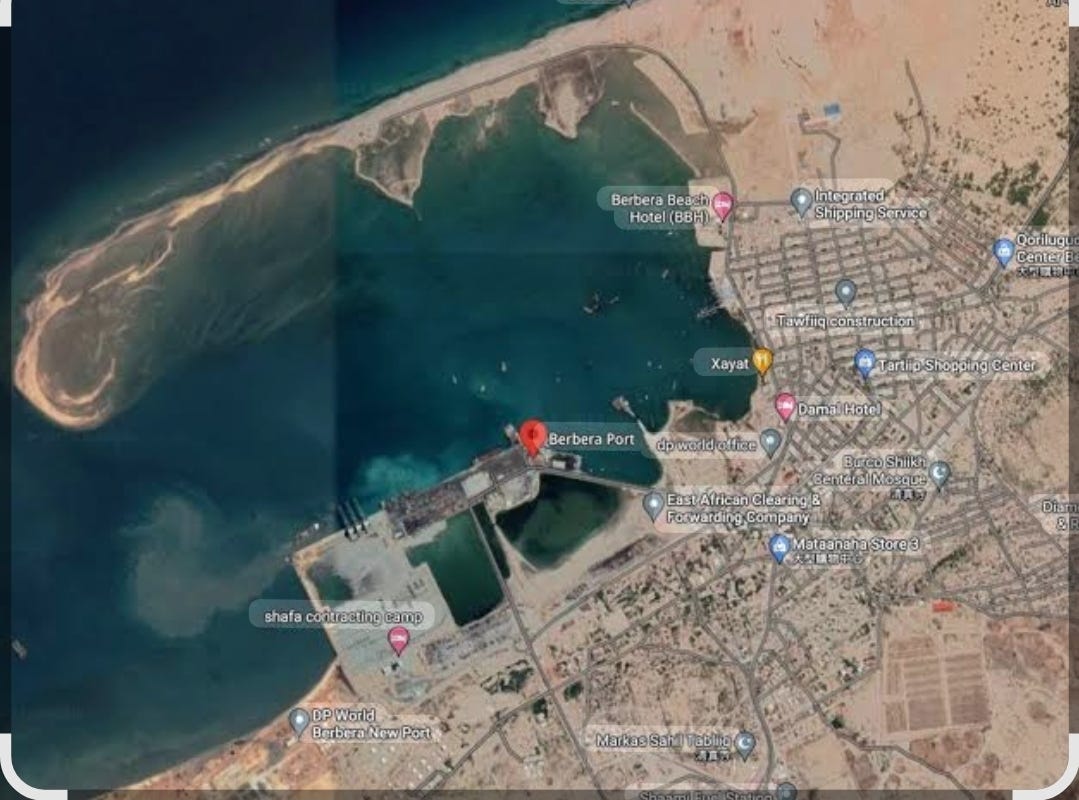
The allegations published by the French newspaper Le Monde on 6 July 2026, if ultimately substantiated, could have far-reaching consequences for Somalia, the Horn of Africa, and the broader international legal order. In its report, Le Monde alleged that the United Arab Emirates (UAE) is quietly expanding military infrastructure at Berbera Airport in Somaliland. According to the newspaper, the construction includes facilities that could potentially support military operations by the UAE, the United States, and Israel. The report states that its findings are based on an analysis of satellite imagery and information provided by unnamed European security sources. As of now, neither the UAE, the United States, Israel, Somaliland authorities, nor the Federal Government of Somalia has publicly confirmed the allegations, and the claims remain unverified.
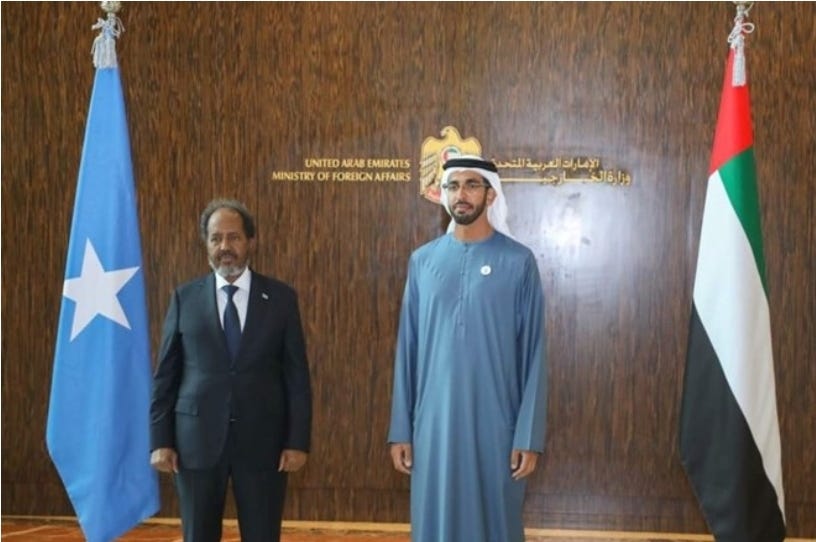
If the reported expansion proves accurate, it would immediately raise fundamental questions about sovereignty, security, and international law. Somalia is internationally recognized as a single sovereign state within borders acknowledged by the United Nations, the African Union, and virtually every country in the world. Although Somaliland has governed itself since declaring independence in 1991, it has not received international recognition as a sovereign state. Consequently, Mogadishu maintains that all agreements involving foreign military deployments, strategic infrastructure, ports, airports, or natural resources within Somaliland require the authorization of the Federal Government.
From the perspective of international law, Somalia could argue that any foreign military arrangement concluded directly with Somaliland without federal consent constitutes an infringement of its sovereignty and territorial integrity. The United Nations Charter establishes the principle of sovereign equality among states and requires respect for the territorial integrity and political independence of member states. Likewise, the Constitutive Act of the African Union emphasizes the preservation of existing international borders and rejects actions that undermine the territorial integrity of member states. These legal principles would likely form the basis of any diplomatic protest by Somalia should the allegations be confirmed.
At the same time, Somaliland has consistently maintained that it possesses the right to enter into agreements with foreign governments because it has exercised independent administration for more than three decades. Hargeisa argues that it has established functioning democratic institutions, maintained relative stability, and developed its own security forces independent of Mogadishu. This legal and political disagreement remains unresolved because no international court has ruled on Somaliland's status, while no state has formally recognized its independence.
Beyond legal considerations, the security implications could be significant. Berbera occupies one of the most strategically valuable locations in the Horn of Africa. Situated along the Gulf of Aden near the Bab el-Mandeb Strait, it overlooks one of the world's busiest maritime corridors linking Europe, Asia, and Africa. Millions of barrels of oil and a substantial share of global commercial shipping pass through these waters every day. Any expansion of military infrastructure in Berbera would inevitably attract international attention because of its strategic importance for maritime security, energy supplies, and military logistics.
Should the facilities described by Le Monde become operational, Somalia could perceive them as altering the regional security balance without its consent. Such perceptions may deepen political tensions between Mogadishu and Hargeisa and complicate ongoing efforts to achieve a negotiated settlement regarding Somaliland's political status. The issue would likely become another source of disagreement between the two administrations, making future dialogue even more challenging.
The reported development could also intensify geopolitical competition in the Horn of Africa. The region already hosts one of the world's highest concentrations of foreign military installations. Djibouti alone accommodates military facilities operated by the United States, France, China, Japan, and Italy. The Red Sea has increasingly become an arena where global and regional powers seek to protect commercial shipping, secure energy routes, combat piracy, and project military influence. An expanded military presence in Berbera could therefore be interpreted as part of this broader strategic competition.
Neighboring countries would closely monitor any such development. Ethiopia, which relies heavily on Red Sea access for trade, has shown increasing interest in regional ports. Djibouti may view additional military infrastructure nearby through both economic and strategic lenses. Eritrea, whose security policies are closely tied to Red Sea dynamics, would likewise assess how the reported expansion affects the regional balance of power. Gulf states with growing investments across the Horn of Africa would also evaluate its implications for their commercial and security interests.
Diplomatically, Somalia would likely seek support from the African Union, the United Nations, IGAD, and the Arab League if it concluded that its territorial integrity had been compromised. Mogadishu could argue that permitting foreign military facilities without federal authorization sets a precedent that weakens internationally recognized borders and undermines established principles of state sovereignty. Such arguments would resonate with many African states, which have historically defended the sanctity of inherited colonial borders to prevent wider territorial disputes across the continent.
Nevertheless, strategic interests often shape international responses. Countries concerned primarily with securing the Red Sea against terrorism, piracy, weapons trafficking, and disruptions to global shipping may place greater emphasis on the potential security benefits of enhanced military infrastructure than on the political dispute between Mogadishu and Hargeisa. This divergence illustrates the continuing tension between geopolitical realities and legal principles in international relations.
If managed transparently and within an internationally accepted legal framework, improved military infrastructure could contribute positively to regional stability by strengthening counterterrorism operations, maritime surveillance, humanitarian response capabilities, and protection of commercial shipping. Conversely, if perceived as bypassing Somalia's internationally recognized government, it could fuel mistrust, encourage diplomatic confrontation, and further complicate one of Africa's longest-running constitutional disputes.
Ultimately, the allegations reported by Le Monde highlight the enduring complexity of the Somaliland question. Whether or not the reported military expansion is confirmed, the controversy demonstrates how strategic geography, international law, and unresolved political status continue to intersect in the Horn of Africa. Any lasting solution will require balancing legitimate security interests with respect for international legal norms, Somalia's internationally recognized territorial integrity, and sustained political dialogue between Mogadishu and Hargeisa.
Mohamed Mohamoud Adde is an academic and a geopolitical analyst
Comments
Nothing yet. Say the first thing.
Sign in to join the conversation.