
Africa's economic future may increasingly depend not only on foreign investment but also on the willingness of African entrepreneurs to invest boldly across the continent. The proposed 700,000-barrel-per-day oil refinery in Kenya's Lamu County, backed by Nigerian industrialist Aliko Dangote, illustrates how African capital can help transform regional economies while advancing continental integration.
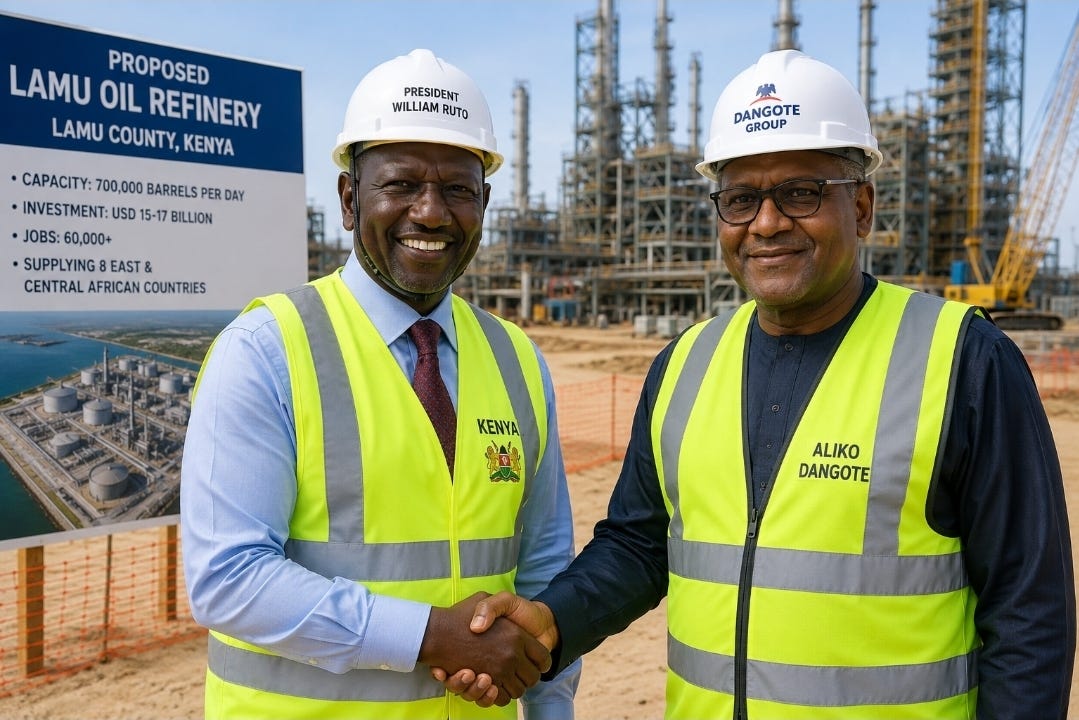
Announced by Kenyan President William Ruto following discussions with Dangote, the project is expected to create around 60,000 jobs and supply refined petroleum products to eight East and Central African countries. If completed, it would become East Africa's largest refinery and a strategic addition to the region's energy infrastructure.
Beyond its impressive scale, the project carries a broader message. For decades, many of Africa's wealthiest individuals have invested substantial portions of their fortunes in Europe, North America, the Middle East and Asia. While global diversification is a normal business strategy, the Lamu refinery demonstrates the immense opportunities that still exist within Africa itself. As the continent's population grows, cities expand and industries develop, demand for energy, transport, manufacturing and logistics is increasing rapidly. These sectors require large, patient investments that African investors are uniquely positioned to understand.
Dangote's decision to expand beyond Nigeria reflects growing confidence in Africa's own markets. Having already built one of the world's largest single-train refineries in Lagos, his move into Kenya signals that African industrial expertise is no longer confined by national borders. It also reinforces the idea that African businesses can become continental champions, operating across regions while creating jobs and strengthening local economies.
The proposed refinery also aligns with Kenya's ambition to transform Lamu into a regional energy and logistics hub through the LAPSSET Corridor. Combined with the modern deep-water port, transport infrastructure and regional trade links, the refinery could enhance fuel security for countries including Ethiopia, Uganda, Rwanda, Burundi, South Sudan, Tanzania and the Democratic Republic of the Congo. Such projects reduce dependence on imported refined fuel from distant markets, shorten supply chains and improve resilience against global disruptions.
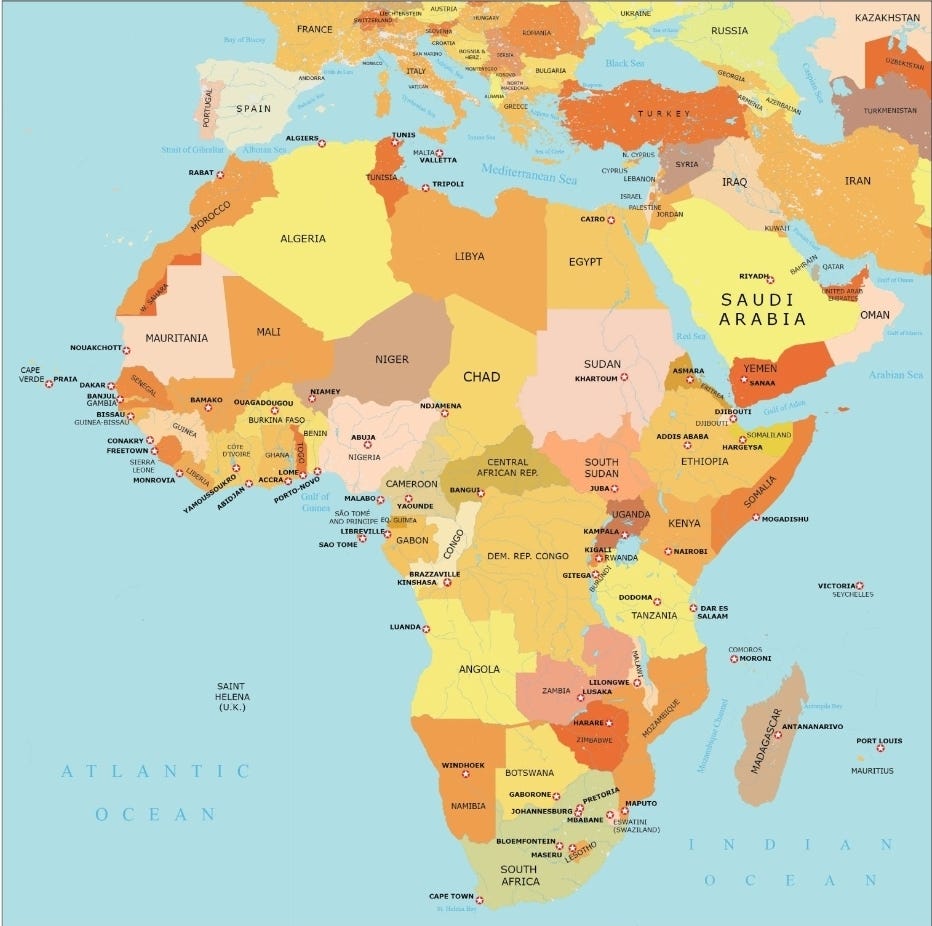
More importantly, the investment reflects a changing philosophy about Africa's development. Rather than viewing neighbouring countries as competitors, many African governments increasingly see regional cooperation as the pathway to shared prosperity. Infrastructure, energy networks, transport corridors and industrial zones naturally serve multiple countries. When designed with regional integration in mind, these investments generate benefits that extend well beyond national borders.
The African Continental Free Trade Area (AfCFTA) provides an important framework for this transformation. By lowering trade barriers and encouraging cross-border investment, the agreement creates incentives for companies to build industries that serve continental rather than purely domestic markets. Large-scale projects like the proposed Lamu refinery fit squarely within this vision by supporting industrialisation, expanding intra-African trade and strengthening economic interdependence.
The refinery also highlights the strategic value of African capital. Local investors often possess a deeper understanding of regional markets, regulatory environments and consumer demand than external financiers. Their investments are more likely to remain committed during periods of global uncertainty because their long-term interests are closely tied to Africa's development. While international investment will continue to play an essential role, stronger participation by African businesses can make economic growth more resilient and locally anchored.
This trend extends beyond the energy sector. Similar opportunities exist in renewable energy, fertiliser production, pharmaceuticals, food processing, mining, digital infrastructure, ports, railways and manufacturing. As Africa's middle class expands and regional trade grows, these sectors will require billions of dollars in long-term investment. The continent possesses the financial resources, entrepreneurial talent and natural wealth needed to support many of these ventures if capital is increasingly directed toward productive investments at home.
None of this suggests that every large project will succeed or that challenges have disappeared. Financing, environmental standards, governance, community engagement and political stability remain essential considerations. Sustainable development requires transparency, sound regulation and responsible management to ensure that major investments deliver lasting benefits for citizens as well as investors.
Nevertheless, the proposed Lamu refinery represents more than a single industrial project. It symbolises an emerging confidence that Africans can build Africa's future with their own expertise, capital and ambition. As successful entrepreneurs increasingly invest across borders, they contribute not only to economic growth but also to a stronger sense of continental partnership.
Africa possesses abundant natural resources, a young workforce and one of the world's fastest-growing consumer markets. The next stage of its development will depend on converting these advantages into industries that create value within the continent rather than exporting opportunity elsewhere. If more African investors follow the example of undertaking transformative projects across national boundaries, the benefits could extend far beyond individual countries. They would help lay the foundation for a more integrated, self-reliant and prosperous Africa—one where the continent's wealth is increasingly invested in the continent's own future.
Mohamed Mohamoud Adde is an academic and a geopolitical analyst
No posts
Comments
Nothing yet. Say the first thing.
Sign in to join the conversation.