
When the referee blows the whistle on Sunday, football fans across the globe will witness more than just another FIFA World Cup final. They will see two of the sport's most celebrated nations meet on the biggest stage for the very first time in a World Cup final. Spain and Argentina arrive with different histories, different football philosophies and different journeys, but both stand just one victory away from immortality.

For Argentina, reaching the World Cup final has become a familiar experience. The South American giants have long been among international football's elite, producing generations of extraordinary players who have shaped the game's history. From Mario Kempes and Diego Maradona to Lionel Messi and a new generation of stars, Argentina has built a football culture defined by technical brilliance, fierce competitiveness and an unwavering belief that the Albiceleste belong among the world's best.
The country's World Cup journey has been filled with unforgettable triumphs and painful disappointments. Argentina won their first title on home soil in 1978 before lifting the trophy again in 1986 under the inspirational leadership of Diego Maradona. They later endured heartbreaking defeats in the 1990 and 2014 finals before reclaiming football's greatest prize in Qatar in 2022 after one of the most dramatic finals ever played. Another victory would secure a fourth World Cup crown and reinforce Argentina's place among football's greatest nations.
Spain's World Cup story follows a very different path. For decades, the Spanish national team was regarded as one of football's great underachievers. Blessed with exceptional players, Spain repeatedly entered tournaments as favourites only to fall short when expectations were highest. That reputation changed forever in South Africa in 2010.

Led by one of the finest generations in football history, Spain revolutionised the modern game through its patient possession-based style, intelligent movement and technical excellence. Their victory over the Netherlands in the 2010 final, sealed by Andrés Iniesta's unforgettable extra-time goal, delivered Spain's first World Cup title and established "La Roja" as the dominant force in world football during that era.
Now, sixteen years later, Spain stands on the verge of a second world championship. Their return to the final signals more than a successful tournament; it reflects the country's remarkable ability to rebuild after the golden generation gradually retired. A new crop of talented players has embraced the nation's footballing identity while adding greater pace, flexibility and attacking creativity.
Although Spain and Argentina have crossed paths several times in international football, they have never contested a World Cup final. Their only World Cup meeting came during the group stage of the 1966 tournament, when Argentina emerged victorious. Sunday's encounter therefore represents an entirely new chapter in football history, with no previous final between these two proud nations to draw upon.
The contrast between the teams extends beyond history. Spain represents the European tradition of structured positional play, relentless passing and tactical discipline. Argentina embodies South America's passion, resilience, improvisation and emotional intensity. Both approaches have produced world champions and inspired generations of coaches around the globe.
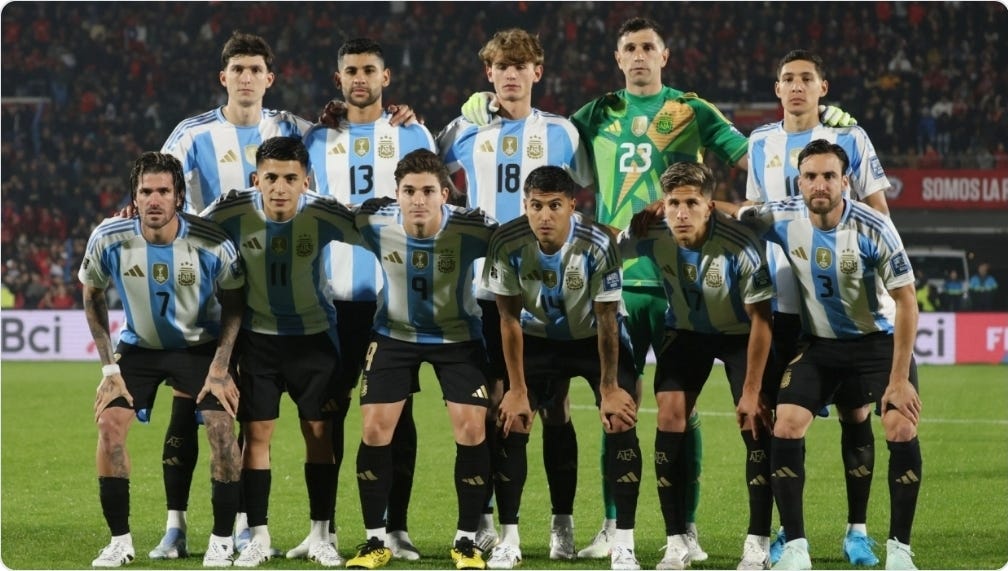
This final also reflects the continuing balance between Europe's and South America's footballing powers. While European nations have dominated many recent World Cups, Argentina's triumph in Qatar reminded the world that South American football remains capable of producing champions. Spain now seeks to reaffirm Europe's strength, while Argentina aims to defend the title and continue its remarkable era of success.
For millions of supporters, the match is about far more than statistics or trophies. It is a celebration of football's unique ability to unite cultures, generations and continents. Children watching today may remember this final for decades, just as previous generations still recall Maradona's brilliance in 1986 or Iniesta's winning goal in 2010.
Only one team will leave the stadium carrying the famous golden trophy, but both finalists have already demonstrated the qualities that define champions: resilience, consistency, tactical intelligence and the courage to perform under immense pressure.
Regardless of the outcome, the Spain-Argentina final promises to become another landmark moment in World Cup history. It brings together two footballing traditions that have inspired millions around the world and offers a fitting conclusion to a tournament that has once again showcased why the FIFA World Cup remains the most captivating event in global sport.
Mohamed Mohamoud Adde is an academic and a geopolitical analyst
Comments
Nothing yet. Say the first thing.
Sign in to join the conversation.