
Humans are funny creatures. By now, most of us know that eating meat is bad for the environment, and beef is the worst offender; we’ve heard that the earth is closer than ever to becoming inhospitable to us. In the United States, which remains the world’s largest consumer and producer of beef, prices have surged over 11% since 2024. So has food insecurity, which recently rose to 16%.
These are precarious conditions for a steakhouse renaissance, and yet, that’s precisely the era in which we find ourselves. As Bettina Makalintal recently wrote for Eater, everything is steakhouse now. In the article, she calls attention to a few reasons why we’re collectively horny for a dimly-lit room with white tablecloths: a predictable setting—and menu—in an era that’s anything but, nostalgia for the bygone days, and the ability to cosplay status, luxury, power, for the duration of your meal.
To these, I’d add the general political swing towards conservatism in North America. A return to tradition, a preference for the tried-and-true, a rejection of strangers in favour of the in-group—all part of the equation. Steak and fries are just meat and potatoes in black-tie attire, right? Of the earth. Practical. Unthreatening. It is no coincidence that the popularity of steakhouses is happening at the same time as the rise of tradwife culture and immigration crackdowns; these are the symptoms of a society which has, after sensing its own unwellness, assigned blame to all the wrong parties. Immigrants instead of extractive billionaires, say, or seed oils instead of the compound stress of life in late-stage capitalism. It is easier to regress to the good old days than it is to dream of a better future.
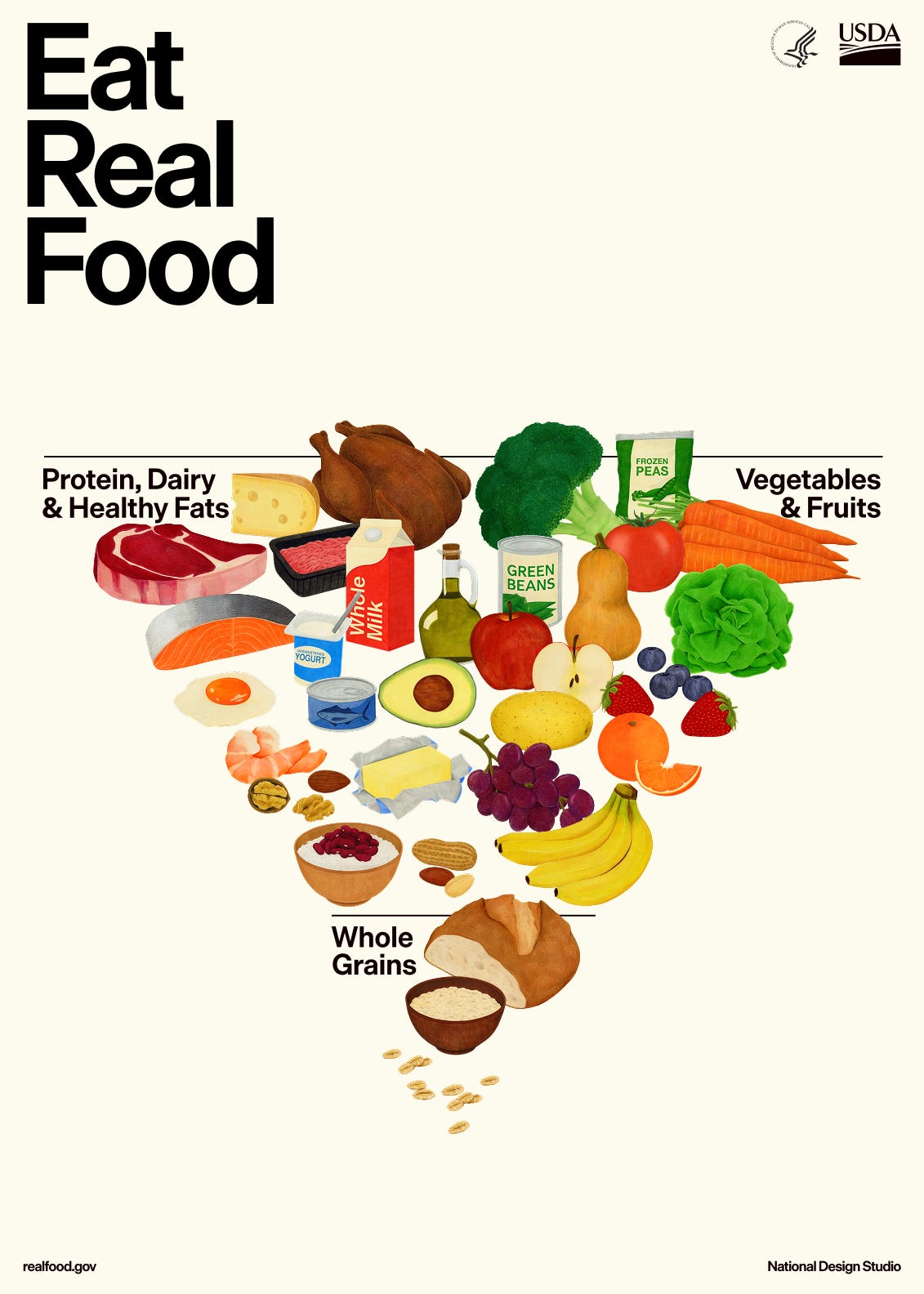
So, meat is back. We’re protein-maxxing, we’re taking “grass-fed” collagen, we’re replacing our moisturizers with tallow. Steak appeared like a crown jewel atop the new American food pyramid, as part of the updated dietary guidelines released by the Trump administration, which was authored by researchers with significant financial ties to the beef and dairy industry. As ever, nothing happens in a vacuum.
Do not mistake this letter for a sermon: I eat red meat, and I always have. There’s no better meal to me than a steak frites and an extra briny martini. I love the pomp and circumstance, I love the carnality of gnawing meat off a bone. If I’m honest with myself, and you, I will likely continue to eat meat while confronting the contradictions I hold within myself, and negotating where I can make amends to my values. I’m eating less of it, for starters. Being choosier about where it comes from, too. And while there is some debate about whether ‘better' meat exists, I believe that there are more thoughtful providers of meat than others.
Which is why I’m here to tell you about Fat Rabbit.
It’s one of the few restaurants in St. Catharines that has broken through Toronto’s navel-gazing tendencies, earning a nod of respect from chefs and diners alike. Recently, it was named #19 best steakhouse in North America, alongside a few of Toronto’s darlings: Linny’s, Jacob’s, and Sammarco. Which is impressive, because by certain metrics, it’s not a steakhouse at all.
The most common criticism of the restaurant is that it lacks swagger. “A glorified butchershop,” said one reviewer. Accurate: the space, austere and industrial with exposed HVAC ducts and high ceilings, takes some getting used to. It reads like a brewery that serves brunch. There’s none of the aesthetic charm of the other steakhouses I’ve mentioned: no sultry banquettes, no warm and convivial lighting. Instead, diners sit tightly-packed at tables that fill the negative space between refrigerated deli cases, which bleach the room with their fluorescence. The restaurant is well aware of this inconsistency and calls it out on their website: A butcher shop inside of a restaurant? Or a restaurant inside of a butchershop?
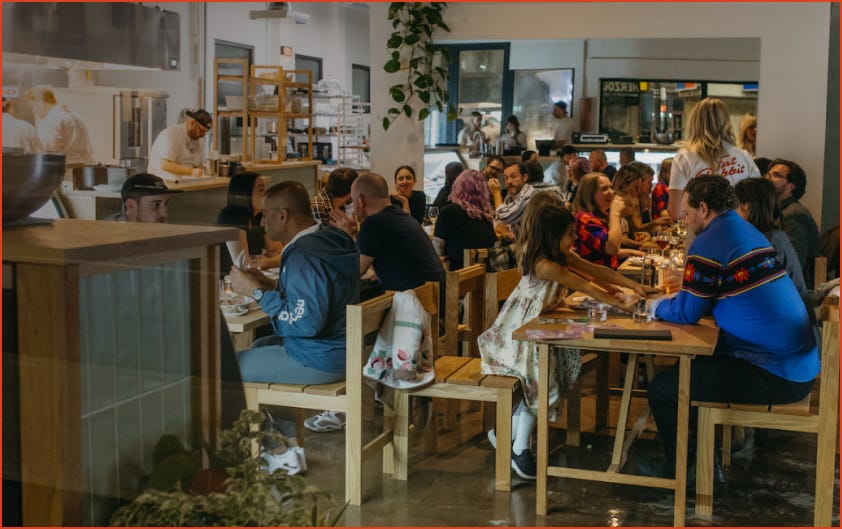
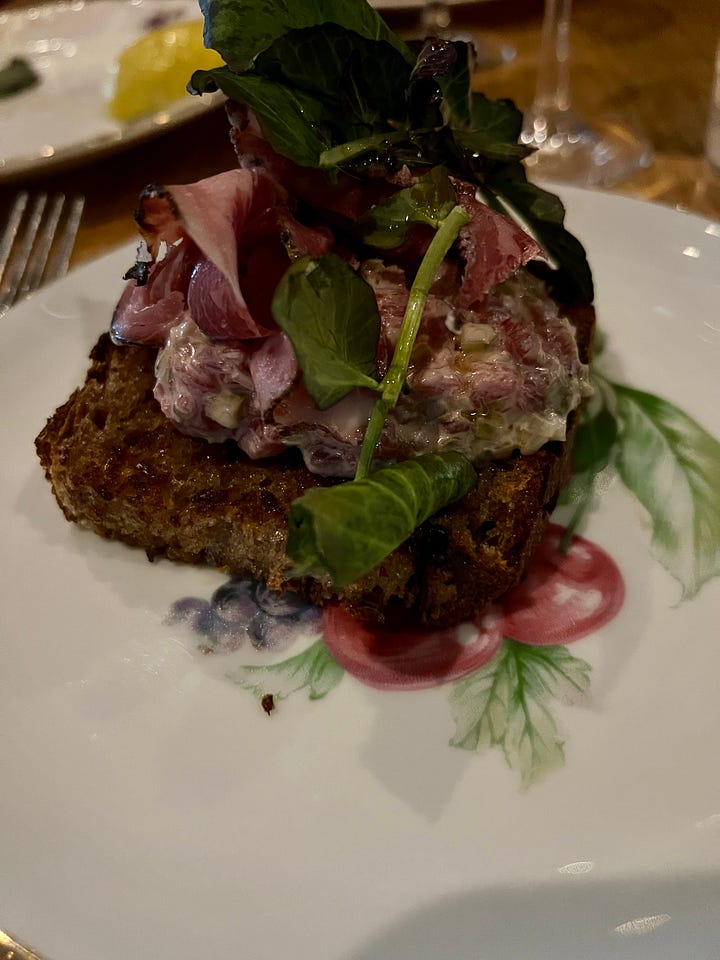
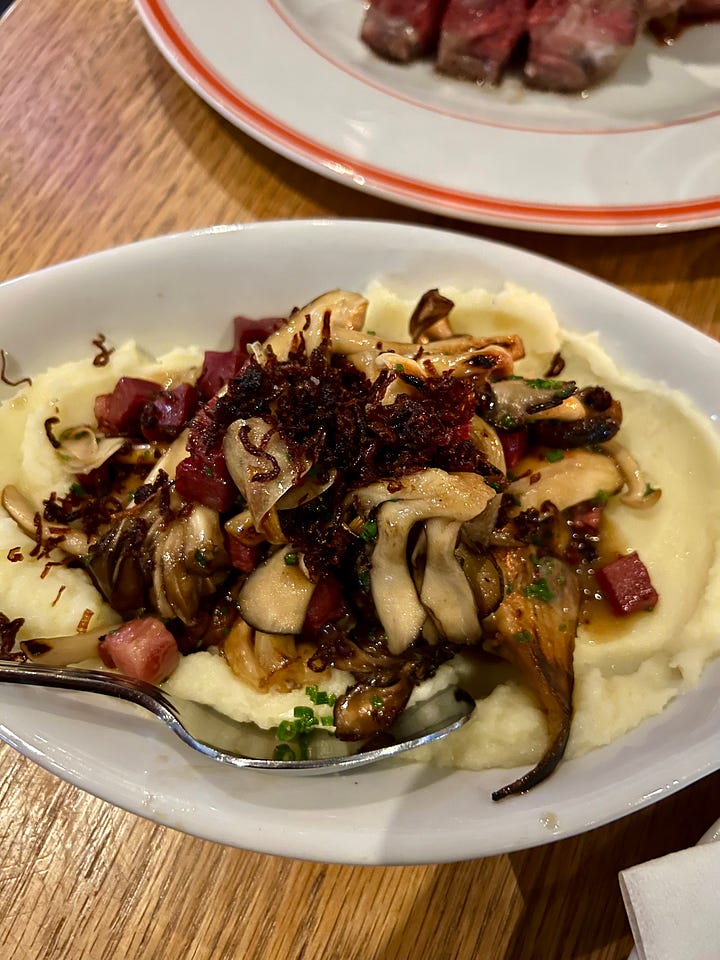
Fat Rabbit certainly operates with the conscientious economy of a butchershop, using every part of the animal across their restaurant and house-made charcuterie. The night J. and I stopped in for dinner, we had a rib steak, a beef tartare tartine topped with watercress and thin slices of beef pancetta, and a side of roasted mushrooms and cubed beef tongue.
Each dish was designed around the fat of the animal: the tartare, sharp and tangy, the mushrooms a vinegary punctuation to the richness of tongue. The steak—cooked over coals and served by itself, every fiber thoroughly but not excessively salted—was among the best I’ve had. It’s hearty, stick-to-your-ribs cooking, to be sure, but attentive, calibrated. What the place lacked in decor, it made up for in service and flavour.
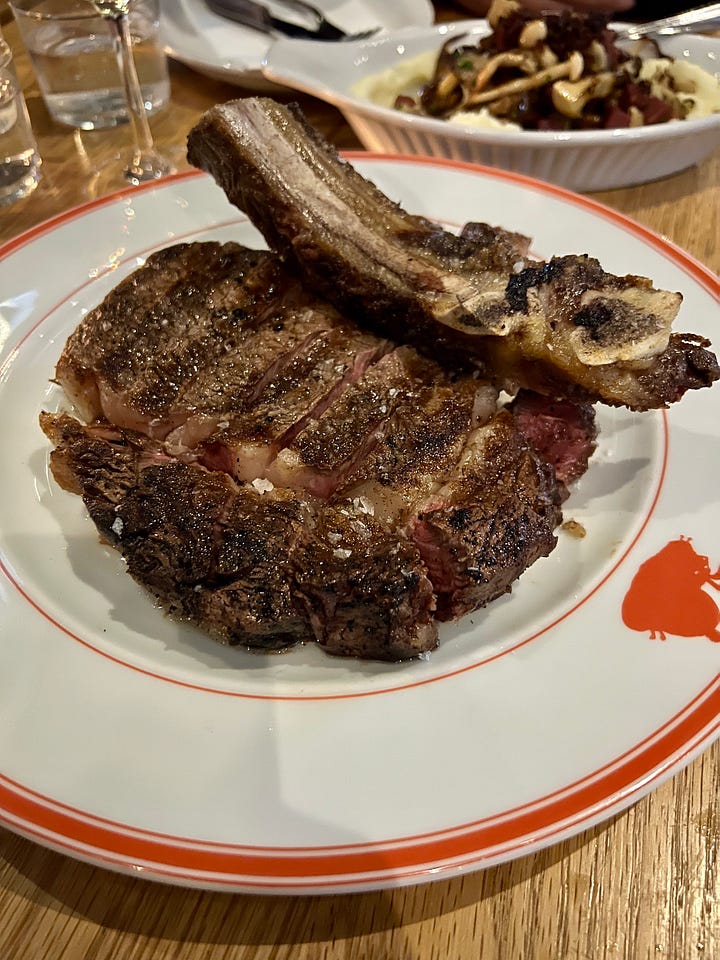
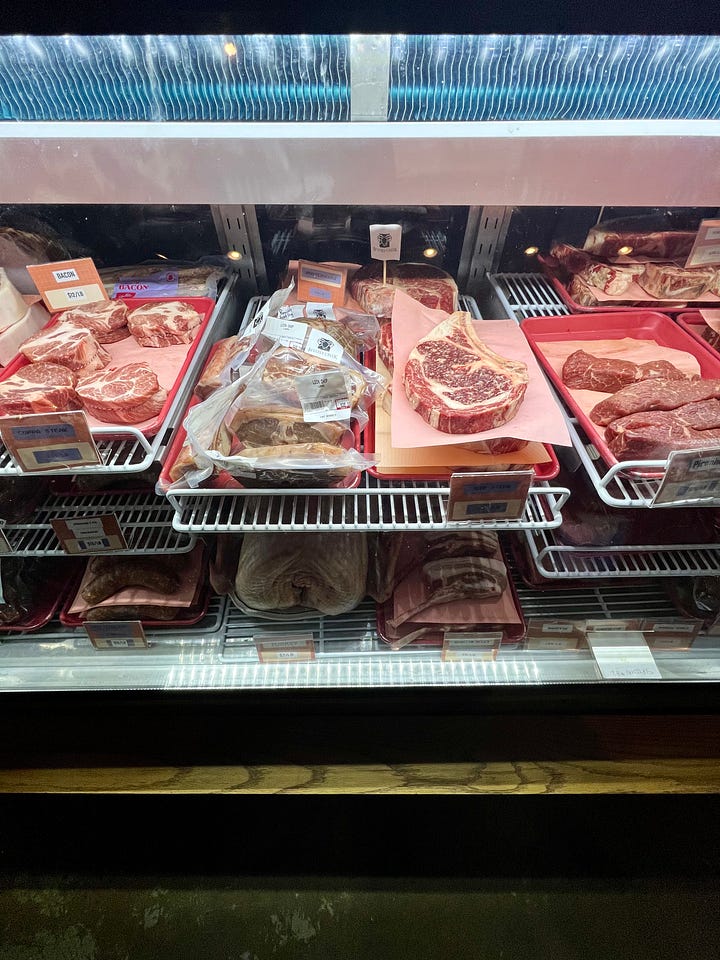
The restaurant prides itself on sourcing from farmers and suppliers in the Niagara region: all of the meat, most of the produce, some of the wine. The rib steak we had—shown to us by our waiter before they fired it—was from Beverly Creek Farms in Millgrove, a rural community outside of Hamilton. It’s easier than ever to forget where meat comes from or what it looks like. We called it beef to create distance from the cow, after all. Fat Rabbit, on the other hand, leans in—presenting the raw alongside the cooked, the pig’s head next to the pork chops.
These days, I am thinking a lot about the cost of the things we love—and the tradeoffs we have to make in the name of preservation. Through that lens, Fat Rabbit is as great a steakhouse as any. If ambiance is what we have to lose in exchange for a more measured approach to meat consumption, so be it. Maybe eating steak should be a little sobering.
In the Good Place ledger of ethical choices we make every day, I’d like to imagine that these decisions account for something: instead of steak flown in from Australia or Japan, instead of wasting the less desirable parts of the animal, instead of the excesses of splendor. There’s a time and place for those, too, plenty of beautiful rooms built for nostalgia, where we can still suspend our disbelief.
Fat Rabbit
34 Geneva St
St. Catharines
No posts
Comments
Nothing yet. Say the first thing.
Sign in to join the conversation.