
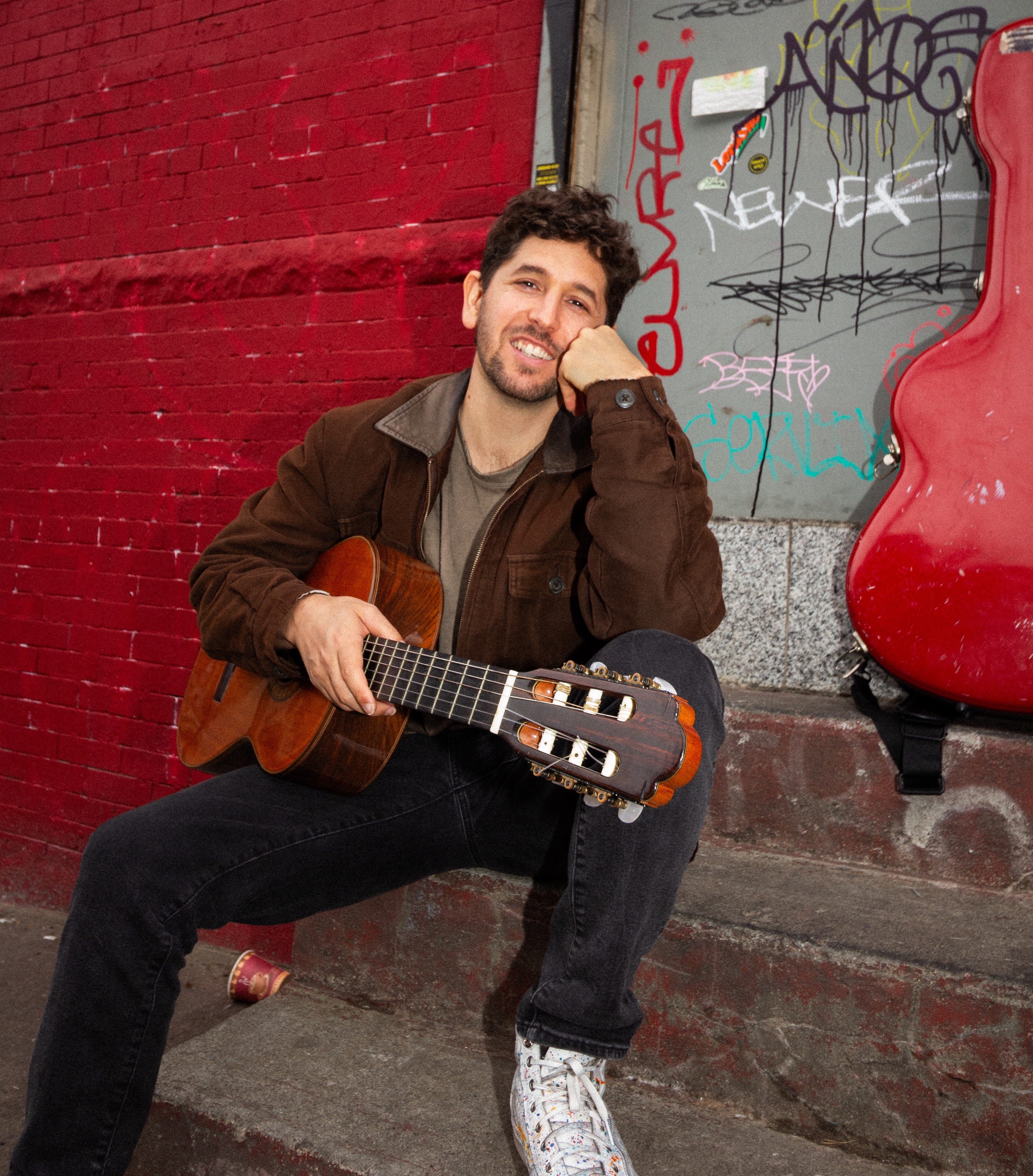
While the nylon-string guitar has long been the standard concert instrument for classical players, it has occupied only a small corner of the jazz world outside of bossa nova. There are notable exceptions: musicians like Duck Baker, Gene Bertoncini, and Ralph Towner have demonstrated that it can serve as a compelling improviser’s instrument, while players like Wolfgang Muthspiel have used it to bring a different sonic palette to modern jazz. Even so, relatively few contemporary musicians have made it their primary voice. Rarer still is a player equally at home on the upright bass.
Brooklyn-based Tal Mashiach is one of them. For more than a decade he has been a member of clarinetist Anat Cohen’s Quartetinho and Tentet while building a career of his own as a composer, and bandleader. Yet after a few listens to Who’s Around?, I found myself thinking surprisingly little about the instruments themselves.
The record is full of rich harmonies, Brazilian rhythms, Greek and Israeli folk traditions, chamber-like textures, and the occasional rhythmic curveball, but none of it feels like a display of cleverness. The overriding impression is one of warmth and joy. Even the most intricate passages retain an inviting, songful quality, and there’s an unmistakable sense that everyone involved is listening deeply, responding instinctively, and simply enjoying making music together.
The conceptual contrast with Mashiach’s 2022 debut couldn’t be much greater. Tiyul was recorded largely alone in a cabin in northern Israel, while Who’s Around? grew out of friendships formed over more than a decade in New York, bringing together collaborators from Greece, Georgia, Puerto Rico, Brazil, Israel, Chile, and elsewhere. Rather than simply inviting guests onto the record, Mashiach writes with specific musicians in mind, embracing the unexpected directions they take the music once they begin playing together.
I recently connected with Mashiach to talk about the contrast between those two albums, growing up in a tiny mountain village, the lessons he has absorbed from years alongside Anat Cohen, why he’ll probably always gravitate toward acoustic instruments, and his belief that even the most intricate music should still feel songful.
You began on classical guitar, later became a serious bassist, and now move fluidly between both instruments. When you compose, are you thinking like a guitarist, a bassist, or from some third place entirely? Does harmony tend to come first, or rhythm and bass movement?
Probably more as a guitarist than a bassist. Sometimes I also compose on piano because it’s easier for me to work on a harmonic instrument, but guitar was my first instrument for composing. I still pick up the classical guitar and just play. If I really like something, it stays and eventually becomes a song. So I mostly compose on guitar, and occasionally on piano as well.
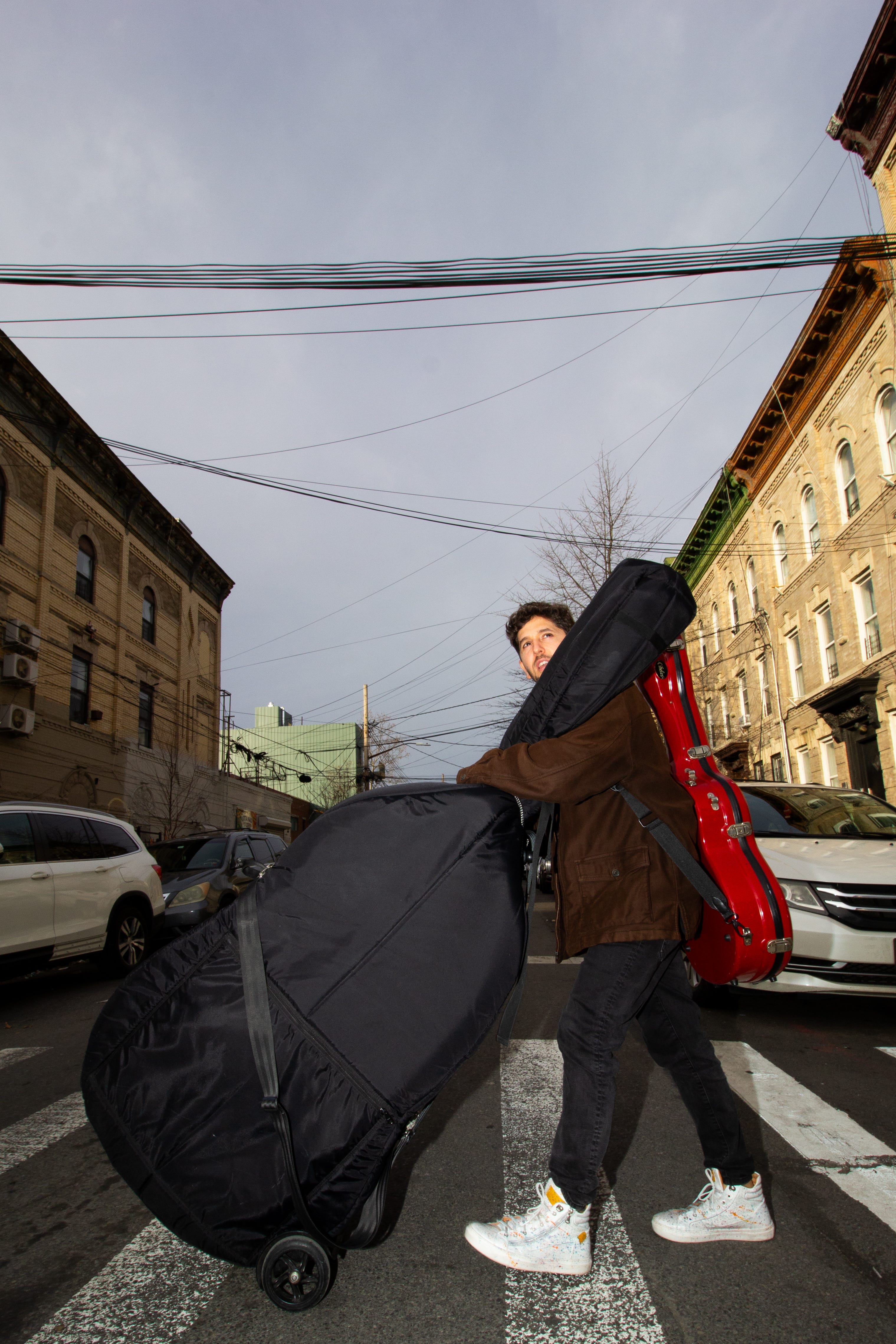
You grew up in Harashim, a small mountain village in northern Israel, far removed from New York’s density and noise. Are there sounds, rhythms, or musical memories from that landscape that still live in your playing?
I always feel like my background is present in both my playing and my compositions. It wasn’t a village with a strong musical tradition; it was incredibly quiet. When I was growing up there were only about 50 families, and there wasn’t even a supermarket.
Practicing classical guitar as a kid, I had so much space and so much nature around me. I still carry the deep quiet of that little village in northern Israel with me. Then I moved to one of the busiest cities in the world, and I think that contrast sometimes appears in my music—the dynamic between the quiet, romantic atmosphere of “Duo,” for example, and something like “Lama Ken Lama Lo,” which is much more influenced by the Latin music I hear here in New York.
What was it like when you first moved to New York, both musically and otherwise?
Moving to New York was a shock. I had a middle stage because I first moved to Tel Aviv, so New York wasn’t my first city, but you really can’t compare New York to anywhere else—certainly not to Tel Aviv.
I came to study at The New School, so I immediately had a community. Many of the musicians I met there are people I still play with today, and several appear on this album. [Pianist] Gabriel Chakarji, for example, is someone I met at school.
Musically, New York exposed me to so many different traditions. I had always loved different styles of music, but what I love about New York is meeting people from all these different places, learning about their cultures, and sharing my own. Music becomes this common language that makes it very easy to connect with people.
For example, I never would have written “Creta” without meeting Panagiotis Andreou from Greece. He has introduced me to so much Greek music I never knew existed, and we constantly share music with one another. New York is an incredible place to learn about different cultures through the people who live here. Musicians are very open—they want to meet, play together, share music, and keep learning.
Comments
Nothing yet. Say the first thing.
Sign in to join the conversation.