
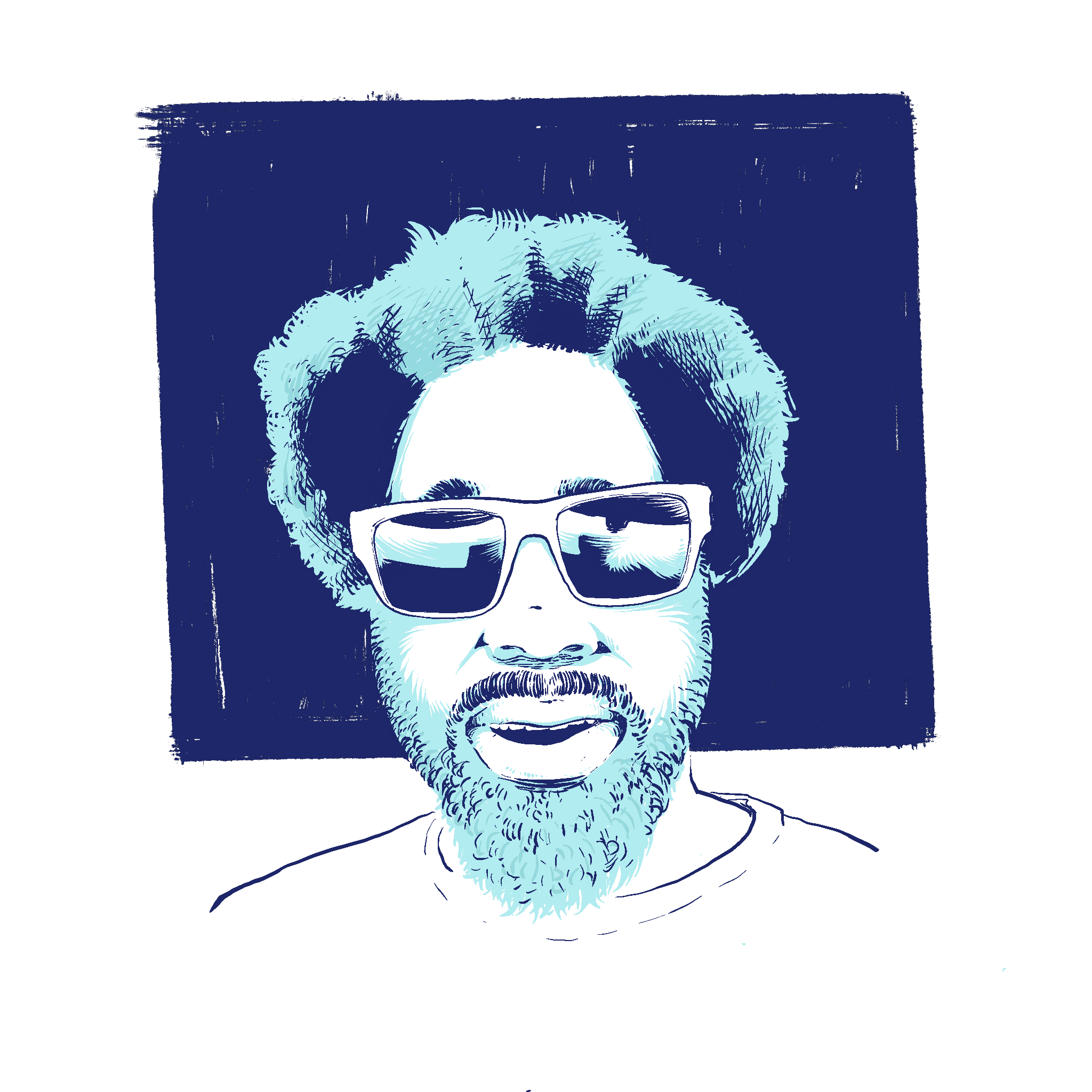
I had just left my first radiation visit in the Oakland Kaiser dazed, emerging from the dungeon-esque basement of the clinic, wandering onto a bustling Piedmont Avenue like a nocturnal creature squinting at the light, and there he was: W. Kamau Bell, the famed East Bay comedian and host of CNN’s United Shades of America. Bell – a tall, gregarious, magnetic man with trademark afro – was someone I knew only from the other side of the screen: from his show, from his win on Celebrity Jeopardy, from his endlessly witty and pugnacious Instagram feed, punching back at Trump’s daily authoritarian madness. I seemed to see him every day on a screen, but now, here he was here in front of me at The Posh Bagel.
Was it Kismet?
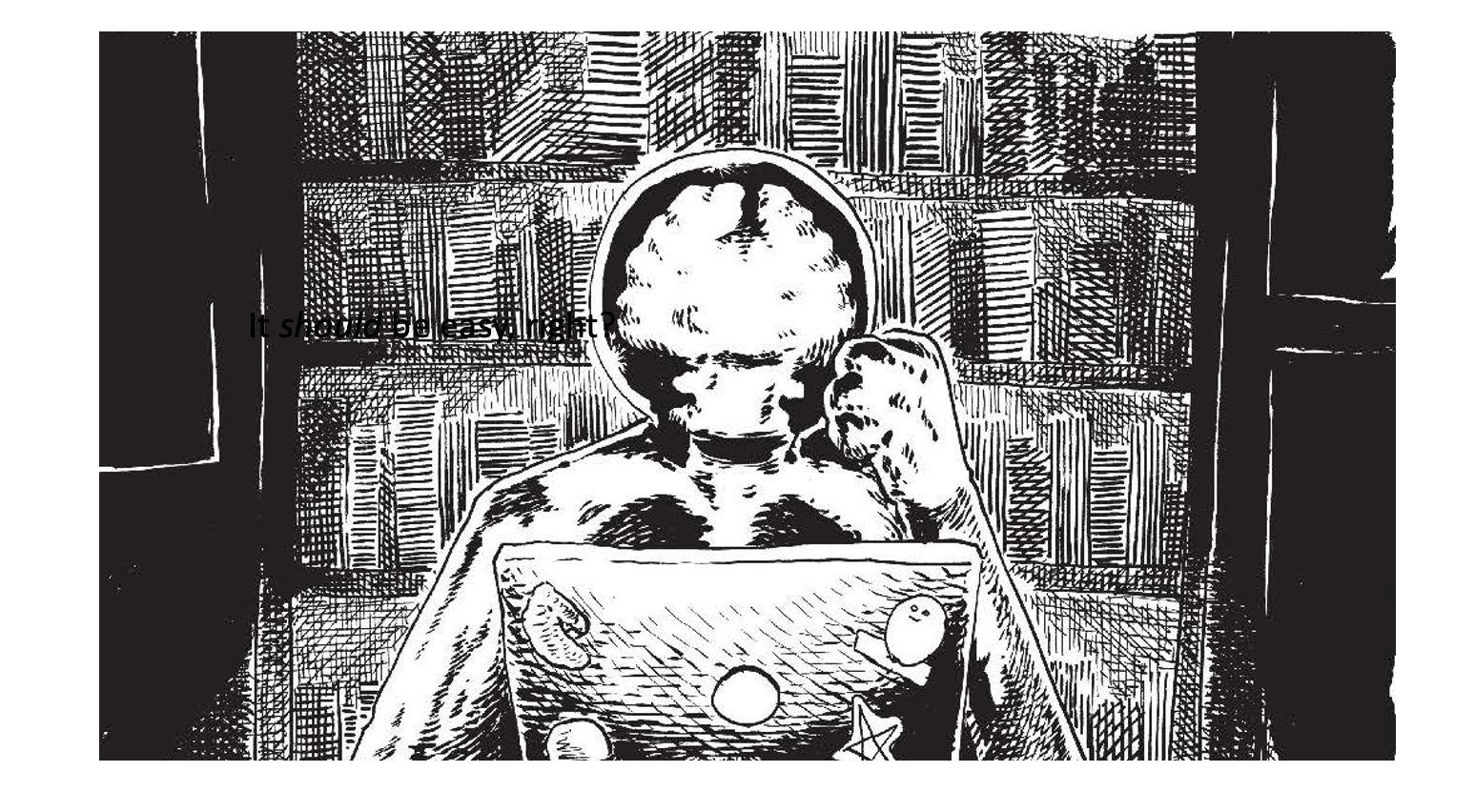
This chance encounter led to what you are reading now – my first Substack, one focused on sharing my current brain tumor journey. With Kismet on my side, it should be easy, right?
I certaintly thought it would be.
I’ve been living with a malignant brain tumor for over 16 years, and writing about it the whole time, so it seems I shouldn’t have an issue. I recently wrote a letter to friends and family about the new growth, a genre of letter I’ve written every few years since I had a grand mal seizure in 2009 that lead to the diagnosis of a brain tumor. Since then, I’ve written countless thousands of words in notebooks to myself about the experience, and published about living with a brain tumor for over a decade, including work for a broad public audience in The Boston Globe and in my graphic memoir Going Remote: A Teacher’s Journey (with Peter Glanting). I went on a book tour talking tumor, meeting with folks in person and online, interviewing for newspapers, speaking on podcasts, and even taping live in a local morning program in Portland with a host who had a beehive in a fake living room. I don’t think most folks want to start their day talking tumor, but there I was.
Why was this so hard to just write?
When I was diagnosed, I was terrified to publish about the brain tumor experience for fear that it would ruin my teaching career. I was interviewing for the full-time tenure track teaching English faculty position, and I feared that the committee would find out – as there could be no way they’d hire someone for a job with their brains who had a brain tumor. I kept worrying of how the students would just think of me through the lens of the tumor: that any grade could be challenged because of the disease – “Oh, Bessie’s brain isn’t working, that’s why this paper got a D.” I worried that colleagues and administration might view any mistake I made as not just a mistake, but as a larger signal of a systemic problem with my brain, my mind, my cognition – my very worth in the job. Indeed, as I was about to have the final interview with the President of the college, my surgeon congratulated me, but also warned: “Don’t tell them you have a brain tumor.” I didn’t. And I wouldn’t write about it publically for about six years – when I earned tenure, when I felt safe to come out.
I was in the cancer closet.
—
But by 2015, the year I earned tenure, I couldn’t stay in the closet any longer. I was bursting at the seams with stories on living with cancer – but little I had experienced seemed to appear in the media. I had notebooks full of observations, experiences, stories, cartoons – from the brain surgery, the wedding months after surgery, the years chemo, the IVF, and Sol’s remarkable birth. But I saw no represetations of this kind of multi-facted, three-dimensional human experience.
I was driven to write myself into existence – as if it were a matter of life or death.
And it is.
Often, those living with brain tumors are shown to be one-dimensional cut-outs – to be feared or pitied, and often, both at once. The best example is the horror-gorefest Saw, which I watched last week with Sol (now, 13, with the hint of a mustache and his face looming right in my face). The killer, Jigsaw, devises devious puzzles that force his victims to kill themselves. And his motive? A brain tumor. And in Stephen King’s Under the Dome – it’s the tumor in his dome also that made the character a serial killer. The worst, though, is David Cronenberg body-horror extravaganza Videodrome, in which an evil videotape creates brain tumors to make assassins (or so I think … a complicated movie). We are afraid of the killer, but at the same time pity them because they did not choose to kill – their broken minds made it so.
The tumor terror trope is more common than you’d think, especially in sci-fi and horror, my favorite genres, and ones I’ve taught in my classes. I can’t say how many shows have sudden brain tumor plots using the disease to explain the characters insane behavior OR as an easy route to create pathos.
“A brain tumor, again?” I’ll turn to Corin on the couch, and then we’ll often tune out.
It’s a lazy writing trick, using the tumor as a short-cut to push the reptile brain into the real fear represented in this illness: that anyone can get it at anytime, that it can kill or disable you, and that it is an implacable, unrelenting, force that doesn’t bargain nor negotiate, and which doesn’t care about you – like Jigsaw, I suppose.
The greater challenge when writing about a brain tumor for a general audience: well, who wants to read about it? Hell, I don’t even want to be writing this. I don’t want to be living it. It’s terrifying, and most of us would prefer to avoid thinking about something terrifying unless it’s contained in a narrative structure that makes us feel safe. The narrative needs to assure the audience of their distance from the illness: that only someone else who gets the illness (not me!), that the person “deserved” the illness through their actions (I can be safe!), or that the illness is vanquished in a heroic fashion, such as in Lance Armstrong’s It’s Not About the Bike. If there is a cancer story, it must have a clear redemption/cure arc that helps the normies feel good: life as usual, illness/calamity, bravery, recovery — even better than before. And if the person died, it’s because they must not have fought hard enough, or become a “bad” patient, those worthy of their fate – which keeps the audience still feeling safe.
The brain tumor – and long-term chronic illness in general – befuddles such a narrative as the person remains uncured, and thus, there is no clear resolution. As I wrote my book Going Remote, which focused on teaching in the pandemic along with my cancer journey, I struggled with the conclusion for this reason: the pandemic was still on-going, and I just started a new experimental treatment. At the time, I had no idea how the pandemic nor my cancer would unfold, which is what we all want with a good story – a resolution. Often, with cancer, the clear resolution is death or survivor who has beaten it – what about those of us, like me, that are in the middle of our story? And indeed, that became the ending of the book – as all of us are in the middle of our story, wherever we are, so long as we are alive.
So now, I’m out of the cancer closet.
And 16 years on, I’m still here.
Upon finishing the book and the book tour, I felt a sense of resolution in the unresolved. I had worked for over a decade to make stories and narratives that could help brain tumor patients, their families, friends, and strangers. Most of all, I was making these visual narratives as a form of Graphic Medicine for myself. I thought often of the 28 year old version of myself, terrifed he would have no future, and wrote to him. I know I haven’t shifted the cultural narratives on folks living with brain tumors in any appreciable manner (the counter-forces have so much gravity), but I had done my part … for now.
I felt done writing about cancer. I was done with cancer. I just wanted Jigsaw to let me out of this lethal maze.
But it’s not done with me.
After all, there were at least ten Saw movies, so I suppose I should have suspected another sequel.
---
“W. Kamau Bell! I love your stuff. Thanks for all you do!”
I had walked by him (along with my wife, son, and mother-in-law), and then into the Posh Bagel before I yelled at a safe distance from celebrity. I felt a little bad about bothering him, about intruding in his space, about outing him in public, but blame it on the post-hospital haze. Just 20 minutes earlier, I had been deep in the mechanical bowels of the radiation clinic, getting fitted for face mask that would mold to my head, and ensure I was totally locked into sci-fi esque machine (which I’ll discuss in the next post). I felt like I’d was dimension hopping, and was still out-of-phase with the environment, the street, the surface reality. And now, I was talking with someone who I’d only known from screens.
Kismet at the Posh Bagel?
Bell actually walked in to say hi – and towered over me though, perhaps, it’s just that I felt small in his presence, small he’s famous, small because I had just left the hospital, small because of all the fear I have for the future, not just my own, but my family, my wife, my son, and the country itself, which is struggling against the authoritarian illness. It felt as if realities were converging for a moment – Bell, the hospital, tumor, all phasing in and out like the teleporter stuck between locations in Star Trek: TNG. It felt like a sort of hole in the universe had formed, realities folding back and inside of each other. I barely recall the conversation, other than he was friendly, just as he is on the screens. I confessed to him — as if he was a friend, as if he could do something — that I had just come out of a radiation appointment, and was appalled by “Trump’s War on Cancer Patients” (a comic I’m currently writing with Dr. Ryan Montoya), and that even though I had published a lot of material, this was hard to get it published.
“Just make a Substack! That’s what I do.”
And so here it is.
While I don’t know what comes next, while I don’t have a resolution, we’re going to go on this adventure together.
Thanks for coming along.
Next Chapter 2 coming soon: Radioactive Man.
Comments
Nothing yet. Say the first thing.
Sign in to join the conversation.