
“How was your summer?”
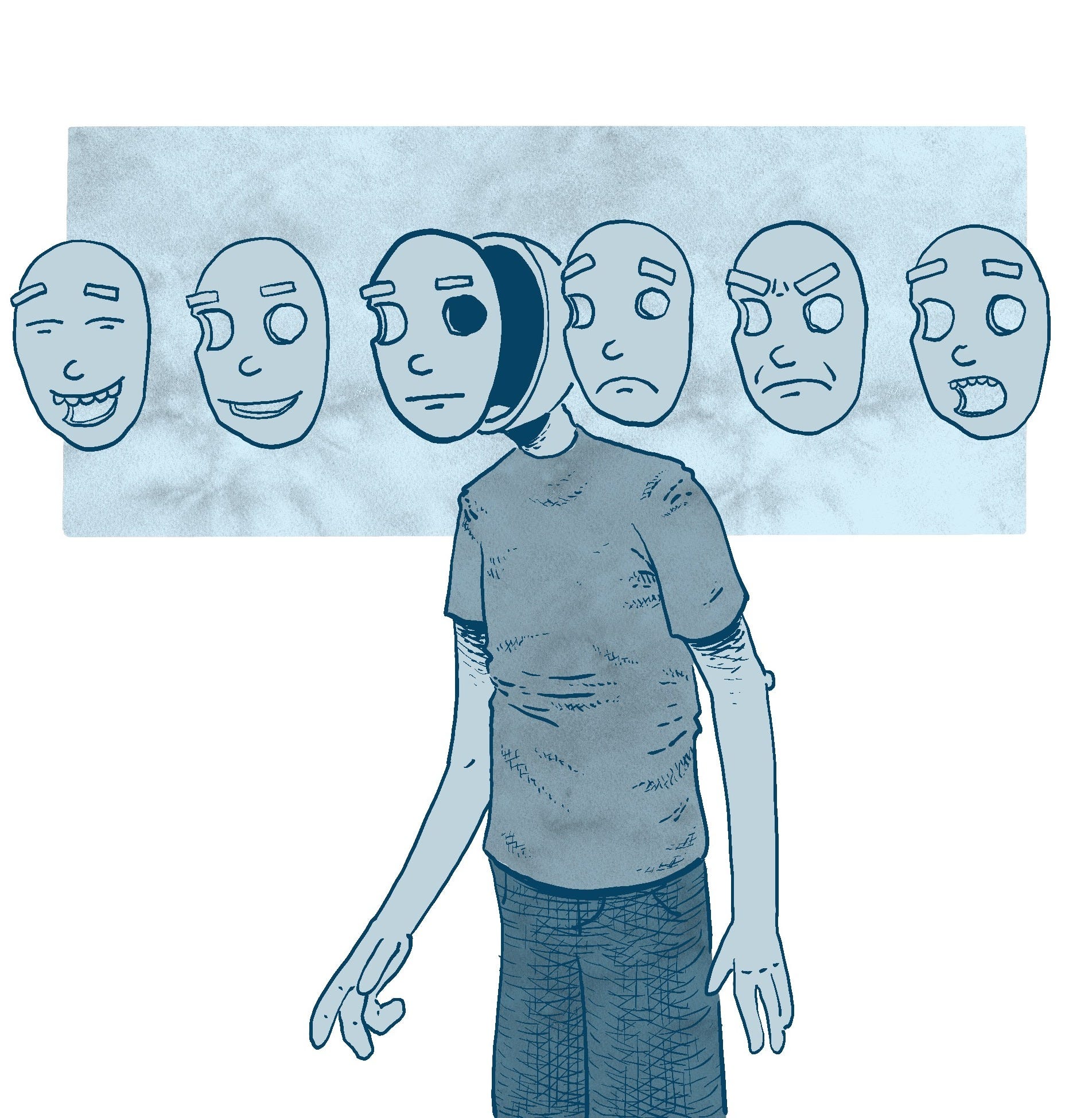
Rebecca, a relatively new colleague, asks the summer question, a ritual for every educator. After two to three months off campus (unless we’re still teaching or have a second job), our minds have moved into another realm, attempting to jettison the stress, rigid schedule, and intellectual and emotional fatigue of the year. Each of us can shed the teacher persona, the mask required to do the job well. The summer question is a starting bell of a race, a shot ringing out to pull it all back together, to get the lesson plans set, to stop watching Netflix until 2 a.m., to get the teacher face back on, and get running.
“It still feels like summer to me,” I respond outside my office, wiping a bead of sweat off my brow. As soon as the summer ends in the Bay Area, it seems to get hotter and hotter, as if attempting to resist the hegemony of the seasons, counter-seasonal. My outfit doesn’t help: after 3 months of shorts and tank-tops, I’m in my casual suit with my hipster cap, my teacher avatar. But the sweat is not just about the sweltering heat – it’s about this summer question itself.
What do I tell Rebecca? What face do I put on? And does she already know about the cancer?
Cancerman, Cancerman, Cancerman
“lllness is the night-side of life, a more onerous citizenship. Everyone who is born holds dual citizenship, in the kingdom of the well and in the kingdom of the sick. Although we all prefer to use only the good passport, sooner or later each of us is obliged, at least for a spell, to identify ourselves as citizens of that other place,” Susan Sontag writes in her classic work Illness as Metaphor, which I read at 21 in university. At that time, the tumor was likely growing in the aptly named Literature of Disaster course, but would not present itself until I had a grand mal seizure on President’s Day weekend 2009, right as I was planning a summer wedding with my then fiancé Corin (we’ve been married 16 years) and in the interview process for a tenure track job at the college at which I am now tenured.
As I sat in Disaster class with Sontag’s book, I pitied “those poor sick bastards.” I was young, a runner, a college athlete, a picture of health, or so I thought. I was already in the Kingdom of the Sick with them, a “poor bastard” -- but didn’t know it yet.
We are all bound to the other place, as Sontag observes. Nobody wants to be reminded that one day we are all likely to be “poor bastards,” forced to use our passport to that other place. Most folks don’t want to think about that other place. And certainly, many folks don’t want to see folks from that other place, nor hear about that other place, for fear that the other place is contagious, that you can catch it just by thinking about it, and god forbid you speak of it aloud, as you may find yourself here, a poor bastard.
It’s like iconic horror-character Candyman – say his name three times and he’ll appear.
Call me Cancerman.
The Cancer Ghost in the Nokia Flip Phone
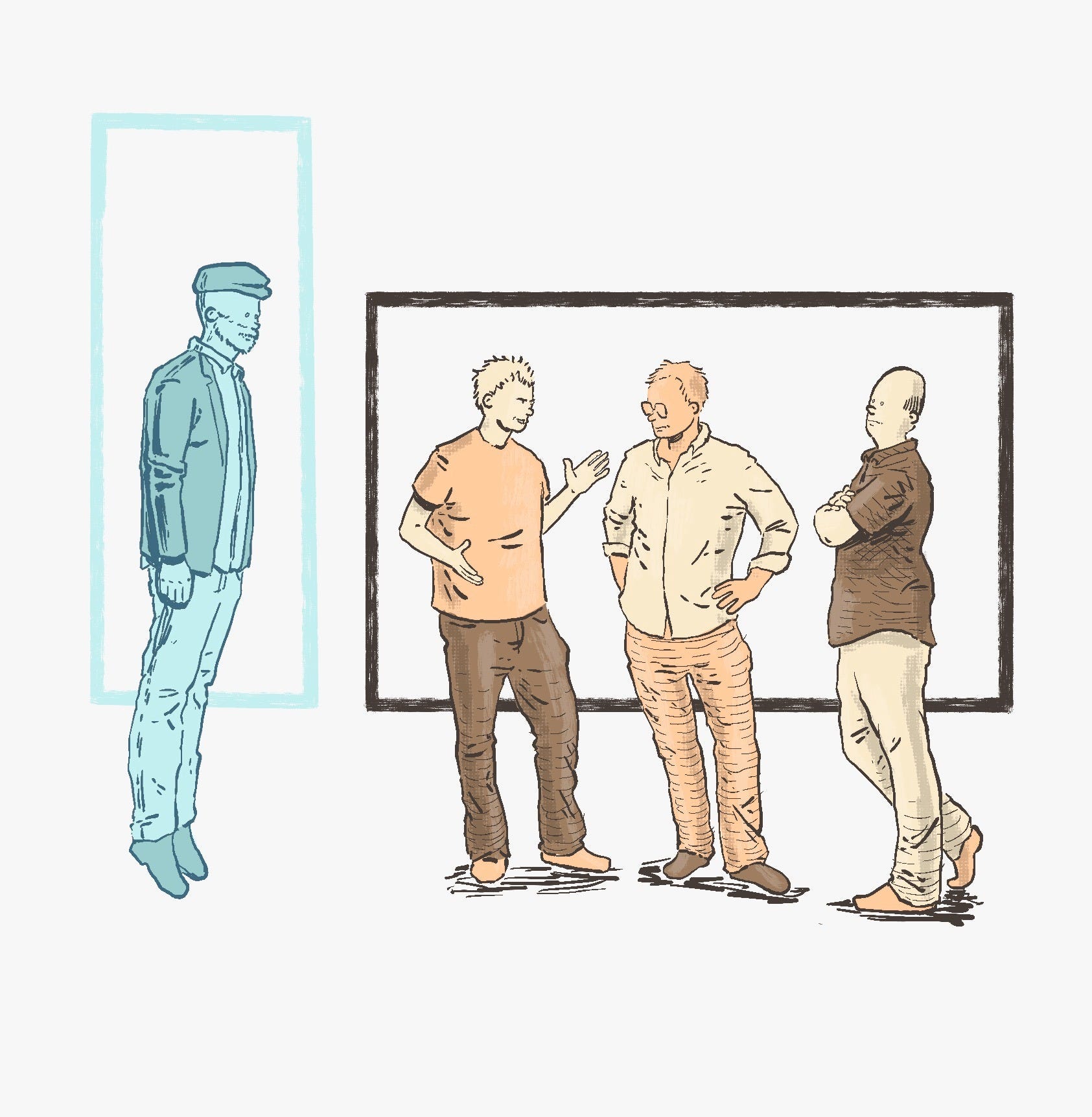
Corin and I were cancer-ghosted the first time a year after my diagnosis. These friends – Julie, Jamie, Sebastian, and Vivian – had been honored guests at our wedding, which happened three months after my brain surgery, as I was still learning to walk again. The Clique – that’s what we’ll call them -- hiked with us, partied with us, and Corin and I thought we thought we had a deep bond, one that could withstand the high velocity cancer comet that had smashed into our lives without warning. And without warning, the fallout came: we’d get called less and less, invited out less and less, and then, not at all, as they disappeared completely from our orbit. Once we’d hung every weekend; now, we hadn’t talked nor seen them in a month.
“Are we being paranoid?” We would ask each other.
“Maybe they’re just busy. Or maybe we’re pushing them away?”
“Is it us or them?”
“Is it all just on our heads?”
Our conversations went into a circles, spinning, coming up with plausible scenarios to explain why the Clique had disappeared. Where were our friends when we needed them most?
We went to find out the answer … though at some level we already knew it.
The silence was the answer.
I picked up my trusty Nokia flip phone and rang one member of the absent Clique. She finally answered their phone on the fourth ring, right before the voicemail, right as I prepared to flip my phone shut. But there she was – no longer in my mind, but her real voice. I asked why Jamie – who I thought was a best friend – no longer answered my calls. I nearly dropped the phone with the swift weight of the reply:
“Well, it’s just so hard for Jamie. It’s all too heavy for him.”
Too heavy for him?
Too heavy for him?
What do you think it’s like for me?
For us?
But I never said that aloud. I can’t remember what I said, as it felt the air was sucked out of me, out of the room, as if I now Corin and I were floating in the vacuum, in a void. In this space, I realized that the Clique had decided as a collective to move onwards, to leave us in our void, as we become memories from the past rather than friends.
We were the ghosts.
I felt guilty for a moment, as if I had imposed some undue burden, that it was in fact “too heavy.” Perhaps I was trauma-dumping (a term I didn’t learn until last year). I mean, we were all in our twenties still, too young for all this, and it was still early in President Obama’s era of Hope.
We didn’t fit the vibe.
Cancer didn’t fit the vibe.
We were all too heavy.
Florida Man or Cancerman?
But as the gravity of our lives pulled us out of the Clique’s orbit, we found ourselves pulled into new orbits – and far better orbits. For a few months, we were lost in the void, but soon it filled with friendships that were better, richer, and deeper for having ghosted by the Clique.
We found many folks – who became friends – who had travelled to the Kingdom of the Sick, who lived in their own other place, or at the very least were not repulsed or scared of my cancer. We cultivated friends who could see us, be with us – and in turn, we could see them and be with them.
But it wasn’t just the Clique. Indeed, our lives can at times be “too heavy” for some folks. And so, with each relationship – be it personal or professional – we need to decide what information to give to whom and at what time. It’s critical to triangulate the orbit of the relationship, to calculate the impact sharing my story will have on how we relate, or if we can relate at all. If I miscalculate the classification – as happened with the Clique – then it creates awkwardness, tension, and perhaps, ghosting (by them or us or both).
(I make these same calculations here, dear reader.)
And now, as I stand in front of Rebecca, as she poses the summer question I wonder: what do I say?
She doesn’t know, I don’t think – but it’s hard to know if my colleagues are talking about it, if she follows my Instagram and has seen the hard turn from smiling tropical vacation images to Hellraiser radiation mask, if she read the last Substack entry. Perhaps she’s being polite, pretending she doesn’t know. Perhaps she doesn’t know. Perhaps she does. I don’t know.
But I need to say something.
Do I tell her “I’m fine,” and then share about our family trip to Florida?
Do I tell her about the kayaking in mangroves and beaches and summer vibes?
Do I put on a face?
Do I pass?
Will she show know I’m passing?
Or do I tell the truth?
Do I tell her about the cancer, about the recurrence this summer, about the weeks of radiation, and the terrifying uncertainty of it all?
Do I risk getting ghosted?
(Have I risked getting ghosted by you, dear reader?)
I don’t know.
I wipe the sweat off my brow, open the sliding door to my office, and open my mouth: “What did I do this summer? Well, I …”
Chapter 3 coming soon
*All names have been changed, and details altered.
**The story with “Rebecca” is more an amalgam of experiences over the last 16 years, and not a real person this semester.
***Thanks to all the friends over the years who have been in our orbit, whether we are close or not at the moment. You’ve been part of our journey.
Thanks to amazing comics artist and visual storyteller Fred Nolan for inspiration on a key part of this. Glad you’re in our orbit!
This post is commemorated to Karen — RIP, Rest in Peace and Poetry.
No posts
Comments
Nothing yet. Say the first thing.
Sign in to join the conversation.