
Principle: The Pause Is a Position
Chris Voss spent decades negotiating hostage situations for the FBI. In Never Split the Difference, he makes a point that silence is not the absence of negotiation. It’s the negotiation.
When you go quiet after making a proposal, you create pressure without saying a word. The other person sits with the discomfort of an unanswered question. And humans are wired to resolve discomfort by talking — they explain, they soften, they reveal more than they intended to.
The research supports it. Studies on negotiation consistently show that silence after a proposal increases concession rates. The pause isn’t dead air. It’s the ask doing its work.
But coaches carry a specific handicap here.
We are conditioned to fill silence — with instruction, with encouragement, with the next cue. Silence in a performance environment can feel like absence, like we’ve stopped coaching. So when we walk into a contract conversation, a budget meeting, a difficult review, we bring that same reflex. We make the ask. We feel the gap open. And we close it ourselves — with qualifiers, with softening, with explanation — before the other person has had a chance to respond.
We talk ourselves out of leverage before they’ve said a word.
Perspective: Coaches Treat Silence Like a Problem
Watch most performance coaches handle a difficult conversation and you’ll see the same pattern.
They make the point. Then they keep going. Softening it. Qualifying it. Explaining it. Covering for it before the other person has had a chance to receive it.
The silence gets filled. The moment gets lost.
Rushing past the silence is almost always a tell, you’re not sure your point will hold up, so you crowd it with more words before the room can press back.
But the room doesn’t need more words. The room needs time. If you fill that space, you take that work away from them — and the conversation stays on the surface.
The coaches who carry the most authority in a room didn’t get there by having more to say. They got there by knowing when to stop.
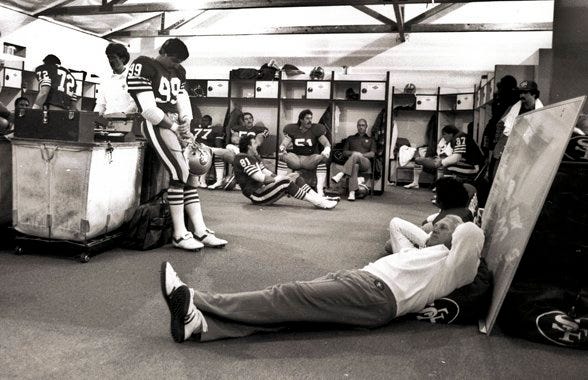
Story: Bill Walsh and the Quiet Sideline
The NFL sideline is not a place built for silence. Coaches pace. They yell. They cover every possession with instruction. Noise is the default.
Bill Walsh didn’t fit the pattern. In The Score Takes Care of Itself, Walsh wrote that the head coach’s words carry such weight that spending them loosely erodes their value. He believed that filling silence for the sake of it cost more than it gained.
So he didn’t. Three Super Bowl titles. Two NFL Coach of the Year awards. A coaching tree that shaped the modern league for the next thirty years.
Walsh’s edge wasn’t that he talked more than other coaches. It was that he understood when not to. He used silence the way a good surgeon uses a scalpel — not as the main instrument, but as the one that decides whether the work holds.
Question:
Think about the last high-stakes conversation where you had something important to say.
Did you let your point sit? Or did you fill the space before the other person could feel the weight of it?
Closing Thought:
Most coaches rush the pause because it feels uncomfortable. The ones with authority know it’s where the point finishes working.
Let the silence do the work.
Until next week,
Caleb Cousens
This newsletter is free. It goes out every week. If you’re serious about the leadership side of coaching, please consider subscribing.
Comments
Nothing yet. Say the first thing.
Sign in to join the conversation.