
I play in a recreational soccer league every week. We just played the best team in the league. It was a tense match, and I noticed that the more pressure mounted, the more our communication defaulted to what was going wrong. Mistakes were pointed out. Frustration was audible. More tension. More mistakes.
Nobody chose it. Pressure just narrowed what we noticed, and what we said.
That pattern isn’t unique to recreational football. It’s the default in most coaching environments. And it has a cost.
Albert Bandura’s work on self-efficacy — one of the most replicated bodies of research in performance psychology — identified verbal affirmation from a credible source as one of the primary mechanisms by which athletes build belief in their own capability. Not just feel better. Build capability. In sport, few sources are more credible than the coach.
When you tell an athlete “that was right, do that again,” you aren’t just offering praise. You’re providing information. You’re telling them what to keep, and you’re building the belief that they can execute it when it counts.
Research backs this up: a recent study found that supportive coaching behaviours including constructive, affirming feedback, directly predicted athlete performance through increased self-efficacy and psychological safety, while controlling, correction-only approaches had the opposite effect.
The problem is that in high-stakes moments, exactly when affirmation matters most, pressure narrows communication to correction.
And what doesn’t get said has consequences too.
There’s a belief, often unspoken, that positive feedback is for beginners. That once someone is elite, they don’t need to be told they’re good. They should already know. Praise is for youth sport.
This is wrong.
Silence after good work isn’t neutrality. It’s a message. And the message is: that wasn’t worth noting.
In high-performance environments, athletes are already operating in a constant state of self-evaluation. They’re looking for signal in everything, including what you choose not to say. When a coach only speaks to correct, the athlete’s internal calculus becomes simple:
Feedback means I failed. No feedback means I barely got it right.
The cost isn’t just psychological. It’s behavioural. Athletes who aren’t told what to keep doing often stop doing it. The behaviour that earned silence gets quietly revised and replaced by something that at least produces a reaction.
You didn’t intend to coach them away from it. But you did.
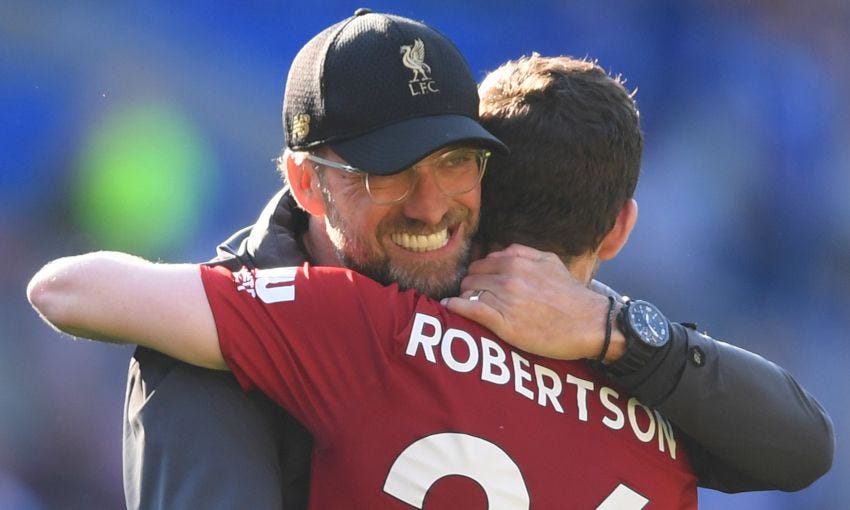
In their early years at Liverpool, Klopp developed a reputation not for tactical complexity — other coaches matched him there — but for his ability to make elite players feel like the best version of themselves.
Those who’ve studied his approach describe a consistent pattern: Klopp would find three things you did right in a game where you made five mistakes. He didn’t ignore the mistakes. But he led with what worked.
The principle wasn’t naivety. It was strategic. When players feel capable, they attempt more. When they attempt more, they create more. When they create more, there’s more to correct, but there’s also more to build on.
Coaches who only correct are managing. Coaches who affirm and correct are developing and that compounds over a career.
Think about the last session you ran.
If I asked your athletes what they did well today, would they be able to tell me?
Correction tells someone what to change.
Affirmation tells them what to keep.
Both are coaching decisions.
The absence of one is a gap. Say what they did right. Mean it. Then raise the bar.
Until next week,
Caleb Cousens
No posts
Comments
Nothing yet. Say the first thing.
Sign in to join the conversation.