
Creative problem solving often begins with a noble intention: to make something better. A better product. A better service. A better process. A better learning experience. A better way for people to work, decide, buy, participate, lead or change.
Then reality quietly enters the room.
People do not always behave as the solution expects. They forget things. They resist change. They protect their time. They avoid embarrassment. They take shortcuts. They interpret messages differently. They are busy, distracted, sceptical, hopeful, tired, cautious, ambitious and occasionally hungry. In other words, they are human.
This is why solutions cannot be designed only around logic, strategy, technology or internal enthusiasm. They must be designed around the real experiences, motivations and constraints of the people involved.
A solution may be clever, technically feasible and commercially attractive, but if people do not understand it, trust it, want it, use it or sustain it, it will struggle. Many solutions do not fail because the idea was poor. They fail because the human reality was underestimated.
Human-centred creative problem solving changes the starting point. Instead of asking only, “What can we build?” it asks, “What do people actually need, experience, value and struggle with?” Instead of assuming adoption, it designs for adoption. Instead of treating people as passive recipients of a solution, it invites them into the process of shaping it.
For entrepreneurs and professionals, this is not soft thinking. It is practical, commercial and strategic. People adopt solutions that make sense in their world. If we want solutions to work, we must design for the world people actually inhabit, not the tidy version we imagined in a meeting.
WHY: Why Human Needs Must Sit at the Centre of Solution Design
Solutions fail when people reject, resist or simply ignore them. This may sound obvious, but it is astonishing how often teams design as though human behaviour is a minor implementation detail.
A business may create an online course that is full of valuable content, only to discover that customers do not complete it because the lessons are too long, the rhythm is unclear or the promised outcome feels too distant. An organisation may launch a new process that makes sense to senior leaders but frustrates employees because it adds extra steps to already pressured work. A product team may build a feature that looks impressive but does not match how users actually think, decide or act.
In each case, the solution may be well-intentioned. It may even be logically sound. But if it does not fit people’s lived experience, it will not create the intended value.
Human-centred thinking matters because people are not just users of solutions. They are meaning-makers. They interpret what a solution says about them, what it asks of them, what it threatens, what it enables and whether it feels worth the effort.
This is especially important when a solution requires behaviour change. People rarely change simply because a better option exists. They change when the new behaviour feels meaningful, possible, supported and worthwhile. They change when the emotional cost of adopting the solution is lower than the emotional cost of staying the same. That is not usually written on a project plan, which is one reason many project plans are slightly optimistic works of fiction.
Entrepreneurs need this because customers do not buy solutions in the abstract. They buy relief, progress, confidence, status, clarity, ease, belonging, advantage or transformation. If an offer does not connect with what people are actually trying to achieve, it may be admired but not purchased.
Professional teams need this because organisational solutions live or die through adoption. A new process, strategy, learning programme or technology may be approved at the top, but it succeeds only when people engage with it in practice. If it creates confusion, overload, mistrust or friction, people will work around it. Quietly, efficiently and with impressive creativity.
Designing around human needs improves adoption because it reduces the gap between what the solution intends and what people actually experience. It helps teams notice practical barriers, emotional resistance, hidden motivations and overlooked stakeholders before the solution is fully built.
It also improves the ethics and quality of creative work. Human-centred solutions are less likely to impose answers on people and more likely to respect their realities. They do not treat people as obstacles to implementation. They treat them as essential sources of intelligence.
A solution designed without human understanding may look efficient. A solution designed with human understanding is more likely to work.
WHAT: What It Means to Design Around Human Needs
Designing around human needs means building solutions from a deep understanding of the people affected by them. It is not simply asking people what they want and then doing exactly that. People do not always know what they need, and they do not always describe their behaviour accurately. Human-centred design goes deeper.
It seeks to understand experiences, motivations, behaviours, emotions, constraints, relationships, language, habits, fears and aspirations. It asks what people are trying to achieve, what gets in their way, what they value, what they avoid, what they misunderstand and what support they need to act differently.
This requires several shifts.
From Assumptions to Empathy
Empathy is not sympathy. It is not feeling sorry for people or trying to be nice. Empathy is disciplined curiosity about another person’s experience.
In creative problem solving, empathy helps teams move beyond assumptions. Instead of saying, “Customers want convenience,” the team asks, “What does convenience mean in this context?” Instead of saying, “Employees resist change,” the team asks, “What are they protecting, fearing or finding difficult?” Instead of saying, “Managers need training,” the team asks, “What real moments are managers struggling with?”
Empathy gives the team better raw material. It reveals the difference between the stated problem and the lived problem.
For example, a business may believe customers need more information before buying. Customer conversations may reveal that the real issue is not information, but confidence. People understand the offer, but they are unsure whether it is right for them. The solution may not be another brochure. It may be a clearer diagnostic, a comparison guide, a trial experience or a reassuring conversation.
Empathy helps teams solve the problem people actually have, not the one the team first imagined.
From Users to Whole Stakeholder Systems
A solution rarely affects only one person. It usually sits within a wider system of stakeholders.
A customer may buy the solution, but someone else may influence the decision. An employee may use a new process, but a manager may determine whether there is time to use it properly. A learner may attend a programme, but their team culture may decide whether the new behaviour is supported or punished. A patient, citizen, client or community member may be the visible user, while family members, administrators, funders or frontline staff shape the experience behind the scenes.
Human-centred solution design asks: Who is affected directly and indirectly? Who has influence? Who could block adoption? Who carries the burden? Who benefits? Who might be excluded?
This matters because solutions often fail at the edges. The core user may value the solution, but another stakeholder may make adoption difficult. For example, a leadership development programme may be excellent for participants, but if their managers do not reinforce the learning, the behaviour change fades. A new customer service process may improve customer experience, but if it adds unrealistic workload to frontline teams, quality will decline.
Good solutions consider the stakeholder ecosystem, not only the target user.
From Rational Benefits to Behavioural and Emotional Reality
People do not make decisions through logic alone. They are influenced by emotion, identity, social norms, habits, perceived risk, trust, effort, timing and the desire to avoid looking foolish in front of other people. A minor detail, admittedly.
A solution may offer clear benefits and still fail because it triggers anxiety, threatens status, requires too much effort or conflicts with existing habits.
Behavioural factors ask: What must people do differently? What makes that behaviour easy or difficult? What cues, incentives, habits or barriers are involved?
Emotional factors ask: What might people feel when they encounter this solution? Confident? Confused? Exposed? Relieved? Sceptical? Proud? Overwhelmed?
For entrepreneurs, this might mean understanding why customers hesitate before purchase. For organisations, it might mean understanding why employees resist a new tool. For consultants, it might mean recognising that clients may want transformation but fear the disruption it requires.
Designing around human needs means designing for behaviour and emotion, not only function.
From Consultation to Co-Creation
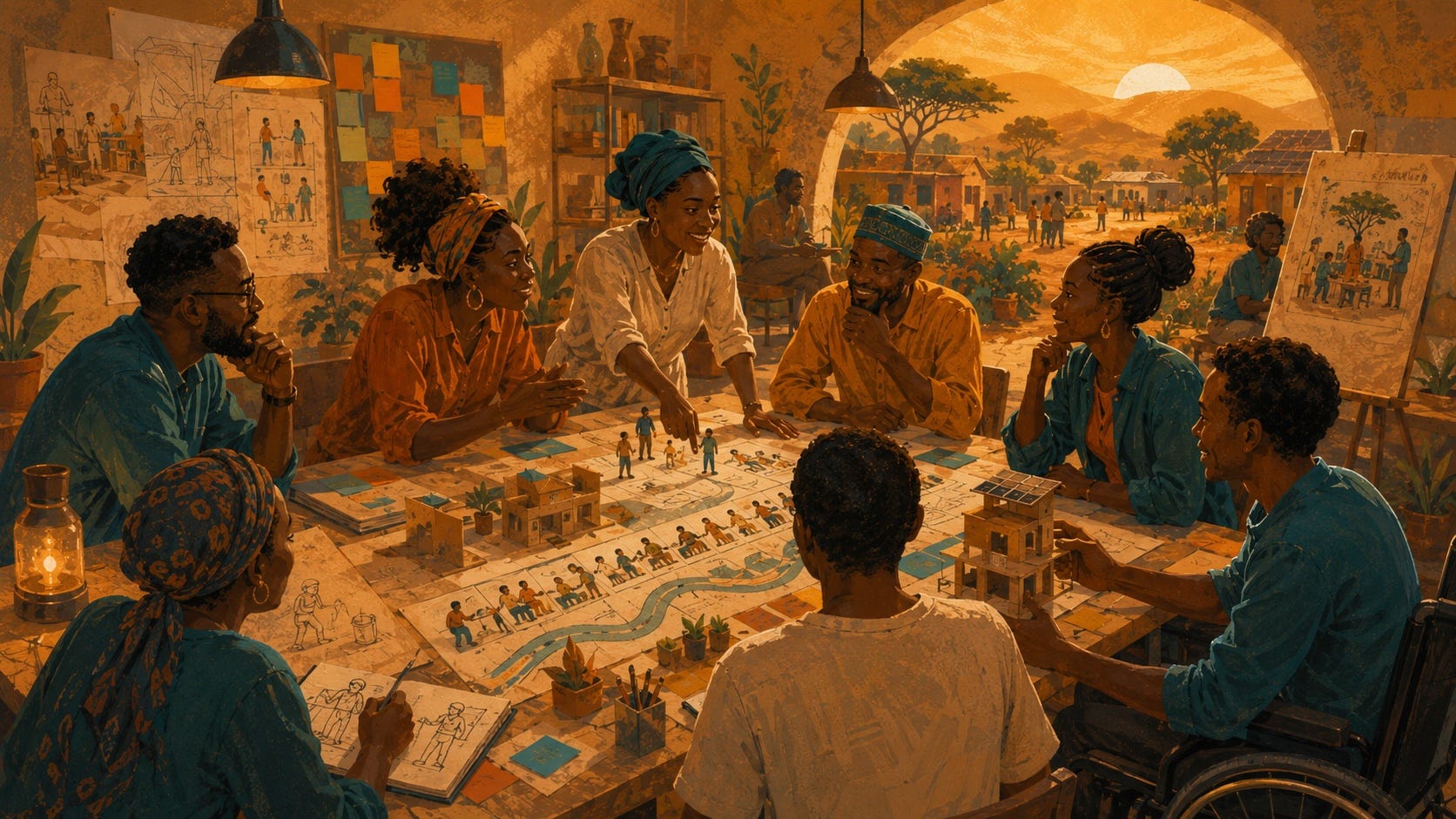
Consultation asks people for input. Co-creation invites them into the shaping of the solution.
This does not mean handing over every decision or trying to satisfy every preference. It means involving the right people at the right moments so that the solution is better informed, more realistic and more likely to be adopted.
Co-creation can include interviews, workshops, prototype testing, journey mapping, user panels, pilot groups, stakeholder reviews or collaborative design sessions. The value is not only in gathering opinions. It is in allowing people to reveal how the solution might work in real life.
Co-creation also builds ownership. People are more likely to support what they have helped shape. They understand the reasoning behind the solution, see their reality reflected in it and feel less like change is being done to them.
For entrepreneurs, co-creation may mean developing an offer with early customers. For professionals, it may mean involving employees, clients or delivery teams before the solution is finalised. Either way, participation improves both quality and commitment.
From Adoption as an Afterthought to Adoption by Design
Many teams design the solution first and worry about adoption later. This is risky. Adoption should be designed from the beginning.
A solution is more likely to be adopted when people understand its value, trust its purpose, can use it easily, see how it fits their world and receive enough support to begin.
Adoption by design asks:
What will make this easy to understand?
What will make people want to try it?
What might create resistance?
What support will people need?
What behaviour must change?
What must leaders, managers, customers or stakeholders reinforce?
What would make this become part of normal practice?
Adoption is not a communication plan added at the end. It is a design requirement from the start.
HOW: How to Design Solutions Around Human Needs
Designing around human needs requires a disciplined approach. It is not enough to say, “We care about users,” and then proceed exactly as before. Human-centred solution design must influence how the team explores, develops, tests and implements the solution.
First, start with human insight, not the preferred answer. Before building the solution, understand the people involved. Use interviews, observation, journey mapping, listening sessions, customer conversations, surveys, shadowing, service data or frontline insight. Look for patterns in what people say, what they do and where those two things differ.
Second, define the human problem clearly. Avoid vague statements such as “customers need better support” or “employees need more engagement.” Instead, describe the real experience. For example: “New customers feel uncertain after purchase because they do not know what to expect next,” or “Managers avoid difficult conversations because they fear damaging relationships and lack a practical structure.”
Third, identify the behaviours the solution must enable. What should people be able to do differently? What must become easier, clearer, safer or more rewarding? If the solution does not change behaviour, experience or outcomes, it may not be solving much.
Fourth, involve stakeholders early. Bring in users, customers, employees, clients, implementers or partners before the solution is complete. Show them rough versions. Ask them to react. Let them identify confusion, friction, missing value and practical constraints.
Fifth, design for emotional experience. Ask what people need to feel in order to engage. Confidence? Trust? Safety? Urgency? Belonging? Control? Relief? A solution that ignores emotion may be technically correct and humanly rejected.
Sixth, reduce friction. Make the solution easier to understand, start, use and continue. Remove unnecessary steps. Use familiar language. Provide prompts, examples, guidance and support. Make the desired behaviour as easy as possible.
Finally, test in real-world conditions. A solution that works in a workshop may not work in the field. Pilot it. Observe it. Gather feedback. Watch behaviour. Adapt before scaling.
The practical aim is simple: design with people, not merely for them.
The Human Reality Design Playbook: Practical Strategies for Building Solutions People Actually Use
Human-centred solution design becomes easier when teams use simple, repeatable practices. The following strategies help entrepreneurs and professionals move from assumed needs to real adoption.
1. Map the Human Landscape
Before designing the solution, map the people affected by it.
Ask:
Who will use this?
Who will decide whether it is adopted?
Who will influence the decision?
Who will deliver or support it?
Who may be burdened by it?
Who could resist it?
Who might be excluded or overlooked?
This prevents the team from designing for a fictional “average user” who is suspiciously convenient and rarely available for follow-up interviews.
A human landscape map helps the team see the wider system of people, relationships and pressures around the solution.
2. Listen for Lived Experience
Do not ask only what people want. Explore what they experience.
Useful questions include:
What are you trying to achieve?
What makes this difficult?
What do you do now?
Where do you get stuck?
What frustrates you?
What do you avoid?
What would make this easier?
What would make you trust a new solution?
What would make you ignore it?
Pay attention to stories, not only opinions. Stories reveal context, emotion, workarounds and hidden needs.
Also watch behaviour where possible. People may describe the official process, then quietly show you the real process they use to survive the day. The real process is usually where the useful insight lives.
3. Identify Functional, Emotional and Social Needs
People engage with solutions for different kinds of reasons.
Functional needs are practical. People need to save time, complete a task, solve a problem, reduce errors or access information.
Emotional needs are internal. People may need confidence, reassurance, safety, pride, relief, motivation or a sense of control.
Social needs involve relationships and identity. People may need to be seen as competent, gain approval, avoid embarrassment, belong to a group or protect their reputation.
A strong solution often addresses all three. For example, a new manager learning tool may need to provide practical conversation structures, emotional reassurance and a socially safe way to practise without feeling incompetent.
When teams understand these layers, they design more human solutions.
4. Co-Create Before You Finalise
Invite the people affected by the solution into the design process before decisions become too fixed.
Co-creation may include:
Testing early concepts with users
Running stakeholder workshops
Creating journey maps together
Reviewing prototypes
Piloting with a small group
Asking implementers to identify delivery risks
Inviting customers to shape language, pricing or format
The point is not to make the solution by committee. The point is to improve the solution through participation.
Co-creation helps people feel heard, but it also helps the team see what it would otherwise miss.
5. Design for Adoption from the Start
Adoption does not happen because the solution exists. It happens because people understand it, value it, trust it and can use it without unnecessary friction.
Ask:
What will make people notice this?
What will make them care?
What will make them trust it?
What will make the first step easy?
What might make them resist?
What support will they need?
What would make this part of normal practice?
This is where communication, onboarding, training, leadership support, timing and reinforcement matter. A solution that is technically good but poorly introduced may fail before people have given it a fair chance.
6. Make the Desired Behaviour Easier
If the solution requires people to behave differently, design for that behaviour.
Ask:
What is the current behaviour?
What is the desired behaviour?
What makes the current behaviour easier?
What makes the desired behaviour harder?
What cues, prompts or supports could help?
What can be simplified?
What can be removed?
Behaviour change often depends less on motivation than on ease. If the old way is simpler, faster or socially safer, people will usually return to it. Humans are efficient like that, particularly when busy.
7. Test the Experience, Not Just the Concept
A concept test tells you whether people like the idea. An experience test tells you whether the solution works in practice.
Let people interact with the solution. Watch where they hesitate. Notice what they misunderstand. Ask what felt useful, difficult, unnecessary or missing.
For a service, test a sample journey. For a product, test a prototype. For a programme, test a pilot session. For a process, test it with one team before scaling.
The question is not only, “Do people like this?” It is, “Can people use this in their real world?”
8. Build Feedback Loops into the Solution
Human needs change. Contexts shift. Solutions that work today may need adjustment tomorrow.
Build feedback into the solution from the beginning. This could include user check-ins, customer feedback, usage data, reflection points, community input, frontline reviews or regular improvement cycles.
A human-centred solution is never completely finished. It remains responsive.
A Worked Example: Designing a Solution Around Real Manager Needs
Imagine a company wants to improve the confidence of newly promoted managers. The initial idea is to create an online learning library with articles, videos and templates.
It seems efficient. It is scalable. It looks sensible.
But before building it, the team explores the human reality. It interviews new managers, their direct reports, HR partners and senior leaders. The insight is clear: the managers do not primarily lack information. They lack confidence in difficult real-time situations. They avoid conversations because they fear damaging relationships, saying the wrong thing or being exposed as inexperienced.
The team identifies three layers of need. Functionally, managers need simple conversation structures. Emotionally, they need reassurance and practice. Socially, they need a safe way to learn without feeling incompetent in front of their teams.
The solution changes. Instead of a large content library, the team designs a short practice-based learning sprint. Managers bring real situations, practise conversations in pairs, receive feedback and return for a follow-up reflection session after trying one conversation at work.
The team co-creates the pilot with managers and HR. Managers help refine the scenarios. HR helps align the sprint with existing development pathways. Senior leaders provide visible support so participation feels legitimate rather than remedial.
The pilot reveals that managers value the practice but need clearer examples before role-play. The team adds short demonstration videos and a simple preparation worksheet. Feedback also shows that managers need support from their own line managers after the session, so the team creates a manager briefing guide.
The final solution is more human, more practical and more likely to be adopted. It does not simply provide information. It addresses the experience, emotion and behaviour behind the problem.
That is the difference human-centred design makes.
A Human Needs Solution Canvas
Use this canvas to test whether a solution is genuinely designed around people.
People affected:
Who will use, support, influence, approve, deliver or be affected by this solution?
Lived experience:
What are these people actually experiencing now?
Functional needs:
What practical task, problem or outcome must the solution support?
Emotional needs:
What feelings, fears, motivations or confidence issues must be considered?
Social needs:
How might identity, reputation, belonging or relationships influence adoption?
Behaviour change:
What must people do differently for this solution to work?
Friction points:
What might make this hard, confusing, risky or inconvenient?
Co-creation input:
Who should help shape or test the solution before it is finalised?
Adoption support:
What communication, guidance, training, leadership support or prompts are needed?
Experience test:
How will we test whether people can use this in the real world?
Feedback loop:
How will we keep learning and improving after launch?
WHAT BECOMES POSSIBLE: From Clever Ideas to Solutions People Actually Use
When solutions are designed around human needs, creative problem solving becomes more effective, more ethical and more practical.
Adoption improves because the solution fits people’s real lives and work. It speaks their language, addresses their concerns and reduces the effort required to engage. People are less likely to resist or ignore it because it feels relevant and usable.
Engagement improves because people feel seen. When users, customers, employees or stakeholders recognise their own experience in the solution, they are more likely to trust it. This creates a stronger emotional connection and a greater willingness to participate.
Innovation improves because human insight reveals better opportunities. Teams stop solving generic problems and start addressing specific human realities. This often leads to simpler, sharper and more valuable solutions.
Implementation becomes easier because barriers are identified earlier. Resistance, confusion, workload, fear and lack of support can be designed for before they become reasons for failure.
Entrepreneurs benefit because they create offers that connect more deeply with customers. They understand not only what customers say they want, but what they are trying to achieve, avoid, protect or become. This improves positioning, product design, service delivery and customer loyalty.
Professional teams benefit because solutions become more grounded. Strategies, processes, programmes and tools are shaped around the people who must use them. This increases credibility and reduces the gap between intention and behaviour.
Most importantly, human-centred design builds trust. It shows people that the solution was not imposed from a distance. It was shaped with an understanding of their world.
That trust is often the difference between a solution that is launched and a solution that lives.
People Are Not the Final Obstacle. They Are the Starting Point.
Designing solutions around human needs is essential because every solution eventually meets people. It meets their habits, fears, hopes, pressures, relationships, priorities and daily realities. If those realities are ignored, even a clever solution can fail.
Human-centred creative problem solving begins with empathy and stakeholder understanding. It considers behavioural and emotional factors. It uses co-creation and participation. It designs for adoption from the start. It tests the real-world experience, not just the attractiveness of the concept.
For entrepreneurs and professionals, this is a practical discipline. It improves adoption, engagement, customer value and implementation success. It helps solutions become useful, trusted and sustainable.
The goal is not to please everyone or remove every difficulty. The goal is to create solutions that fit the people they are meant to serve well enough to be understood, valued and used.
People are not the final obstacle to implementation. They are the starting point of good design.
When we design from human reality, solutions stop being clever objects and become meaningful experiences.
That is when creative problem solving begins to make a real difference.
Join us at ACRE30, Africa’s Premier Creativity and Creative Thinking Conference in 2026 at Klein Kariba, South Africa! https://acreconference.com
Comments
Nothing yet. Say the first thing.
Sign in to join the conversation.