
I’ve been beating the same drum about Slamdance over the years, so forgive me for repeating myself. In the now ten (!) years I’ve been covering this film festival, Slamdance has undergone some major changes, although the narrative around it has stayed relatively consistent. Originally a parallel festival with Sundance in Park City, Utah, last year Slamdance moved to its new home in Los Angeles where it now takes place every February. The move was necessary, given Sundance’s decision to move from Utah to Boulder, Colorado in 2027. And while it’s only the second year since the move, Slamdance appears to be happy with their decision. Festival co-founder Peter Baxter boasted about “terrific growth” and surpassing $100,000 in box office for 2026. It’s a figure that doesn’t mean much without anything to compare it to, but it shows a demand for the kind of community and counterprogramming the event has fostered for over three decades.
The other big change Slamdance made in recent years was the decision to become a fully hybrid festival in 2021 as a result of the ongoing pandemic. Like the recent move, this decision was born out of necessity given the public health regulations at the time. But as other festivals switched back to being strictly theatrical, Slamdance remains committed to accessibility through its virtual component, dedicated programming of films by disabled artists and/or subjects, as well as affordability. While Sundance has also remained a hybrid festival (albeit one at the mercy of rights holders, so a chunk of films stay offline), it charges $35 per ticket to one of its virtual screenings. Slamdance offers a pass to the virtual festival for $74.99, which also includes access to their year-round channel of films and series from past editions. And if you wanted to attend Slamdance in person, a pass to every screening would only set you back $50.
As much as I like to check in on Slamdance each year, and more often than not come away seeing at least one worthwhile film, it’s a festival that demands more of a commitment to trial and error. The focus on new filmmakers and true, independent productions make it a collection of unknown quantities, meaning almost every film is a gamble of some sort. Of course, none of this is unique to the festival circuit. Every film is a gamble, and plenty of breakout successes emerge every year from higher profile festivals. But those festivals have more attendees and eyeballs on them, so there’s a bit of help in sifting through the bullshit. Slamdance, like other “lower tier” fests in this silly hierarchy, requires some extra legwork in separating the hits from the misses.
This whole preamble really amounts to a bit of guilt on my part, since I didn’t feel like I could make the adequate time commitment I usually put aside for Slamdance each year. As I tried to catch up with more films from this year’s edition, and tried to watch some of the award winners, I had to cut my losses before seeing what I consider to be an adequate amount of films. Here are my thoughts on four features (and one series) from Slamdance 2026.
The LeMieurs
In all honesty, my feelings on documentaries have changed so much over the years I rarely feel inclined to write about them. It’s partly due to being worn down by the amount of bad documentaries I’ve seen, but I find myself more annoyed by the films that are merely serviceable. These are documentaries I can’t really fault on any technical level; they’re put together nicely, perfectly watchable, and get their points across exactly as intended. These films are also a dime a dozen now, the result of years of successful, mainstream docs that developed a template style and general etiquette other non-fiction filmmakers must follow in order to get eyeballs on screens.
These documentaries are artistically bankrupt. As easy as it might be to sit back and watch them, the built-in, passive response they inspire is like nails on a chalkboard for me. I see it as a backwards approach where, instead of the subject matter influencing the filmmaking, the “material” gets awkwardly contorted and shoved into whatever pre-made form the filmmakers prefer. These strained efforts are always in service to audience comfort above all, an ugly truth many documentaries don’t address. That’s why I find myself frustrated when, for example, a “call to action” documentary around an existential threat to the environment carries itself with a similar style and energy as a fluffy portrait of a musician looking back at the peak of their career. Think of that tired Four Chord Song bit from years ago, where it’s pointed out that most pop songs follow the same chord progression. Part of that routine’s fun was thinking about how something foundationally similar could inspire so many different variations. Many documentaries feel like shitty covers of the same shitty chords heard elsewhere, a lack of effort made all the more offensive by its involvement with topics and individuals that deserve more respect and consideration.
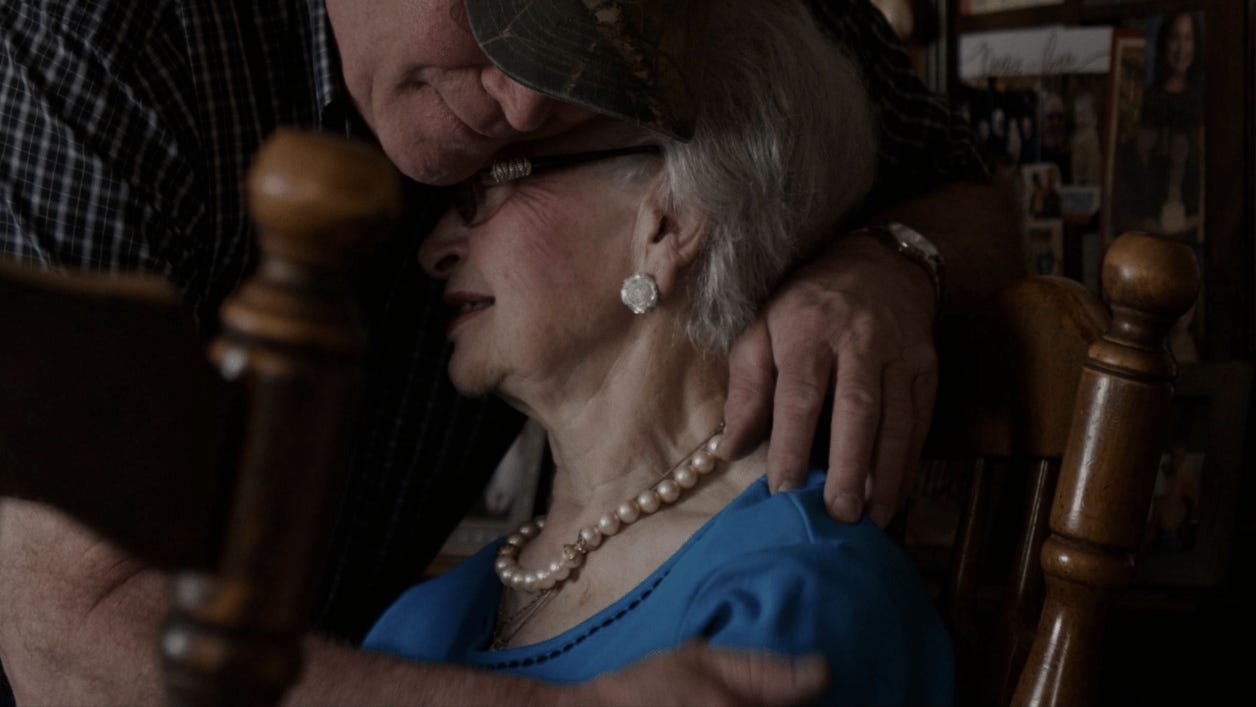
I feel it’s necessary to share my baggage around the format before I delve into my thoughts on the three documentaries I watched from this year’s festival. The LeMieurs was the strongest of the non-fiction Slamdance titles I saw because of how effectively director Sammy LeMieur uses the limitations of his form and subjects to create a more detailed portrait. As the title suggests, this is a personal film for LeMieur since he profiles his extended family in a small, Minnesotan town. The first people we see are Seth, Kyle, and Eli, grandsons in the family tree who work together at a funeral home. In the opening minutes, we watch them prepare for the funeral of their 37-year-old cousin Tony. The three of them don’t appear bothered by burying family, going about their work like it’s any other day, and soon we’re introduced to Tony’s father Steve, who casually laments that he’ll never know his son’s cause of death due to no autopsy being performed. Soon after, Kyle tells the camera about how he separates his work from grief, so he doesn’t mourn until after the ceremony and burial when his work is done.
Right from the jump, The Lemieurs makes it clear that it’s about this family’s compartmentalization given both their line of work and the history of death and tragedy within the family. After the funeral, LeMieur switches his focus to his grandmother and family matriarch Beverly, now in her twilight years, along with her five sons that take care of her. LeMieur sits in on a meeting of his five uncles as they gather around a kitchen table to discuss how they’ll split up the responsibility of caring for their mother between them. It’s a sensitive topic they approach with the banality of doing administrative work, and the matter of fact nature of their conversation makes it difficult to parse out if this is a coping mechanism or an indifference to the inevitability of their mother’s death.
LeMieur thankfully doesn’t fuss over this, nor does he try to dig deeper into his family’s history to offer any attempt at psychologizing or explaining their behaviour. The intimacy of what LeMieur documents makes for a fascinating clash against his direction, which tends to be as unsentimental as his relatives’ attitudes over Tony’s passing and Beverly’s declining health. When Beverly’s sons come over for dinner, a reunion she delights in, the film cuts back to the earlier meeting where we watch her children figure out what they’ll do with her house once they put her into a nursing home. In someone else’s hands, the juxtaposition could easily read as judgmental, and her sons could come across as callous in how they handle her affairs. It’s in moments like this where LeMieur’s direction and closeness to his subjects pays off, as we’ve become so familiarized to his family’s personalities and dynamics that the sequence serves as a blunt reminder of the difficulty in planning for a loved one’s permanent exit.
The LeMieurs sits in that discomfort for a good while, and LeMieur understands how compelling his family’s specificity is in the face of a topic people often avoid. I could easily see a different, less interesting version of this film existing, where someone would try to investigate the backstories and references to family history often brought up by Beverly or other relatives (the biggest one being Beverly theorizing that someone might have poisoned Tony). But there’s plenty to mull over in what’s left unsaid, like the brief moments where we catch the family’s deep, underlying sorrow bubbling to the surface. Moments like these make The LeMieurs more powerful due to the film’s pursuit of authenticity over presentability.
Thanks for reading Acquired Cinema! This post is public so feel free to share it.
The Bulldogs
First off, I recommend reading my interview with The Bulldogs directors Noah Dixon and Ori Segev, which I posted back when the film had its first screening at Slamdance. The Bulldogs was one of the few titles I zeroed in on at this year’s festival since it deals with the Norfolk Southern train derailment in East Palestine, Ohio in 2023. It was a horrific environmental disaster whose damage we probably won’t fully grasp for decades, since it culminated in the burning of toxic chemicals that authorities insist is perfectly fine.
After watching The Bulldogs, I wanted to speak to Dixon and Segev to get a better understanding of the choices they made in approaching East Palestine and its population. This is because I found myself conflicted over their well-intentioned but deliberately hemmed in direction. The two filmmakers drove out to East Palestine about six months after the derailment, long after the media moved on to other things, and followed multiple townspeople over one year as they tried to settle back into their lives.
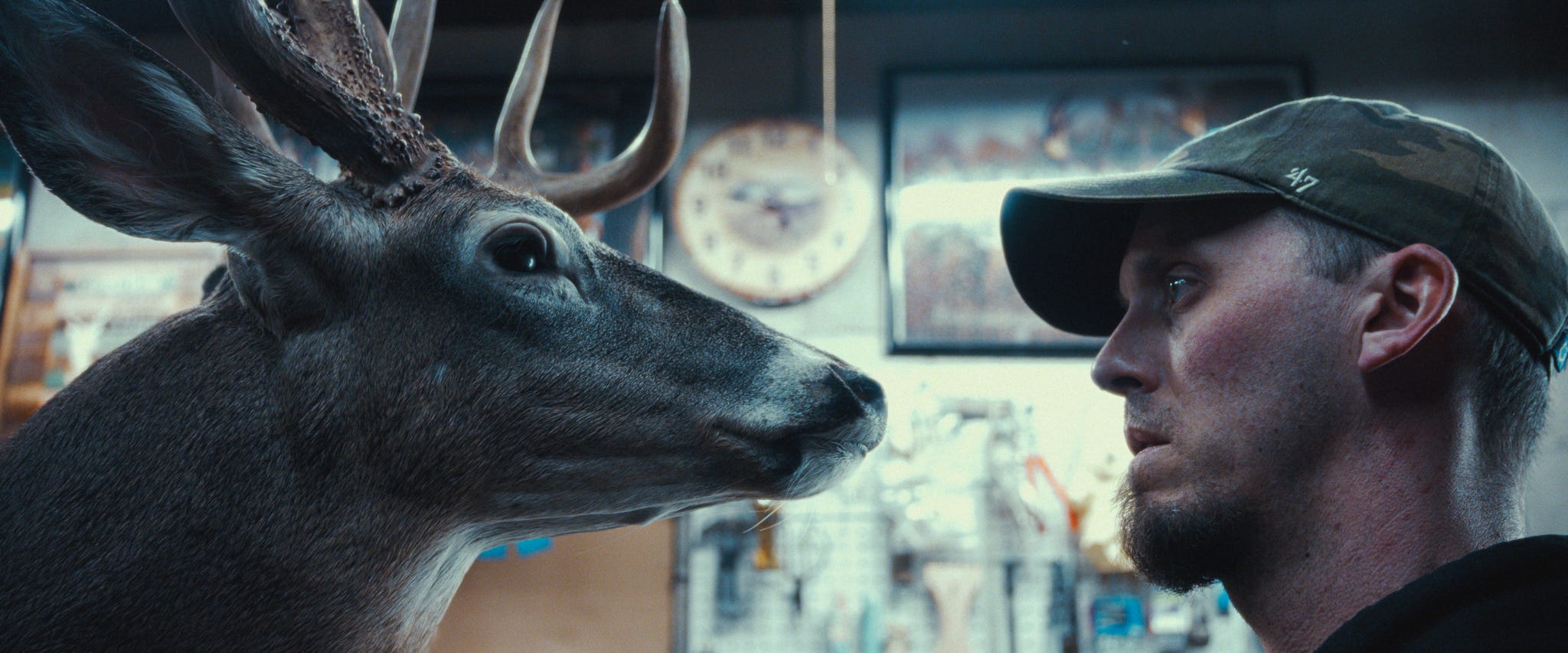
The Bulldogs is Dixon and Segev’s first documentary, having worked primarily in narrative before, and those instincts show themselves in their visuals and focus on several eccentric residents. Segev, doing double duty as director of photography, keeps the camera locked down, observing and/or interviewing people in precise, eye-catching frames with bold colours that make the film look like a more elaborate production (it speaks to Dixon and Segev’s production background that the film looks this good for such a small crew). And when it comes to their subjects, Dixon and Segev avoid whittling them down to a collection of idiosyncrasies for the most part. There’s a tendency for them to find levity where they can get it, and thankfully these lighter moments aren’t at the expense of the people they film.
So it works fine as a character-driven piece, but the only reason why we’re here in the first place is because of the train derailment. Up until that point, East Palestine was a rural town people (and trains) would pass though. And when it comes to tackling the impact of the derailment on East Palestine, whether it’s the pitiful excuse for compensation offered by Norfolk Southern or the backdrop of the 2024 presidential election, The Bulldogs feels lacking. Dixon and Segev make an effort to tackle it head on with subjects like Rick Tsai, a chiropractor who runs for Congress after he witnesses the environmental destruction firsthand. But Tsai’s scenes are both more political than the other subjects’ while lacking context about the election or even his affiliation (we only learn later that he’s running in a Republican primary and had no chance of winning). And a sequence where protests break out over Joe Biden’s visit to East Palestine suggests a town swept up in the divisive rhetoric of contemporary US politics, but the film doesn’t really explore that further.
Even if the politics here get away from Dixon and Segev, they come from a humanist place that’s obviously driven by a desire to highlight and embrace the oft-ignored people that make up towns like East Palestine. But without a strong handle on the incident that’s come to define these people’s lives, as well as how those lives change after becoming victims of political and capital forces, The Bulldogs can only do so much within its narrow scope.
Clovers
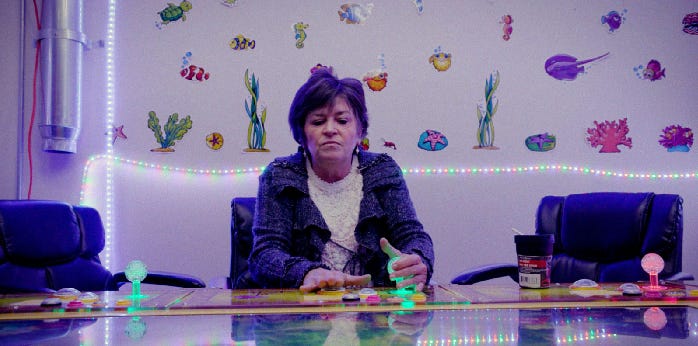
Shot in 2016 and 2017, the one question on my mind during Clovers was why it took almost a decade for the film to premiere. Nothing in the film addresses the long post-production period, but it only takes a few minutes for directors Jacob Hatley and Tom Vickers to have their film’s plans upended. Starting in 2016, Jennifer “Jenny” Paschal works at a prison in Asheboro, North Carolina, a town once labelled the fastest dying city in America. She loves her job, but after a few scenes of her doing the rounds, we abruptly jump three months ahead to find out Jenny was fired. Now, she’s about to embark on a whole other venture: opening a video casino called Clover’s in a strip mall. While not technically (or legally) a casino, Jenny’s business exists in a grey area since it’s made up of arcade games that have been converted to gambling machines.
It’s a bit of a ramshackle reset button for her, which falls in line with how Hatley and Vickers’ film comes across. While Clovers classifies itself as a documentary, much of its first act unfolds in scenes that have to be staged given the camera set-ups, expositional dialogue (Hatley and Vickers also have screenwriting credits), and forced interactions between Jenny and her customers. It suggests a hybrid format, but the film’s starts and stops throughout imply that direction might have been abandoned at some point.
The amateur qualities of these early scenes make it difficult to get a grip on what Clovers is up to. The seams in what Hatley and Vickers try to stitch together tend to be more distracting than what they’re trying to make. But the film transforms itself in unexpected ways, ones that make Clovers an intriguing if imperfect object in how it observes, mocks, and sympathizes with its three central figures.
After Jenny opens her business and appears to be doing well, the film soon abandons her to focus on Sharon and J.D., two middle-aged regulars at Clover’s who stay connected to each other due to having a child together in their twenties. Sharon dismisses J.D. as little more than a fling that got complicated with the pregnancy, while their son Taylor is a lost cause due to his opioid addiction.
This introduction leads to the film’s lengthy middle act, set entirely in Sharon’s house over the night of the 2016 US election. J.D. shows up to watch the results come in, even though he’s the odd one out in the house as the only person who doesn’t support Donald Trump. It’s both an unwieldy sequence and a strange time capsule, with tonal shifts that mimic the roller coaster of emotions one might have felt over one of the wildest nights in recent history. Sharon gets drunker as the night goes on, celebrating as Fox News calls one state after another for Trump until a scene that could have come straight out of a Christopher Guest film. Sharon, after seeing some favourable votes for Hillary Clinton come in, sneers at the “rigged” results from the “students” in the “electorial college” who get to decide the winner. A flabbergasted J.D. tries to explain what the electoral college means, that it’s not college students who vote, but Sharon ignores it so she can continue to vent about the spoiled kids whose parents pay for their dorm rooms.
It’s hilarious in how it sums up the ignorent contempt that fuels Trump’s support but, as the night goes on, Sharon takes a more pensive tone. She opens up about her husband’s stroke, how she went to see him at the hospital every day until his death, and her disappointment in her son’s drug addiction. She talks about Trump’s win as a “silver lining” in her life, and that she might finally be able to have a better life for herself in the years to come. It’s a sobering moment that does much of what the media failed to do in their dismissal of Trump: it shows the pain that his supporters feel, the dissatisfaction with their lives that Trump successfully tapped into and harnessed for his personal gain. But that humanizing only goes so far since Hatley and Vickers can’t help themselves; when Trump wins North Carolina, they cut away from Sharon’s celebration to a shot of her dog humping a curtain. It’s a crass jab that doesn’t sit well so close to Sharon’s more vulnerable moments on camera.
Cutaway aside, Clovers finally shapes itself into something more thoughtful in its final act. The film becomes more confessional as J.D. explains his tragic backstory, followed by Hatley and Vickers revisiting Jenny after she gets robbed at gunpoint. J.D. and Jenny turn inward, speaking about their desires and regrets, with Jenny breaking down on camera at one point when she talks about a missed opportunity as a kid to become a cheerleader. These scenes tie the film together around finally giving its subjects interiority, which culminates in the finale where J.D. performs a ceremony rooted in extreme pain as a way to, in his words, set his mind right (“Not in a sexual way, but pain gets me off,” J.D. tells Jenny in an early scene that foreshadows the squeamish ending). Even if a fair amount of viewers are likely to look away from what J.D. puts himself through, it’s a surprisingly poignant moment that closes the film. And even though Clovers stumbles across most of its runtime, it ends up in a more fascinating place than I would have expected.
The Plan
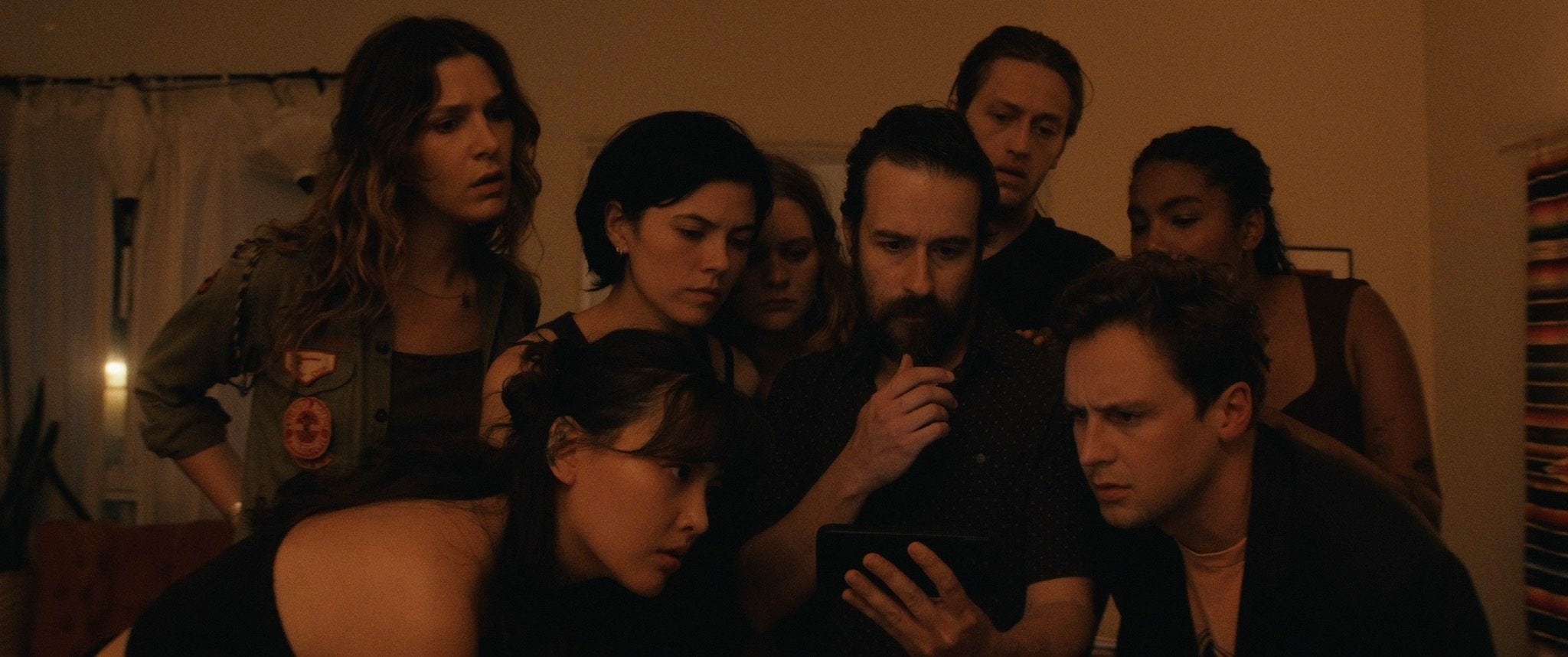
One of the few Slamdance titles I looked forward to this year turned out to be the biggest disappointment, and while it bums me out to say it, Jessica Barr’s The Plan exists in total opposition to what I’d like to see from a political film. The few bits of writing I’ve seen about The Plan focus on its technical accomplishments, with the whole film shot in a single, 70+ minute take. Barr drops us in a Los Angeles apartment where a group of seven people meet up as they’re about to enact a plan of some sort, with the details being withheld for the first act. There’s no way I can talk about The Plan without going into plot details, so if you’d prefer to watch and find out for yourself, stop reading here.
The group eventually goes over specifics, where we learn they intend to commit an act of political terrorism that will surely kill them along with many innocent people. While that could make for a tense hook, Barr immediately shows her priorities have little to do with the actual politics of her characters. Instead, we’re subjected to tired, undercooked personal dramas and character relations. There’s Evan (Ryan Simpkins), only there for her boyfriend Liam (Percy Hynes White) who’s also sleeping with fellow group member Sasha (Arkira Chantaratananond); Toby (Logan Miller), who has drinking problems and is dealing with his boyfriend leaving him; Taylor (Jordan Hull), whose decision to go on a date several days earlier creates trust issues with everyone; and group leader Mads (An-Li Bogan) along with her girlfriend Emily (Eve Lindley), although much of their screen time is about Mads’ strained relationship with her mother.
Barr’s choice to put all the focus on petty, personal matters, and reduce the political motivations for their impending act of mass murder/suicide to broad declarations is a baffling one, to say the least. The most obvious comparison that came to mind while watching The Plan was Daniel Goldhaber’s 2022 film How to Blow Up a Pipeline, which also looked at a group of young people committing an act of terrorism. Adapted from a manifesto by Andreas Malm, Goldhaber (rightfully) puts politics and radicalism front and centre. As the group prepares to destroy an oil pipeline in Texas to trigger a global energy crisis, flashbacks explain each person’s motivation, with several characters directly victimized by corporate greed and environmental pollution. The film’s point is direct: these people were radicalized because the privilege that separates the personal from the political was violently taken away from them.
Seeing the characters in Barr’s film get so hung up over their feelings, while we only get a vague sense of their ideology, makes The Plan devolve into an enraging exercise in wheel spinning. We get treated to almost every character wrestling between their desire to live and dying for a greater cause, and the film more or less stays on this individualistic framing to the very end. By the point Taylor tearfully pleads to one of her co-conspirators that she wants to “keep falling in love” rather than follow through with their plan, everything comes across as so farcical it’s difficult to tell if Barr wants us to view these characters with sympathy or contempt. If it’s the former, then The Plan amounts to a misguided and backward effort that privileges the personal over the political; if it’s the latter, then Barr’s film is deeply cynical, offering an extreme and defeatist view on political activism that’s woefully out of touch with the current moment.
The Human, Will
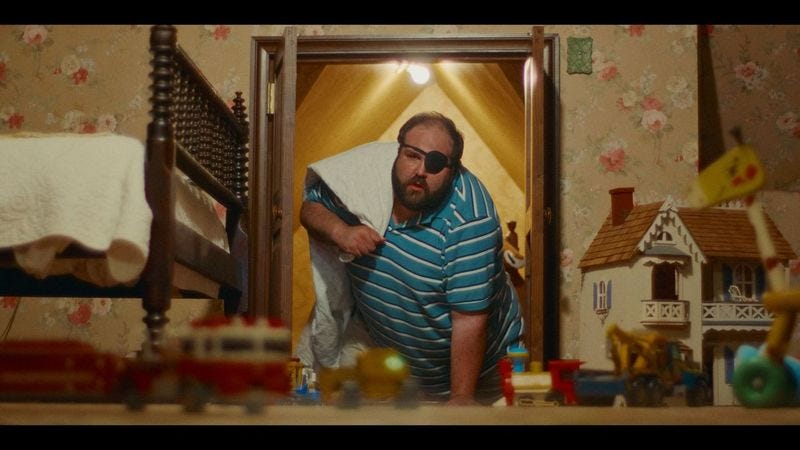
Part of the festival’s “Episodes” strand dedicated to series meant for TV and/or online, The Human, Will unfolds over seven parts that add up to just under one hour. The show follows Will (Will Sterbenz), a single man living a humdrum life as an insurance adjuster. Lonely and depressed, his life takes a turn after his neighbour’s gun goes off and accidentally kills Will’s goldfish. The experience makes Will become aware of how fragile his life is, which then kicks off a series of adventures he takes to exercise his newly discovered free will.
Think of it as Eat Pray Love for a homebody, as Will’s journey of self-discovery is about as small-scale and hapless as him. He kicks things off by demanding a demotion at work, as the reduction in responsibility gives him more freedom to pursue things like building a birdhouse (it goes wrong), fixing his air conditioner (it also goes wrong), or going for a hike (take a guess). Sterbenz doesn’t talk for most of the show, with the bulk of dialogue coming from Will’s guardian angel (Joe Pera) who narrates throughout.
Pera’s involvement made me hesitant about The Human, Will at first, since I’m admittedly not a fan of his schtick. His dry, deadpan delivery thrives on detailing various mundanities and topics most people wouldn’t give a second thought, a persona that never felt lived-in or true (it always reeked of a New York comedian’s caricature of a loser from flyover country to me). Pera comes from the same group of comedians like Conner O’Malley and Tim Robinson, who have both made a name for themselves through similarly absurd characters. Robinson and O’Malley prefer to work in the discomfort of their hideous and off-putting creations, with O’Malley’s satire making his characters represent empty husks that parrot distortions of very online, very toxic, and very American subcultures. Pera’s humble, doddering version of himself always read as pitiable to me, and no matter how endearing he’d try to make himself, the intent to laugh at someone so innocuous always came across as a little too mean-spirited for my tastes.
I digress, but only because The Human, Will is too wispy and mild-mannered to generate a strong reaction. Director/co-writer Edward Bursch comes from a background working on Wes Anderson’s films, and that influence shows through the series’ light touch on existential ideas. And I have to give Bursch credit for making good use of Pera, whose benevolence as Will’s guardian angel fits nicely with the show’s sympathetic tone. But The Human, Will is a passable riff on the well-worn story of arrested development/finding yourself later in life, one that’s too benign to have much staying power.
Thanks for reading Acquired Cinema! Subscribe for free to receive new posts and support my work.
Comments
Nothing yet. Say the first thing.
Sign in to join the conversation.