
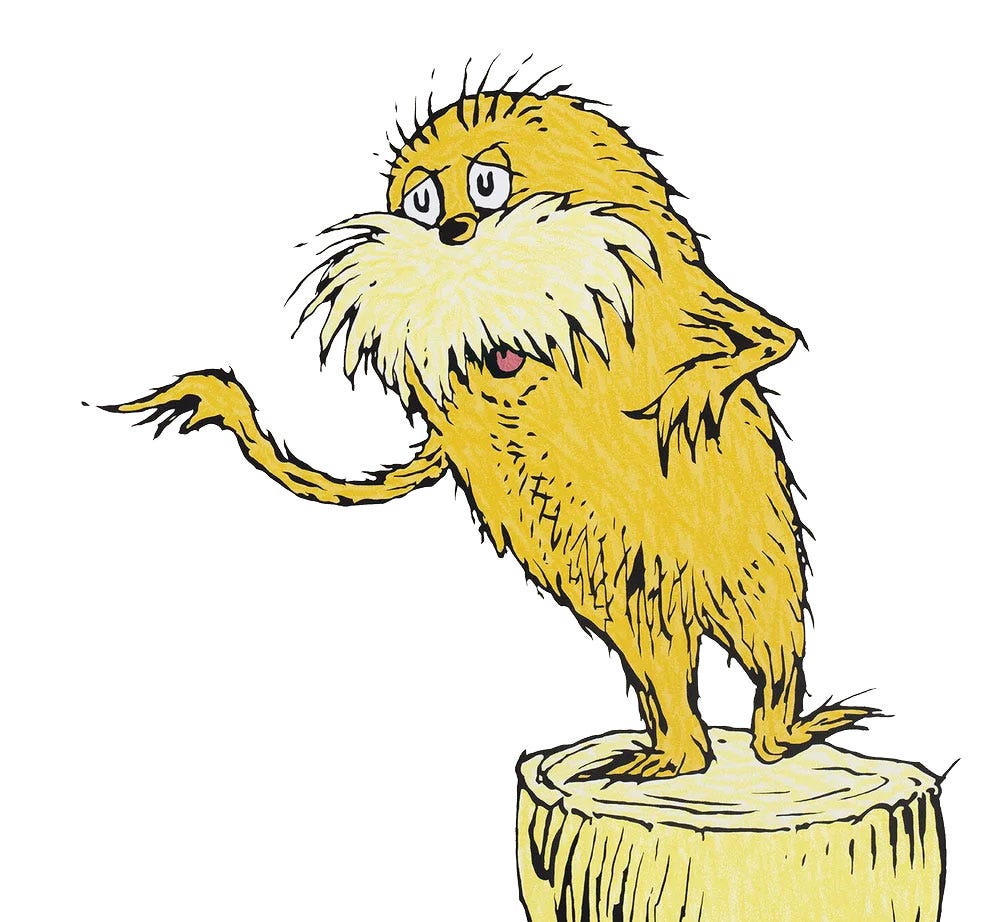
More than 50 years after its publication, Dr. Seuss’s The Lorax isn’t just a beloved children’s book—it’s become one of the most enduring calls to environmental action ever written.
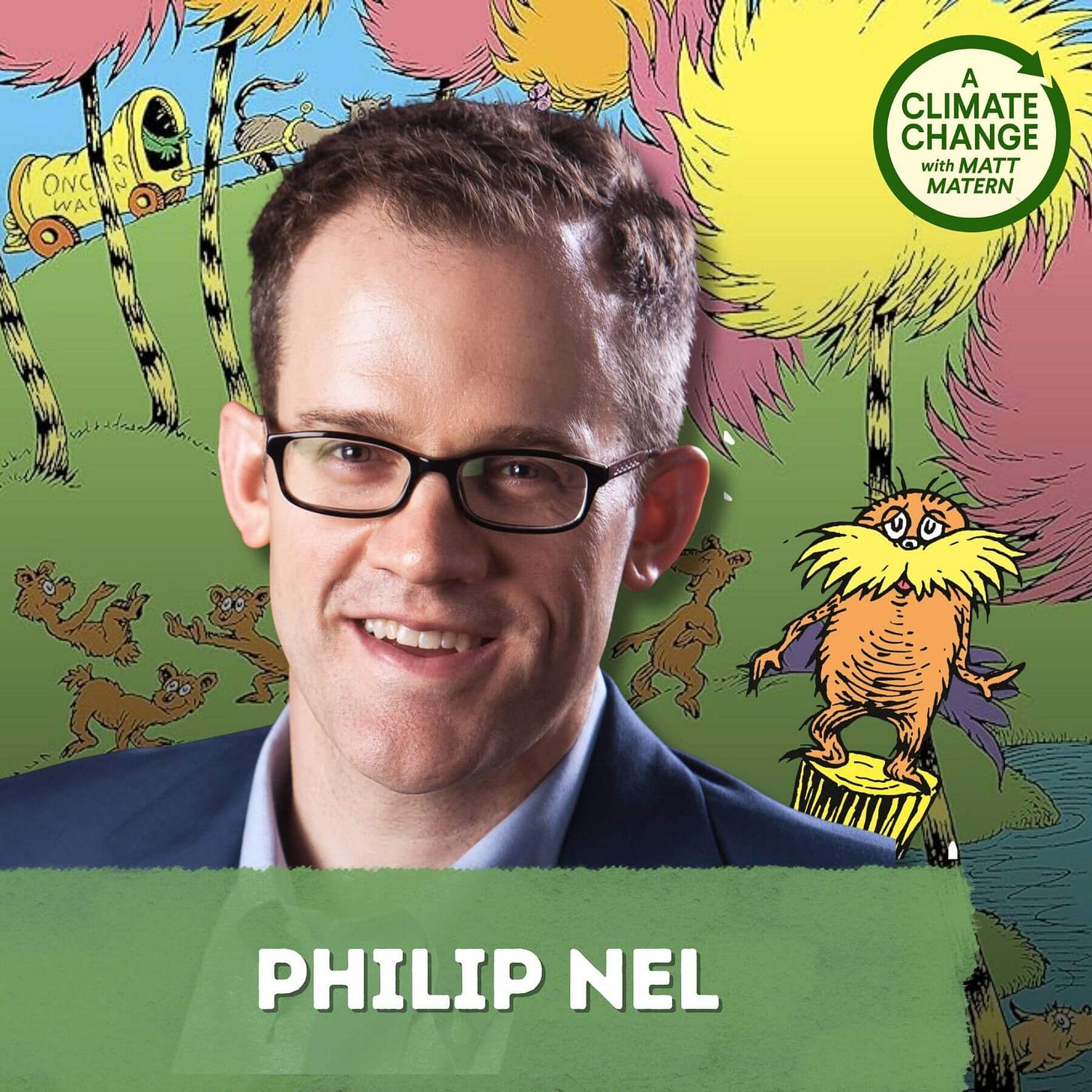
In this week’s episode of A Climate Change, I sat down with Dr. Philip Nel, one of the world’s leading Dr. Seuss scholars, to explore why The Lorax continues to resonate in an era of climate change, environmental rollbacks, and growing political division.
A Story Born Out of Frustration
Many people know The Lorax. Fewer know how it came to be.
Dr. Seuss first became inspired while watching development destroy the California coastline near his home in La Jolla. But despite his passion, he couldn’t find the right story. He later called his early attempts “propaganda with a plot.”
Everything changed during a trip to Kenya.
Seeing acacia trees being cut down sparked the idea that eventually became the Truffula Trees, and Seuss famously drafted much of The Lorax on hotel laundry paper.
More Than a Children’s Book
The genius of The Lorax isn’t that it lectures readers.
It invites them into a story.
Its final message remains one of the most memorable in children’s literature:
“Unless someone like you cares a whole awful lot, nothing is going to get better. It’s not.”
According to Dr. Nel, children immediately responded after the book’s release. They wrote letters to Seuss describing tree-planting projects, neighborhood cleanups, and new conservation efforts inspired by the story.
That simple message—that ordinary people can make a difference—has inspired generations of readers.
A Book That Still Sparks Debate
The conversation also explores something many readers don’t know.
The Lorax has been controversial almost since it was published.
The logging industry even produced its own response book, Truax, arguing that Seuss unfairly portrayed forestry. Over the years, The Lorax has repeatedly appeared on banned and challenged book lists, becoming one of Dr. Seuss’s most debated works.
Perhaps that’s exactly what powerful stories do.
They make people think.
They challenge assumptions.
And sometimes, they make people uncomfortable.
Why It Feels Even More Relevant Today
When The Lorax was published in 1971, the environmental movement was gaining momentum.
Today, the challenges are even greater.
Climate change is accelerating. Public debate over environmental protections has become increasingly polarized. Yet Dr. Nel believes the book’s message has only grown stronger with time.
Hope, he argues, isn’t naïve.
It’s necessary.
Stories help people imagine a better future—and believing change is possible is often the first step toward making it happen.
The Lasting Lesson
One of my favorite takeaways from this conversation is that every successful social movement has stories at its center.
Stories inspire action.
Stories build hope.
Stories remind us that ordinary people can change history.
The Lorax has been doing exactly that for more than half a century.
Maybe that’s why it still feels so timely today.
🎧 Listen to the full conversation with Dr. Philip Nel to discover the remarkable history behind one of the world’s most influential environmental books—and why its message may matter now more than ever.
Comments
Nothing yet. Say the first thing.
Sign in to join the conversation.