
Before we begin, Check our Investorstack - Your one stop destination to become a better investor. Here’s Everything we Introduced in Past 2 Weeks:
Thematic baskets like data center proxies, CMDO, GLP-1s
New scanners including RSI breakout, VCP
Investorstack 35 (caught many stocks early using this scan)
Walk the talk analysis using past 3 years of concalls
Capex Tracker for all companies
Updated market dashboard with multiple data points
And many more features! For any feedback, reach out on Twitter.
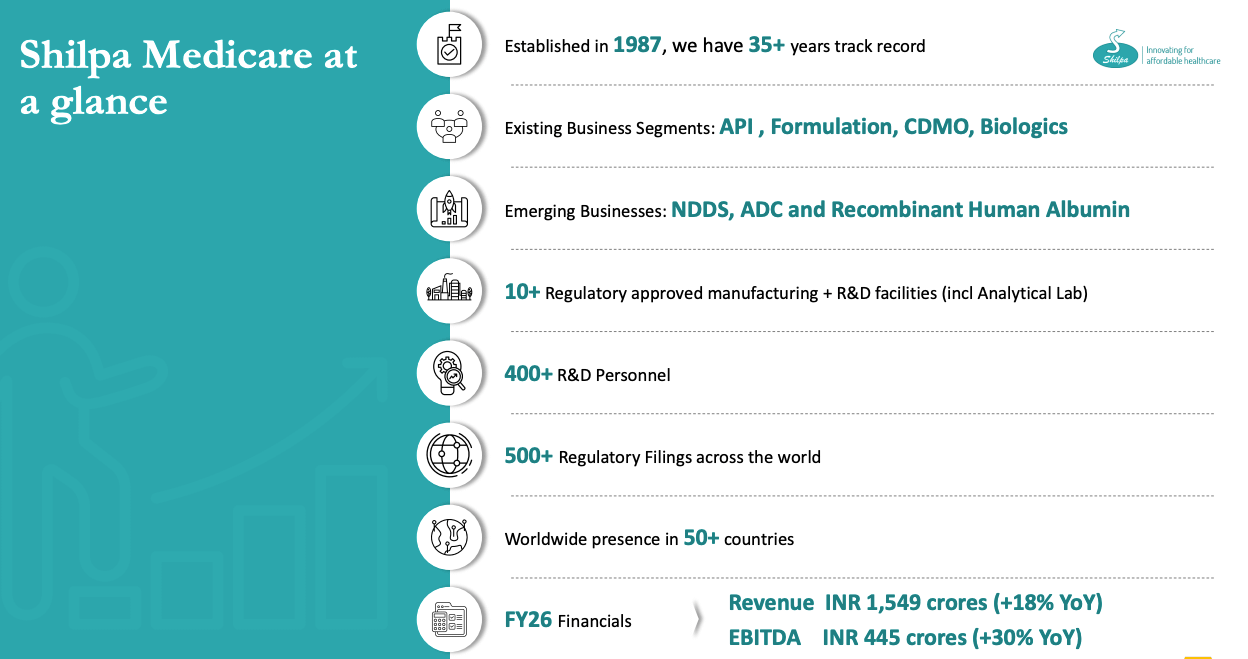
Shilpa Medicare Limited is a specialized, vertically integrated Indian pharmaceutical and biotechnology company that has pivoted from a pure-play commodity Active Pharmaceutical Ingredient (API) manufacturer into an advanced, R&D-driven platform. Founded in 1987 in Raichur, Karnataka, the company has historically built its reputation as a dominant merchant supplier of oncology APIs. However, over the past decade, management has systematically re-invested its cash flows into high-barrier regulatory capabilities, complex generic formulations (Finished Dosage Formulations), novel biosimilars, and state-of-the-art biological platforms.
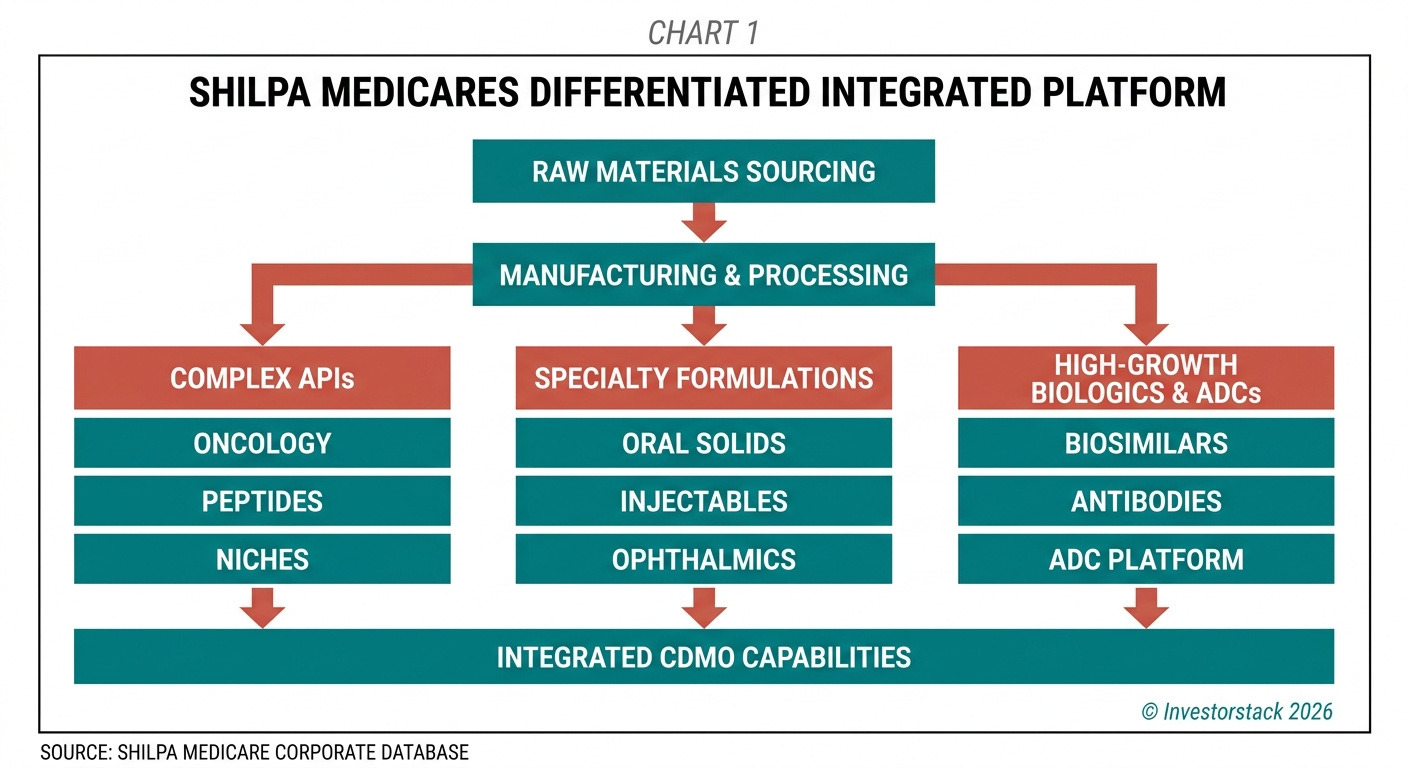
The core value proposition of Shilpa Medicare lies in its ability to handle complex chemistries, hazardous substances, and biological molecules. SML operates across the entire value chain from laboratory synthesis to large-scale commercial manufacturing of drug substances (APIs) and drug products (formulations) under strict global regulatory approvals (USFDA, EMA, PMDA Japan, and KFDA Korea). Rather than competing in crowded, hyper-commoditized generic spaces, Shilpa focuses on low-competition niches, 505(b)(2) hybrid novel formulations, transdermal drug delivery systems, orally disintegrating films, long-acting injectables, and highly advanced technologies such as Antibody-Drug Conjugates (ADCs) and Recombinant Human Albumin.
How SML actually works is a model of high-barrier vertical integration. The company develops its own non-infringing routes of synthesis for complex APIs and immediately feeds them into its in-house formulation capabilities, creating a highly efficient cost structure. It then commercializes these drug products in highly regulated Western markets (the US and Europe) and Rest of World (ROW) geographies through high-profile local marketing partnerships, capturing both manufacturing margins and backend profit shares. In the high-growth biologics and CDMO spaces, Shilpa acts as an exclusive end-to-end development and manufacturing partner for global biotech innovators, licensing its proprietary technology and receiving upfront milestones, development fees, and commercial manufacturing contracts.
The API segment remains Shilpa Medicare’s largest revenue contributor and foundational core, operating under its subsidiary, Shilpa Pharma Lifesciences Limited. SML possesses 19 API and intermediate manufacturing blocks with complete physical segregation of oncology and non-oncology assets at its primary sites in Raichur. The company is a global behemoth in oncology APIs, supplying over 30 distinct cytostatic compounds (including blockbusters like Capecitabine, Azacitidine, Gemcitabine, and Imatinib) to regulated markets.
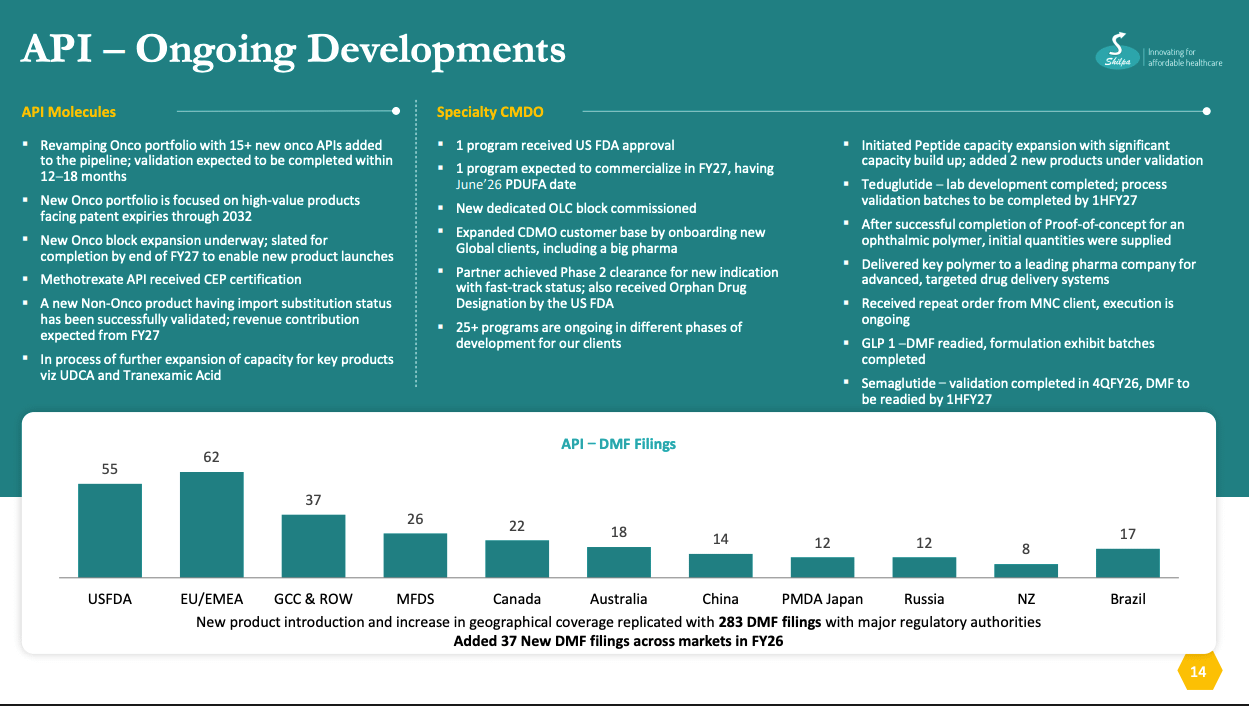
To hedge against the structural price erosion of mature oncology molecules, SML has heavily diversified into non-oncology APIs (such as Tranexamic Acid and Ursodeoxycholic acid), custom polymers, and peptides. The company is actively scaling up its high-barrier peptide platform (focusing on blockbuster GLP-1 agonists like Liraglutide, Semaglutide, and Tirzepatide) using both synthetic and semi-synthetic chemistries. It is also building a highly automated, large-scale peptide block expected to commission in the second half of FY27, positioning SML to capture a significant share of the global merchant peptide market as patents expire.
SML’s formulations business represents the primary engine of its modern growth and margin expansion. SML manufactures oral solids, complex injectables, transdermal patches, and orally disintegrating films at its USFDA-approved formulation units in Jadcherla (near Hyderabad) and Bengaluru. The formulation strategy is built around developing complex, high-margin, low-competition generic formulations or reformulating existing drugs via the FDA’s 505(b)(2) regulatory pathway (which offers 3 to 5 years of market exclusivity for drug modifications).
The division has achieved massive commercial breakthroughs in Europe, where its non-infringing formulation of Nilotinib has captured substantial market share. It is also launching its recently approved Rotigotine transdermal patch in Europe in Q1 FY27 and has submitted US filings. In India, SML achieved a historic milestone in November 2025 by launching Nor-Ursodeoxycholic acid (NorUDCA), the first approved drug in the world for Non-Alcoholic Fatty Liver Disease (NAFLD).
Operating under its wholly-owned subsidiary, Shilpa Biologics Private Limited (SBPL) in Dharwad, SML has constructed a state-of-the-art biologics ecosystem. SBPL is currently advancing 8 distinct biosimilar assets and pioneering a highly proprietary pipeline of Novel Biological Entities (NBEs) and Antibody-Drug Conjugates (ADCs). The company’s most advanced biosimilar is Aflibercept (a complex ophthalmic VEGF inhibitor), which is on track for an India filing in H1 FY27, backed by marketing partnerships with two major Indian ophthalmic giants.
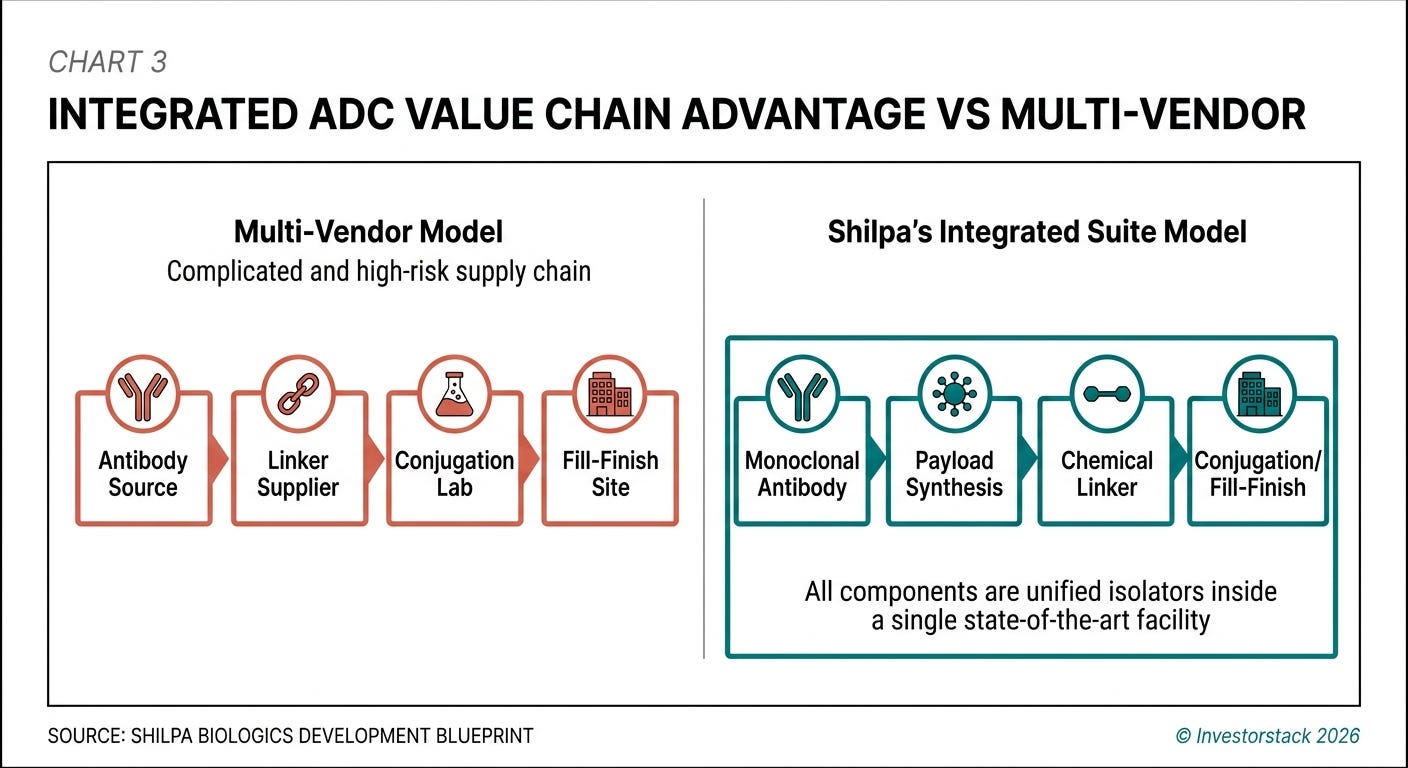
SML is also advancing Nivolumab (a multi-billion dollar immuno-oncology monoclonal antibody), initiating Phase I/III clinical trials in India and partnering with SteinCares for Latin American commercialization. SBPL has also successfully engineered its first ADC biosimilar (SBPL01) in its laboratory and is building an integrated, state-of-the-art ADC manufacturing suite in India that controls everything from antibody fermentation to payload/linker synthesis and final conjugation under isolators.
SML’s CDMO business leverages its extensive integrated capabilities to offer global innovators end-to-end small molecule chemical development and biologics manufacturing services. SML currently manages over 25 active CDMO programs in various preclinical, Phase I, Phase II, and Phase III stages.
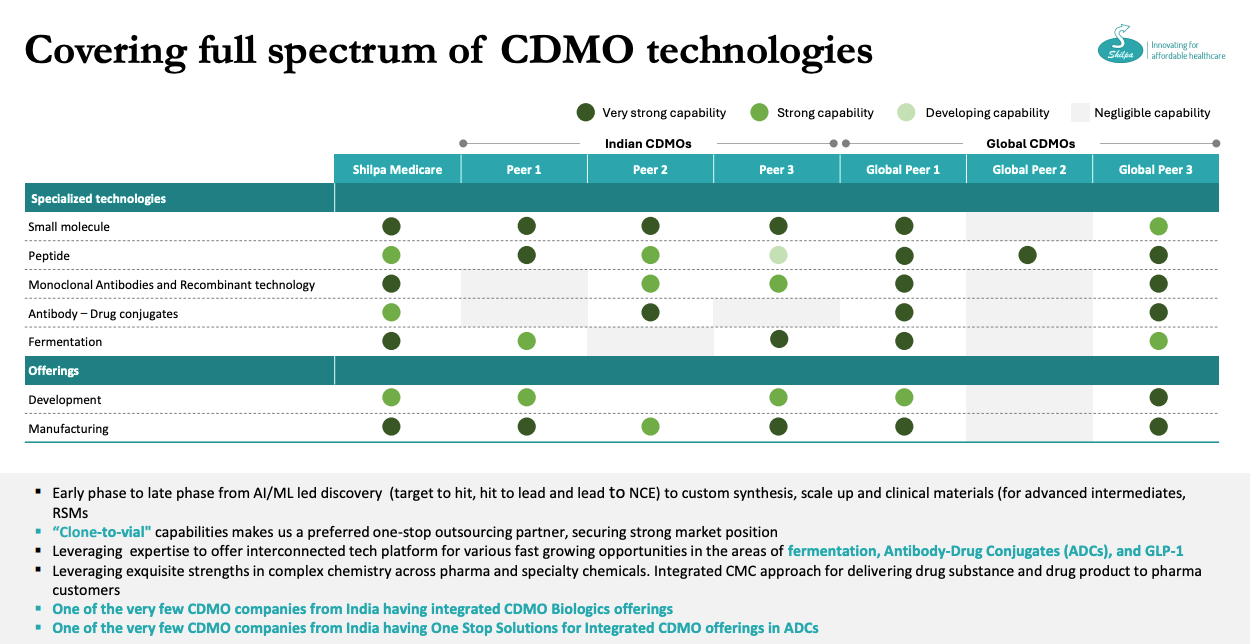
The crown jewel of SML’s CDMO operations is its strategic partnership with US innovator Unicycive Therapeutics. SML has successfully conducted tech transfers and manufactured exhibit batches for Unicycive’s flagship NCE program, Lanthanum Dioxycarbonate (OLC), a novel kidney disease therapy. SML has constructed a dedicated commercial manufacturing block in Raichur for OLC, which was successfully commissioned in Q4 FY26, positioning SML as the exclusive global API and formulation partner as the drug moves toward its US FDA PDUFA date on June 29, 2026.
Shilpa Medicare’s product catalog is highly diversified and technical, bridging the gap between small molecule chemistry and biotechnology. The company’s small-molecule generic API business is anchored by regulatory filing muscle: it holds over 50 Active US Drug Master Files (USDMFs) and numerous Certificates of Suitability to the European Pharmacopoeia (CEPs). Key blockbuster oncology drug substances in SML’s merchant portfolio include Pemetrexed Disodium, Azacitidine, Bortezomib, Busulfan, Decitabine, and Lenalidomide.
In formulations, SML has translated this API dominance into a robust portfolio of 16 injectable dosage forms and 19 oral solid dosage forms. In the US, the company has commercialized three NDA formulations through major partners (including Pemetrexed and Bortezomib injectables), while in Europe, its non-infringing Nilotinib formulations continue to command strong volume market share.
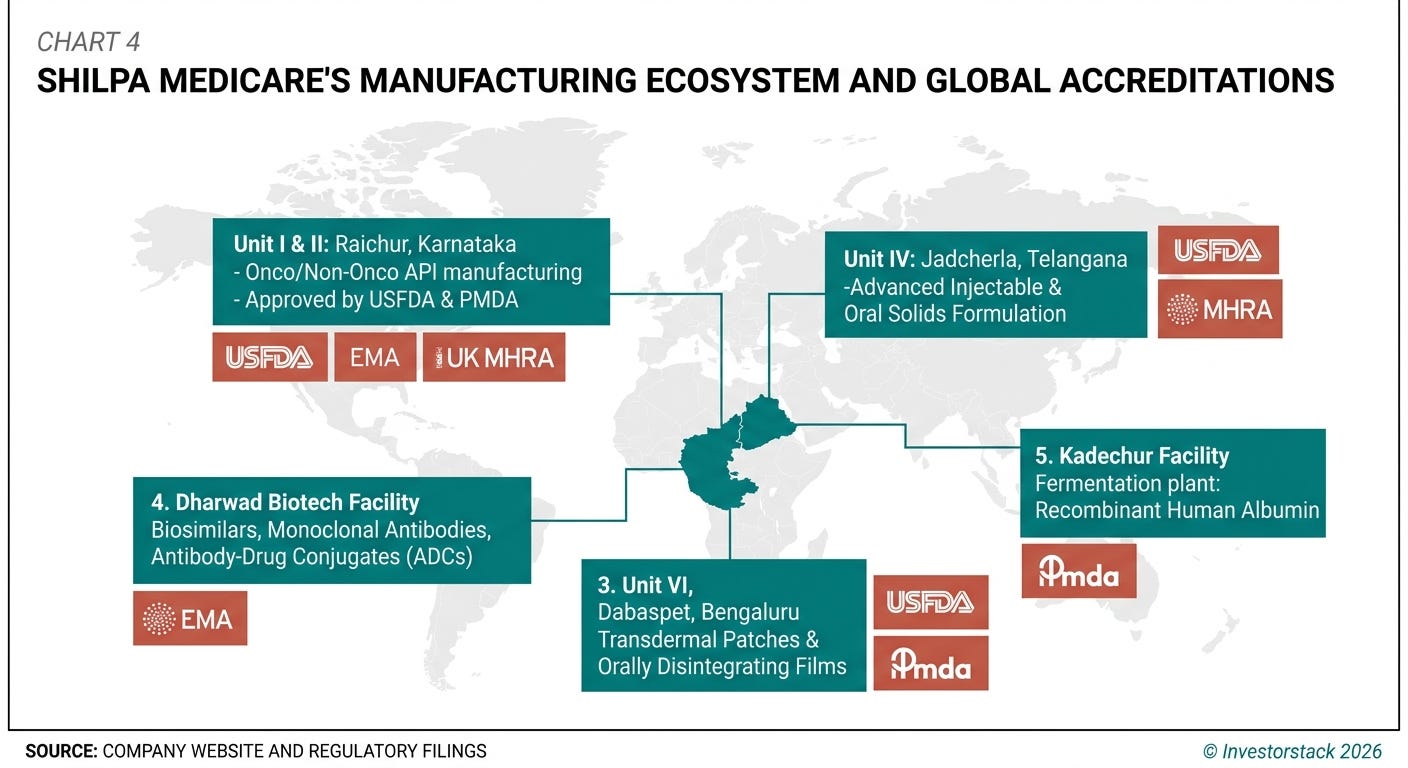
SML’s manufacturing footprint spans across 5 specialized, globally-accredited facilities:
Unit I (Raichur, Karnataka): The foundational API facility focusing on oncology and non-oncology chemical synthesis. Highly inspected and approved by USFDA, EU-GMP, PMDA Japan, and KFDA.
Unit II (Raichur, Karnataka): Dedicated API intermediate and raw material manufacturing.
Unit IV (Jadcherla, Telangana): SML’s primary Finished Dosage Formulation plant, featuring advanced robotic injectable lines, liquid/lyophilized vials, and oral solid manufacturing capability.
Unit VI (Dabaspet, Bengaluru, Karnataka): Specialized transdermal patch and orally disintegrating film (ODF) facility, certified by the UK MHRA and USFDA (EIR received in Q1 FY26). SML is one of the very few Indian companies with commercial transdermal capabilities.
Dharwad Facility (SBPL, Karnataka): The advanced biotechnology and biologics development/manufacturing hub, housing cell line development, mammalian cell culture, purification, and the upcoming integrated ADC suite.
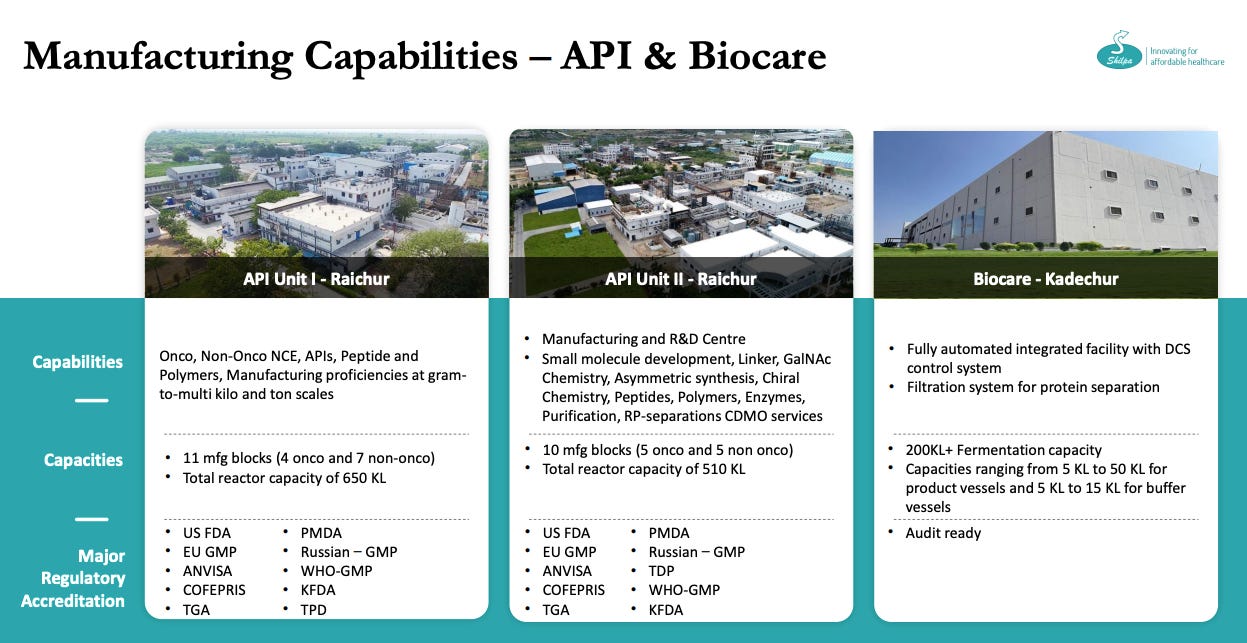
Additionally, SML is constructing a major fermentation plant at Kadechur (Karnataka) for its groundbreaking Recombinant Human Albumin program. SML has developed a proprietary yeast-based expression system to manufacture Recombinant Human Albumin, a critical, high-purity non-animal excipient used in vaccines, drug formulations, and cell culture. SML has already entered a highly lucrative licensing agreement with European partner Orion Corporation for the European market and is on track to file an Investigational Medicinal Product Dossier (IMPD) in H1 FY27 to initiate global clinical trials.
Shilpa Medicare serves a highly sophisticated global customer base that can be categorized into three distinct buckets: generic formulation players, global biotech innovators (CDMO), and domestic medical networks. Because of SML’s focus on high-barrier, complex molecules, its customer relationships are deeply sticky, resulting in high switching costs.
For its merchant API business, SML supplies top-tier generic pharmaceutical companies across the US, Europe, and Japan. These customers choose SML because of its immaculate regulatory track record, non-infringing intellectual property routes, and consistent supply chains. In the generic industry, switching API suppliers is an extremely tedious process, requiring fresh stability testing, regulatory filings, and DMF updates that can take 12 to 18 months, creating a massive barrier to exit once SML is locked in as an approved source.
In the CDMO and Biologics segments, SML’s customer relationships are highly collaborative and strategic. Its partnership with Unicycive Therapeutics is a prime example: SML has co-developed the drug substance and formulation for Lanthanum Dioxycarbonate and built a dedicated commercial manufacturing suite. Similarly, its licensing deal with Orion Corporation for Recombinant Human Albumin in Europe, and SteinCares for Nivolumab in Latin America, are structured with substantial upfront milestone payments, development cost-sharing, and long-term exclusive supply agreements.
Domestically, SML’s customer base consists of hospital networks and key opinion leaders (KOLs) in the hepatology and gastroenterology space. For its historic launch of NorUDCA, SML deployed a dual marketing strategy: commercializing the drug under its own specialty brand while simultaneously licensing the molecule to three of India’s largest domestic pharmaceutical companies (under their respective brand names). This structure ensures maximum market penetration and doctor coverage within a short period, avoiding the typical heavy customer acquisition costs associated with solo domestic launches.
The pharmaceutical market for complex APIs and formulations is highly consolidated, characterized by steep entry barriers. Shilpa Medicare’s primary competitors vary across its distinct business lines:
In Oncology APIs: SML competes with global merchant chemical giants and specialized Indian API manufacturers such as Divi’s Laboratories, Natco Pharma, and MSN Laboratories. SML wins against these players by constantly developing non-infringing routes of synthesis that allow partners to launch generics on “Day 1” of patent expiry, bypassing expensive litigation.
In Complex Formulations and Patches: The competitive landscape for transdermal drug delivery systems (like the Rotigotine patch) and orally disintegrating films is highly limited. SML’s Unit VI in Bengaluru is one of a handful of facilities globally capable of manufacturing commercial-scale patches. SML’s primary competitors here are specialized European and American drug delivery players (such as LTS Lohmann or Corium). SML holds a massive cost advantage by being vertically integrated and operating in a lower-cost manufacturing environment.
In Biologics and ADCs: SML is positioning itself to compete with biosimilar giants like Biocon Biologics and global CDMOs. SML’s competitive edge is its highly integrated ADC strategy: by manufacturing the monoclonal antibody, synthesizing the cytotoxic payload and chemical linker, and performing the conjugation all within its own facilities, SML eliminates the complex supply-chain risks and massive mark-ups associated with traditional multi-vendor ADC development.
The barriers to entry in SML’s core markets are:
Regulatory Friction: The requirement of holding USFDA, UK-MHRA, and EU-GMP approvals for highly potent cytotoxic substances.
Technical Complexity: Handling extremely toxic oncology compounds that require specialized containment systems (isolators) to protect plant operators.
Intellectual Property: The necessity of engineering around aggressive brand-name patent walls, a process requiring world-class synthetic organic chemists.
Shilpa Medicare operates at the intersection of several high-growth global pharmaceutical sub-sectors. The global oncology API market was valued at USD 41.79 billion in 2024 and is projected to rise from USD 43.95 billion in 2025 to USD 69.55 billion by 2034, growing at a steady CAGR of 5.24% over the next decade. Within this market, the demand for highly potent active pharmaceutical ingredients (HPAPIs) is growing at double-digit rates, driven by the shift toward targeted therapies, antibody-drug conjugates, and precision oncology.
Concurrently, the India API market has transitioned into a critical hub for global supply chain diversification, valued at USD 14.18 billion in 2025 and projected to reach USD 22.18 billion by 2031, growing at a CAGR of 7.74%. This growth is heavily supported by global “China+1” sourcing strategies, where Western pharma companies are systematically reducing their reliance on Chinese chemical suppliers in favor of regulatory-compliant Indian partners.
The biologics and biosimilars sector represents an even larger, high-barrier gold rush. Over the next five years, major biologic blockbuster drugs with combined annual sales exceeding USD 100 billion (including Nivolumab/Opdivo, Pembrolizumab/Keytruda, and Aflibercept/Eylea) will face patent expiries in the US and Europe. This has triggered massive global demand for high-quality biosimilars and biotech CDMO capacity.
However, the industry is highly cyclical and regulated. Pharmaceutical manufacturing is subject to intense, unannounced regulatory audits by international bodies. Any major observation (such as a USFDA Form 483 with warning letters) can shut down exports from a facility for years. SML itself has navigated these cycles, having successfully resolved prior regulatory issues and rebuilt its compliance profile to secure recent Establish Inspection Reports (EIR) for its primary units.
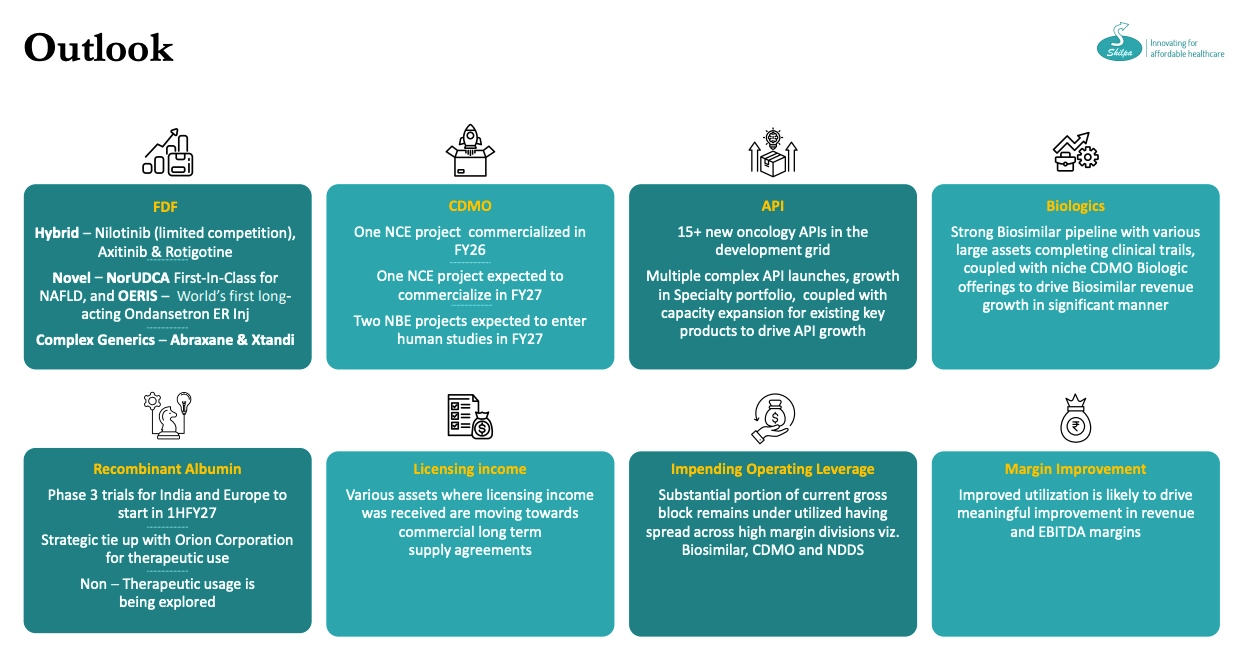
Launch of Rotigotine Transdermal Patch in Europe: Having received official EMA marketing authorization in Q3 FY26, SML is on track to launch its first transdermal patch in Europe in Q1 FY27 with its marketing partner, which will drive immediate product revenue and high-margin profit shares.
NorUDCA Global Scale-up and Domestic Traction: SML’s novel NAFLD therapy, NorUDCA, launched in India in November 2025, has received outstanding clinical reception. Management plans to initiate Phase I human clinical studies in the US and Europe in FY27, opening up a multi-billion dollar global market.
Unicycive CDMO Commercialization (PDUFA June 29, 2026): SML’s dedicated manufacturing block for Unicycive’s NCE, Lanthanum Dioxycarbonate (OLC), was successfully commissioned in Q4 FY26. With validation batches starting in Q1 FY27 and a US FDA PDUFA date of June 29, 2026, SML expects to start high-volume commercial supplies in FY27.
Aflibercept Biosimilar India Launch: SML has completed Phase III clinical trials in India for its Aflibercept biosimilar (ophthalmic injection) and is on track to submit its marketing application to CDSCO in H1 FY27, launching the product through two established domestic ophthalmic partners in late FY27.
Nivolumab and Biosimilar Licensing Deals: SML’s strategy of licensing its biosimilar portfolio globally is accelerating. Having signed SteinCares for Nivolumab in Latin America in Q4 FY26, SML is actively negotiating licensing deals in Europe and ROW markets, which will translate into significant upfront and milestone revenues in FY27.
Recombinant Human Albumin European IMPD Filing: SML plans to submit its Investigational Medicinal Product Dossier (IMPD) in Europe in H1 FY27 to initiate global Phase III trials for its revolutionary Recombinant Human Albumin, triggering milestone payments from partner Orion Corporation.
Regulatory Inspection Risk: SML’s business is entirely dependent on maintaining active GMP certifications from the USFDA, UK-MHRA, and EMA across its 5 manufacturing plants. Any adverse regulatory finding or data-integrity issue during unannounced audits would halt commercial exports, severely disrupting formulations and API growth.
Client Concentration and Delay in CDMO Programs: SML’s near-term CDMO revenues are highly concentrated around a few key innovator molecules, particularly Unicycive’s OLC. While SML successfully completed the technology transfer to an FDA-approved partner site after previous CMO issues, any further regulatory delay or market rejection of OLC by the US FDA would directly impact SML’s dedicated plant utilization.
High Gestation R&D Investments: The biologics, NBE, and ADC programs require extremely heavy upfront capital expenditure and R&D spending (SML spent INR 361 Crores on capex in FY26). If these molecules fail to clear clinical trials or face intense competition from bigger multinational players upon launch, SML risks writing off massive investments, depressing its return ratios.
Lumpy Licensing Income: SML’s revenue profile contains a significant portion of licensing and milestone fees (e.g., from Orion and SteinCares), which are inherently lumpier and harder to predict. A delay in clinical trials or regulatory filings would push these milestones into future quarters, creating severe revenue volatility.
4/5. Management Delivered on Key CDMO and Formulation Projects
Shilpa Medicare demonstrated strong execution on CDMO projects like Unicycive Therapeutics’ OLC and formulation launches such as NorUDCA. However, biologics like Aflibercept faced delayed commercialization. Management maintained guidance on API capacity expansions and peptide programs.
In this scenario, Shilpa Medicare’s high-barrier bets pay off in spectacular fashion, transforming the company into a world-class specialty pharma and biotech platform. On June 29, 2026, the US FDA approves Unicycive’s Lanthanum Dioxycarbonate (OLC), triggering immediate commercial orders that rapidly fill SML’s newly commissioned dedicated commercial block. SML operates as the exclusive global supplier, enjoying exceptional margins. At the same time, the Rotigotine transdermal patch launch in Europe exceeds expectations, capturing substantial volume share through its marketing partner, while the US FDA rapidly approves the transdermal patch filing in late FY27, triggering a massive second wave of US commercialization.
Domestically, NorUDCA becomes the gold-standard therapy for NAFLD, scaling rapidly across both SML’s proprietary brand and its three domestic licensing partners, turning into a massive cash cow. In biologics, the Aflibercept biosimilar is approved and successfully launched in India in Q4 FY27, while SML signs extremely lucrative European and US licensing deals for its Nivolumab biosimilar, bringing in hundreds of crores of non-dilutive licensing milestone income. The Recombinant Human Albumin clinical trials progress rapidly in Europe under partner Orion, and SML secures US FDA approval to initiate clinical trials in America. Operating leverage kicks in across all units, driving return ratios to historic highs and fully validating the massive R&D capex of the previous decade.
In this scenario, Shilpa Medicare progresses on a steady, highly predictable growth path. Unicycive’s OLC is approved by the US FDA, and commercial manufacturing begins in late FY27, though initial sales ramp up gradually as doctor adoption of the new kidney drug takes time. The Rotigotine patch is successfully launched in Europe in FY27, providing a stable stream of product sales, while the US FDA review of the transdermal patch takes the standard 10 to 12 months, setting up a launch in late FY28.
The domestic formulations business continues to perform well. NorUDCA gains steady traction among Indian hepatologists, though the 6-month treatment cycle means that volume growth is moderate and steady rather than exponential. SML’s Aflibercept biosimilar is submitted to CDSCO in H1 FY27 and approved in late FY27, laying the groundwork for a commercial launch in FY28. On the biologics CDMO side, SML continues to execute on its five active clinical-stage programs, converting one or two new clients each year, which offset the high gestation costs of their proprietary NBE and ADC pipeline. Debt levels stabilize as internal accruals increasingly cover ongoing capex, resulting in a gradual but consistent improvement in return ratios.
In this scenario, Shilpa Medicare faces a series of technical and regulatory setbacks that stall its commercial momentum. The primary risk materializes when an unannounced USFDA inspection at SML’s Jadcherla formulation plant (Unit IV) results in serious observations and subsequent warning letters, halting all formulation exports to the US market for several quarters. Simultaneously, the US FDA issues a complete response letter (CRL) or delay for Unicycive’s OLC because of clinical data issues at the innovator’s end, leaving SML’s newly commissioned dedicated manufacturing block heavily under-utilized and dragging down asset-turnover ratios.
In Europe, the Rotigotine transdermal patch launch is slow due to aggressive pricing maneuvers by entrenched generic players, capping SML’s profit shares. Domestically, the scale-up of NorUDCA is hampered as Indian doctors remain cautious, requesting longer-term post-marketing clinical trial data before prescribing the drug on a large scale. In the biotechnology segment, the clinical trials for Recombinant Human Albumin face regulatory delays in Europe, pushing back milestone payments from Orion. High interest costs on SML’s net debt of INR 613 Crores continue to strain cash flows, and with high-gestation ADC and peptide R&D costs continuing to run, the company’s return ratios remain depressed, testing the patience of shareholders and lenders alike.
Thanks for reading! Do check out Investorstack.
No posts
Comments
Nothing yet. Say the first thing.
Sign in to join the conversation.