
Purity culture taught me to separate from my body long before I ever knew what embodiment meant.
It taught me that desire was dangerous.
That curiosity was sinful.
That pleasure was a moral slope.
That the safest woman was a disconnected one.
But here is the quiet truth I had to learn on my own:
You cannot be fully alive while being divided from yourself.
Erotic self-knowledge isn’t about sex.
It’s about wholeness.
It’s about remembering that your body is not an enemy you must conquer —
it is a home you are allowed to return to.
What Erotic Self-Knowledge Really Means
Let’s redefine this word — because the world cheapens it and the church fears it.
“Erotic” comes from eros, the Greek word for life force, vitality, creative energy — the spark that moves through your breath, your laughter, your prayer, your longing, your joy.
Erotic self-knowledge is:
Listening to your body’s signals
Understanding what feels good and what feels wrong
Knowing the difference between fear and intuition
Honoring your yes and your no with equal reverence
Reclaiming the parts of yourself that were taught to be silent
It’s the practice of becoming fluent in your own body again
It’s resurrection work
Sacred work
Liberation work
Before You Trust Your Desire, You Learn to Trust Your Body
For so many of us, desire wasn’t the first thing purity culture took.
It was trust.
The trust that your body could be a guide.
The trust that intuition was holy.
The trust that longing didn’t make you dangerous.
The trust that pleasure didn’t make you unworthy.
So Part 2 of the journey is not about expression —
it’s about permission.
It’s allowing yourself to feel again.
To notice again.
To experience sensation without judgment.
To sit with the truth that your body has always been trying to talk to you.
The body speaks in subtle language long before the soul can translate.
Desire Is Not a Sin — It’s Information
Here’s something I wish someone told me when I was young:
Desire is not a verdict.
It’s a signal.
It tells you what you long for:
connection, tenderness, intimacy, touch, joy, closeness, creativity, pleasure.
It tells you where you feel alive.
Where you feel safe.
Where you feel open.
Where you feel closed.
Desire is internal intelligence —
and when you shut it down, you shut down your intuition too.
Dr. Caroline Leaf talks about “embodied cognition,” the idea that the mind is not separate from the body.
Your brain and body communicate constantly.
You cannot silence desire without silencing wisdom.
When you listen to desire, you’re not being rebellious.
You’re being honest.
A Woman Who Knows Herself Is a Threat to Any System Built on Her Silence
Purity culture was always afraid of the woman who knows her own body.
Because a woman who knows herself…
doesn’t stay small,
doesn’t settle,
doesn’t perform,
doesn’t apologize for wanting,
doesn’t accept crumbs,
and doesn’t confuse control for care.
A woman who knows herself is a woman who cannot be managed.
That’s why they call her “bad.”
That’s why they label her rebellious.
That’s why they shame her curiosity.
Because self-knowledge is power.
And power is the thing they never wanted you to have.
It’s not uncommon to feel like your life is out of your control after leaving a controlling religious environment.
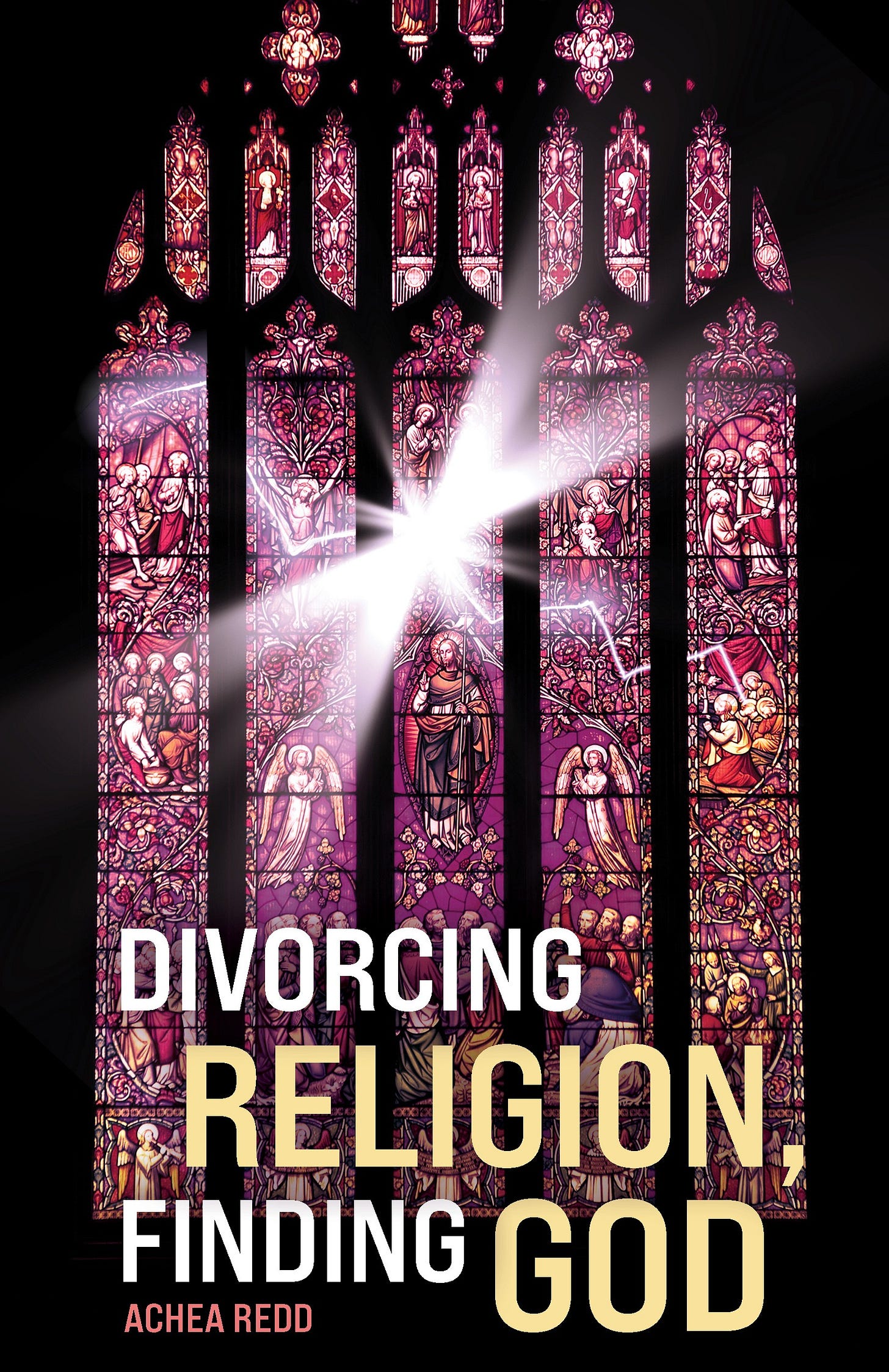
Read how I took back control of my spirituality in my book, Divorcing Religion, Finding God. Pre-order your copy HERE.
Comments
Nothing yet. Say the first thing.
Sign in to join the conversation.