

If you have been seeing the word acemannan everywhere lately, you are not imagining it. It is having a moment. Different products, different claims, different price points, all using the same vocabulary. And if you have found yourself trying to sort through it, wondering whether what you are looking at actually does what it says, this piece is for you.
Last week I sat down with Sam Caster for an extended conversation about acemannan, glyconutrients, and what has changed in 30 years of working with this molecule. Sam was in the room when this compound was first stabilized. His name is tied to the original Mannapol product, to the creation of Ambrotose, and to MannaRelief, the humanitarian organization that has distributed acemannan to medically fragile children around the world since 1999. He coined the term glyconutrients. He knows where the bodies are buried in this space, so to speak, and he has no incentive to oversell anything.
What follows is a recap of our call with the most important things he said, organized around the questions I hear most often from our community. If something in here makes you want to go deeper, the full conversation is available to watch above.
Start Here: What Acemannan Actually Is
Acemannan is a long-chain polysaccharide found in the inner gel of the aloe vera plant. It is made up predominantly of a sugar called mannose, and more specifically it is an acetylated mannose polymer, which is where the name comes from. Acetylated, mannose, acemannan.
That description can make it sound like just another plant compound. It is not. What separates it from virtually everything else in the supplement world is what it does in the body and why that happens.
Your immune system, at its most basic level, runs on mannose. When immune cells survey the body looking for what belongs and what does not, what is healthy and what is damaged, they are reading sugar structures on the surface of cells. Mannose is the primary signal in that language. When something goes wrong, mannose tells the immune system to pay attention.
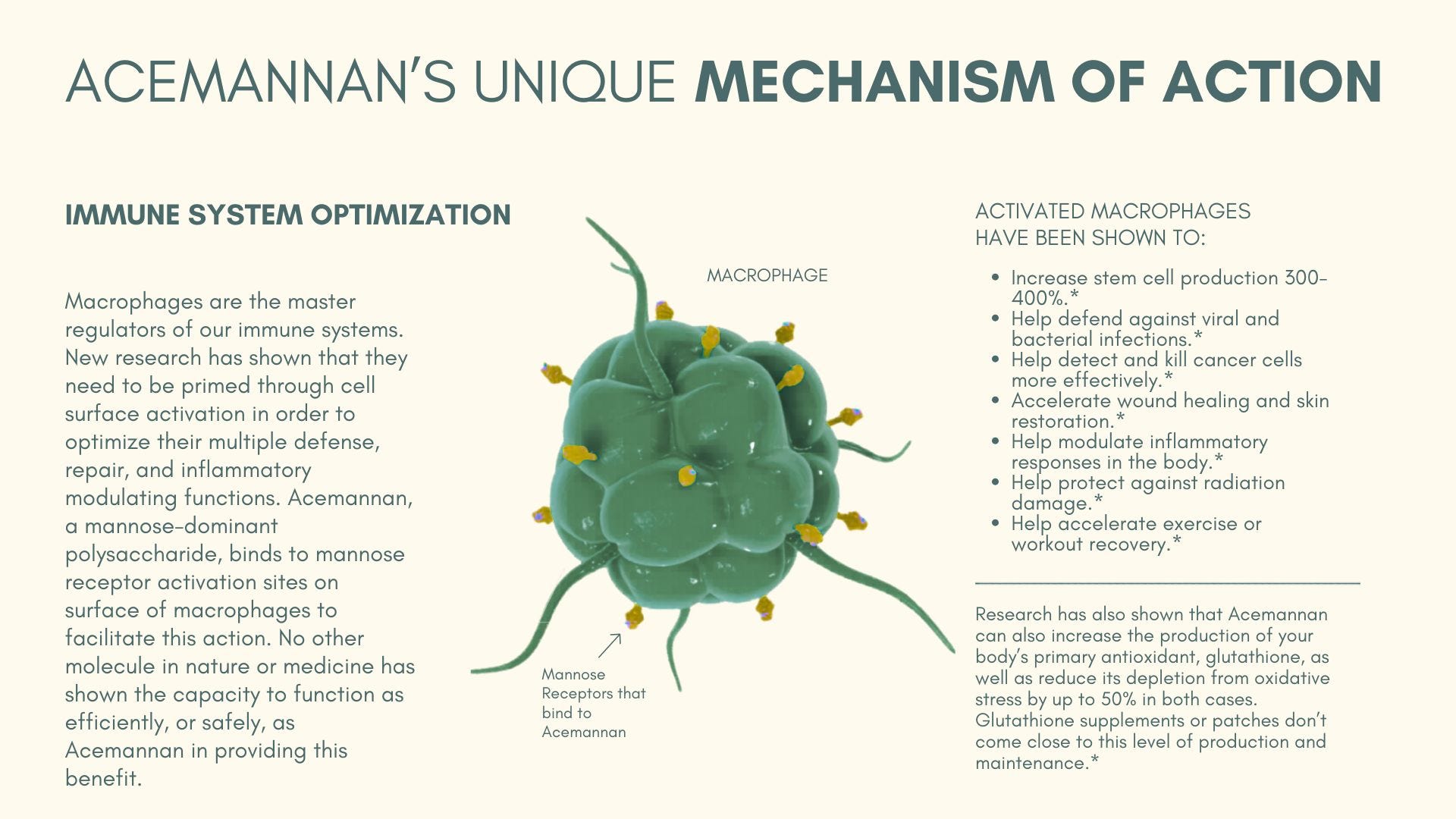
Acemannan, when it is the right molecular weight and properly stabilized, binds to the same receptor sites on immune cells that mannose does. It activates macrophages, which are the master regulators of the entire immune system. When macrophages are activated, the whole system wakes up and begins operating at a different level.
That is the mechanism. Not a drug effect, not a stimulant effect. A communication event. Acemannan does not force anything. It helps the immune system understand what is happening and respond appropriately.
Why Most Acemannan Products are Not What They Say They Are
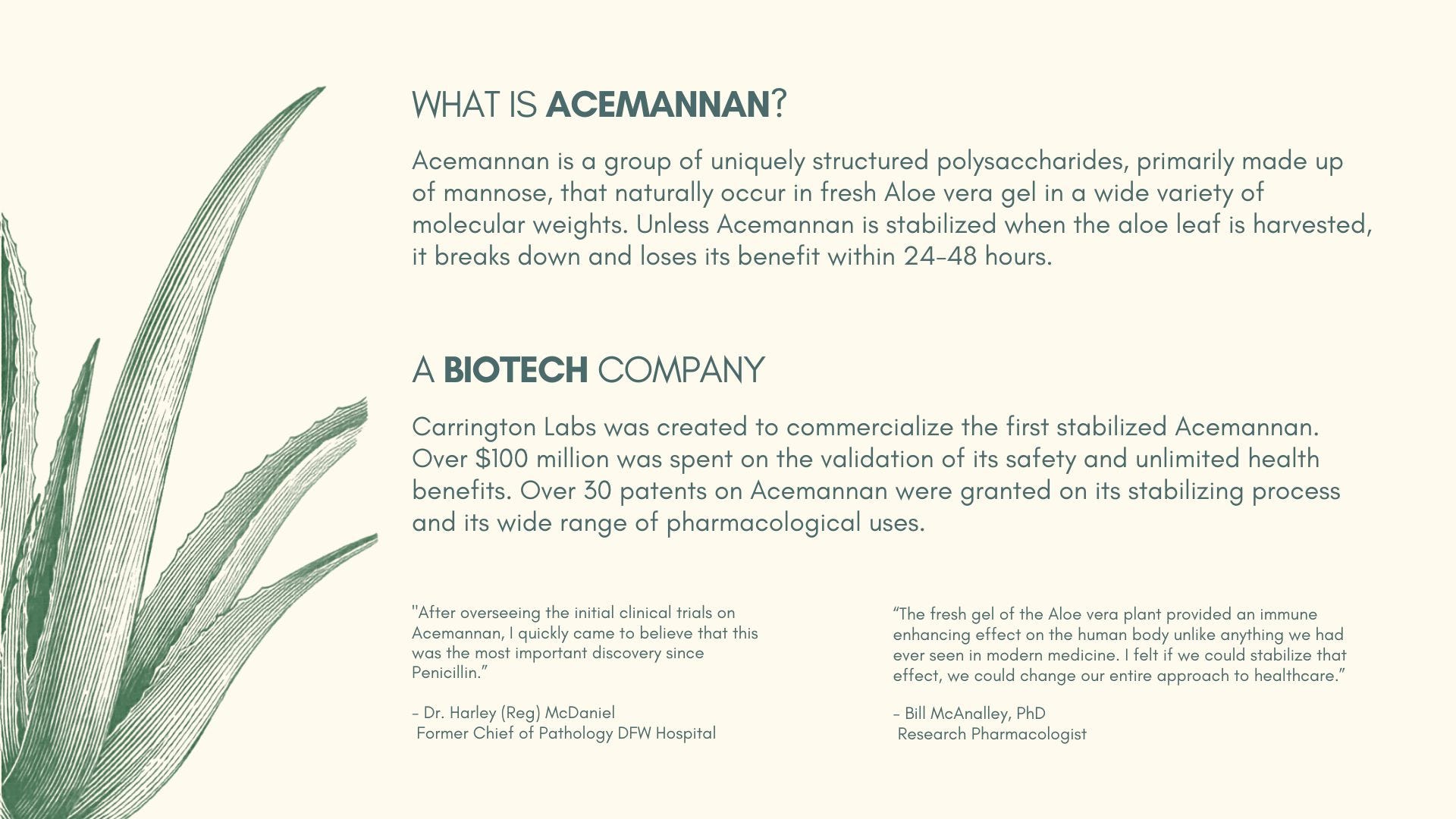
Here is the first thing Sam said that stopped me in my tracks: 99% of aloe vera products on the market do not contain acemannan. Not because they are lying about using aloe. Because acemannan degrades within about 24 hours of the aloe leaf being cut. By the time it is in a bottle, processed, shelf-stabilized, and sold, the acemannan is gone.
The aloe is real. The acemannan is not.
To have actual acemannan in a product, the compound has to be isolated and stabilized through a specific process. That stabilization process was patented by Carrington Laboratories in the 1980s. It was not simple or inexpensive. Most manufacturers have never done it and are not doing it now.
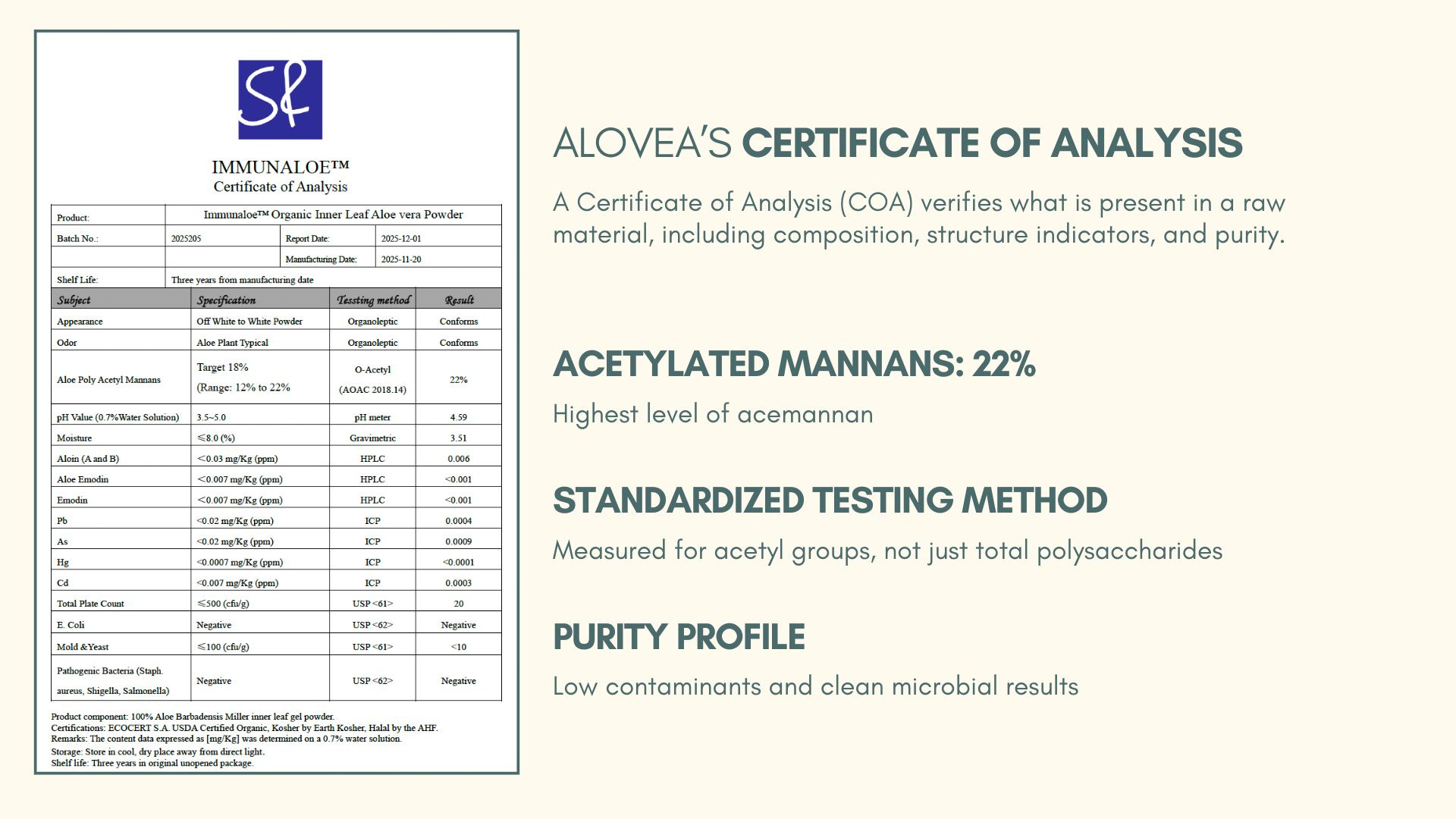
So when you see a product that says ‘with acemannan’ or ‘contains aloe vera extract’ or uses any variation of that language, the first question to ask is: has the acemannan actually been stabilized? If someone cannot show you a certificate of analysis that measures acetylated beta-1,4-mannans specifically, the answer is probably no.
What to Ask Before You Buy Anything
Is it stabilized? Acemannan that has not been through a proper stabilization process is not acemannan in any functional sense. It is aloe gel with the active ingredient removed.
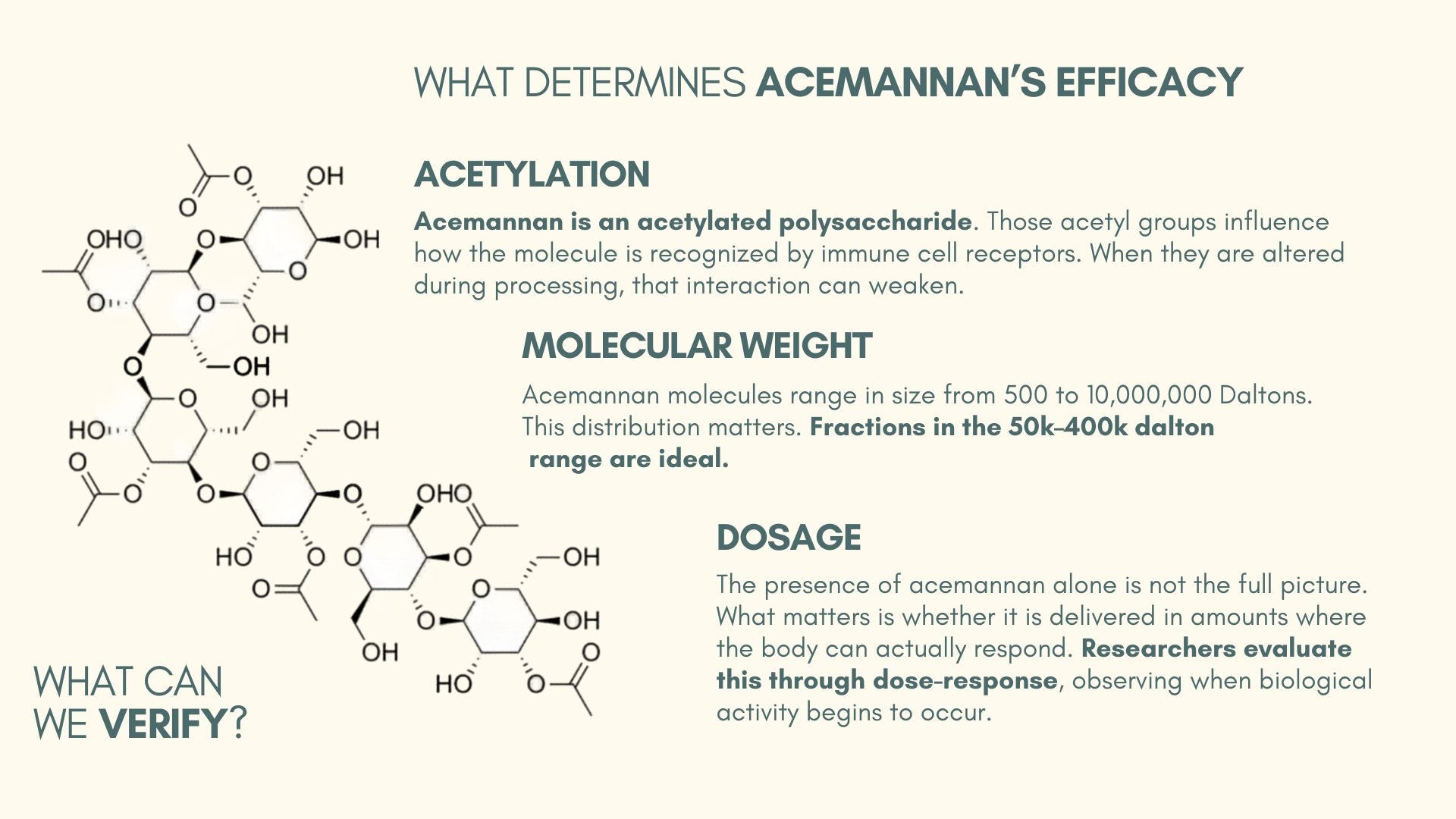
How much is there? There is a dose response with acemannan. A trace amount included so a company can put the word on a label is not the same as a meaningful serving. The total acemannan content per serving matters.
What is the immune optimizing fraction? This is the newest and most important layer of this conversation, and we will spend some time on it.
The Piece Most People Have Never Heard of: Immune Optimizing Fractions
Acemannan is a polysaccharide, which means it exists as a range of chain lengths. Short chains, medium chains, long chains. They range from about 500 to 10 million daltons in molecular weight. They are all forms of acemannan. They are not all equally useful for immune function.
Research eventually identified a specific window, molecules that fall between roughly 50,000 and 400,000 daltons, where immune activation happens. Bind to macrophage receptors, trigger the modulating response, wake the system up in the way we have been talking about. Outside that window, the chains either pass right through without doing much or serve different functions entirely. The very short chains get absorbed into the bloodstream and provide mannose for cellular communication. The very long chains act as soluble fiber and feed the gut microbiome. Both have value. Neither is immune optimization.
The percentage of a product’s acemannan that falls within that immune-activating window is called the immune optimizing fraction.
This is where the history gets interesting. Sam told the story directly.
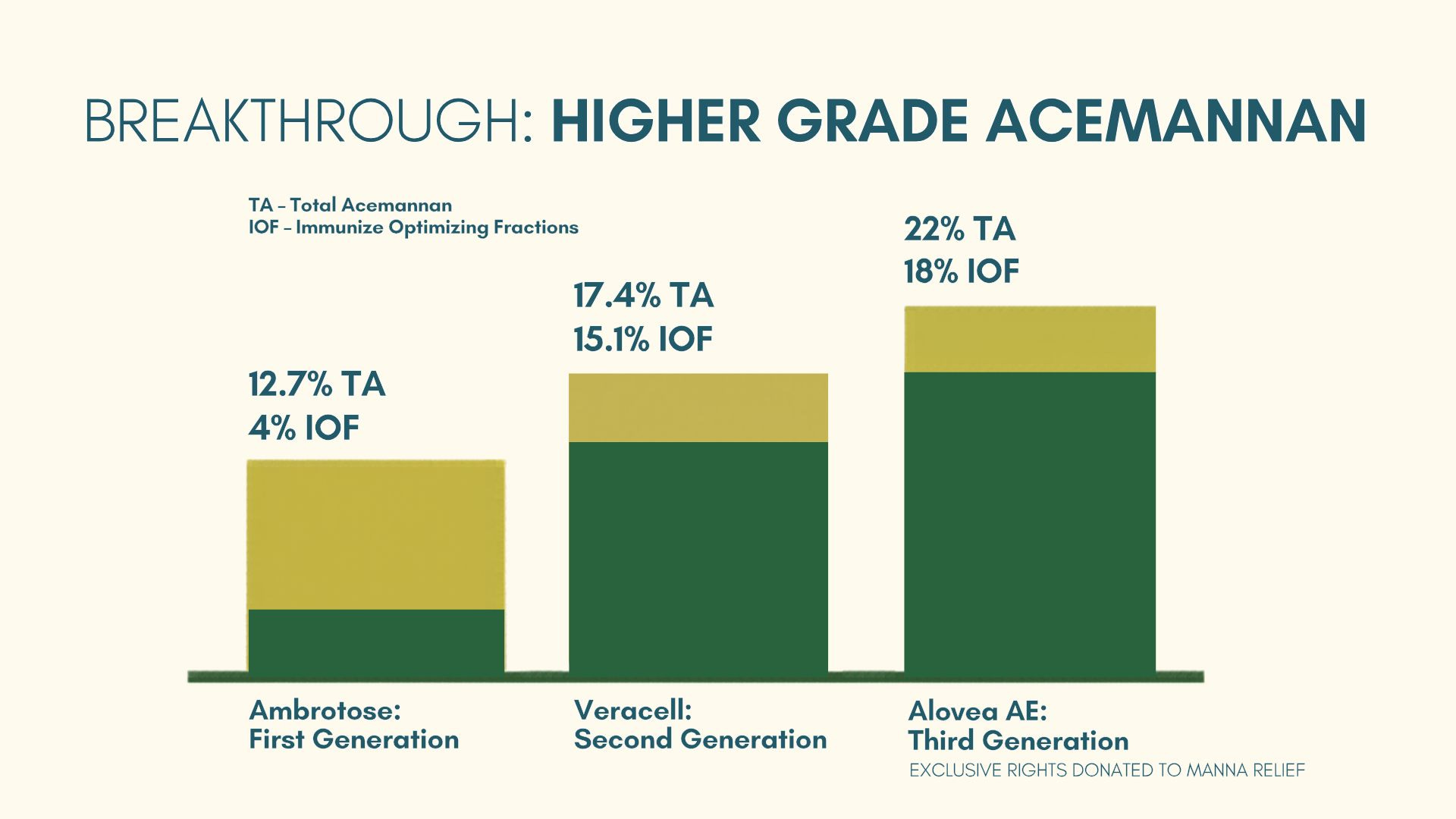
The original Manapol product had 12.7% total acemannan. About 15 years into using it, a new processing method was developed that produced acemannan with nearly identical total content, around 12.1%. It looked the same on paper. People switched to it.
Customers started reporting that their symptoms were coming back. Conditions that had been stable were flaring. The company’s response initially was that this was impossible because the acemannan content was the same.
Then the research on immune optimizing fractions emerged.
When they went back and measured both products, the original Manapol had 4% immune optimizing fractions. The newer version had 1%. A 75% drop. The total acemannan number was nearly identical. The functional content was not.
It wasn’t because it didn’t have acemannan. It was because it didn’t have immune optimizing fractions.
This is the part of the conversation that matters most for anyone trying to make sense of the current market. Products can have high total acemannan numbers and still be largely inert from an immune standpoint. The number on a label does not tell you where the molecular weight distribution falls. Only a full certificate of analysis, with specific testing for the immune-active fractions, tells you that.
The next generation acemannan, developed by Dr. Santiago Rodriguez, one of the original patent filers, brought total acemannan to 22% and immune optimizing fractions to 18%. That is four to five times more immune-active content per gram than the original Manapol. The exclusive rights to this formulation were donated to MannaRelief.
Glyconutrients: The Bigger Picture
In the early 1990s, a broader scientific discovery changed how Sam and others were thinking about acemannan’s role in the body. It came from a field called glycobiology.
Every protein in every cell in your body is coated with a sugar structure. These are called glycoproteins, and they are how cells identify themselves and communicate with each other. The immune system reads these structures constantly. Are you me? Are you okay? Are you damaged? Are you foreign? The answer to all of those questions comes through glycoprotein structures on cell surfaces.
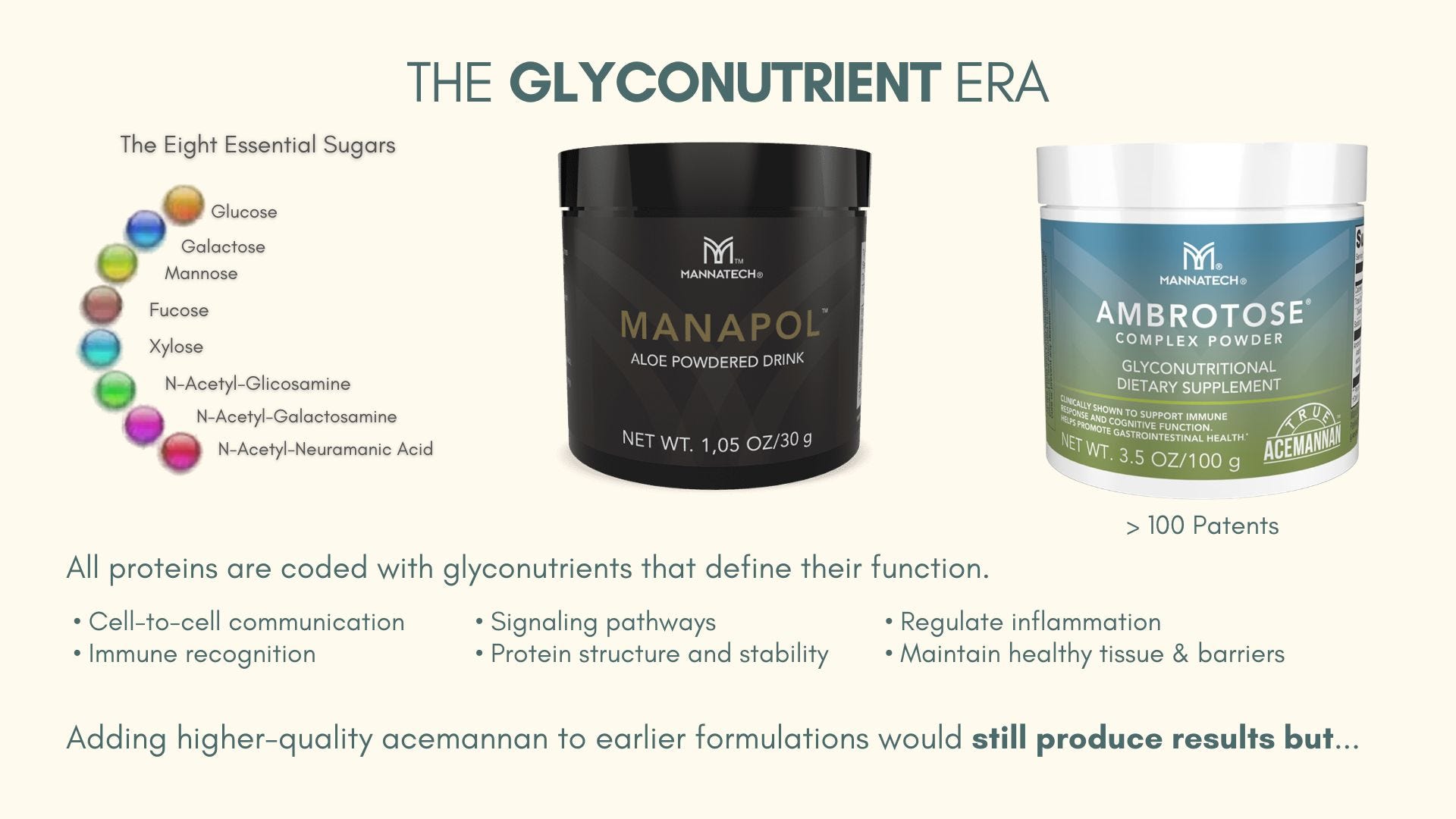
Glycobiology identified eight specific saccharides, eight sugars, that the body uses to build these structures. There are over 200 sugars in nature. Your cells use these eight. And the research found that most people in modern populations are only getting two of them through their diets with any regularity.
The other six can be synthesized internally, converted from glucose. But that conversion is slow, expensive in metabolic terms, and not the body’s preferred method. The body has dedicated pump sites in the intestinal wall specifically designed to absorb mannose directly from food. It is looking for these sugars in the diet because it needs them that way.
Hippocrates said all disease starts in the gut 2,500 years ago. Glycobiology just gave us the cellular mechanism that explains why.
This is the origin of the term glyconutrients, a word Sam invented to distinguish these eight functional sugars from the simple sugars people associate with sweets and blood sugar spikes. These sugars do not cause an insulin response. They are used entirely differently. The name was necessary because calling them sugars in a health context caused immediate confusion.
Ambrotose was the first product built around this science. It combined the stabilized acemannan from Manapol with polysaccharides containing the other seven essential saccharides, creating the first glyconutrient supplement. Over the following two decades it sold over $3 billion in 26 countries.
Fascinating Rabbit Trail About Breastmilk
One of the most clarifying moments in our conversation was when Sam asked me what food has the highest concentration of glyconutrients. The answer is human breast milk.
Breast milk is not just nutrition. It is immune programming. It contains high levels of mannose and the other essential saccharides specifically because the infant’s immune system needs them to develop and calibrate correctly. The microbiome is being established. Cell-to-cell communication pathways are being built. The glyconutrient content of breast milk is not incidental. It is functional.
Sam pointed out something I found compelling, and that I want to sit with as a former lactation consultant and midwife: women with autoimmune conditions often find that their symptoms go dormant during pregnancy and breastfeeding. Their body is producing elevated levels of mannose and these saccharides. Once breastfeeding ends, symptoms return.
What is happening during that window is that the immune system has what it needs to regulate itself. The glyconutrient availability changes the communication capacity of the immune system, and the system responds accordingly.
The problem now is that chronically ill mothers pass on fewer of these benefits. Not because breastfeeding stops mattering, it still matters enormously, but because gut damage, immune dysregulation, and nutritional depletion mean the milk is not delivering the same immune signal it would have delivered in a healthier body. Supporting the mother’s immune system, her glyconutrient status, her gut integrity, directly affects what she transfers to the child she is carrying and feeding.
The World the Body is Operating in Now
Sam has been working in this space for over 30 years. He watched glyconutrients go from a fringe concept to a $3 billion market. He has also watched the environment the human immune system has to navigate get considerably harder.
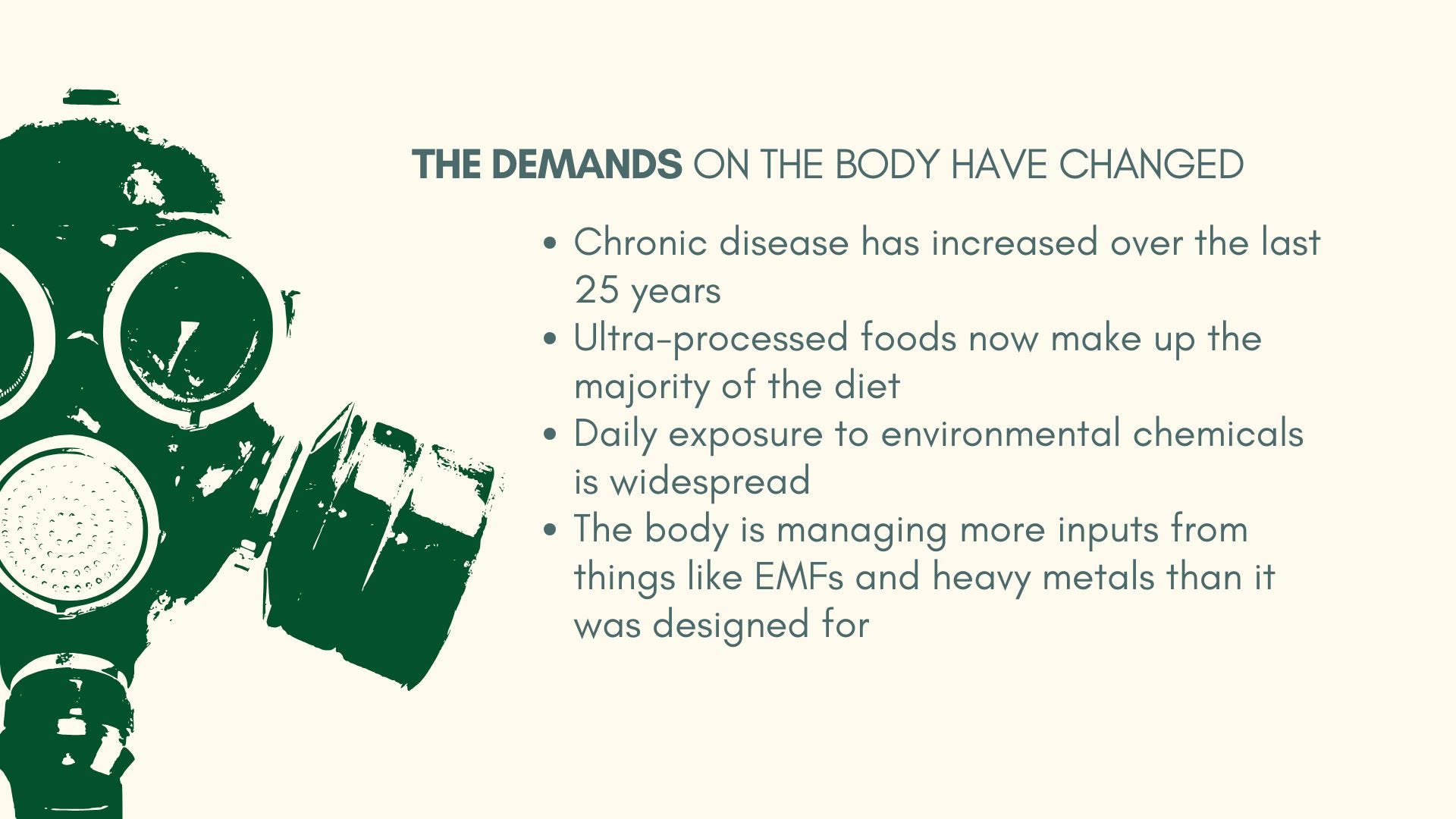
Roughly 80% of the US population now lives with one or more chronic conditions. That number was not anywhere near that 30 years ago. The toxin burden, the ultraprocessed food supply, the heavy metal exposure, the EMFs, the chronic stress. These are not abstract concerns. They are compounding pressures on a system, the immune system, that was designed to handle acute challenges, not a permanent state of chemical and physiological overload.
What this means practically is that the immune system needs more support now than it did when Ambrotose was first formulated. The baseline has shifted. The body is dealing with more.
This is part of why Sam formulated differently when creating products for Alovea. Not because the original science was wrong. Because 30 years of research, and 30 years of watching what the body is up against, changed what he knew needed to be in a formula.
How Immun and Core Came to Exist
When Sam founded Alovea, and brought Alovea AE to market, he could have simply added the next generation acemannan to a formula like Ambrotose and called it an upgrade. He knew the science. He knew the ingredients. That would have been the straightforward path.
He did not do that.
What he did instead was build two distinct products around two distinct needs, one for gut health as a foundation and one for pure immune support at meaningful doses.

Immun: Acemannan as a Standalone
The first thing he recognized was that acemannan has a dose response. When it was one component of a larger glyconutrient blend, making up roughly 10% of the formula, people with serious health challenges had to take large quantities of the full blend just to get enough acemannan to make a difference. The rest of the formula was coming along for the ride whether they needed it or not.
Immun is a standalone acemannan product. It exists so that the dosage can be calibrated to the individual and the situation, without being constrained by a blended formula. For maintenance, it keeps immune function operating at a high level. For people under greater demand, dealing with chronic illness, supporting someone through a serious health challenge, or working alongside immunotherapy, the dose can be adjusted without taking megadoses of an entire gut health complex.
Sam shared that immunotherapists he works with currently are asking for higher levels of acemannan specifically because they have found it supports the broader immune function that targeted immunotherapy cannot address on its own. They want the standalone product because they need to control the dose precisely.

Core: Gut Health as the Foundation
The second product, Core, reflects three decades of learning that acemannan does not exist in isolation. The gut is where immune function either thrives or deteriorates. Hippocrates knew it. Glycobiology confirmed the mechanism. And the research landscape on microbiome, gut barrier integrity, and systemic inflammation has made it impossible to think about immune health without thinking about what is happening in the gastrointestinal tract.
Core contains the third generation acemannan alongside a new glyconutrient blend that incorporates newer research findings. Xylooligosaccharides, for instance, were not available when Ambrotose was formulated. They have since been shown to be three to seven times more effective than common soluble fibers at supporting beneficial bacterial production and short-chain fatty acid synthesis. Glucomannans from medicinal mushrooms, arabinogelactan, gum acacia. The science moved. The formula moved with it.
Beyond the glyconutrient base, Sam added:
Colostrum for immune resilience, immunoglobulins, and gut lining support.
Collagen specifically for the tight junctions in the gut wall. Tight junctions are made of collagen. When the gut is leaking, those junctions need structural repair, not just bacterial reseeding.
Betalains from beet extract, specifically the sugar-extracted form, for anti-inflammatory action. The best anti-inflammatory naturally available according to current research.
Pine bark extract from New Zealand for antioxidant protection, significantly more potent than vitamin C or E.
Modified citrus pectin for binding heavy metals in the gut before they pass into the bloodstream.
Lactoferrin for binding pathogens, including viruses and bacteria, and disarming them before they infect cells.
What Sam said about this formula was not that it was better than anything else on the market in one area. He said it was the most complete gut health technology modern science can produce. He is not prone to hyperbole. I believed him.
The Dosing Question: Daily Support Versus Higher Demand
One of the most common questions I get from our community, and one I hear from mothers especially, is about dosing. How much is enough? When is more appropriate? Is it safe for children? For pregnancy?
Sam’s answers were direct.
Acemannan is a polysaccharide. It is not toxic. There is no negative interaction with any pharmaceutical product. For maintenance, meaning someone who is generally healthy and wants to keep their immune system functioning well, what is in Core is the right amount. The research and Sam’s experience with children around the world support that children can take it. Pregnant and breastfeeding women can take it. It is not a drug. It does not override anything.
For people with active health challenges, chronic illness, or significant immune dysfunction, higher doses of the standalone Immun product are appropriate. The dose response is real. There is a meaningful difference between a maintenance amount and a therapeutic amount, and for someone whose immune system needs more than maintenance support, that difference matters.
Sam was careful to say that it does not work like a drug in the sense that you cannot say 20 milligrams will produce X effect in Y percent of people. Every person, every condition, every dietary context is different. What the research gives you is parameters. The details require paying attention to your own body.
The Mission Underneath the Company
I want to address the business structure directly because it matters and because there is a lot of noise in the wellness space right now about giving back, mission, and impact.
Many companies attach a charitable component to their business after the fact. They build something that works, scale it, and then carve off a percentage for a cause. That is not a criticism. It is just a description of how most mission-adjacent businesses are structured.
What Sam built is different. MannaRelief has been distributing acemannan to medically fragile children since 1999. It predates the commercial structure. The mission is not attached to the product. The product exists to fund the mission.
In 2020, MannaRelief established Alovea as a public benefit corporation. The profits from Alovea’s commercial sales transfer to MannaRelief. The exclusive rights to the next generation acemannan were donated to MannaRelief because the researchers and scientists involved wanted their best work going to the children they cared most about helping. No one else has access to the 22% total acemannan with 18% immune optimizing fractions. It was given to an organization whose entire reason for existing is getting it to the children who need it most.
The Stanford review Sam referenced makes an important point: buy-one-give-one models work best when the consumer’s benefit from the product is as significant as the recipient’s. With Tom’s shoes, the giving was the draw. The shoe itself did not create lasting loyalty. Acemannan’s track record in our community of over 2,200 testimonies is not built on the social mission. People are staying because the product is working.

Closing Thoughts
Sam’s closing answer to my final question is worth putting plainly.
Three things. Only three.
Stabilized acemannan. If the company cannot show you a certificate of analysis with testing for acetylated beta-1,4-mannans, the acemannan has not been through a stabilization process that preserves its activity. The word acemannan on a label means nothing without this.
A meaningful amount. Dose response is real. There has to be enough acemannan per serving to do something. Ask for the total acemannan content per serving, not per gram of raw material.
Immune optimizing fractions. This is the part that separates a product that modulates the immune system from a product that is essentially inert from an immune standpoint. A high total acemannan number with a low immune optimizing fraction is not a potent product. It is a polysaccharide blend with very little of what actually matters.
If someone cannot answer those three questions with documentation, that is your answer.
* * *
I am grateful to Sam for giving us an hour of his time and for being the kind of person who still gets excited, after 30 years, about a molecule in an aloe plant. The work he, Dr. Reg McDaniel, and Dr. Bill McAnalley did in those Dallas labs in the 1980s is why any of us have this conversation at all. The research they generated, the patents they filed, and the science they built shaped everything that came after it.
The full conversation is available to watch. If anything here raised a question I did not address, send it my way. I am building out this resource library because I think the people in our community deserve to understand what they are putting in their bodies and why it works.
Niccole Rae | Terrain-first health educator. Mom of five.
NEXT: MODULE 1 OF UNDERSTANDING ACEMANNAN
No posts
Comments
Nothing yet. Say the first thing.
Sign in to join the conversation.