
Hey friends,
July was a month of firsts. Valar Atomics became the first nuclear startup in history to generate electricity (see their x post here), and used it to power an NVIDIA chip. AlleyCorp closed a new $335M fund. And a few dozen SpaceX alumni discovered, on our rooftop, that there are far more of us in New York than anyone realized.
In this issue we will cover the first SpaceXers in NYC gathering, the Valar milestone (and the $6B round the press is reporting), our take on the deep tech IPO window, Episode 4 of The Long Frontier on brain-computer interfaces, the DTNY 2027 save-the-date, and the July news we’re following. Finally, don’t forget to check out our deep tech portfolio job board at the end (if you are looking to join the next rocket ship, this is for you)!
As always, if you’re building in deep tech (or “software for hardware”), reach out. We’re here to help.
~Brannon

Photo from the SpaceXers in NYC rooftop event
On July 24 we hosted the first SpaceXers in NYC gathering on the rooftop of AlleyCorp’s new building in Manhattan. Turns out there are way more of us in the New York area than any of us realized, and everyone’s off doing incredible things: founding companies, building at startups, a few in VC (ahem) and other finance roles.
Some auspicious timing: Starship Flight 13 launched that evening (a weather scrub pushed it from that Thursday to Friday) and we caught it together on the rooftop big screen. It turned out to be the program’s best flight yet, and featured the first working Starlink V3 satellite deployments, a 14-second Raptor relight, and the first intact ship recovered in the water. Watching a Starship fly, with great food, on a rooftop full of the people who made it possible is about as good as a Friday night in New York gets.
Why we’re doing this: the SpaceX diaspora is one of the densest pools of hard-tech operating talent in the world, and a surprising amount of it has landed in New York. We want NYC to be a place where that network compounds into companies, talent / hires, and deals. This was the first event of many to come.
Special thanks to Rita and Scott for helping pull the group together, and to Breeanna, our head of events, who made the whole thing happen on the AlleyCorp side. Food came from Oriana, the ex-Eleven Madison Park team on the ground floor of our building. (Seriously, go check out Oriana. It’s getting a lot of buzz, and I can say from first-hand experience that it’s excellent.)
If you’re a SpaceX alum in New York, or know one, we have a “SpaceXers in NYC” WhatsApp group where we organize these. DM me or email me and I’ll get you added before the next event. And there’s already talk of making the US Open our next outing. 🎾
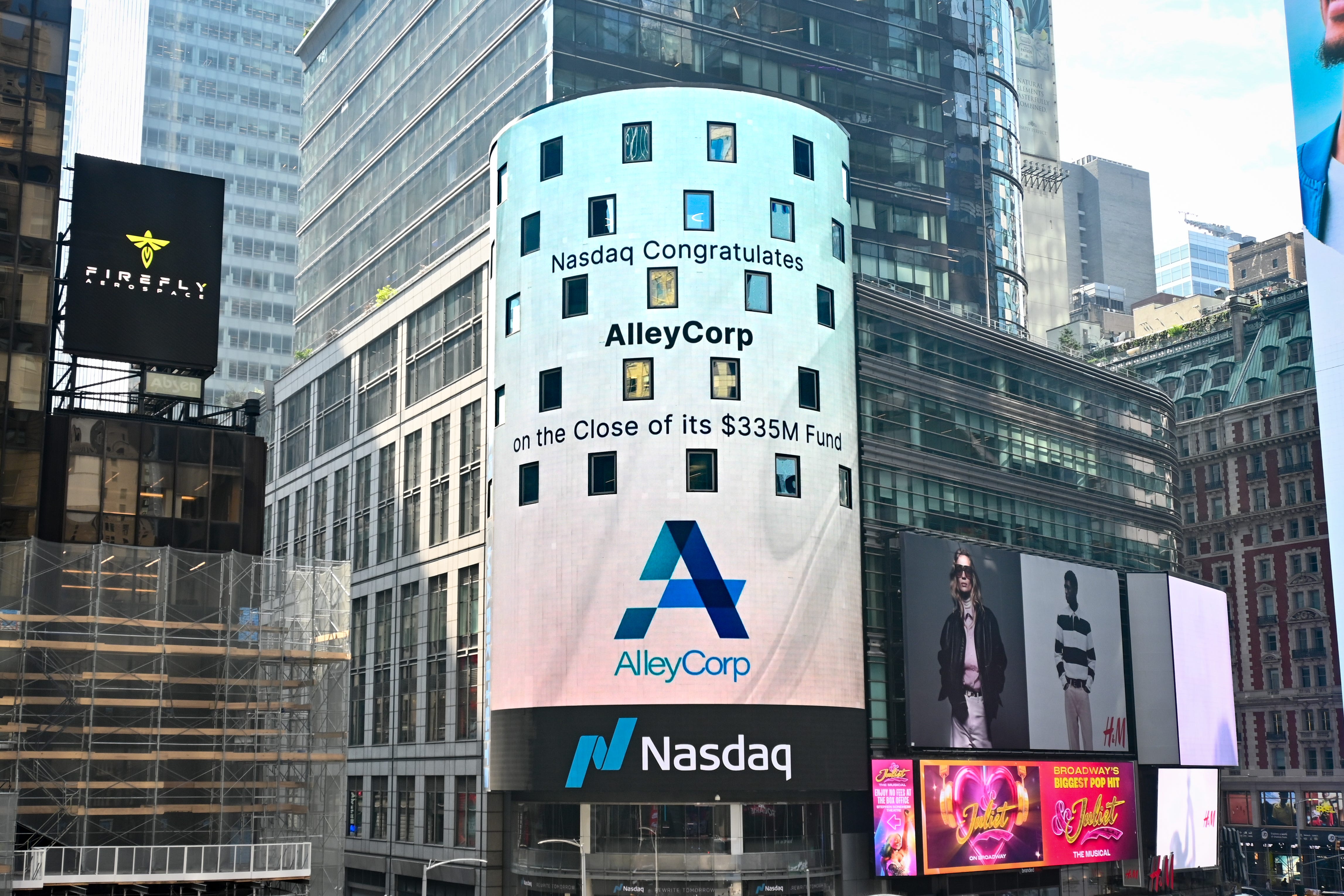
AlleyCorp on the Nasdaq billboard in Times Square
AlleyCorp closed a $335M Fund II in July. Same playbook that’s worked from day one: first checks, early stage, across healthcare, deep tech, and general tech, making bets “when it’s not obvious.”
So if it’s not obvious yet: yes, we are actively investing. If you’re a deep tech startup in robotics, aerospace, advanced manufacturing, energy, or compute, reach out to me and Abe Murray. If you’re building in another sector, the rest of the AlleyCorp team wants to meet you too. The Fortune coverage has the full story, and Nasdaq was kind enough to put us up in Times Square for the occasion.
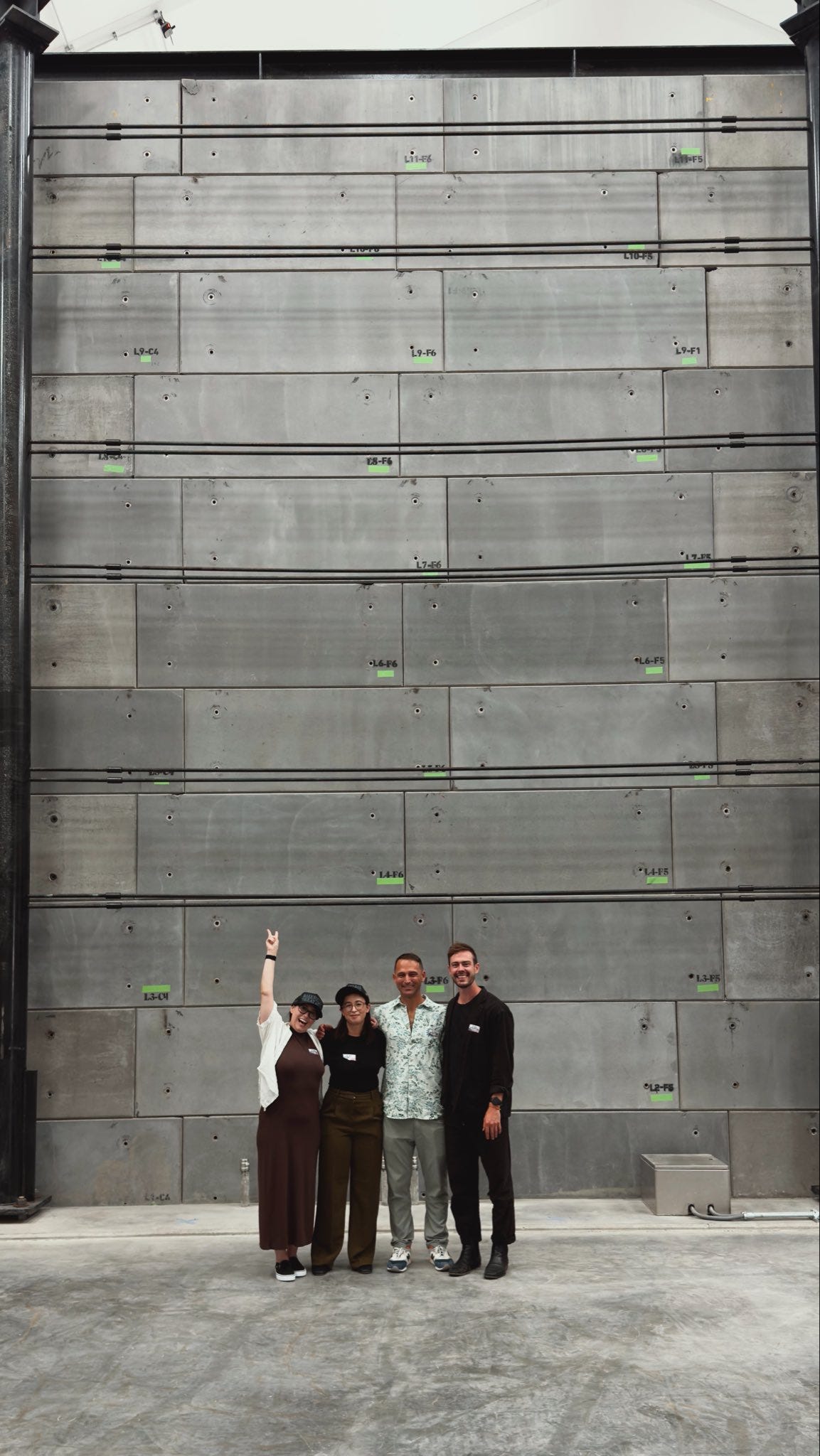
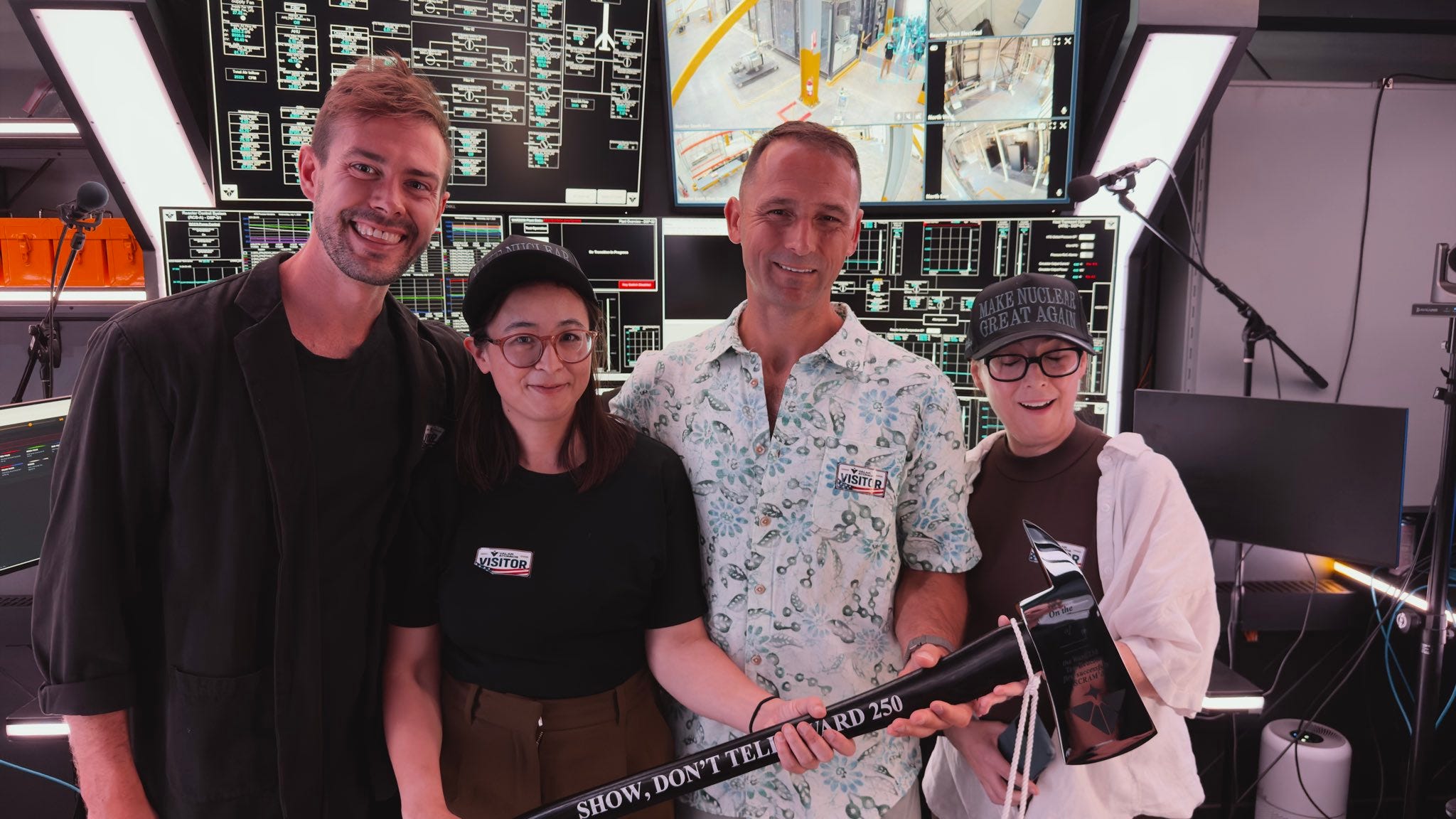
Abe and friends in front of the Ward 250 reactor in Utah
Abe was on site in Utah for the reactor launch. Here he is at the Ward 250, alongside some of the other early believers in the company.
The Milestone: On July 1, Valar Atomics became the first nuclear startup to make electricity, and did it by powering an NVIDIA Spark. The Ward 250 reactor went critical on June 18 in Emery County, Utah, ramped through power ascension, and by the demo was converting roughly 100 kilowatts of thermal output into electric current. Nine months from empty site to a reactor making power, built and operated outside the national lab system. Valar and NVIDIA also announced a joint feasibility study for a 30-megawatt, water-free AI computing facility: the first meeting of advanced nuclear and AI, and almost certainly not the last.
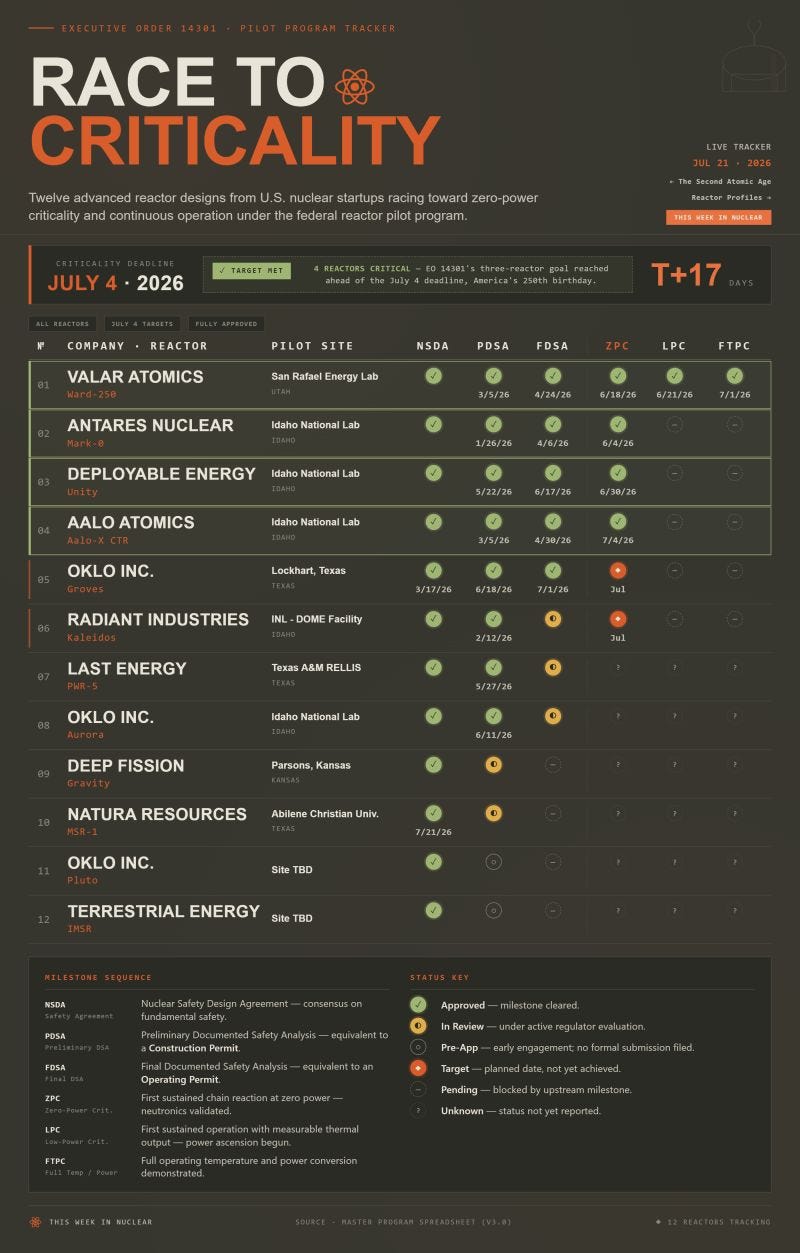
Dylan Robideaux’s “Race to Criticality — July 21st, 2026” tracker chart
Chart credit to Dylan Robideaux, whose Race to Criticality tracker was some of the summer’s best sports coverage so far (after the Knicks, the World Cup, and Wimbledon 😅).
The Race: Executive Order 14301 called for three advanced reactors to go critical by July 4, 2026, America’s 250th birthday, and the industry delivered four. Congratulations to Antares, Aalo Atomics, and Deployable Energy, who all made the deadline alongside Valar. Competition made everyone faster (which was the point).
The Round: The Information reported that Valar is in talks to raise roughly $1 billion at a $6 billion valuation following the power milestone. We won’t make any comment on the reporting, but I will say that we’ve been believers in this team from the beginning, and watching them go from incorporation to first electricity in under three years is a true testament to what Isaiah and the Valar team are building.
Bonus: Jason Carman’s S3 crew visited the Utah site for Episode 74 of S3. Worth watching for the hardware alone.
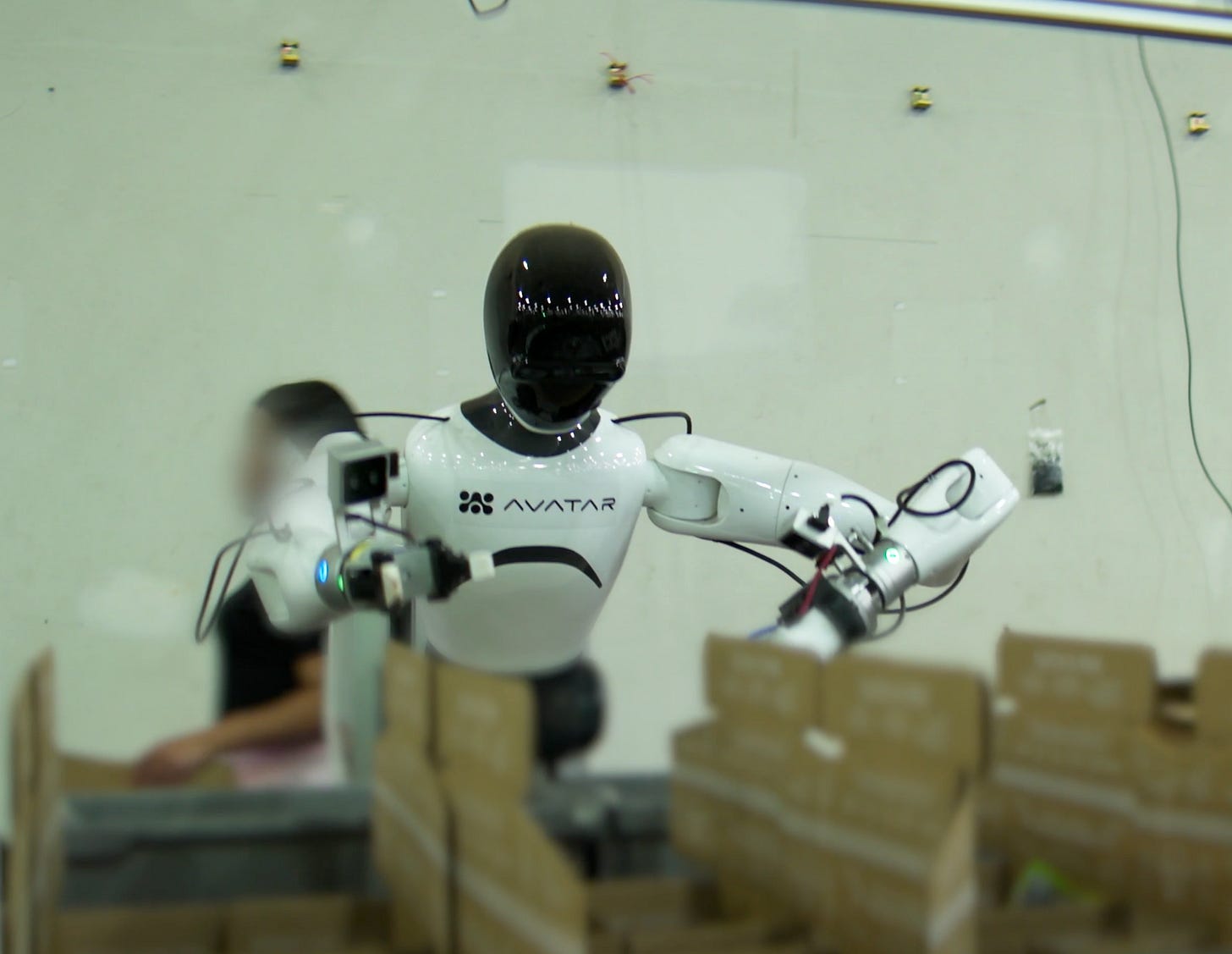
(see full announcement video here)
The Milestone: Since launching its first product last winter, Avatar Robotics has packed, sorted, and helped ship over 700,000 products on real production floors, and is on track to handle over 1 million items this year, across beauty products, sporting goods, supplements, clothes, jewelry, and coffee. As founder Colin Webb put it: “Your latest purchase may have been shipped by a humanoid.”
The Problem: Over 1,000,000 industrial jobs sit unfilled in America, and current robots aren’t smart enough for real production work, which requires thousands of actions a day with constantly changing variables. Avatar’s answer combines humanoid robots, remote operator teammates, and a growing autonomy pipeline into one always-on workforce. New workflows deploy in minutes, and run 24/7. Colin calls it the Power of 1000. To me it represents exactly the kind of unglamorous, high-volume work where robotics ROI gets proven first and can scale profitably.
Deep tech’s return to the public markets is real this time
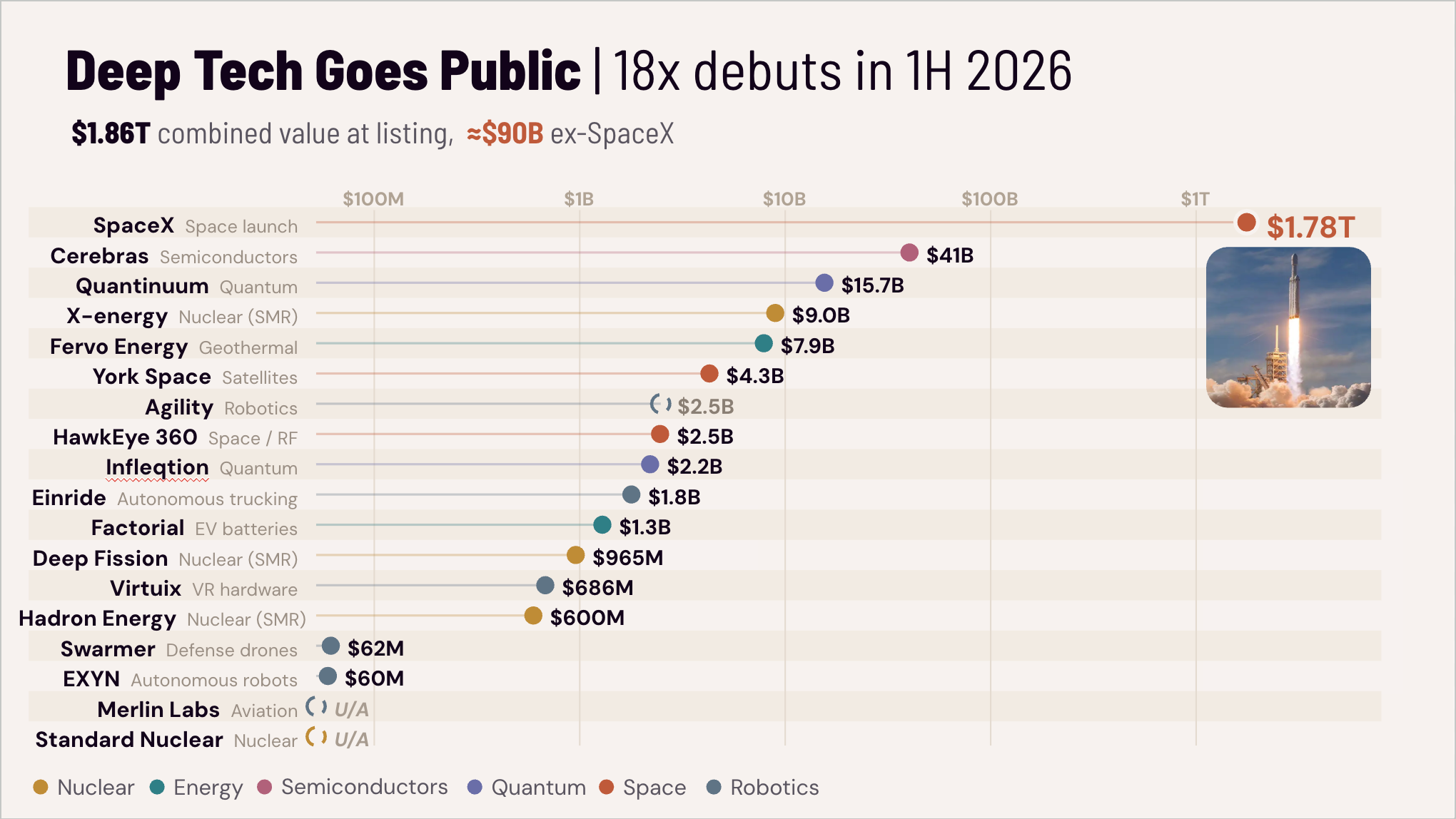
Deep tech public debuts by half-year chart (18 in 1H’26)
In the first half of 2026, deep tech put up 18 public debuts. That’s already the most active stretch since the 2021 SPAC-a-palooza, and we’re only halfway through the year.
The real question is whether this year’s class holds its value over time. I have a lot more confidence it will than I did watching the class of 2021, for two reasons:
1. The filter changed, and the incentives with it. The class of 2021 mostly went public through SPACs where sponsors got paid to close deals regardless of quality, redemption games distorted pricing, and pre-revenue companies could skip the scrutiny of a real S-1 process. The result was a class that went public, largely based on a founders ability to compellingly present a TAM slide. The class of 2026 is different. It is coming through front-door IPOs, with underwriters whose franchise depends on the stock working after the pop, audited financials that have to survive a roadshow, and companies showing up with contracts, backlogs, and in several cases profits. The bar to list moved from “inspiring story” to “P&L,” and that selection effect compounds as more durable exits.
2. The pipeline behind the window is deeper than the window. Unitree priced its IPO this month, DeepSeek is reportedly planning a listing, and the frontier AI labs are openly IPO-bound. When the queue is this long, a single bad debut doesn’t close the window; it reprices it.
The current test case is SpaceX itself. Even after Starship Flight 13 succeeded, the stock sits roughly 50% below its post-IPO high, and under its IPO price, with the market looking past the rocket to first earnings on August 4 and a lockup expiration two days later. I do not believe that is an indication of the IPO window closing, but rather it is the public market doing its job, pricing supply and engineering execution risk in real time.
I think the window’s open this time. And I think it holds. If you disagree, reply. I am here for the counterarguments too.
Episode 4 thumbnail (Tom Oxley BCI episode)
People are already controlling computers with their thoughts. Implanted patients are at home today, browsing and texting through a device in their brain.
That’s the subject of Episode 4 of The Long Frontier, our podcast on the technologies that will define the next fifty years. Abe and I sit down with Dr. Tom Oxley, founder and CEO of Synchron, one of the first companies to put a brain-computer interface in human patients, delivered through blood vessels rather than open-brain surgery. IN this episode, we get into how BCIs actually work, how Synchron’s approach stacks up against Neuralink, the role of AI in decoding the brain, and how these devices are already giving people with paralysis their independence back.
One of my favorite conversations yet. Trust me, the full episode is worth your time. Watch on YouTube or listen on Spotify and Apple Podcasts.

After an incredible inaugural summit, Deep Tech New York will return on April 15, 2027 at Newlab in Brooklyn. Like last year, DTNY will feature a full day of mainstage talks on the technologies that define the next 50 years, plus networking with more than 400 of the world’s most ambitious founders, researchers, engineers, investors, and operators across deep tech.
Registration officially opens in September; in the meantime you can save the date here. And if you have ideas on speakers or topics, reply to this email; we’re building the agenda now.
Walden Robotics Emerges With a $300M Seed at $1.1B: The Toyota Research Institute spinout, led by MIT professor Russ Tedrake, launched from stealth with Toyota and Deviation Capital co-leading, plus NVIDIA, Boeing, Samsung Ventures, and CoreWeave on the cap table. The tell: its wheeled-base robots have been running production shifts inside a Toyota plant since February: a launch built on deployment, not demos. Bloomberg
Helsing Raises $1.8B at $18B: Europe’s biggest-ever defense startup round, backing the Munich company’s strike drones, underwater surveillance, and autonomy software already deployed in Ukraine. European defense capital formation is catching up to the mission. Reuters
Anduril Reportedly in Talks at ~$100B: Per Reuters, up from $61B just two months ago, a valuation that would rival Northrop Grumman and Lockheed Martin. Co-founder Trae Stephens pushed back that “routine dialogue is not a fundraising process,” but the number tells you where defense tech marks are heading. Reuters
Starship Flight 13 Delivers: First working Starlink V3 satellite deployments, a 14-second Raptor relight, and the first intact ship recovered from the water, plus the heat-shield data SpaceX has been chasing for two years. The best evidence yet for the Starship-first future of launch. SpaceNews
India Joins the Private Orbital Club: Skyroot Aerospace’s Vikram-1 (22 meters tall, up to 350 kg to orbit, with a 3D-printed engine) delivered customer payloads to a 450-km orbit on its maiden flight, making India one of the few countries whose private companies have reached orbit. Reuters
CXMT’s $9.8B IPO Goes Vertical: China’s DRAM champion jumped roughly 470% in its Shanghai debut to a ~$489B market value, the largest of any mainland-listed company, and a stark marker of how the global memory shortage is re-rating the semiconductor complex. CNBC
Neros Lands Up to $500M From the Army: The El Segundo startup, founded in 2023 by two former teenage drone racers, won an IDIQ for its Archer FPV drone, built without Chinese components at ~1,200 units a week with a roadmap to a million a year by 2028. The attritable-drone procurement supercycle is here, and it’s a manufacturing story as much as a defense one. Defense Daily
Saronic Picks Brownsville for Port Alpha: A $3B+ next-generation shipyard on 835 acres (expandable to ~4,400) at the Port of Brownsville: construction starting this year, operations targeted for 2028, up to 10,000 direct jobs, and capacity for ships up to 850 feet. The largest greenfield US shipyard project ever announced by a venture-backed company. Defense News
Korea Locks In ~$700B of AI Silicon in 48 Hours: Nvidia and SK Group unveiled a $500B+ initiative spanning AI data centers and next-gen memory, and Samsung won a $200B+ foundry-and-memory pact with Broadcom through 2030. Memory remains the binding constraint of the AI buildout, and Korean capacity just got hard-wired into both sides of the silicon race. Reuters · Reuters
Nvidia’s Reported $250B Backstop for OpenAI: Per the WSJ, Nvidia is in talks to guarantee roughly $250B of financing so OpenAI can lease a 10-GW, $500B+ data center hub in Ohio. The chip vendor backstopping its customer’s half-trillion-dollar site is the clearest look yet at how the compute buildout actually gets financed. Reuters
The $8 Trillion Open-Weights Coalition: Twenty-five companies (Nvidia, Microsoft, Meta, and Palantir among them) signed a letter against “premature restrictions” on open-weight AI models; Jensen Huang joined X for the first time to share it. Whatever side you take, this fight determines which model layer every US robotics and industrial-AI startup gets to build on. CNBC
The White House Rewrites the Science Playbook: OSTP’s 123-page “Science: A New Golden Age” proposes treating the ~$200B annual federal R&D budget like a portfolio: HHMI-style long-horizon talent funding, fast grants decided in under a month, and less admin (researchers currently spend nearly half their time on it). For anyone underwriting lab spinouts and research-adjacent deep tech, this is the funding-environment document of the year. Report
Hyundai Closes Boston Dynamics, and Meets Its Workforce: The same day Hyundai finalized its full acquisition of Boston Dynamics, thousands of union workers at its Ulsan complex staged the car industry’s first factory stoppage over humanoid robots, demanding approval rights before any of the planned 25,000+ Atlas deployments reach Korean lines. Deployment at scale was always going to meet organized labor; this negotiation sets the template. Ars Technica
Packy McCormick, “AI is Oil, Not God”: The cleanest articulation of the pro-diffusion position on open weights: your stance comes down to whether you think AI is an economically useful commodity or a proto-deity requiring containment. Not Boring
Chamath Palihapitiya, “Distillation is a Red Herring”: The contrarian take on the model-layer fight: the moat is above the model and below it, and much of the panic is valuation preservation as the layer commoditizes. Chamath’s Substack
Charles Hudson, “It’s All Pre-Series A Now”: A lightly redacted LP letter naming something many of us have felt: the seed-to-A gap has widened into a structural feature of the market, not a phase. Precursor
Construction Physics, “Why Is Everyone Trying to Build a Solid-State Battery?”: Brian Potter’s typically excellent explainer on why replacing the liquid electrolyte is the battery industry’s white whale, and what it would actually unlock. Construction Physics
SVB, “Physical AI and the Future of Robotics”: A new market-insights report on how AI advances are accelerating hardware investment across robotics. Useful benchmarks if you’re raising in the category. SVB
A running list of open roles at deep tech companies in and around our portfolio. If a role catches your eye, reach out and we’ll make the introduction. Where a listing is linked, you can apply directly.
Valar Atomics | Hawthorne & Torrance, CA / Orangeville, UT — Nuclear energy at industrial scale:
TRISO Chemical Plant Process Engineer — build the fuel plant from first principles. (Orangeville, UT)
Director, Instrumentation, Control & Electrical — Reactor — own the instrumentation and control stack for the reactor itself.
Systems Engineer, Product — systems-level ownership of the product architecture. (Torrance, CA)
Rotordynamics Engineer, Turbomachinery — the machines that create power.
Senior Thermal-Hydraulics Analysis Engineer — the physics of the reactor.
…plus 46 more open roles — careers page.
Portal Space | Bothell, WA — Next Gen Space propulsion:
Materials & Composites Build Engineer — hands on the hardware that flies.
Propulsion Systems Build Engineer — build the propulsion stack.
Senior Satellite GNC Engineer — for maneuverable spacecraft.
Senior Electrical Engineer — Spacecraft Power & Bus — Space power systems
Senior Thermal Structural Analysis Engineer — the loads are real and so are the deadlines.
…plus 5 more — careers page.
Avatar Robotics | San Francisco, CA — Autonomous robotic labor
Machine Learning Engineer (Robotics / Embodied AI) — Advancinv humanoids
Robotics Software Engineer — the stack between the model and the motors.
Field Operations Lead — own the robots where they work: on the floor.
Business Development Representative — sell the unlimited workforce.
Cargo Robotics | Palo Alto, CA — Last-mile delivery robotics:
Sr. Robotics Software Engineer — autonomy for robots in the real world.
AI Robotics Engineer — ML meets mechatronics.
Senior Electrical Engineer — design the electronics stack end to end.
Director of Manufacturing & Supply Chain — prototype to production volume.
…plus 5 more — careers page.
EnCharge AI | Santa Clara, CA & Remote — Analog in-memory AI compute chips:
AI Compiler Engineer — map models onto silicon nobody else has.
Senior NPU Architect — architect the next processor generation.
Silicon Operations Manager — run the path from tapeout to volume.
LLM Inference Deployment Engineer — make frontier models run on the edge.
…plus 20 more — careers page.
Halo Braid | Cambridge, MA & Bristol, UK — Robotics for textured hair:
Senior Mechanical Engineer — precision mechanisms (Cambridge, MA)
Senior Robotics Engineer (Cambridge, MA)
Senior Robotics Engineer (Bristol, UK)
Mechanical Engineering Fall Co-Op — for students who want to ship hardware.
Viam | New York, NY — Platform for building and deploying robots and smart machines:
Radical AI | New York, NY — Autonomous AI-driven materials-science labs:
Perception Engineer — robots that see the lab.
Earthforce | Portland, OR & Remote — Robotic forestry management:
Hardware Manufacturing Lead (Portland, OR)
Head of Product (Remote, US)
Director of Program Success (Remote, US)
Root Access | New York, NY — AI for embedded systems and firmware:
PhD Fellowship — hardware-meets-software research with a path to product.
Civ Robotics | San Francisco, CA — Autonomous construction surveying robots:
Glacier | Remote, US — AI + robotics for recycling:
Computer Vision Data Engineer (Remote, LatAm-based)
Hiring for a deep tech role and want it featured (named or anonymized) in next month’s issue? Reply and let us know.
Thanks for reading, and as always, if you’re building in deep tech (or “software for hardware”), we want to meet you. Keep building! 🚀
~Brannon | AlleyCorp Deep Tech
Comments
Nothing yet. Say the first thing.
Sign in to join the conversation.