
“Whenever the need for some pretense of communication arises, those who profit from our oppression call upon us to share our knowledge with them.” - Audre Lorde, Sister Outsider.
The layman’s guilt of imposter syndrome.
There is a thought I often have when I apply for jobs that I am wasting my potential. I read the cover letters I’ve reshaped to fit hundreds of jobs over the years until I can decode the drone of jargon into a single line: “I am incredibly desperate for a job. Please hire me.”
I recognise that despite my years-long entanglement with joblessness, I remain in a position of privilege where I can apply for jobs I actually want to do 85% of the time. I don’t pay rent, and I don’t leave my house very often. That 15% is relegated to frantically searching for any work, regardless of its impact on my peace of mind.
I recently relapsed into an obsessive spiral of job searching. I’d wake up and check LinkedIn, use the bathroom and check LinkedIn, eat and check LinkedIn, check LinkedIn before I go to bed, so on and so forth. I turned job boards into my feed, curated with roles that satisfied the parts of my brain longing for a title I’d be proud to share and close enough to my skill set so that if I applied, imbuing my application with every prayer that existed, I would finally get a job.
The issue is that I would have periods of applying to so many jobs that the names or descriptions would lose their place in my memory, and then there’d be one job that I agonise over, which, famously, you’re not supposed to do. This obsession stops the scroll entirely, and I feel a sense of newness as I approach finality in the interview stages. This will be the one, I think, daydreaming about finally transitioning from the young adult purgatory between school and Adult Job™, of which I’ve waded through for five years now, into the era of my 20-somethings, where I have the flexibility to make poor decisions on the basis that I do it on my own dime. When the rejection comes, because it always has, I don’t just reenter the purgatory; I am relegated to the very beginning of this sequence, searching and searching, except I lose the ability to see myself as capable of finding an opportunity like the one I’d lost. I am no longer a writer or strategist. I am a fraud, a trickster, and I have been found out.
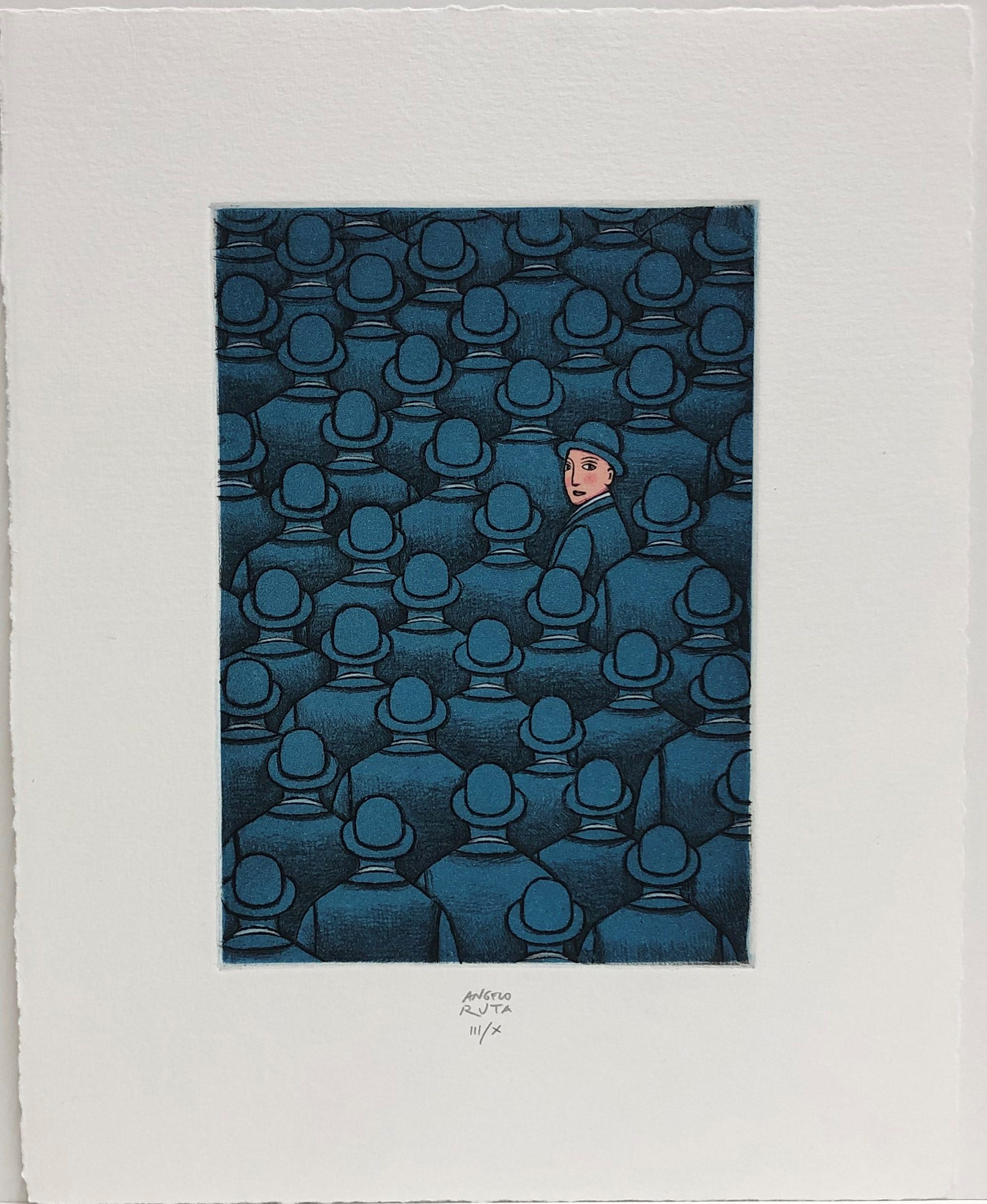
Coined originally as the Impostor Phenomenon by psychologists Pauline Rose Clance and Suzanne Imes in 1978, Impostor Syndrome describes a high-achieving individual who experiences a pervasive sense of self-doubt despite their success. According to Clance, “They are also pretty certain that, unless they go to gargantuan efforts to do so, success can not be repeated. They are afraid that next time, I will blow it.”
Success is a metric I’ve been socialised to calculate by external standards. Money, love, conventional signs of attractiveness, and fame; all of these things have been force-fed to me in spoonfuls by entertainment and media outlets that profit from my aspirational desires to covet those things. I am very much like other girls when I say I want to be pretty and successful, two things which still operate in congruence with each other. Yet, on an internal level, I can’t seem to marry these ideas to my own abilities. Money-wise, I am not successful. Love-wise, I am barely trying. In every external area I’ve been taught to seek success, I have failed in my attempts. This failure, in many ways, feels tied to me and the shape of my utility. With the dismal state of current society, I’m hesitant to consolidate my worthiness with these unstable metrics, but I would be remiss not to mention the leeches that are hard to peel off.
With my job as a writer, I succumb to the desire for external success often, and sometimes without shame. I wouldn’t hate the idea of publishing a bestseller, and I wouldn’t despise a well-paying job with great benefits and fulfilling work, but I am aware that these metrics don’t always exist in tandem with my internal understanding of success. Even if I were to publish a bestseller, a part of me would occasionally peek into that murky vat of negative attention, allowing the self-doubt to drag me into its depths, just for a few moments. These few moments can be, and often are, extremely detrimental to my immediate worldview. It colours the once hopeful belief that I am capable of success with splotches of disdain, dissatisfaction, overcompensation, the list goes on and on until whatever success I seemed to have is minuscule compared to what I don’t.
There are five known types of impostor syndrome:
The Perfectionist: Sets impossibly high, all-or-nothing goals and experiences self-doubt when they fall short of them.
The Superhero: Works harder and harder to compensate, often to the point of overworking and burnout.
The Natural Genius: Judges their intelligence and competence by how easily and how fast they can achieve something, not by the effort they put in.
The Soloist: Believes that asking for help or relying on others is a sign of weakness or fraudulence, and attempts to do everything on their own.
The Expert: Measures their worth by the amount of information they know or can perform, feeling that they must know everything to be considered competent.
I am a confusing mixture of The Perfectionist, Soloist, and Expert, but these days I’ve been leaning towards the Expert’s way of thinking. In an era where demand for critical thinking and nuance conflicts with high frequencies of frictionless optimisation, I’m prone to pressuring myself to hustle for a deep thought once or twice. I see a trending topic and feel the urge to immediately comment on it. Thankfully, I’m getting better at asking myself why my input is necessary, but for many, it still exists as the only way to position themselves as a valuable voice in the current of noise.
Who holds us hostage in these cages? Who takes on the role of warden? Officers standing around the guilty party, you, who are not sure how they ended up being burdened with so much guilt for trying to succeed.
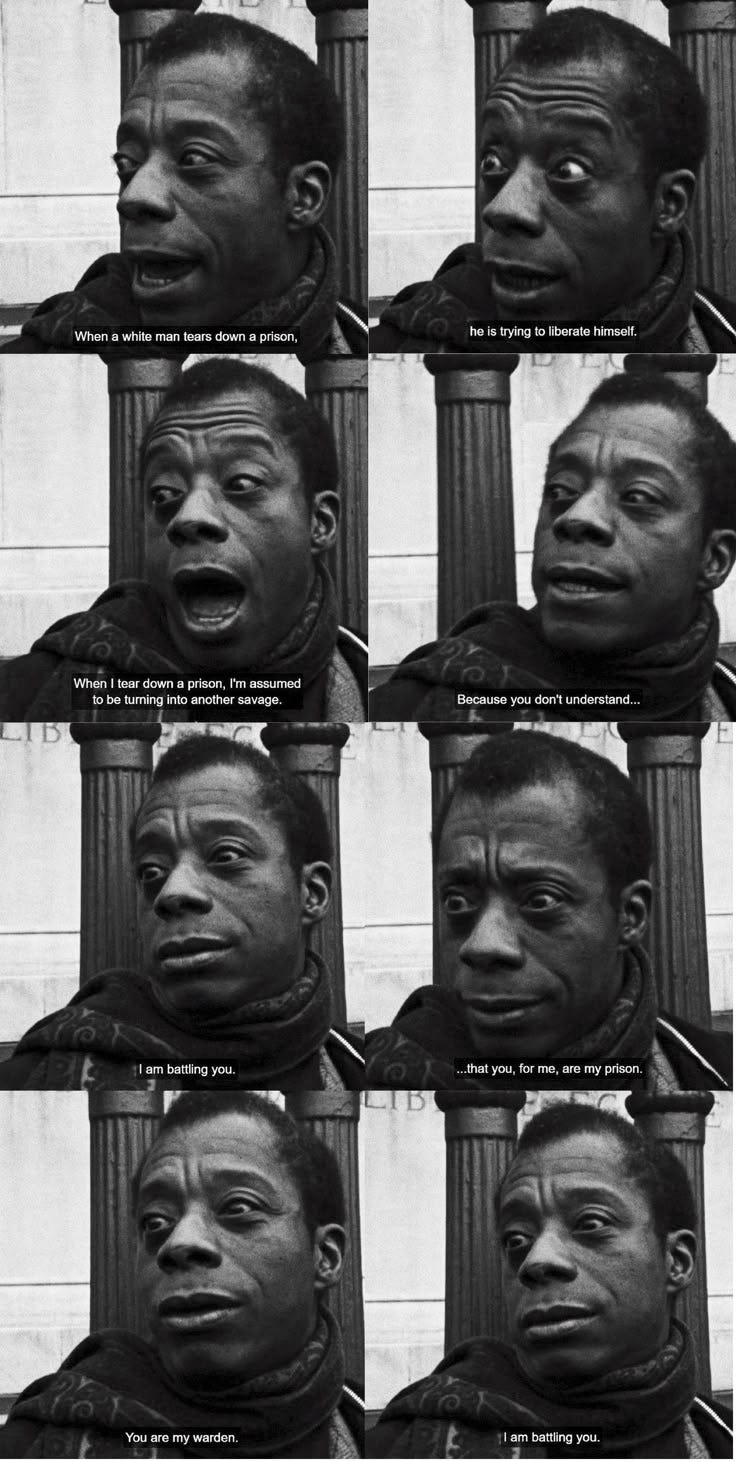
impostor syndrome as a systemic oppressive practice
I consider that impostor syndrome is both chisel and hammer in the evolution of popular culture. The hammer, so to speak, is a larger oppressive system, which acts as the obvious bad, and the chisel, delicate and precise, as the micro-aggressive acts we tend to ignore because it isn’t as obvious if you’re incurious—and a lot of people are deeply incurious. Black women are perhaps the greatest example of this.
Writer Janell Hazelwood argues that to impose impostor syndrome on Black women and women of colour is to immediately assume they have something to doubt. Now, in the long-standing history of oppression against Black women and women of colour, the indoctrinated belief that women are “lesser beings” is glaringly evident, and even now, the rhetoric shines just as bright.
This is the chisel and hammer. The delicate structure of “self-doubt”, where we coach ourselves to grow accustomed to being oppressed, works to replace real systemic isolation that runs deeper than not believing in yourself.
Sister, Outsider, an essay collection by writer and activist Audre Lorde, examines that an “Institutionalised rejection of difference is an absolute necessity in a profit economy which needs outsiders as surplus people.”1
In some ways, like the ones Hazelwood mentions, these outsiders are amplified as mavericks and trailblazers who can connect with the surplus of outsiders. In others, they are what the system has always said they are: Deviants. Unmeritorious of the rewards bestowed upon those who epitomise the pinnacle of Western idealism. Even when Black women reach the top, the scrutiny intensifies because they are not supposed to be there. The imposition of doubt is not only internal, it is explicit and damning.
Hazelwood goes on to say that, "It’s as if we are being forced to look inward to ‘fix’ ourselves and adjust to compete. But the reality is, we’re capable, we’ve earned the degrees, and we’ve paid our dues, only to still face very real, gender- and race-based barriers to our ultimate success.”
Lorde examines the extreme scales upon which racism, sexism, ageism, elitism, heterosexism, and classism live as either insurmountable barriers or fallacies. But these barriers exist endemically, as a constant reminder of that difference which is shunned or violently embraced.
I have been studying morality and the feminist perspectives of the “self” in Western society, which has led to the argument I’m trying to make that impostor syndrome is not a metric any oppressed person can measure themselves on. The scale does not exist in equilibrium for us, and so the work needed to unlearn this “doubt” cannot be solely placed on the individual. Yet, the society we live in has been built expressly for the individual.2
Who is the imposter?
If I were to describe imposter syndrome as it stands—a feeling of inadequacy even in the face of success—and not as a construct of systemic pressure, I would not think of Black women. To me, the makeup of an impostor more closely resembles those people on TikTok who were stepping on their Birkin bags in an attempt to distress them as the Olsen twins once did, as opposed to, I don’t know, allowing this exorbitantly priced bag to naturally distress over time as a result of constant use. This attempt to dirty their golden spoons, the failure of it, tells me that we really should not give a fuck about what the ruling class defines as an impostor because they themselves are the impostors. To circumvent natural characterisation in favour of cheating your way into the appearance of character is very on brand for influencers and celebrities, especially in the case of poverty cosplay3. Everything from distressed designer jeans to scuffed sneakers that retail for one month’s rent in London, there is a desire from the top to cherry-pick the sensationalised aesthetic of poverty without any of the selfhood actualised from the perspective of those on the outside. Lorde states that where fear manifests in an economy that creates a surplus of outsiders, we have all been programmed to respond in one of three ways: “ignore it, and if that is not possible, copy it if we think it is dominant, or destroy it if we think it is subordinate.”
The ruling class, when faced with their own sense of impostor syndrome, are prone to possessiveness. It is this possession that breeds a new age of “cool” across subcultures, from fashion to beauty to music to art. For the oppressed, impostor syndrome is a way of keeping us undetermined and falsely content with our roles as outsiders. Of course, this doesn’t take away from the fact of a larger system, as it shouldn’t. When faced with that delicate chisel, remember there is a hammer ever-present. Unfortunately, the whittling down of quality is a signature of the ruling class. Despite the many ways in which more interesting people have created art within these subcultures, it is still not interesting enough to liberate us from the clout-chasing trend hoppers. I might sound a little annoyed here, and it’s because I am. There is nothing interesting about stepping on an expensive bag to make it appear used. You look like a loser, actually.
I recently watched a video essay that described short-form content as a pay-to-play system, where those who can bombard the viewers with gross displays of wealth are the curators of novelty, meaning trends are first filtered through several layers of this trend-laden ragebait before they reach the likes of imitators, commentators, and admirers who know they will never achieve these things. Only the hungriest parts of their attention spans are being fed.
And yet, the onus is on me, and thousands of other marginalised people, to dig through this slop and come out still believing there is any good to success according to the Western ideal, when really, the level of success will not negate the amount of scrutiny, and in fact, it will only intensify the more skilled you are proven to be. I, personally, am learning to care less. It is not an easy task, as I’ve mentioned, and there are no six steps to overriding a system built centuries ago. Despite the systemic downplaying of our very existence, there is also the algorithmic change, the socioeconomic change, and the individual choice to preserve selfhood as the collective suffers. All of these things present issues that I hope we can inch towards changing with much courage, but I maintain that there is no greater impostor than the system itself.
Age, Race, Class, and Sex: Women Redefining Difference; Sister, Outsider - Audre Lorde.
(From my notes on Feminist Ideas of Selfhood: “The Western view of the self is inherently individual - a free, autonomous agent. Two views of the self dominate this milieu: a Kantian ethical subject (referring to the German philosopher Immanuel Kant, who’s subject uses reason to transcend cultural norms and personal preferences in order to discover absolute truth) and a utilitarian “homo economicus” (reffering to a hypothetical person who behaves in exact accordance with their rational self “using rational assessments, Homoeconomicus attempts to maximize utility as a consumer and economic profit as a producer.”)
https://title-mag.com/why-fashion-loves-to-cosplay-poverty/ - obsessed with the web layout of this article, but the content is also important.
Comments
Nothing yet. Say the first thing.
Sign in to join the conversation.