
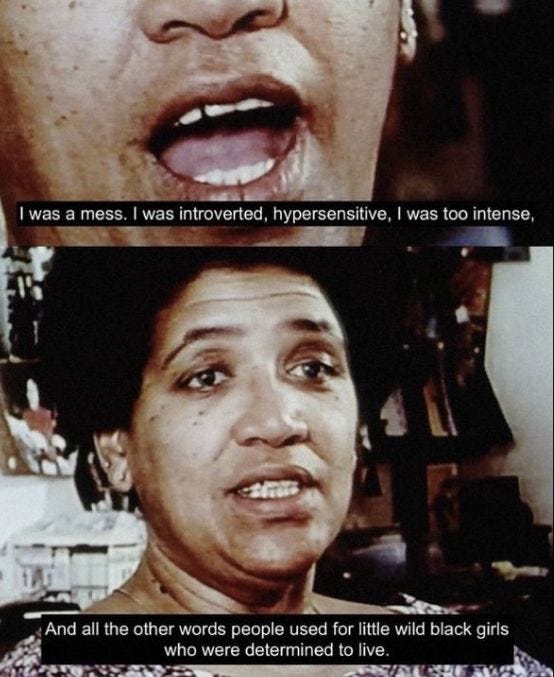
The Black woman, first and foremost, is a lesson in perseverance.
Ever since the soles of our ancestors’ feet kissed soil, we have been holding out, holding out, holding out. In this generational rotation, it can be quite challenging to ask yourself whether you’re doing the right thing. Your focus is to keep going, keep holding out. As Sethe says in Toni Morrison’s Beloved, “the future was a matter of keeping the past at bay.”
In many ways, we have watched Black women hold out until they crumble under the weight of holding. The act of holding something, once literal in nature, becomes a dynamic web for keeping everything and everyone together. Holding it down, holding it together, God, we do so much fucking holding. To the point where, if the arms tire or the legs tremble and we falter, the wrongdoing is not placed on how heavy a burden we’ve been strapped to carry, but rather our unwillingness to be like our ancestors, our grandmothers, our mothers, who held until they were nothing but string.
When I think of the Black women who present themselves as role models, moulded into casts so that I may step into and fit my body within their hollowness, I seldom think of my ancestors. It is difficult to imagine myself filling those spaces. Instead, I wonder why a role model is even necessary. Do these women, these mothers and grandmothers, want me to be them? Do they want me to hold until I can’t?
In asking myself this question, I’ve concluded that I do not look to Black women I have admired or revered as role models. To do so would be to nullify the fullness of their beings. This thinking extends into my writing. I do not write black women to be role models. To expect so much from the inner workings of one woman amongst thousands is frankly stupid and reductive of what really matters: representation.
To be clear, these two are not the same. Being representative of Black women, though at times impossible for the same monolithic reasoning, has its own requirements.
Being a good representation of a black woman does not require a moral code. Good does not mean pure, and to represent someone is to understand that. Do you understand this woman? Do you empathise with her, even as her flaws, as frustrating as they might be, drag her into self-destruction? I gravitate towards abject women in media often. It soothes the parts of me that have shut down due to years of repression, and now, the feeling of elation I get watching a Black woman be strange and complex is unbound.
I expected to feel this way when I watched One Battle After Another for the first time a few weeks ago. I bypassed the initial excitement and waited until the discourse got the better of me to watch it, and unsurprisingly, I had thoughts. Though the thoughts come in two-fold: a dissection of the film itself, its characters, and their portrayal, and secondly, the noise surrounding what a flawed character should be.
PERFIDIA AS A LESSON ON HYPERSEXUALITY
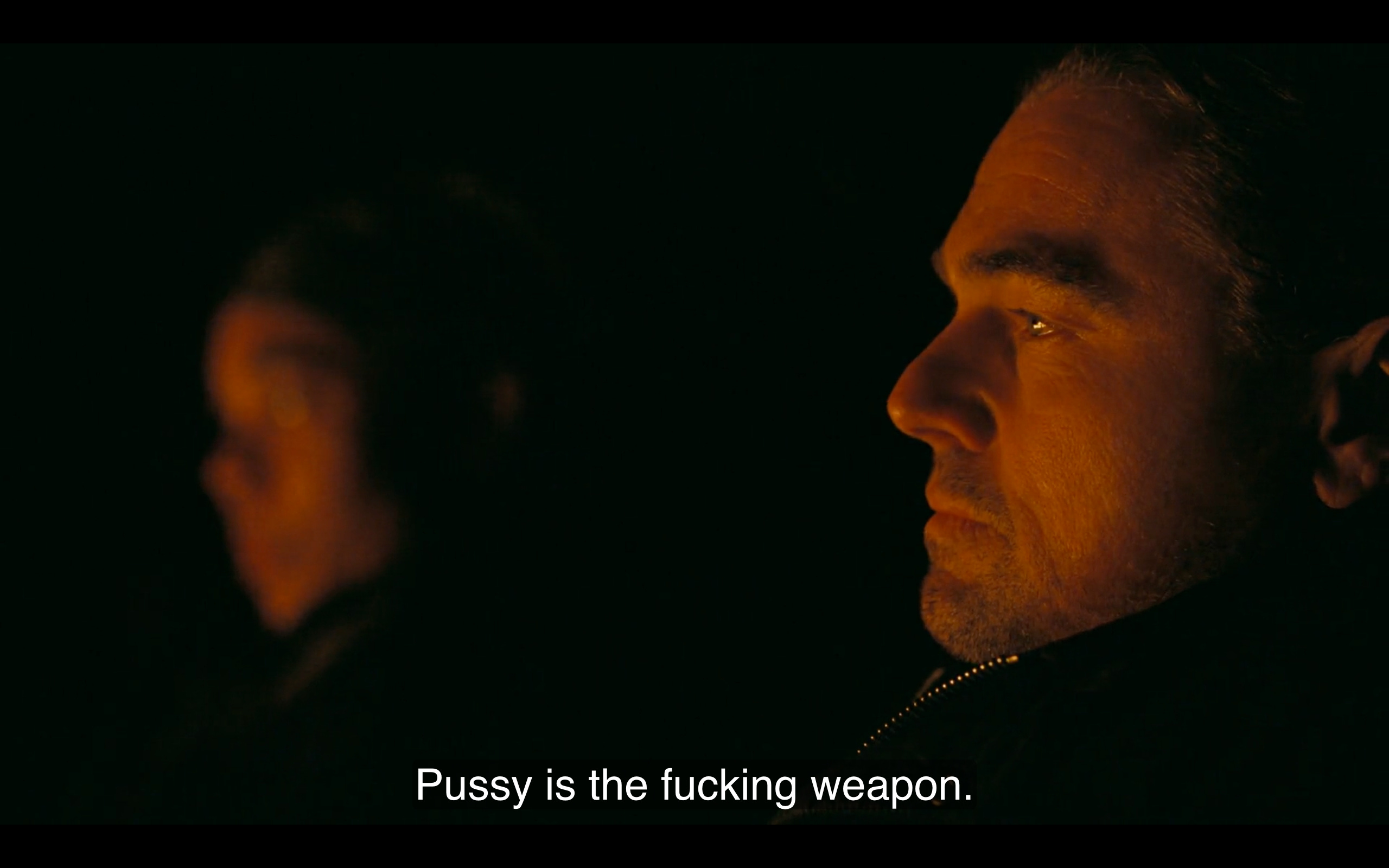
I will always encourage a healthy dose of questioning towards a white man who decides to write a Jezebelian Black woman into his script. I can understand the overall disdain for this trope, considering the history and the particularly white lens through which we are perceiving Perfidia Beverly Hills’ sexuality, but I feel the discourse in particular ignores the fact that Perfidia’s hypersexualisation is not isolated. It exists, as the Jezebel does, in a larger conversation of why many Black women hypersexualise themselves as a means of accessing control. Does it work? Not really. But it exists. Portrayal does not mean endorsement, and the maladroit tackling of the subject does not negate its broader importance.
Now, however, I want to hyper-focus on Perfidia and the responses to her hypersexualisation as an isolated issue. In a bathroom scene early on in the film, there was an immediate fear I had that Perfidia was about to be raped by Lockjaw, a military officer who crudely lusted after her from the minute he appeared on screen. It was frightening to consider that he might finally force himself into her orbit, taking back whatever sense of control he lost when Perfidia had him at gunpoint at the beginning of the movie— though we find out that he might like that sort of thing. Nevertheless, I wondered, “Is she going to seduce him to get out of this?”
I was right. Kind of. Her initial response was to narrow her eyes and press herself into him. Thankfully, we didn’t have to witness what would have been at best a coercive blowjob, but I could still sense the residue of terror. We see it a little while later. After she successfully escapes Lockjaw and meets up with Pat—soon known to be Bob—, he kisses Perfifda, and the camera lingers on the way her expression, usually charged with lust, slowly morphs into distress. Teyana Taylor, that Golden Globes award was well deserved.
A branch of hypersexuality is the matter of confusing perceived violence with arousal1. It’s the brain’s way of protecting you from trauma. Consequently, you may find yourself aroused by the notion of something violent or insidious because any other interpretation would retraumatise you. It’s not often voluntary, nor do many people act on it, but in the case of a Black woman whose position in the world is treated as one of an innately sexual function, to be decidedly hypersexual is an attempt to regain control. Perfidia wants to fuck all the time. Arguably, it’s at the most inopportune times, which makes the image of a revolutionary figure seem mocking, but I have a different perspective on things.
I have been hypersexual since I was a child, and until now, I have never known how to understand what it has done to the way I approach normalcy because I have not had the representation necessary. I understand why Perfidia utilises it in inappropriate circumstances because it is something of a stress toy. The devil you know. Bodies for Black women are not treated as such; to deny this is to close your eyes and proudly call the sky black.
The portrayal of the hypersexual woman is exhausting, and I understand well. I famously dislike Tyler Perry’s rolodex of used and abused Black female characters because they’re often caricatures of women who, despite being used and abused by men they trusted, have fully complex inner lives. The closest we got to that was Taraji P Henson’s Melinda Moore Gayle in Atrimony. This trope is maltreated, usually by male writers and directors who put little to no effort into understanding how integral misogyny is to the motivations many of these women have. Hypersexuality is a byproduct of misogyny. The belief that a woman, to gain control of her autonomy, must overexert that autonomy to survive even as it circles back to demean her is a form of internalised misogyny. These movies rarely understand and make room for that because I guess it’s not as interesting to empathise with women who actively utilise what is often meant to be exploited.
Black women are given their purpose in society before their bodies have absorbed enough formative information to develop their own place in the world. The decision is not really yours, and when it is yours, it is only because you have chosen to completely succumb or completely resist. Either option will get you crucified.
I find hypersexualised characters deeply fascinating, especially black hypersexualised characters, because there is a presumption of promiscuity that, if mishandled, can just as easily veer into caricature. I don’t think Paul Thomas Anderson has the tools necessary for writing a hypersexualised Black woman well, but on its own, Perfidia’s actions invite another question into the mix: Can you guys handle real uncomfortable portrayals of hypersexualisation?
Despite my hesitations, it’s complicated for me to try and muddle through all this, because I ended up agreeing with people I thought I’d disagree with. Unfortunately, we’re once again reminded that a topic like hypersexualisation cannot be dealt with such a blasé approach.
THE BLACK WOMAN IS AN IDEA FIRST, PERSON SECOND - Black women as foils for white heroes.
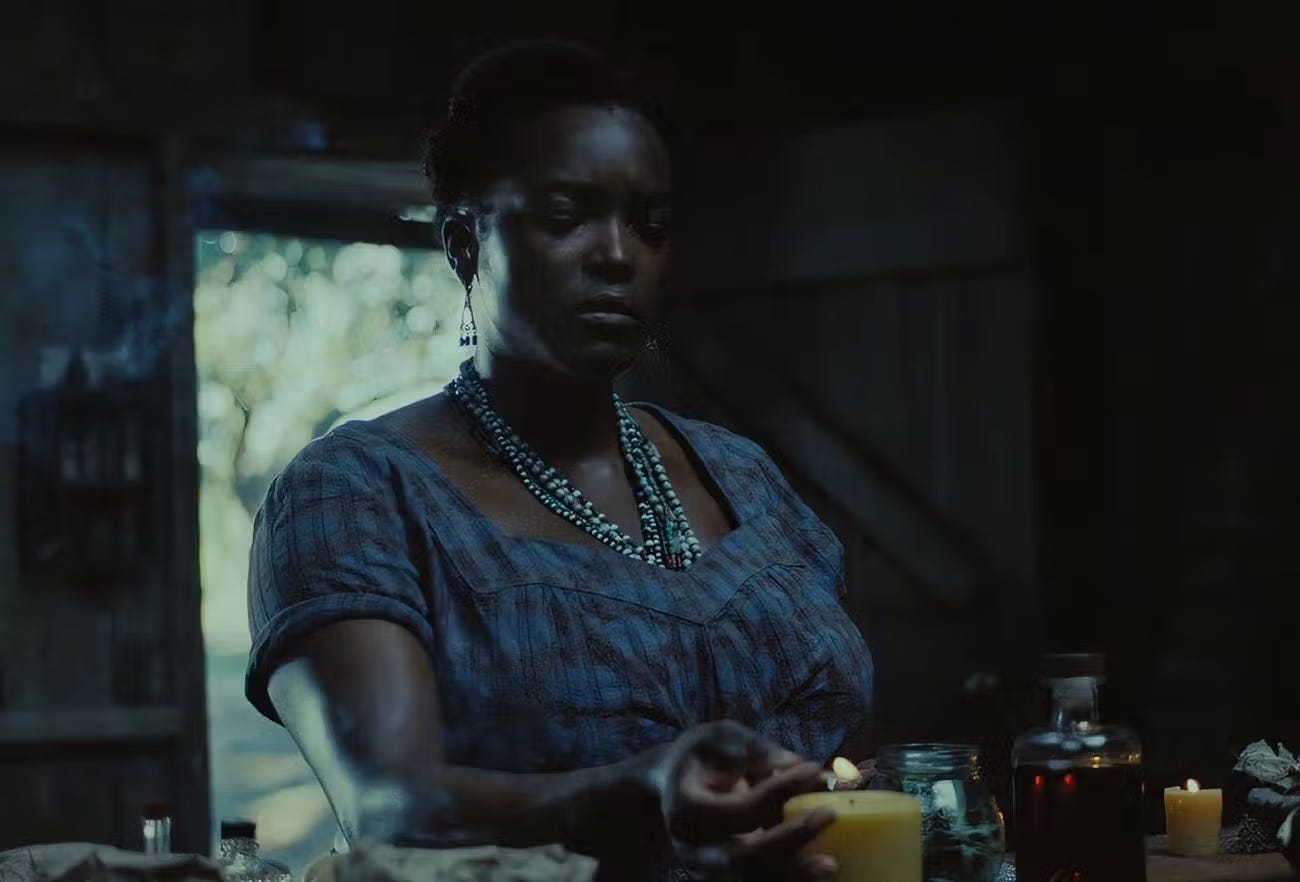
Even when the goal is to bring awareness to a trope or stereotype, it seems people can’t help but see women as those stereotypes first and foremost. Guilty until proven innocent, I guess. Caught in the crossfire of discourse wars over One Battle After Another was Sinners, Ryan Coogler’s feature about the SmokeStack Twins running a juke joint during the Jim Crow era. Smoke’s ex-wife, Annie, has been used as collateral damage over and over again as an example of a “mammy” caricature, which tells me that some of you don’t know what a caricature is.
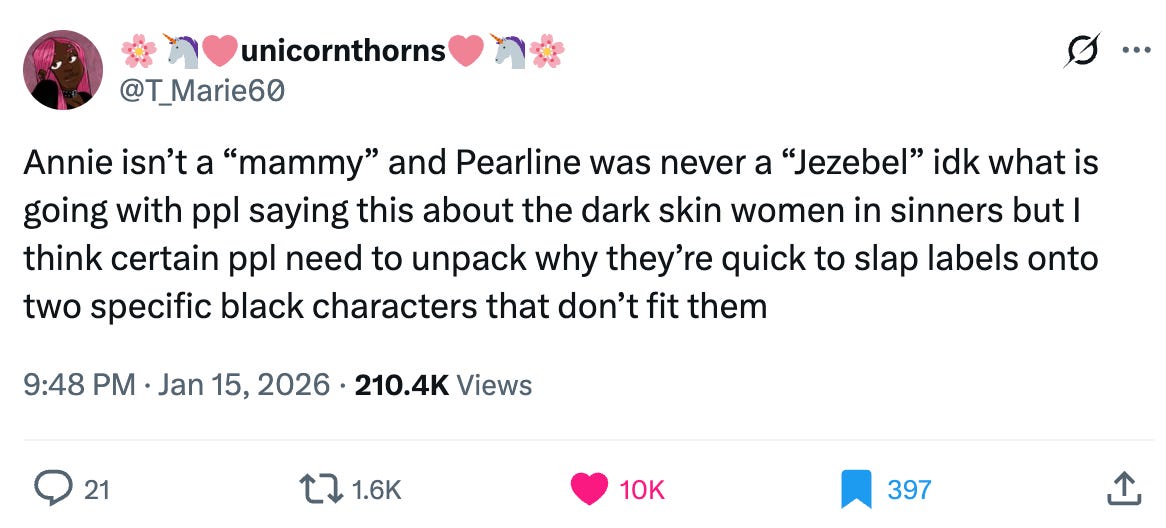
In trying to bring awareness to the misuse of the labels, people have ironically been misusing the label. It’s weird, because none of their actual characterisation points to these labels being true, only that the people who point that accusatory finger subconsciously believe it to be true.
Black women in media are often reduced to the ideas they present rather than the importance of their actual characters. Annie is central to revealing the identity of the vampires and teaching the remaining survivors how to protect themselves. Yet some dofus on Twitter is convinced that she is a caricature because she is fat and dark-skinned. Guilty until proven innocent, and even then, innocence is not promised.
On the issue of Perfidia as a pedagogy for hypersexuality, I won’t act as though it was explored perfectly. In fact, I think it could have been done better. The weird interracial overtones definitely sour what could have been an interesting take on a woman’s choice to exaggerate her sexual nature for the sake of survival. It’s not a new story, nor is it done all that well, but I chose to unravel what Paul Thomas Anderson wanted me to unravel. I followed his trail, I empathised with his almost cartoonish portrayal, and I waited for the other shoe to drop, the one where Perfidia is also unravelled, given a history that supplements the mess she made. I did not like her, but I did root for her. And then she disappeared.
Where PTA’s portrayal of Perfida loses me is her story being used as the catalyst for two white men who remain losers up until the end of the movie, one less so than the other. True to history, all the women are subsumed in the murky waters of this almost three-hour film, from Deandra and Junglepussy to Rochelle and the sisters. It’s clear who the hero is meant to be in DiCaprio’s character, but I didn’t view him as one at all. Sergio was way more interesting as a revolutionary figure. He had presence, connections, a sense of rerouting even as Bob got himself tased and dropped from a fucking tree. Everyone who wasn’t given a majority of the screen time bar Willa, was more interesting, and, unfortunately, we don’t see many of these interesting people for the rest of the movie.
Because of this, Perfidia’s hypersexualisation is treated as the utility of her role rather than a tactic used by a woman who is many more things. It’s annoying, because I wanted to defend this movie, but the more I waded through its run time, the more I realised that it would not be the case. By the end, I’m confused as to whether she was meant to be a sympathetic character or someone who simply made a bad choice for the sake of her individual survival, even as that choice completely upended a crucial point in the French 75’s mission.
To end my thoughts on the film, this comment under Waving The Red Flag’s review said it best: “I don’t think PTA is equipped to answer who is Perfidia as a full breathing character. I don’t think PTA can answer for what this film is asking us to believe about political revolutions. It’s just a movie about a family, and when I look at it like that, all I can say is shits was aight.”
THE ISSUE OF PURITY AND REPRESENTATION.
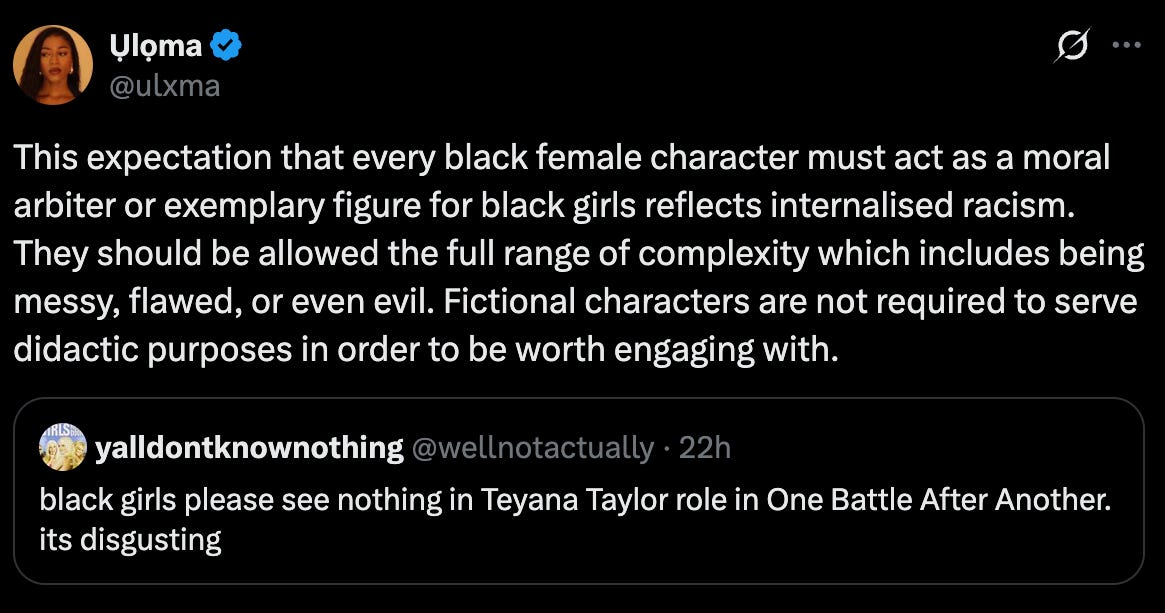
Now, on the matter of who the character should be, I meet with more vim than I did in the film. As discourse does, I was dragged out of the world and down below into the underbelly of people wanting to purify Black women characters, which can be separated from One Battle After Another because there are a myriad of stories that do it better. Toni Morrison, for one, is known to strip her characters and make them lean enough to face even the worst of crimes, which often involves a blurring of ethics. Luster by Raven Leilani is a book about a Black woman who ends up living with her affair partner’s family, including their adopted Black daughter, whom she essentially becomes the caretaker of. If you read some of the one-star reviews of Luster, you’ll see that many people are quite appalled by how gross and indecent Eddie, the protagonist, is. I didn’t love the book, but I’ve grown to appreciate it, certainly more than its detractors.
This isn’t to say that you have to like bad women in media, but I’d like you to at least question your resistance to Black women being bad. What kind of Black woman are you expecting to get? What constitutes a layered and complicated Black woman? Answers will definitely vary, but as As Told By Kenya has said, we don’t get manic pixie dream girls in brown skin. It’s quite an unpopular portrayal. All we get are complications, but often those complications are uncontrolled and at our expense. When a Black woman presents herself to have any semblance of agency in her bad decision-making, no matter how real it is, that is often where people have a problem. Black women are easy to pity when they’re forced into uncompromising scenarios, but once they shift that power dynamic, that is where the matter of role models is constantly rehashed. The same could be said for Perfidia. That bathroom scene was enough for me to realise that the hypersexualisation was an act and, however poorly written, deserved much more consideration.
As a whole, I find complicated Black women who are active participants in their own demise far more fascinating. It’s in the Sulas’ and the Eddie’s that I see myself, not as role models but as a representation of how suffocating it is to feel as though you have little control. People have motivations for everything they do. Whether it’s written well or not is the task of the writer, and a bad one can tarnish good potential.
I don’t need Black women to be morally good. I don’t need them to be morally reprehensible just for the sake of it, either. I need them to be active, responsive and layered. The reason I think it’s so hard for Paul Thomas Anderson to write Perfidia is that he’d have to develop her past the hypersexualisation. As much as I’ve made a case for it, it isn’t the only trait she should have, and yet when the story could have progressed, she disappeared. To write a good flawed character, you yourself must have an understanding of where this flaw comes from and where it will end up. Paul Thomas Anderson did not. So while I agree that Perfidia was hypersexualised and her hypersexualisation has merit, she wasn’t given the time to be anything else.
This is a space for evolving opinions, though the one that stays quite firm is that so many of you expect Black women to be easy heroines. You want Black women in media to be exceptionally capable and constantly unmarred by self-inflicted flaws. That’s boring and unrealistic. Harper Stern, the protagonist from HBO’s Industry, is one of the most fascinating women I’ve come across on TV. She is corrupt and crooked and willing to desert any sense of morality for the sake of getting ahead. She is not ashamed of it. She is a bad person, and she is undeniably compelling.
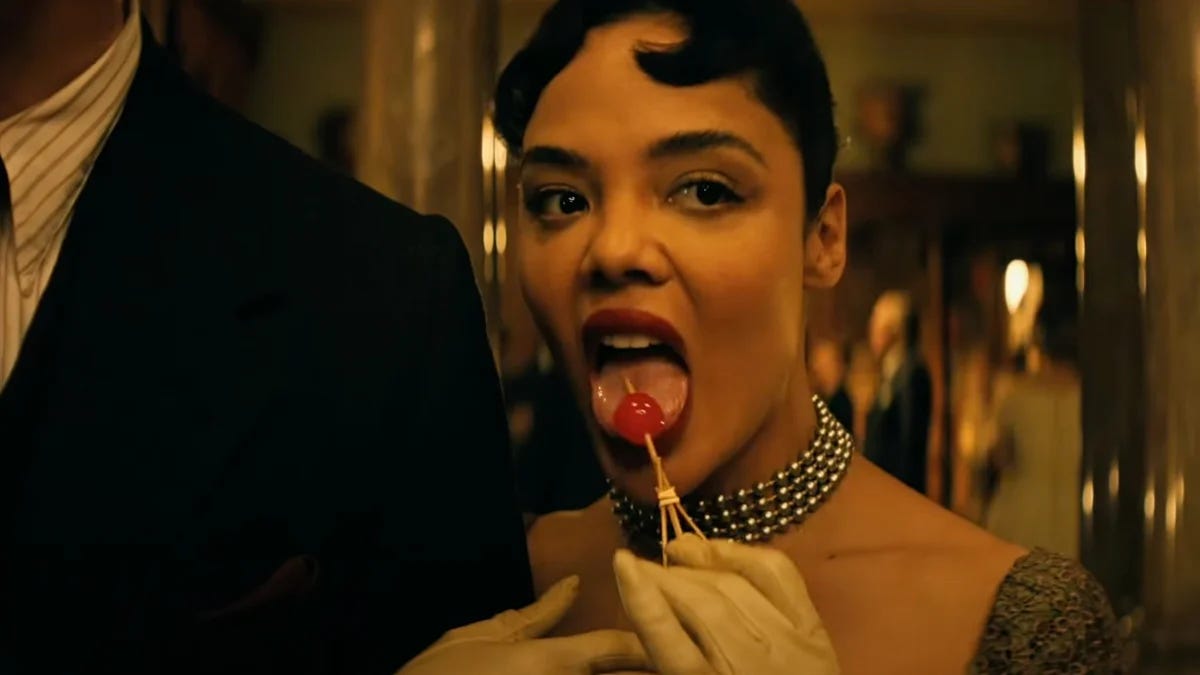
A movie I don’t see getting much love is Hedda, which follows a Black woman over the course of one night as she makes horrible yet admittedly understandable decisions. Hedda is at times a victim but never a bystander. She plays an active role in turning the night into a frenzy of liquor-soaked fun, sprinkled with close calls with her old lover, her current lover, and her husband. Hedda is a mess who thrives on dragging others into her mess, and I loved her dearly. In an interview with A Rabbit’s Foot, Tessa Thompson, who plays Hedda, makes it clear that the binary of villain or victim did not appeal to her in unpacking the role. She simply asked herself why we make the choices that land us where we are. As an emotional core, I think it’s what allows me to empathise with Hedda, even as she does things that are endlessly frustrating and quite senseless. I do not question the writer because I know where the senslessness is rooted, and as all good stories are known to do, I have many theories as to how her story will end. For Perfidia, I could not say the same.
To conclude, I’d like to circle back to my initial frustration. Black women already have so little in the matter of representation in comparison to the full breadth of white heroines and pale gothic figures and manic pixie dream girls, that each sliver of representation is treated as a goal post that shifts ever so slightly because we’ve become incurious to complexity. Easy media often wins, which is why this representation is so sparse in quantity and questionable in quality.
I say this in reference to the exceptional negro. Working twice as hard to be seen with a light half as bright. Everyone who looks like you is looking to you. Perhaps it’s selfish of me to say, but I have no desire to be a role model. If you find that your footfalls follow a similar pattern to mine, then by all means walk the same path, but do not expect me to lead you.
Thanks for reading Accident Prone! Subscribe for free to receive new posts and support my work.
“a continuation of sexual behaviors regardless of aversive consequences.” - The Roles of Shame and Guilt in Hypersexual Behavior, Randy Gilliland, Brigham Young University - Provo (read with discression.
Comments
Nothing yet. Say the first thing.
Sign in to join the conversation.