
Scandi summer is over, and Strategic Accidents HQ reopened for business last week.
Every August and January, I curate an official Strategic Accidents playlist. Find the A/W 26 here.
Since it’s back-to-school time, I’ve included a special section called Itinerary Insights – exciting Stockholm events this Stockholm where you can gather insights and inspiration.
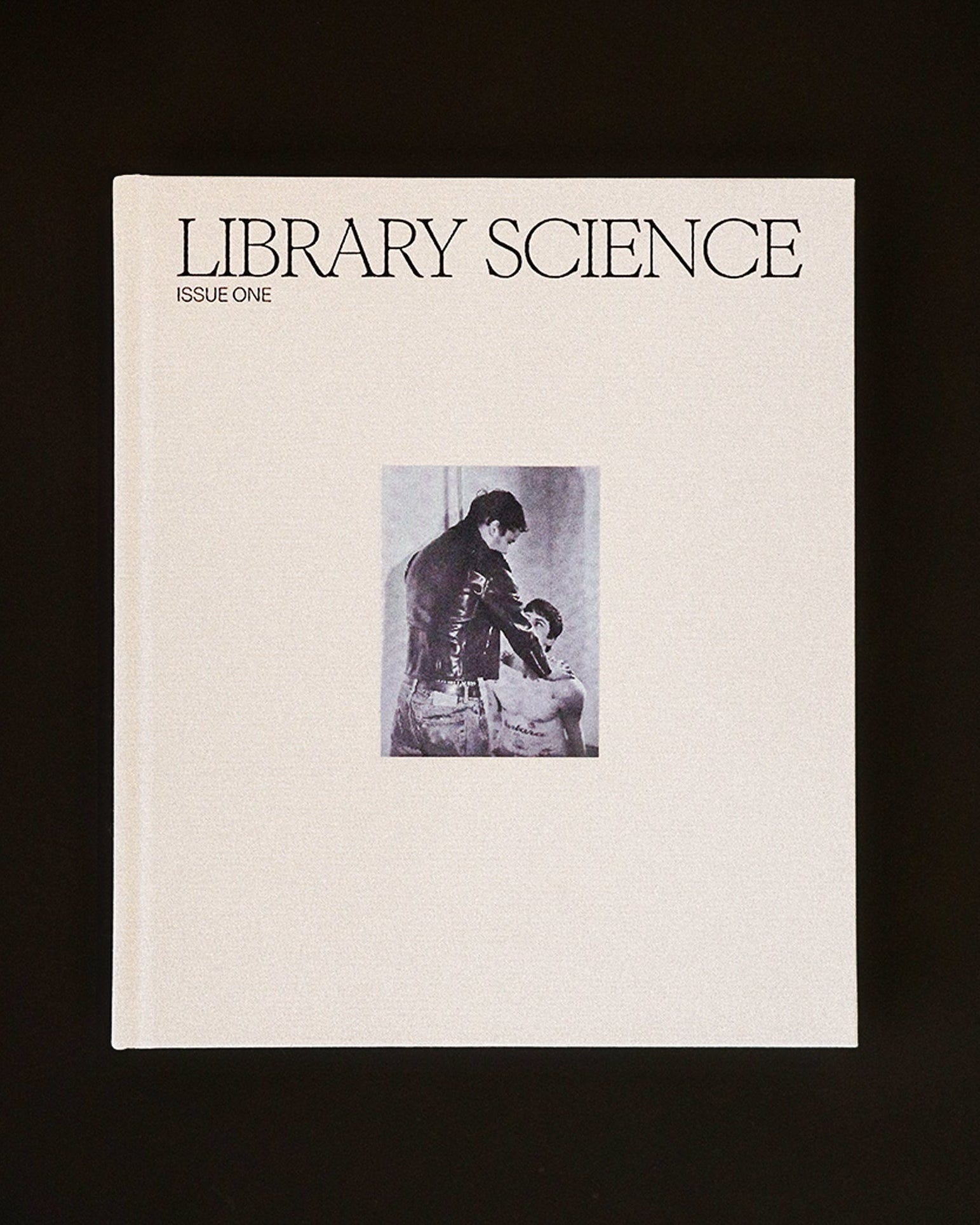
The most interesting things I’ve read, seen, thought about, or debated the last two weeks. High and low.WRITERS WAVE. Last year this newsletter predicted a writer renaissance. And it might be upon us now. According to Financial Times, the new status symbol is books written by real people (not AI). The Mercer Edition claims “writing like a human being is the most radical act you can make today” – because AI can’t understand the nuances real people understand. Monocle points out that AI might be able to aggregate news, but humans usually gather it. A NYT op-ed argues that you should not let AI do your writing, because writing is about compelling thoughts (and that is hard to outsource), which in the long run makes us better thinkers. Writing with AI also comes with risks, like getting the first-ever zero-star review on Pitchfork. This makes it important to highlight texts which are not written by AI. Anthropic has promised to implement a digital watermark to highlight AI-generated text. Some people use “em dash disclaimers” to prove they didn’t use AI. The Economist has launched a guide on how to spot AI writing. Gen Z takes it to the next level and goes for pen and paper. Cool people are also writing – Kaia Gerber (of The Shards fame) launched a print publication under her Library Science flag and admitted to secretly writing fan fiction. Do you still wanna stay with the AI chatbot interface but get human-written answers? Try ChatTJB where a random guy answers your questions.
DIFFERENTIATE AGAIN. Is Jack Trout (author of Differentiate or Die) getting a renaissance? After years of Ehrenberg-Bass’s “being distinctive is more important than being different” narrative, differentiation might be plotting a comeback. The Creative Dividend proved that differentiation is more important than distinctiveness for challenger brands (and vice versa for mature brands). A new paper in the Journal of the Academy of Marketing Sciences argues that ad messaging with a point of difference (pod/usp) is more effective than ad messaging without. It seems to drive all metrics – awareness, consideration, purchase, and liking.
EXPENSIVE DATING. Is dating too expensive for young people? A New York Times article claims the combination of a sluggish job market, crushing economy, and escalating costs makes dating impossible for Zoomers to afford. Over half of unmarried people between the ages of 22 and 35 state insufficient money is their biggest barrier to dating. Deutsche Bank researched the most expensive cities to date in – the clear winner was Geneva. Stockholm ranked at 7, below Copenhagen, Oslo and London but above NYC, Tokyo and Paris.
AUDIO AWARENESS. According to a System1/Effie study, audio advertising boosts profits by 75%. Audio boosts price insensitivity by 81%, customer acquisition by 19%, and delivers an average uplift of 22%. I think we need to talk about podcasts. Podcasts are one of the most exciting mediums right now. It’s one of the few media where consumers are deeply engaged in the content, the creators, and the topics discussed. And it is usually a tool to ignore the outer world. According to Scott Galloway, Trump won the election because he won the podcast game. I lectured at Berghs SoC last year, and it turned into a chat with the students about the future of media. We all agreed that podcasts were the most intimate media, where we really immerse ourselves. Yet most agencies do podcast ads with their left hand, and honestly, most of the ads I hear on podcasts are very skip-button-friendly. Are we underutilizing an incredibly exciting, modern, and intimate medium?
AI IN STEM. As marketers, we constantly debate how AI will automate creative tasks. However, artificial intelligence might be even more valuable in industries that demand intelligence rather than creativity. And it has. Recently, AI has helped to: Create synthetic viruses. Solve an 87-year-old math problem. Develop a natural alternative to Ozempic. Battle male infertility by finding sperm where doctors can’t.
SHALLOW READING. This newsletter is obsessed with the idea of books as a status symbol and cultural object. But there might also be a more shallow side to it (beyond performative males reading Didion’s A Year of Magical Thinking). i-D wrote earlier this year about the Whitney Review aka the hot literati reshaping criticism. LA’s most exclusive clubs are now book clubs – its participants have a broad set of agendas: from escaping the algorithm and finding the new book to adapt into film. Too lazy to read books – this Berlin firm helps you make your books look like they’re read. Shallow reading is not always positive. According to a Guardian piece, focusing on our looks while reading, rather than on how we engage with the text, creates a new barrier to literary culture.
FEED OF SAMENESS. Are you looking the same as everybody else? It might be because of the algorithm. At least according to content creators. According to Marcus Johnson, trends are taking over taste. Orenmeetsworld claims every city now looks the same with the same stores and cafes, and since everyone has the same things, nothing is cool anymore. Brendahashtag thinks all graphic design looks the same and has found the root cause: templates. Ironically, everyone seems to claim this at the same time. This made me think that marketing science might be both the gift and the curse. Through Les Binet & Peter Field, Ehrenberg Bass Institute, System1, and other often-quoted players, we have learned a lot (Broad reach! Distinctive brand assets! Fame campaigns!, etc.), but there is also a risk that we all use the same playbook and become a part of a marketing sea of sameness.
EVERYDAY H(AI)CKING. According to Airbnb CEO Brian Chesky, to win the hearts and minds of the masses, AI companies need to build things that regular people use. This might be happening right now. A set of AI solutions that improve more mundane things in your everyday life is surging. OpenAI recently launched a service that lets people book tables through ChatGPT (something people had built their own agents for before). There is an AI agent that helps you book hard-to-get Pilates classes (and also hacking the gym’s system, btw). In the UK, regular people are using AI to battle the state in everything from getting housing approvals to benefits. Some people use it to find lower prices when shopping online. Sometimes I believe this is much more exciting than some of the big visions from the big AI companies.
CORPORATE FATIGUE. Almost everyone I talk to seems to be overworked and understimulated in their corporate jobs. And the statistics tell the same story. According to Gallup’s State of the Global Workplace report, global employee engagement fell 20% in 2025, its lowest since 2020 (the COVID year). High-performing industries are at the pinnacle of this. A recent study on lawyers in New Zealand found that they suffer from “high levels of vicarious trauma, secondary traumatic stress, moral distress and widespread burnout, depression, anxiety, and stress”. In the U.S., many people who can’t take it at work anymore are staying anyway since they are afraid of losing health care. Gen Z is seeing through this and is valuing their careers less than their millennial counterparts do. However, some people say you should just suck it up and become “emotionally resilient” if you want to succeed in today’s corporate world.
EURO PALANTIR. European governments are trying to cut their Palantir addiction and opt for local alternatives. France and Germany opted for French company ChapsVision. In Spain, the government has instructed state companies to ban Palantir from public procurement tenders. There are two exciting Swedish alternatives to Palantir. Stockholm-based Nordan was founded by Evelina Antilla, and this spring µTorrent founder Ludvig Strigeus joined. Malmö-based Neo4j is differentiating itself as not having a kill switch.
MAINSTREAM MARIJUANA. Is weed having a moment? Last year marijuana surpassed cigarettes in the U.S. Positive marijuana tests are rising, but more employers are dropping them. This is driven by the increasingly lax legislation on cannabis. The WNBA has removed cannabis from its banned substances list. According to an op-ed in The Wall Street Journal, weed is no longer a countercultural identity marker but the new booze.
THE INSIDER SLOWDOWN. Is the AI industry going to slow itself down on purpose? Top staffers at some of the largest tech and AI companies have written an open letter urging the US government to slow the pace of artificial intelligence development to allow security and safety measures to catch up. JPMorgan Chase CEO Jamie Dimon is leading a cross-industry effort to tackle AI risks. There is also a guerrilla movement – nearly a third of workers admit that they are sabotaging their companies’ AI strategies – predominantly because they get paid too little.
POOP POWER. Earlier this year, Harvard Medical School assistant professor Trisha Pasricha’s book You’ve Been Pooping All Wrong gained headlines. And poop is making it into the algorithms – health influencers are now sharing “poopmaxxer salads” and bathroom routines with each other. Stockholm startup Alba is pushing sponsored posts for a poop-analysis. Aesop’s marketing team has had their ear to the ground and re-launched their Post-Poo Drops with a cheeky ad campaign.
Unsure where to dig for insights and inspiration this autumn? I’ve pulled together a list of some events that I’m excited about. Very much Stockholm-based.
Vinterviken Sunset Session (Vinterviken). August 21.
Eken Marknad (Slakthusområdet). August 22.
Augustifesten (Ingmar Bergmans Plats). August 22.
Arkad Furniture Festival (Slakthusområdet). August 27.
EffDay (Münchenbryggeriet). September 3.
Nordic Tech Week (All City). September 7-11.
Stockholm Korean Film Festival (Bio Skandia). 16-20 September.
Young Lean Art Exhibition (Torsgatan 22). 25 September - 11 October.
Vincenzo Latronico Author Talk (Kulturhuset). 28 September.
Open House Stockholm (All City). October 2-4.
Stockholm Jazz Festival (All City). October 9-18.
Stockholm Open (Kungliga Tennishallen). November 7-14.
Stockholm Film Festival (All City). 11-22 November.
Polaris Perfume Expo (Downtown Camper). November 28-29.
The Creative Open (venue and date TBC).
Things I’ve been reading, watching, and listening to. Some connect to bigger ideas. Some are just nice reading on their own.
Y Combinator’s Request for Startups list for fall 2026. Time to start working on your pitch deck.
Reddit has launched a beauty index based on data from its community.
Interview with Ralph Lauren CEO Patrice Louvet on the importance of not spreading too thin and how to balance magic with logic.
Inside the coke-fueled rise and fall of Vice.
Intel for Stockholm-based marketers. Jobs, new spots, and occasional gossip.
Hyper Island is moving to what real estate brokers are calling Tidningskvarteren (around DN-Skrapan).
The company behind Nöjesugiden (HKM Media) has filed for bankruptcy. RIP.
Sagas Okända Stockholm is becoming a book.
Spots: The Korean Culture Center is opening a book café. Nexiko is taking over and saving Elverket.
Jobs: Agency Partnership Manager Nordics at TikTok. PR Strategist at NORD.
xoxo don’t forget to share with your colleagues, clients, agencies, external stakeholders, and office nemeses.
Comments
Nothing yet. Say the first thing.
Sign in to join the conversation.