
Hi, and welcome to this week’s newsletter.
Substack has a word limit, and I’m running out of space. Let’s head to the insights.
INSIGHT DOWNLOAD
The most interesting things I’ve read, seen, thought about, or debated the last two weeks. High and low.
THE NEW TELEVISION. TV (at least the loosely defined version of the word) is changing rapidly right now. Substack has an AppleTV app, and Instagram is testing one out. The border between social media and TV is getting even fuzzier. Content creator Alix Earle is going from “FYP to your TV” for an unscripted Netflix show later this year. Hitchcock’s The Lodger has been turned into a “vertical microdrama” on the Tattle TV App. Netflix is producing “background noise shows” designed to watch while scrolling on another device.
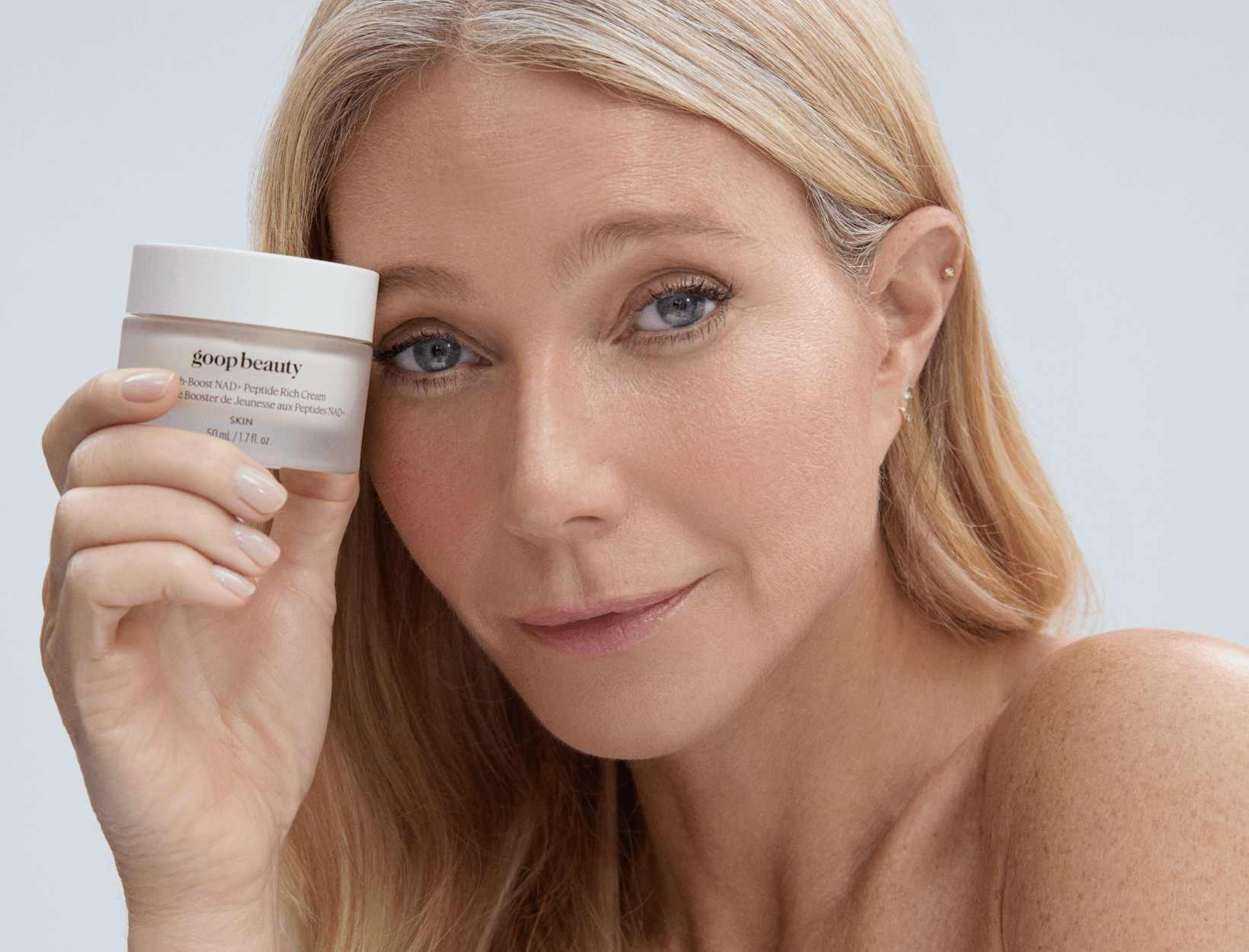
GENERATION PEPTIDE. Peptides (short chains of amino acids that improve cell communication, support collagen production, and promote healing and firmness) are the biggest wellness craze right now. Especially the “gray market Chinese” ones. The hype is fueled by TikTok, Instagram, Discord, and Reddit and sits at the intersection of biohacking, hustle culture, and looksmaxxing. Silicon Valley-based users are true to their startup ethos, aiming to move faster than regulators. Gwyneth Paltrow is apparently trying to save Goop by launching a moisturizer infused with NAD+ (a gray market ”peptide” that is supposed to slow or reverse signs of aging). However, according to Psychology Today, it’s more about wishful thinking than science.
EMPLOYEE EMPLOYER AI GAP. WSJ reports, in a very viral article, on the AI gap between employees and employers. In a survey of 5,000 white-collar workers, two-thirds of non-managers say it saves them less than two hours a week or no time at all, while only 2% of executives think the same, and 40% claim they save more than eight hours. Employees feel overwhelmed, spend loads of time correcting AI errors, and use the tools for basic, not complex tasks. 40% would be fine, never using AI again. At the same time, Citi has built a 4,000-employee internal AI workforce. Following the latest Claude update, a Swedish IT consultancy has stopped charging for code.
SCULPTURAL COUTURE. There was something incredibly visual, sculptural, and theatrical happening during this year's Couture Week in Paris. Check out Robert Wun, Valentino, Viktor & Rolf, Ashi Studio, Schiaparelli, and Miss Sohee. TTP? Charli XCX is, of course, already there.
RANDOM OPTIMIZATION. LLM optimization is the big hype for brands looking to capture search traffic with LLM models. However, it might be as predictable and linear as they hoped. New research concludes that “there’s a <1 in 100 chance that ChatGPT or Google’s AI, if asked 100X, will give you the same list of brands in any two responses.” Ouch.
CAN AI TOUCH? AI is, for most people, a chatbox but it might be much more tactile very soon. Tesla is no longer a car company but a robot company. Physical Intelligence is a Silicon Valley-based startup building robot brains. Jensen Huang recently claimed, “The ChatGPT moment for robots is here”. But it’s not just a top-down process led by SF firms. OpenClaw is an “open-source autonomous artificial intelligence personal assistant,” which is basically an AI assistant installed on a separate MacMini or Raspberry Pi that actually executes tasks for you. The agents? They have already created their own forums where they discuss their humans. Rentahuman.ai is a service where AI agents can rent humans to perform different tasks. In China, physical AI is taking another route. Cosplayers help women go on real dates with their AI boyfriends for a day.
KEEP IT REAL. Ogilvy Social’s 2026 trend report says one thing clearly: 2026 is the year when real returns (I wrote about the return of handcraft in the last newsletter). Dazed coined 2026 the year of the analog, and it doesn’t necessarily mean that we go offline but that we produce and watch content about going offline. Other small signals include a cassette tape café in Shibuya and Tin Can, “a new school land line for friends”. Everyone might not go offline and shift to dumb phones. But offline will, as Edmund Lau claims, become a status symbol. “The overall lifestyle that surrounds it – having a lot of leisure time, and the luxury of not having to check your phone – that’s the status symbol, more than carrying the dumb phone.” Talking of real? Simon Porte Jacquemus just made his mom the first official ambassador of his eponymous brand.
THE ECONOMIST GONE ROGUE. Has the magazine, for those who think of a Middle Eastern country with a 3.3% growth rate when someone mentions Jordan, taken a new turn? They seem to (or at least advertise a lot on Instagram about that they) write about drugs, porn, and alcohol. Articles include: “How porn stars can survive in the age of AI”, “Brute force is no match for today’s high-tech drug-runners”, “The traffickers are winning the war on drugs”, “Falling wine sales reflect a lonelier and more atomised world”, “AI is upending the porn industry”, “Health warnings about alcohol only give half the story” and “How humankind’s 10m-year love affair with booze might end”.
MEDIEVAL MOMENT. Medievalcore was all hype last year, but it might be evolving. Burn After Reading has a nice piece on why the future suddenly feels medieval and is a far cry from smooth modernism. It includes knights fighting in Central Park, chainmail and armour on the runway, and highly embellished jewellery. Deathtostock also claims that “Iron Maiden Girl” is an aesthetic that takes us back to darker times. Beyond the fact that some of the world’s political leaders give a slightly medieval aura right now, my Spotify algorithm tried to get me hooked on medieval music.

CANADIAN COOL. Spotted: Mark Carney giving off “the new leader of the free world” vibes in Davos. Heated Rivalry is taking the world by storm (as well as their fleece jackets), and so is Canadian pop princess Tate McRae and outdoor brand Arc’teryx. This influence is also quantified: Canada is now ranked no. 8 in the Global Soft Power Index.
BORED WITH THE USA. There is a new movement in Europe trying to end the continents dangerous reliance on U.S. internet technology. In Sweden, Daniel Byström of consultancy firm Särimner recommends Nextcloud instead of Google Drive, LibreOffice instead of Microsoft 365, and EQT-owned Linux solutions provider Suse. Berget AI is hosting AI servers on Stockholm soil and has secured backing from Norrsken Evolve, Luminar Ventures, and Wellstreet. Clients include the Central Bank of Sweden. Denmark is, as always, a little bit more blunt. The UdenUSA app (NonUSA) is topping the Danish App Store, up from place 441 just a few weeks earlier. Finland is taking a different road, trying to lure U.S. techworkers over with work-life balance. Wanna join in? Here’s a list of European alternatives for anyone feeling like Joe Strummer in 1977.
DIFFERENTIATED QUALITY. Has AI’s ability to make anyone a creator made it more dangerous than ever to be mediocre? At least according to Mischief’s Greg Hahn, who believes creatives must deliver exceptional creativity to be noticed. I love this piece about “luxury software,” where the idea is that if you sell to prosumers, features are a commodity, and instead, you win with a clear point of view. Claude and its branding are a good example of this. This might also be the reason why “competence porn” like The Pitt is the hottest thing on TV right now: quality differentiates.
CULTURE AS CAPITAL. Jacquemus referenced a Paloma Picasso portrait by Helmut Newton inside the Picasso Museum in Paris. But does it drive results? An article in the Journal of Advertising Research investigates whether cultural capital in advertising drives purchase intent. The short version: references to art, heritage, or “good taste” boost purchase intent only when the product is expensive enough to justify it. Across wine, bottled water, and even face masks, we see the same pattern: when high-culture cues match high price signals, ads feel more natural, and people respond better. For cheap products, though, the same cues either do nothing or actively backfire. Taste works, but only when the price point agrees.
PARTY AGAIN. Clean girl is out, and party girl is in. The wellness anarchist movement is rejecting the puritanism of fitness, instead they opt for ciggs and beers. A new report from Mayor Sadiq Khan’s Nightlife Taskforce claims a 24-hour London is going to save the British capital’s nightlife. People with money? They also go party, but together with Kygo’s Palm Tree Crew, who hosts intimate, curated, and ridiculously expensive parties in places like St. Barths, Aspen, and Napa.
JUDGY WHITE COLLAR. In the US, job ads that include AI are growing while the rest of the job market is struggling. According to The Economist, AI won’t wipe out white-collar jobs, instead, tech will expand the workers’ scope and raise their value by shifting them toward higher-value judgment, coordination, and oversight roles. But it might not be that simple. According to an HBR article, when we outsource the gruntwork to AI, we don’t train judgment among a new generation of leaders.
TRUST MEAN BUSINESS, OR NOT? New IPA research claims brand trust is essential since 93% of for-profit campaigns that increase brand trust report at least one very large business effect compared to IPA’s average of 66% on for-profit campaigns. Someone smart I know was irritated that IPA figures predominantly focus on correlation, not causation, and here it really might be the case. According to an old Marketing Science article (not online) by Ehrenberg-Bass researchers Svetlana Bogomolova and Christopher Villani, brand trust comes from brand size, not the other way around (and, as per the EB playbook, brand size drives business effects).
CREATIVE REPLICATION. Sveriges Annonsörer has released its latest effectiveness report based on the 100-Wattaren results. It replicates most of the Les Binet and Peter Field findings, like the importance of reach, distinctive assets, and emotions, as well as the separation of brand and activation. Where it stands out is that creatively awarded campaigns produce better effectiveness outcomes, a number that has fallen significantly in the UK and globally. It might be explained by Sweden having lost its position as an ad-award-winning country.
BEYOND INSIGHTS
Intel for Stockholm-based marketers. Hence, exciting job openings, new third places to freelance from, or random gossip.
Young Lean’s Stockholm recs on IsaacLikes.
ABBY.WORLD is hosting a talk with WARC.
There is a Kickstarter campaign for a book of the now-defunct Stockholm-based ad agency Romson.
Lunar is bringing Founders Friday to Stockholm.
Exciting new gigs: CMO at Auctionnet, Art Buyer at WEEKDAY and, Creative Director at Kulturhuset Stadsteatern.
xoxo don’t forget to share
Comments
Nothing yet. Say the first thing.
Sign in to join the conversation.