
Text within this block will maintain its original spacing when published
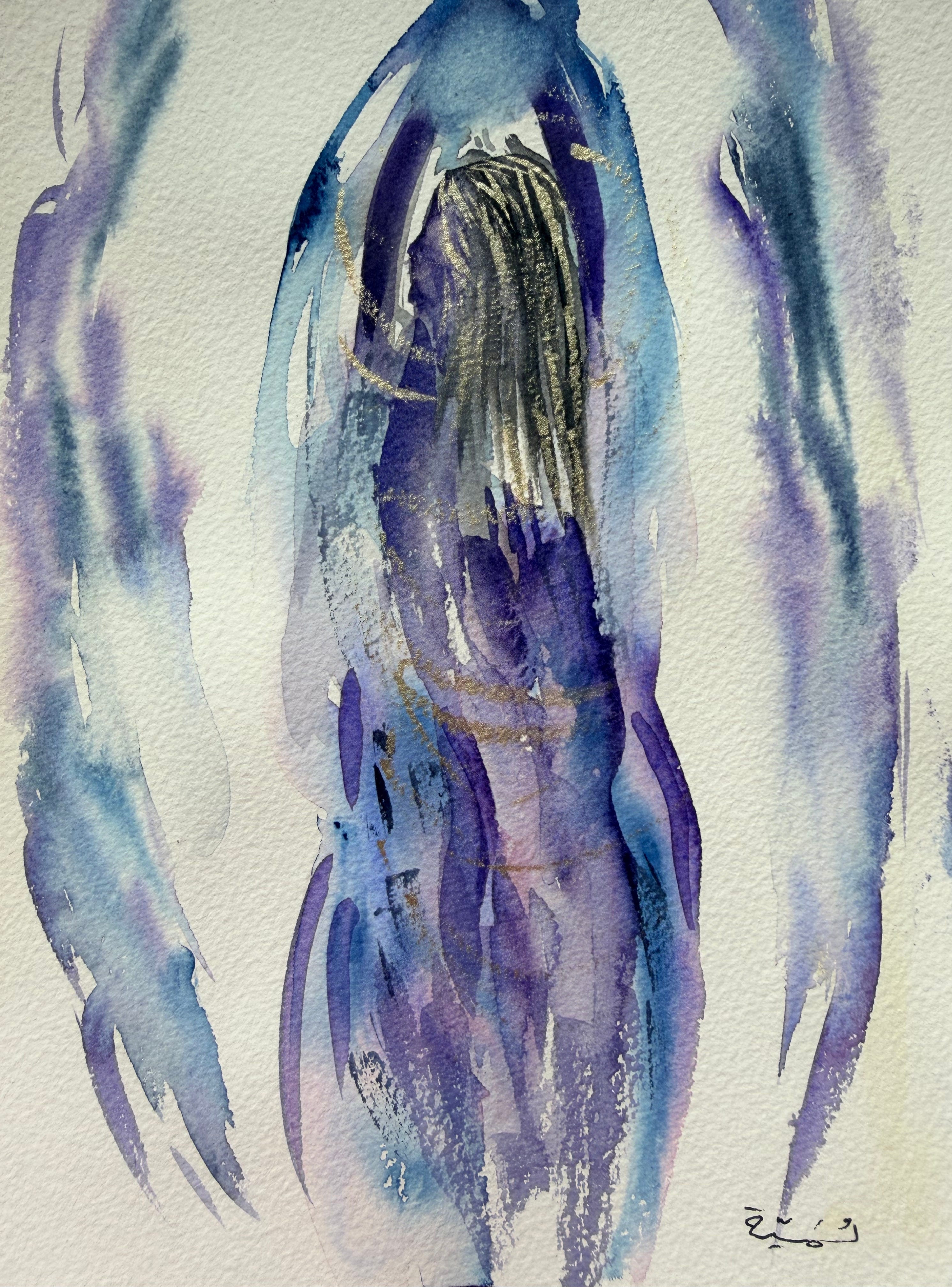
She was always there,
hidden safely
behind the shiny armor.
The quiet, sensitive one.
No matter how hard
the world tried,
how hard I tried,
She could not be erased.
She is indomitable,
like all
our she's,
or he's,
waiting patiently,
impossibly resilient,
held by gossamer
threads of light
until she could finally emerge
from that chrysalis
of slings and arrows
and outrageous fortune,
as tender and sweet
as the day she was born
but full of a quiet strength
she never knew she had.
Ready now
to shine her light
with the unexpected might
of an undefended heart.

“What were your parents doing that you grew up in Lebanon?”
I’m almost always asked this question when I meet someone for the first time.
I’ve lived in the United States for 43 years, and I’m guessing I’ve fielded that question hundreds of times every year. That’s many, many thousands of times over the course of my four decades here.
I’m so sick and tired of the question, and of the assumptions behind it—that you can’t be blond, blue-eyed, and Lebanese—that the last time someone asked me that question, I was a hair’s breadth away from answering
“I’m pretty sure they were having sex.”
Thankfully, I caught myself just in time.
But I never actually answer the question. I just take a breath and say, “I’m Lebanese.” Which is almost always met with a blank look. I leave it at that.
But, dear one, I’m ready to answer the question now. Because it matters. I’m sharing so many tender stories of the hard things—and the ways that not being held through the hard things made them nearly unbearable things. And these stories reflect on my parents.
As you’ve been reading (or listening to) my stories, maybe you too have been asking yourself “what were her parents doing?”, but with an entirely different curiosity than the usual one.
Maybe. Maybe not. Either way, I finally want to share the real answer, the real story.
Their story started in 1962. Dad was in his mid-30s, one of Lebanon’s most eligible bachelors. He was handsome, charismatic, fun-loving. And successful.
Despite growing up in a small mountain village—and not setting eyes on the Mediterranean Sea until he was thirteen, despite the fact that it was only 32 kilometers away—he had big dreams. Soon after graduating from the American University of Beirut, he had a grand vision about the future of aviation and how it would change the world.
Which, of course, it did.
He rode the wave of that change, armed with his entrepreneurial spirit and some serious Chutzpah, and started a little cargo operation—with just one plane and a hired pilot—to deliver goods and fresh food to American Aramco employees working in remote areas of Saudi Arabia.
That little cargo operation eventually became one of the world’s largest cargo airlines. And Dad loved every minute of that wild ride. Including the part where an American colleague, the vice president of Pan American Airlines, sent his twenty-year-old daughter to visit Lebanon.
That was my mom.
She was swept off her feet by Beirut in its glamorous, sophisticated heyday. And by Dad, also in his glamorous, sophisticated heyday. She was a young American girl from Scarsdale, NY, and I can only imagine how exciting Beirut nightclubs, music, food and high society must have been. Or how dashing and exciting Dad must have been.
After eighteen months of correspondence and a few in-person visits, Dad proposed. She said yes.
Dear one, I have to pause here and let that in. This young woman from New York, who spoke neither Arabic nor French, said yes to moving to the Middle East to marry a man fifteen years her senior, leaving behind her family, her culture, her language (mostly), and her entire continent.
Clearly, Dad wasn’t the only one with Chutzpah.
Heaven knows how they made it work. They had to cross a cultural divide, a language divide, and make it through a war that upended Lebanon, Dad’s business, and their lives.
But they did make it work. They were married for over 50 years. It was a grand love story.
So, back to the question: what were your parents doing that you grew up in Lebanon?
The answer is that Dad was running a global airline, playing golf and tennis, going on hunting trips with his buddies, and flying all over the world for aviation conferences. Oh, and also spending weekends teaching me to shoot, ride horses, ski and hike all over the mountains like a mountain goat. Truthfully, it wasn’t just me; it was all five of us kids, but in my memories, it felt like it was just me.
Mom, on the other hand, was holding everything together. In the middle of a war.
She managed our household and kept five kids fed, clothed and on time—so very on time—for school, doctor’s appointments, social events, sports events and the occasional ballet lesson (which didn’t last long, dear one, because I had a sway back, and the teacher kept smacking me on the butt and telling me I’d never be good at ballet). She got us through all manner of childhood illnesses, which in the Middle East is no small thing. Oh, and she managed a grand social life that included throwing impeccably planned and hosted dinner parties for Beirut’s high society, business leaders, politicians, ambassadors and, occasionally, even heads of state.
That’s it. That’s what my parents were doing that I grew up in Lebanon.
In other words, they were living and surviving. Like everybody else. But maybe with a little more glamour and a lot more war.
Is it any wonder they weren’t able to give each of us five kids the loving and holding we needed to make it through the hard things unscathed? That kind of loving and holding is the purview of parents with addresses that don’t happen to be right in the middle of a bloody civil war. And maybe parents who aren’t part of a generation that turned the word “parent” into a verb.
In other words, not my parents. And not most parents of that generation, war or not.
They did their best. That I know for sure. They gave it their all.
I wish their all was enough to hold me in the way I needed to be held. Or to shepherd my siblings and me to adulthood without the emotional wounds that would plague each of us in unique ways—and that would eventually tear our family apart.
But it wasn’t.
And I forgive them.
I could end the story there, dear one. But there’s one more piece of the puzzle that’s important for me to share, one that shaped me as much as my earlier years: our family’s dynamics during my teens and early twenties.
The best way for me to paint the picture for you is to describe the mayhem that was the Abuhaidar dinner table. So here goes.
Imagine a long mahogany table in a cozy, brightly lit, beautifully appointed dining room. The table is perfectly set for seven, complete with fine china, polished silverware, linen napkins, and a perfect floral centerpiece. The sideboard is laid out with a beautiful meal on china serving platters: a whole roast chicken, sauteed potatoes with butter and thyme, and asparagus drizzled with lemon and sprinkled with slivered almonds. And, of course, there’s a basket, lined with a cloth napkin, brimming with warm, fresh rolls.
The delicious smell of the food fills the room, and the candles on the table are already lit, radiating an inviting, warm glow. Everything is perfect, ready for a family dinner. My family’s dinner.
Now imagine us pouring into the room. We’re nicely “dressed for dinner.” Not formal. Not over the top. But definitely showered and “presentable”—whatever that means.
We’re raucous and loud, an unruly contrast to the perfect room and table. Conversations that started outside on the terrace are carried in, already loud, already heated. The sound of laughter wafts into the room with us. We were always laughing. Wine glasses—probably filled with a nice French red—have already been filled, emptied and refilled at least once. Probably more.
The volume of conversations—and laughter—is already loud. It’s about to get louder. Much louder.
But not just yet. First, there’s a pause, a kind of cease-fire, as we all fill our plates and find our seats. Always the same seats. Mom and Dad at each head, the rest of us in our usual places, well-worn and comfortable from years of seated family dinners.
We wait, well-trained, for Mom to pick up her fork. As soon as she does, the game is on.
The quiet room erupts in loud voices, conversations picking up where they left off. Rapid-fire debates, always about politics and current events, rat-a-tat-tat around the table in a loud barrage of vociferously stated opinions. The laughter that wafted in earlier dies down with every refilled wine glass, replaced with ever louder voices defending positions and opinions.
The currency at that table is not accuracy. It’s not depth of knowledge or defensible arguments. It’s volume.
What wins the day—and the argument—is how loud you can be. How confident. How Arrogant. And how effectively you can interrupt everyone else.
Not to mention how much wine you can drink.
Dear one, it was lively and exciting. But it wasn’t for the faint of heart. Or for the highly sensitive. Staying sensitive at that dinner table would eat you up. Would have eaten me up.
So what could I do but bury that quiet, sensitive part of me under the hardest, shiniest, most impenetrable armor? What could I do but don that armor and raise my voice, turn up my arrogance, and interrupt with the best of them?
Nothing that wouldn’t feel like a kind of inner death, so that’s what I did.
I earned a BA in Philosophy from an Ivy League school. Which was a great start, but not really enough. So I went on to earn a PhD. My field was Education, but my focus was political theory. Of course. The most important topic at that dinner table.
I want to be clear that the impetus for my studies was, first and foremost, a burning desire to read and learn, to be immersed in a vibrant academic environment, and to do my own research and weave my findings into new stories, new knowledge to share with the world. I truly loved academia.
But my love of the academic life wasn’t my only motivation. I know that now.
Without realizing I was doing it, I also positioned myself to be the smartest, most educated, most knowledgeable—and the best debater—at the Abuhaidar dinner table.
Now that would be good armor. Not just armor. Armor and ammunition. With that armor and ammunition, I could do more than survive. I could thrive. Maybe even have a little fun. Or a lot of fun.
And it worked. I held my own. I had fun. I didn’t get swallowed up. And I didn’t suffer the worst fate one could suffer as an Abuhaidar: be boring, quiet or timid, and therefore irrelevant. Because irrelevant meant unloved. Or at least felt like being unloved. Which wasn’t an option.
The world already felt scary enough. I didn’t need to feel that on top of everything else.
But oh, the cost! It would be a long time before I understood the crushing cost. A long time before I remembered that it was just armor.
That it was mine, but not me.

If you’re new here, welcome!
However you made your way here, I’m grateful you found me and happy to have you pop into my little world, whether it’s for a brief visit or a longer hangout around my campfire.
Accidental Alchemy is a serial memoir, so if you’re curious and have the time, I recommend starting with the Prologue and reading chapters in order for the full experience. You can access all chapters on my Substack homepage.
For the best reading experience, I recommend reading in a browser and on a larger screen. It makes it easier to enjoy the art and navigate through the chapters with the buttons at the bottom of each post.
If you’re enjoying this memoir, please share with someone you love!
Share Accidental Alchemy by Sumaya Abuhaidar
PS.. All art and poetry included in this memoir are my own unless I specifically credit another author or artist.
Comments
Nothing yet. Say the first thing.
Sign in to join the conversation.