
You can listen to the newsletter here:
0:00
-10:46
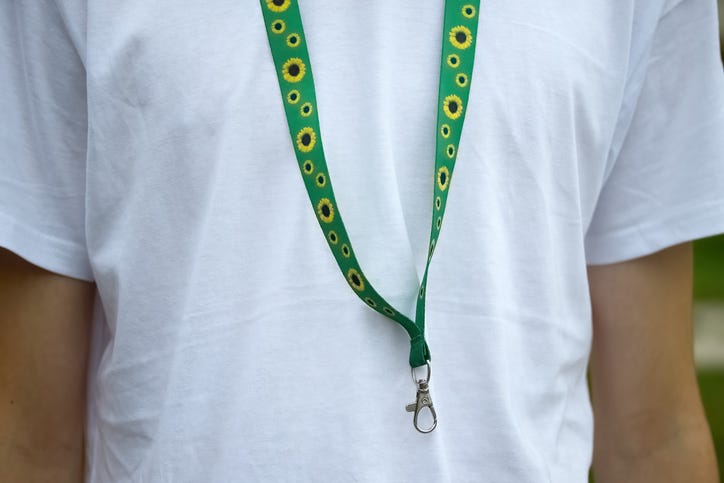
The Telegraph published a story last week about dyslexic passengers using the Sunflower Lanyard to jump airport queues. It featured influencers coaching their followers titled “Helpful tip – Tell your airline you have ADHD!”, a woman sipping champagne in a Virgin Atlantic lounge before her wedding, and a tour of the cockpit. By the way, this has nothing to do with the sunflower lanyard, more with her wedding. The framing was exactly what you’d expect: scroungers, self-diagnosis, lifestyle perks. But the outrage is aimed at the wrong target, and it’s doing real damage to disabled people.
What the Telegraph article never mentions: under the Equality Act 2010, you do not need a clinical diagnosis to have a legally recognised disability. The Act defines disability as a physical or mental impairment that has a substantial and long-term adverse effect on your ability to carry out normal day-to-day activities. That’s a functional test, not a medical certificate.
Dyslexia meets that test. ADHD meets that test. Autism meets that test. And many of the people currently labelled as “self-diagnosed” by the Telegraph are not making it up. They are on NHS waiting lists that, depending on where they live, can mean a several-year wait, and not everyone has a spare £2000 to get a private diagnosis, only to be told by the NHS they don’t recognise it anyway.
The woman on the Virgin Atlantic flight to Montana who is in the Telegraph story said she felt “like a fraud” and was “going through the diagnostic process.” She’s not a fraudster. She’s someone navigating an overwhelming environment while waiting for an appointment. Condemning her for using a lanyard before her referral comes through is just ignorant of how the system works.
The Hidden Disabilities Sunflower scheme launched at Gatwick and is now used in 300 airports worldwide. The intention when starting the scheme was a discreet signal to staff that a passenger might need a bit more time, patience, or support. No fuss, no bureaucracy, no medical gatekeeping.
The problem is that what started as a signal has quietly become a gateway. Priority boarding. Fast-track security. Assistance lounge access. Assistance lounges are not lounges with champagne and free sandwiches. They are a glorified holding area for disabled passengers. I was never offered business lounge access just because I’m disabled. When I was in a business lounge, I had a business-class ticket or airline frequent-flyer status that allowed me access.
The way the sunflower lanyard is now used and displayed is not a disabled people’s problem. This is a design problem.
When a £1.30 lanyard becomes the key to reasonable adjustments that should have been provided as standard (for everyone who needs them, without requiring disclosure or standing in a queue), then the system was broken before anyone tried to game it. And the gaming, where it genuinely occurs, is a symptom of that broken system, not its cause.
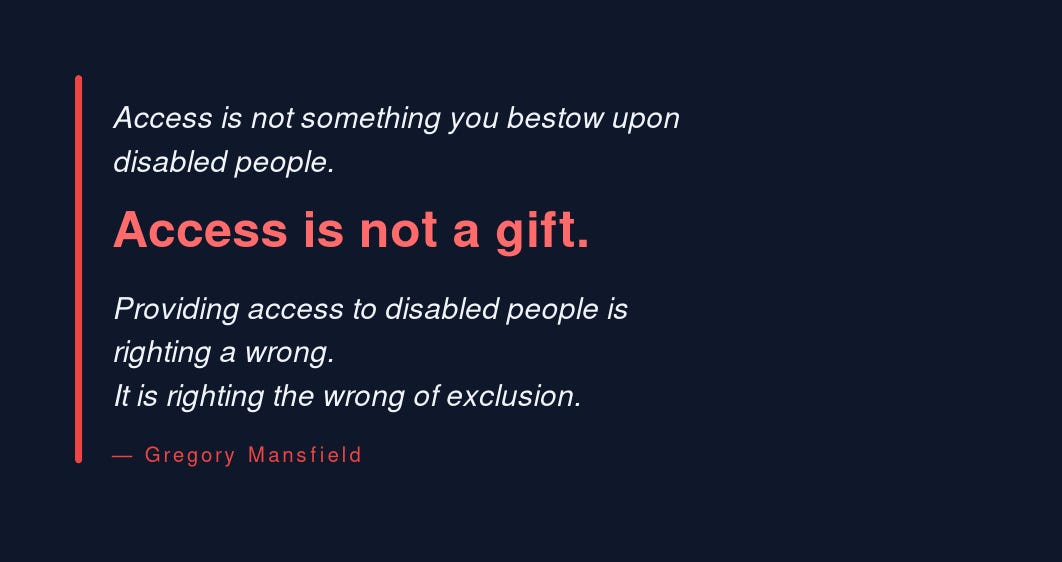
Sheri Byrne-Haber, writing in her newsletter Access*Ability, makes the structural argument clear: access shouldn’t require a permission slip. The Sunflower Lanyard is exactly that. It asks disabled people to make themselves visible to announce health information to strangers across security lanes, check-in desks, and boarding gates in order to receive what should be standard treatment.
That’s a Social Model of disability failure hiding in plain sight. Airports are not designed for passengers with a range of impairments. They’re designed for the median traveller, and exceptions are bolted on afterwards. The lanyard is one of those bolted-on exceptions. Like, all bolt-on solutions shift the burden of dealing with a broken system onto the people the system was already failing.
Not every disabled passenger wants to wear a lanyard. The big majority doesn’t. Many have experienced harassment or worse after making their impairment visible. Asking someone to choose between public identification and going without support is not inclusion. It’s good branding of a lack of inclusion.
The headline here isn’t “self-diagnosed passengers exploit the system.” The real story is that airports have spent a decade accepting a voluntary opt-in symbol as a substitute for building inclusive processes from the ground up, and that this approach was always going to create exactly the pressure points the Telegraph is now writing about.
The reality at far too many airports is that people are left waiting far too long, unable to reach their gates, and stranded at jetways. In 2022, the CAA had to write to airports demanding action plans, threatening enforcement. Assistance at major UK airports has been, for years, a system that disabled people have had to route around rather than rely on. I personally don’t want to sit in a glorified waiting area (“Assistance lounges”) just to make processes easier. I prefer to spend some money at the airport and go shopping. The Sunflower Lanyard grew partly because the formal pre-notification system is so reliably unreliable at many airports, and people think their experience improves if people “just knew”.
Now the workaround is under attack, not because airports fixed the underlying problem. It puts every disabled person who depends on assistance and/or wears the lanyard in a culture war they didn’t start. And it is no coincidence that it’s another secondary theatre of war that disabled people are currently confronted with. The anger is pointed in exactly the wrong direction.
The Sunflower Lanyard is not an accessibility strategy. Use it as one optional tool within a holistic, proactively inclusive plan. Every frontline staff member should be trained to offer assistance without waiting for a visual cue. Lanyard or no lanyard, diagnosis or no diagnosis. “Is there anything I could do to make this easier for you?” should be the standard, not triggered by a sunflower symbol.
Fix your formal assistance channels. If disabled passengers are bypassing your pre-notification system (Really?) because it’s slow, opaque, or unreliable, the answer is not to crack down on workarounds. The answer is to make the formal route worth using. Fast, simple pre-notification. I want to mention British Airways, which has seriously improved its systems in recent years. I can basically request assistance, including sending them a battery notification, during ticket booking. One step. Not 10. Railway, are you listening? That’s how it’s done, not the n-th app.
Just to manage expectations: on the railway, assistance bookings don’t offer any real benefit, like queue-jumping or anything. It’s about train ramps and guiding for blind people. And the numbers increase sharply because the system is inaccessible. Still, the increase in bookings is good news! Yay, disabled people are travelling more.
Staff who actually know what to do when someone arrives, if you get that right, the lanyard stops being a special pass and becomes what it was designed to be: a quiet hint for a bit more patience.
Design systems that don’t require disclosure. A ramp doesn’t ask you to identify as a wheelchair user before you can use it. Subtitles don’t require proof of D/deafness. Accessible boarding processes, sensory-friendly environments, and forward-thinking assistance provisions work because they’re built in, not because someone was brave enough to wear a symbol. That’s the standard to aim for. Everything else is a workaround.
And if you’re writing or commissioning coverage of this issue (yes, I had a former life as a journalist), the story of a woman drinking champagne in an airport lounge celebrating her wedding is not the disability access story of 2026. The story is an industry that built a £1.30 system and called it inclusion. Hold them to a higher standard than that.
A wheelchair user in Australia calls for ‘common sense’ after a fine threat for using an accessible zone at an airport.
Blue Badge holders and carers report being harassed, filmed and threatened by strangers who think they are faking their disability, reports the Guardian.
More than a dozen new and updated accessibility improvements from this year’s Aircraft Interiors Expo, which put the spotlight firmly on airlines to reduce the barriers for disabled passengers.
The ‘Enhanced’ Disability Rights Strategy, presented by the European Commission, falls short of our demands and of the European Union’s obligation to implement the UN Convention on the Rights of Persons with Disabilities, says the European Disability Forum.
Did you know that some of the finest accessibility features we use every day were first tested in Norwich, UK?
British Airways is searching for an Inclusion and Diversity Manager (12-month FTC)
Transport for All is searching for a Chief Executive Officer
I’m currently reading: - The Fraud: Keir Starmer, Morgan McSweeney, and the Crisis of British Democracy by Paul Holden - My rating: 5/5
Do you want to meet for a coffee? I’m in Berlin at the re:publica conference next week and in Dublin at the “Advance accessibility in transport conference” in June
The Accessible Link is a reader-supported publication.
I’m Christiane Link, and I improve the customer experience in aviation, transport, and travel. I worked as a journalist for over two decades and travelled extensively for business and leisure. I’m a wheelchair user.
Whether you're a Customer Service Director, a Head of Customer Experience, a corporate Accessibility Manager, a DEI leader, a transport planner, or a member of a disabled employee resource group, I can help you make your organisation more inclusive. You can book me for speaking engagements or hire me as a consultant for your accessibility or DEI strategy, communications advice and other related matters. I have worked for airlines, airports, train operators, public transport providers, and companies in other sectors.
If you want to read more from me, follow me on LinkedIn, Twitter, Bluesky or Mastodon. You can also reply to this email if you want to contact me.
.
Comments
Nothing yet. Say the first thing.
Sign in to join the conversation.