
You can listen to the newsletter here:
0:00
-8:12
Britain’s railway stations have 1,377 passenger lifts. Yes, that’s quite a lot, but not enough. And if you wonder if they are reliable, here comes the Office of Rail and Road’s latest statistical gift: the Passenger Lifts at Stations report for April to October 2025.
Spoiler alert: It’s a mixed bag of marginal improvements.
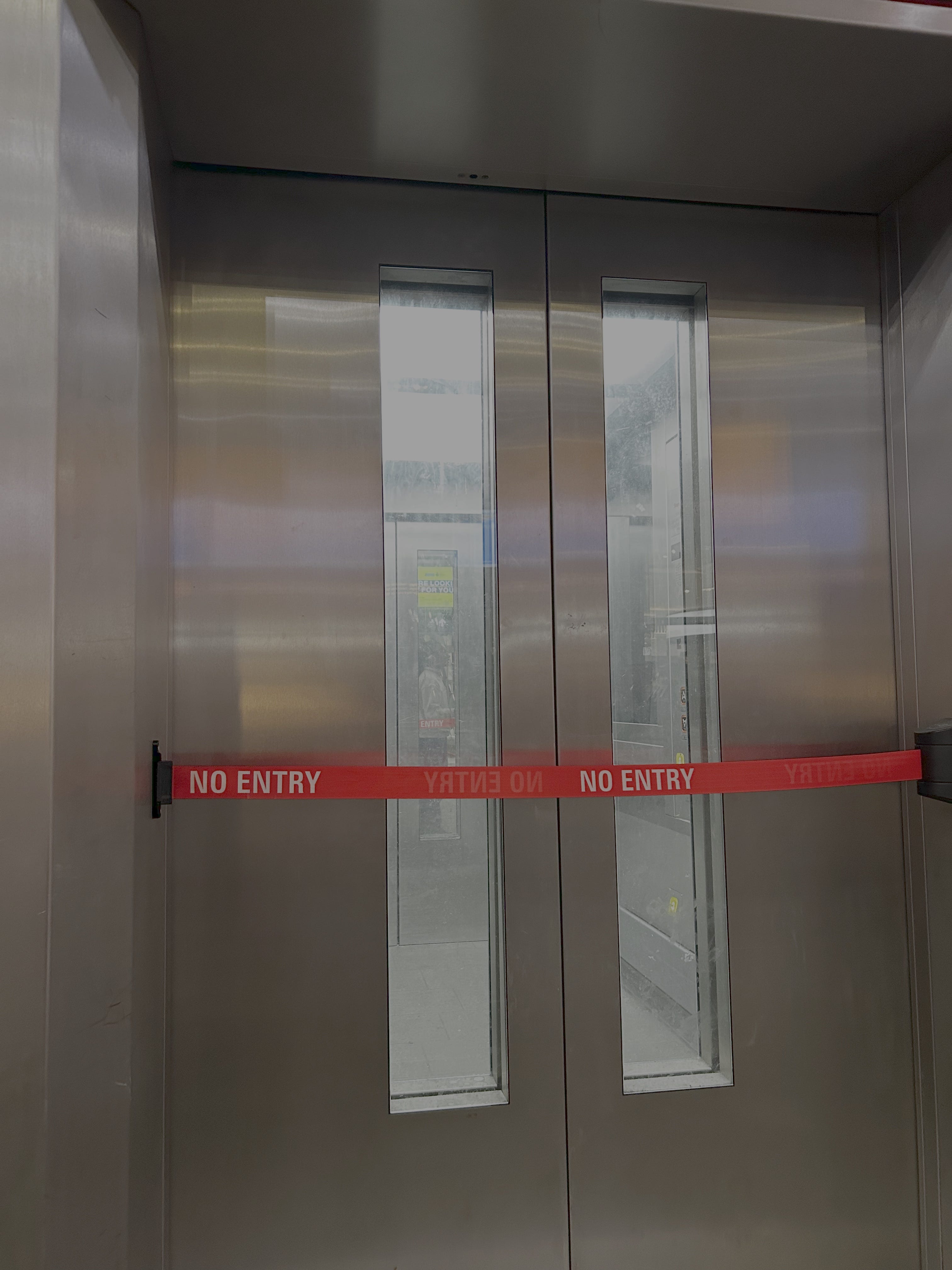
Let’s start with the good news. Britain gained a net 50 lifts since October 2024. 50 whole lifts across the entire network. At this rate, we’ll have full step-free access in hundreds of years.
During the reporting period (April to October 2025), 33 new lifts opened at 17 stations. However, one was a replacement, and six were transferred to Transport for London, resulting in a net gain of 26 lifts at railway stations over seven months.
Here’s where things get interesting. There were 5,550 lift faults recorded between April and October 2025, a 6% increase on the previous year. That’s 4.03 faults per lift, up from 3.96.
If railway lifts were employees, they’d be on a performance improvement plan by now.
The report helpfully breaks down the causes:
60% wear and tear (aka if you don’t replace and maintain them on time, this happens)
27% misuse and vandalism (yes, some people are evil)
13% external factors (yay, we can blame the British weather)
The average time to repair fell by 11% to 19.4 hours, which sounds impressive until you realise that’s still nearly a full day of a lift being out of service. And 128 faults put lifts out of service for over a week. That’s 128 times that disabled passengers, older travellers, parents with pushchairs, and anyone with heavy luggage were told, “Sorry, take the stairs or find another route.”
Now for the entrapment statistics. There were 369 lift entrapments between April and October 2025. That’s down 7% from the previous year, which the report presents as good news.
The average response time fell to 44 minutes. Forty-four minutes.
That’s enough time to listen to Pink Floyd’s album "The Dark Side of the Moon" in its entirety.
Then there are twenty-five entrapments of more than 75 minutes. Being stuck in a lift for over an hour at a railway station? No, thank you.
Passenger journeys increased by 8% during this period. So more people are using the railways, which presumably means more people are using the lifts, which means the lifts are working harder, which means... they’re breaking down more. Yes, infrastructure needs to be properly maintained, renewed and expanded to meet demand.
They also note that they don’t hold data on lift reliability for individual stations. How convenient. Especially for St Pancras and Dartford. This means that if you want to know whether your local station’s lift is reliable, it’s not visible in these statistics. Ignorance is bliss.
Britain is legally required to make its railway network accessible. So I’m struggling a bit, celebrating a slight improvement in entrapment response times as if we’ve landed on the moon.
The Access for All programme continues to move at the pace of the lift at Liverpool Station (the Londoners know). Meanwhile, disabled people continue to plan their journeys around which stations have working lifts, checking and rechecking before they leave home, always with a backup plan for when, not if, something goes wrong.
The ORR’s report is full of percentages and comparisons to previous years, highlighting an incremental improvement. But incremental improvement on a fundamentally inadequate baseline is still inadequate.
Yes, it’s good that response times are falling. Yes, it’s good that we’re adding lifts (at a glacial pace). But this is a very low bar for celebrating.
Until every station is step-free, until lifts are reliable enough that passengers don’t need to check their status before travelling, until being trapped for 44 minutes is considered “unacceptable” rather than “improved,” we’re not done.
Britain’s railways were built in the Victorian era, a fact very often stated to excuse the lack of accessibility. It’s time we stopped maintaining accessibility features with a Victorian-era attitude. If my fellow British-German, Prince Albert, got the windows of Buckingham Palace cleaned from both sides in 1837, I’m sure we can improve lift reliability and availability in 2026.
P.S.: My Cricklewood Saga from the last newsletter got a mention in the printed “RAIL Magazine” (that’s industry press in the UK), and they interviewed me about the Access for All programme. So get a copy if you see it anywhere.
Christiane Link
Four in five blind people struggle with the gap at UK train stations. Level boarding would solve that.
Research finds that 48% of UK websites need accessibility improvements, with the travel and hospitality sectors most affected, while councils lead in digital inclusion.
“Forcing or expecting disabled people to be grateful for an accessible ramp or restroom undermines their daily experience of inaccessibility and discrimination.” Kelly Mack about forced gratitude.
LNER gets new trains. Not step-free. No level boarding. And they still call it “state-of-the-art”. If we had 1970, that would have been correct.
The Equality and Human Rights Commission has published its new strategic plan for 2025 to 2028. They have a focus on transport accessibility.
I love watching videos about accessibility in other parts of the world. So here is Shanghai.

The Accessible Link is a reader-supported publication.
I’m Christiane Link, and I improve the customer experience in aviation, transport, and travel. I worked as a journalist for over two decades and travelled extensively for business and leisure. I’m a wheelchair user.
Whether you're a Customer Service Director, a Head of Customer Experience, a corporate Accessibility Manager, a DEI leader, a transport planner, or a member of a disabled employee resource group, I can help you make your organisation more inclusive. You can book me for speaking engagements or hire me as a consultant for your accessibility or DEI strategy, communications advice and other related matters. I have worked for airlines, airports, train operators, public transport providers, and companies in other sectors.
If you want to read more from me, follow me on LinkedIn, Twitter, Bluesky or Mastodon. You can also reply to this email if you want to contact me.
.
Comments
Nothing yet. Say the first thing.
Sign in to join the conversation.