
You can listen to the newsletter here:
0:00
-9:28
Hello everyone,
Between April 2025 and March 2026, the Office of Rail and Road’s statistics show that 1.91 million pre-booked passenger assists were requested. That’s an increase of 18% compared to the year before. These are disabled people going to work, visiting friends, and participating. It also means they are spending money. That is what an open society looks like, and I love seeing it.
Why the numbers keep climbing
The 18% rise is real. The previous year saw an increase of almost the same size. Disabled and older people today know their rights. My late grandmother (born 1910) stopped travelling by train as soon as she couldn’t lift her knee high enough anymore to get over the steps of the train. The current generation of grandmothers expects to travel forever. They are less ashamed of being disabled than the generations before them, and rightly so. They expect to use a train like everyone else, and when they can’t, they challenge it.
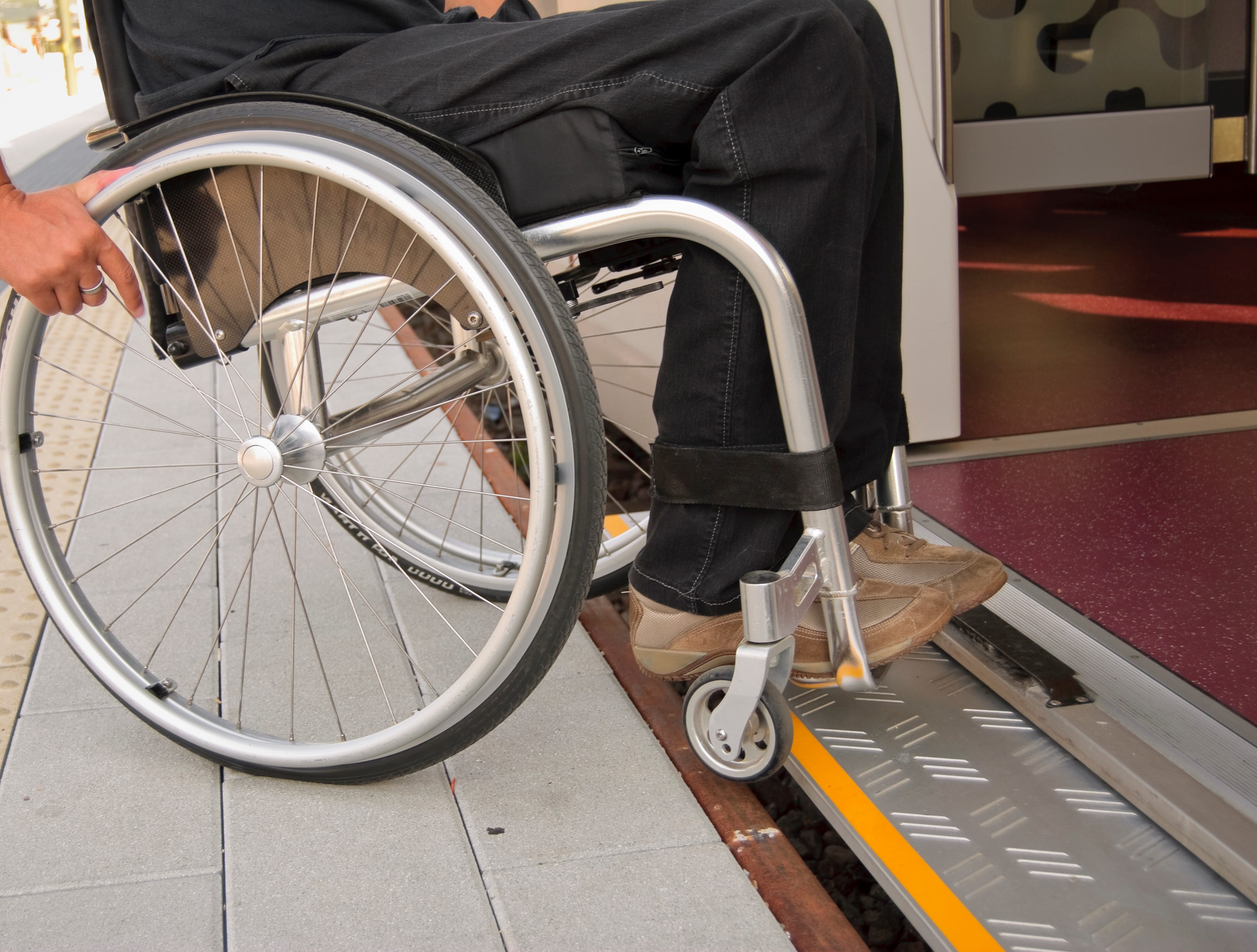
That’s called equality. The UK population is ageing, and disability is strongly connected to age. These passengers requesting assistance are mirroring the demographic curve that every transport planner has known about for decades. This demand is systemic, and transport policy must treat it as such.
Which brings me to the rumours. Every time assistance figures rise, someone in the industry mutters that people are gaming the system, booking assistance they don’t really need. I still don’t understand why anyone should do this. The experience isn’t so great that you’d want to use the assistance team when you don’t need it.
I’ve heard it in meetings, and I’ve read it on social media, that people challenge if these people are real. They are. Most impairments are non-visible. Nobody navigates the friction of Passenger Assist for fun. The numbers reflect disabled and older people with a real need. Treating them as suspects is exactly the attitude that the Equality Act tries to abolish.
The record number of assists measures how many people still cannot board a train without assistance, and policy must address that reality.
Assistance is a legal duty, not a favour
Under the Equality Act 2010, boarding assistance, e.g., a ramp, is an auxiliary aid. Providing it is a reasonable adjustment that operators must make, and they must anticipate the need, not just wait for a booking. That covers unbooked assistance too. Turn up and go is not a premium add-on for the well-organised; disabled people have the right to travel spontaneously, on the same terms as everyone else. When assistance fails, whether booked or unbooked, it is likely a discriminatory breach of the Equality Act, and the courts assess injury to feelings using the Vento bands, which start in the four figures. If you don’t know what Vento is, it’s really worth looking into it as a customer and if you work in transport.
Doug Paulley has spent years making exactly this point, and his legal pressure has already prompted the ORR to review its guidance so that redress is no longer capped at the price of a ticket.
Operators should sit with that for a moment. Every failed assist on your network is not a complaint statistic. It is potential litigation, and disabled passengers increasingly know it.
The industry got used to treating assistance fails as a customer relations issue, solved with a Marks & Spencer voucher and an apology. That era ended decades ago, but too many didn’t get the memo.
The only sustainable fix is level boarding
If assistance grows 18% a year, the railway needs far more trained staff on platforms at exactly the time the industry is trying to cut costs. Manual boarding ramps do not scale. Glorified assistance booking systems do not scale, and I see a future long after me where disabled people look back and wonder why we accepted booking assistance in the first place.
We need new rolling stock and level boarding. Now. Nothing else is sustainable.
The government has to ensure that new train procurements incorporate level boarding; Great British Railways will specify trains that run for 35 to 40 years. The decisions made in the next two years determine whether a disabled child born today will board independently in 2060, or still be waiting on a platform for a member of staff with a ramp.
Level boarding is not a nice-to-have for wheelchair users. It speeds up dwell times, helps parents with buggies, older passengers, and anyone with luggage. It has so many benefits. The only thing missing is the will to mandate it without loopholes and to deliver the trains, not just announcing that new rolling stock is coming in the future.
If a wheelchair user turns up at a station unannounced, can they actually travel, at every station, at every hour? The industry must treat every failed assist and every instance of inaccessibility as a legal risk, because that is what it is. Brief your leadership accordingly. If you are anywhere near rolling stock procurement, push for binding level boarding requirements in every new train specification. Not aspirations. Requirements.
The railway will run the trains it orders now for the next four decades. Order the right ones.
A wheelchair user in New York got to the gate, boarding pass in hand, and was told she couldn't fly. Not because of anything they did, but because they were in a wheelchair and travelling alone. British Airways denied boarding: without a companion, the crew couldn't be sure they could get the passenger to the lavatory, or off the plane in an emergency.
I’m so tired of reading these sagas for decades despite all the legislation and media attention afterwards. When will they learn that wheelchair users are not a threat but customers? The original post on LinkedIn is here.
Rail station lift reliability and entrapment response times in Britain have slightly improved between October 2025 and March 2026 compared to the previous periods, says the rail regulator ORR.
There were 4,307 recorded lift faults across Network Rail-owned stations in Great Britain - down 1% on the same rail periods last year. As the number of lifts in use increased by 52 in a year to 1,403, the fault rate per lift fell by 4%.The body representing London’s 32 boroughs has pledged to maintain the capital’s Freedom Pass, which allows free travel on public transport for those aged 66 or over and disabled people, following pressure from campaigners.
A good history lesson.
Translink in Belfast are searching for an Equality, Diversity & Inclusion Manager.
The Competition and Consumer Protection Commission in Dublin / Ireland are searching for a Head of Unit - Accessibility.
JPMorgan Chase are searching for a Digital Accessibility Specialist, Senior Associate.
Don’t put the Berlin Wall into your garden without a planning permission, please.
I’m currently reading the book “Dear Britain: Auf der Suche nach der Seele Großbritanniens” by Annette Dittert - My rating: 5/5 - I don’t think there is an English version yet, but if you speak German or if it is released in English, I highly recommend the book. Annette Dittert was the London correspondent of the German public broadcaster and is still a Londoner.

The Accessible Link is a reader-supported publication.
I’m Christiane Link, and I improve the customer experience in aviation, transport, and travel. I worked as a journalist for over two decades and travelled extensively for business and leisure. I’m a wheelchair user.
Whether you're a Customer Service Director, a Head of Customer Experience, a corporate Accessibility Manager, a DEI leader, a transport planner, or a member of a disabled employee resource group, I can help you make your organisation more inclusive. You can book me for speaking engagements or hire me as a consultant for your accessibility or DEI strategy, communications advice and other related matters. I have worked for airlines, airports, train operators, public transport providers, and companies in other sectors.
If you want to read more from me, follow me on LinkedIn, Twitter, Bluesky or Mastodon. You can also reply to this email if you want to contact me.
.
Comments
Nothing yet. Say the first thing.
Sign in to join the conversation.