
I’ve been lucky enough to see bears out in the wild quite a few times. I used to joke that it was because my maiden name meant “bear.”
Anyway, a long time ago, when my daughter Em was little and I would hike around with her in this LL Bean baby backpack contraption strapped onto me, we went out behind our place in Trenton, Maine, that same one we rented because we couldn’t afford a home in Bar Harbor or find a place to rent there.
We’ve since been able to buy a home in Bar Harbor.
There were all these ATV trails behind the house and I was feeling confined, stuck inside in the stale air that smelled like mouse nests and a bit of mold. My husband had a friend from college over and they were watching something on TV. I honestly don’t remember what. I’d say football, but I can’t imagine it was football. He was more of a baseball kind of guy if he watched sports.
Em was bored. I was bored. So, I decided we’d go take a walk outside. One of Em’s favorite things back then when she was around 18 months old to two was to see deer scat (We called it deer poopy!) and where deer had bedded down for the night (We called it the deer laying down place).
Full disclosure: Deer poop is no longer Em’s fave thing.
The forest back there is mostly young pines and spruce, the occasional birch grove. There is dead fall, rotten logs that spawn their own delightful ecosystems full of moss and lichen, mushrooms and bugs. The trails are two tire truck ruts that go over the occasional half-submerged granite and stones. They curve and meander in ways that I didn’t understand. An occasional abandoned deer stand, pieced together by two-by-fours, nails springing free and rusty at all angles, hulked in trees, forgotten for years, or at least abandoned for years.
If you go back far enough, you hit a great marsh and power lines.
If you go back far enough, you stop hearing the cars on Route 3 aka The Bar Harbor Road.
If you go back far enough, you stop feeling trapped.
And I was tired of feeling trapped. I’d obviously had some missteps going on back then.
Trapped. No car. No job. I knew I needed to start being brave somehow and make hard decisions.
I did not know how though.
The only adults I talked to were Em’s dad and his best friend at this point. I was still trying to find a playground I could get her to when I had no car. Rural Maine was not great with bus service to playgrounds from random homes in Trenton.
All we had were the woods. So, we made the best of it. Woods are cool. Woods are my childhood; it made sense that it would be hers, too.
“Tell me about Pooh Bear and the pole,” Em would insist while we walked.
“A pole?”
“A pole.”
“Um, once there was a very nice bear and his name was Pooh,” I’d begin.
Em would giggle. “Pooh.”
Sometimes she’d make up her own stories which were nonsensical, but would send her into hysterics. “One time there was a pole. Pole was sad!”
I still don’t get that joke, but anyway, we were walking in the woods and telling stories. I was teaching her about different trees and she had her hand wrapped into my hair when I smelled something: skunky but not skunk or marijuana, a deeper smell than either of those and less sharp, a bit of rotting earth, a bit of wetness almost like mildew, something fruity, too.
Weird, I thought.
We rounded a bend in the road and there it was: a bear. A large black bear bent over some deadfall, his paw clawing at the tree trunk, splintering it slowly apart.
My heart stopped. Em’s fingers kept moving in my hair.
“Dog,” she chirped happily. “Big dog.”
“Oh, baby,” I whispered as the bear slowly lifted up its head and its eyes met mine, “that is not a dog.”
“Dog?”
“That’s a bear. Mommy is just going to back up really slowly and you’re going to be very, very quiet, okay?” I was already backing up.
The bear wasn’t moving, just watching.
Its paw was on the trunk, dark fur against the new, pale lines of half rotten bark and pulp.
It took about five steps to get around the bend again and out of the bear’s sightline, but it felt like five thousand.
It took about three seconds, but it felt like three minutes. At least three minutes.
It took a lot to realize that there was something out there in the wild that was unexpected.
I forgot to breathe and then I did, turning around the moment I could and fast-walking forward. You aren’t supposed to run when you see a black bear. You are supposed to go big.
That was the word Em said when we spoke again.
Big.
“Big bear.”
“A very big bear,” I agreed.
“Not a dog.”
“Nope.” I took the time to explain the difference.
There is a difference.
There are bears in Acadia National Park.
One—or a couple of them—gallivanted around enough last year to earn news articles. One bear allegedly took some chickens in Town Hill and another did that this year in Trenton.
There is a lot of great advice out there if you’re up here and worried about being one of the people who have a rare bear sighting.
Bear Wise is a really great resource.
Here are its tips.
There are lots of simple steps you can take to discourage bears from getting into your stuff and avoid bear encounters. Teaching bears to associate cars, trails, campsites and people with food doesn’t just put a damper on your outdoor fun. It also creates unnecessary risk for you and your family and can have deadly consequences for bears. Doing your homework and taking some simple BearWise precautions now can help keep people safe and bears wild.
Stash anything you’re leaving behind securely out of sight in your locked vehicle or food storage locker. A glimpse of a cooler or a sack full of snacks or the scent of fruit-flavored chewing gum or an empty bottle of energy drink could tempt a bear to explore your vehicle while you’re out exploring its home turf. A window that’s cracked open or an unlocked door (yes, black bears have very nimble claws and can open unlocked vehicle doors) is an invitation to come on in and see if there’s anything good to eat. But once inside, it’s often much harder for the bear to let itself out.

Odors of all sorts attract bears, whether you are camping in the backcountry or frontcountry:
Don’t store food, trash, the clothes you cooked or cleaned fish in or scented products, including toiletries, in your tent. Store these items in an approved bear-resistant container or suspended according to local guidelines; generally, a minimum of ten feet above the ground and ten feet away from any part of the tree.
If you’re in a drive-in campsite, store anything that could attract a bear out of sight in a locked vehicle.
Cook downwind and as far from your tent as practical. Your fire ring or grill isn’t an incinerator; don’t burn food scraps or trash.
Don’t eat or slather on scented sunscreen while in your tent and resist the urge to go to sleep with a midnight snack tucked under your pillow. Keep a flashlight, whistle and bear spray in easy reach instead.
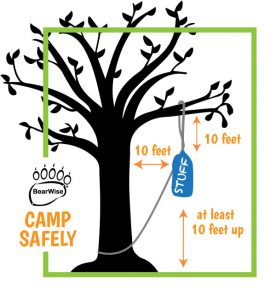
Read our article with more safety tips on backcountry camping, how to let bears know you are there, and more.
Bears prefer to avoid people whenever possible, but both black bears and grizzly bears are powerful wild animals and may defend themselves when surprised or feeling threatened. Deliberate attacks on people are very rare.
Keep reading to learn what to do if you encounter a bear.
If You Encounter a Bear
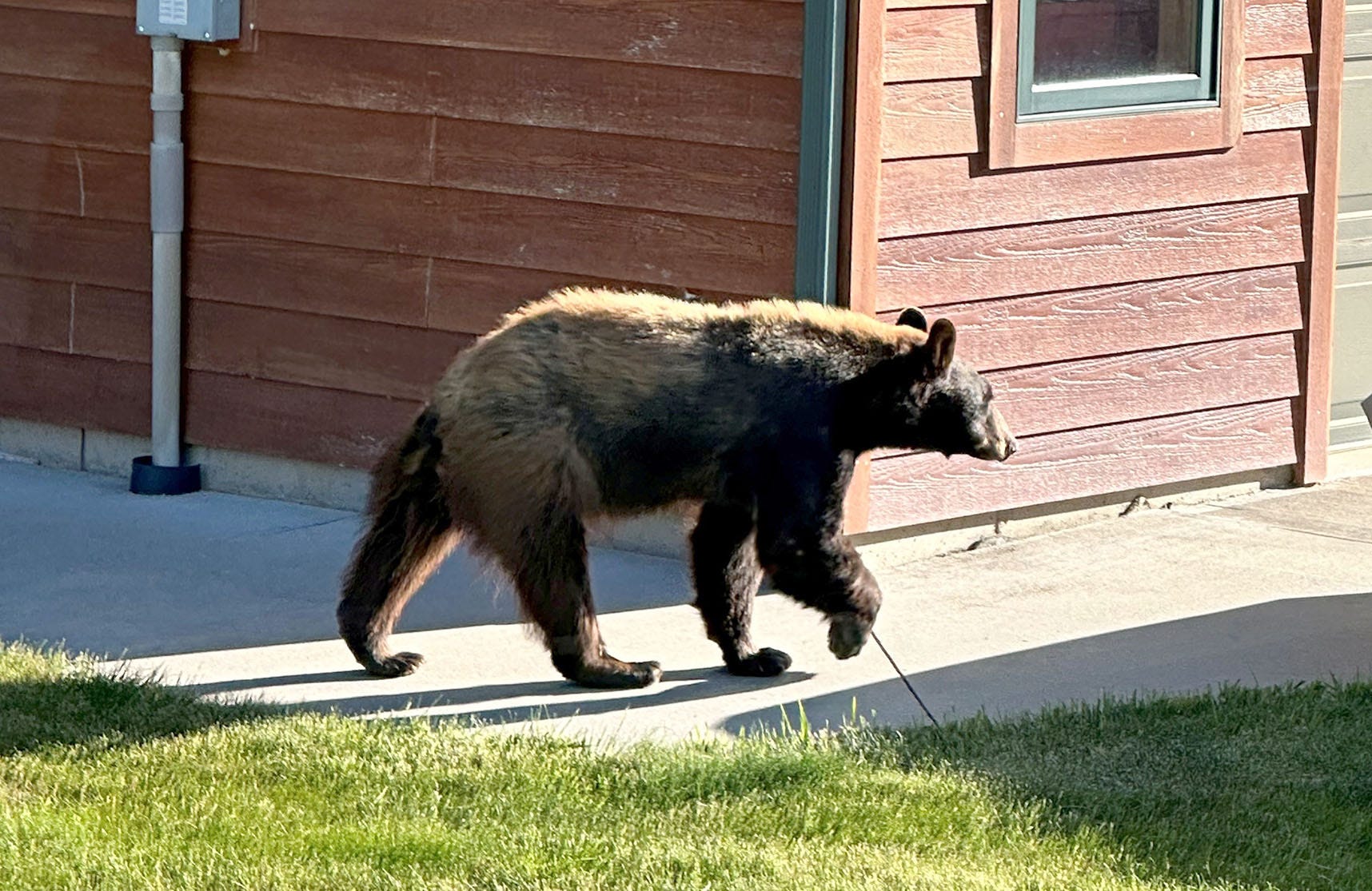
In or Near a Building or Dumpster
Back away from the bear.
Give the bear a clear escape route; do not corner it.
Leave any doors open; do not lock the bear in a room.
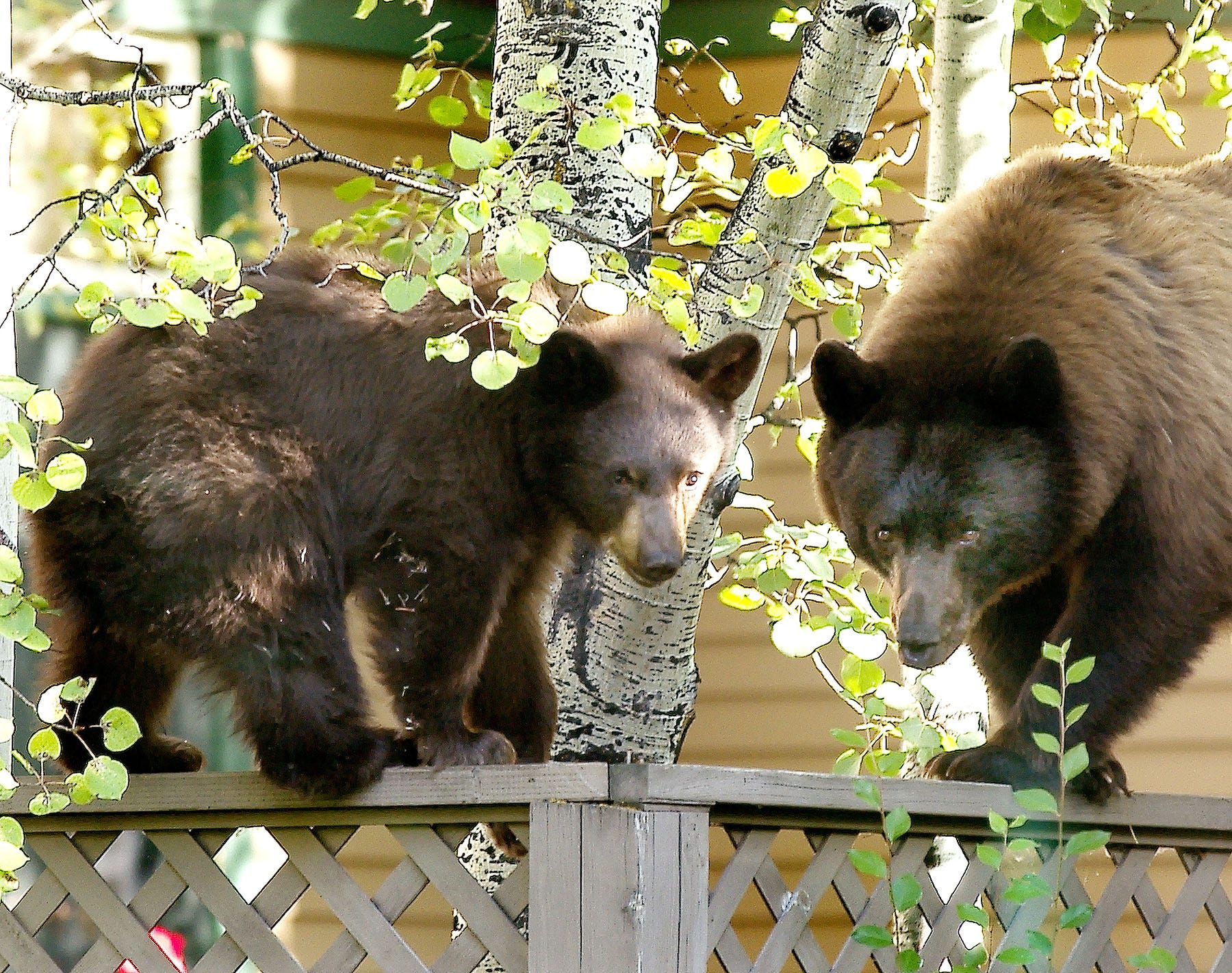
In Your Yard or Garden
From a safe distance, make loud noises to scare away the bear.
When the bear leaves, remove or secure potential attractants.
Always check your yard for bears before letting out dogs.
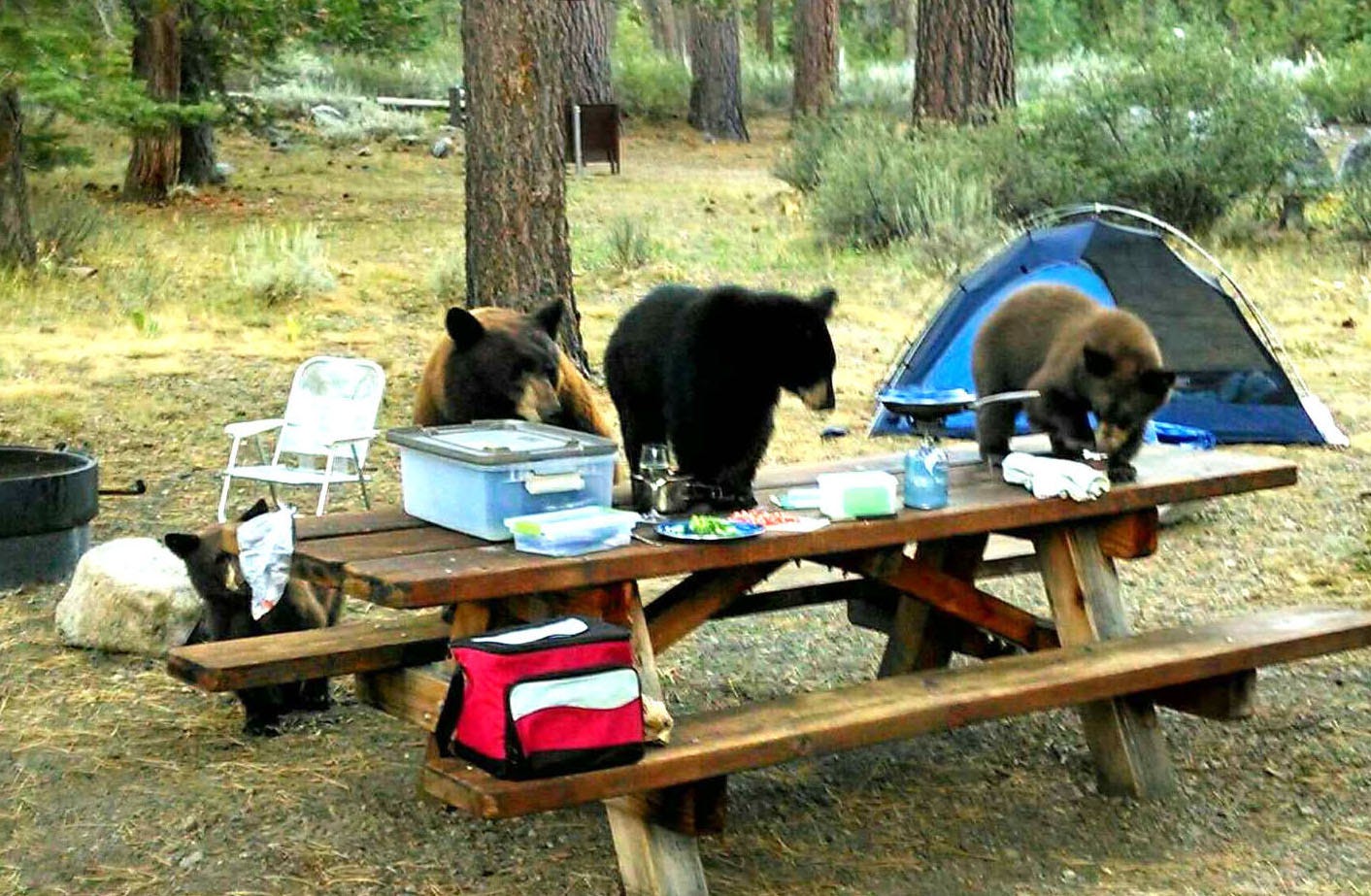
In Camp
If a bear comes into camp, do not approach it.
Group together. Yell, make noise, throw objects (not food) to scare it away.
If a bear enters your tent, FIGHT BACK with anything available.
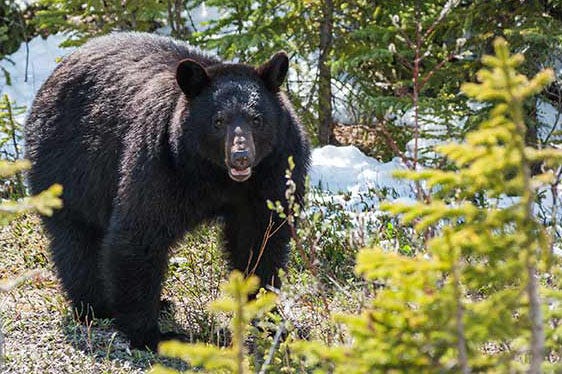
Surprise Encounter at Close Range
If the bear has cubs, a food source or no clear escape route, backing away slowly may convince the bear you are not a threat.
If the bear makes physical contact with you, PLAY DEAD.
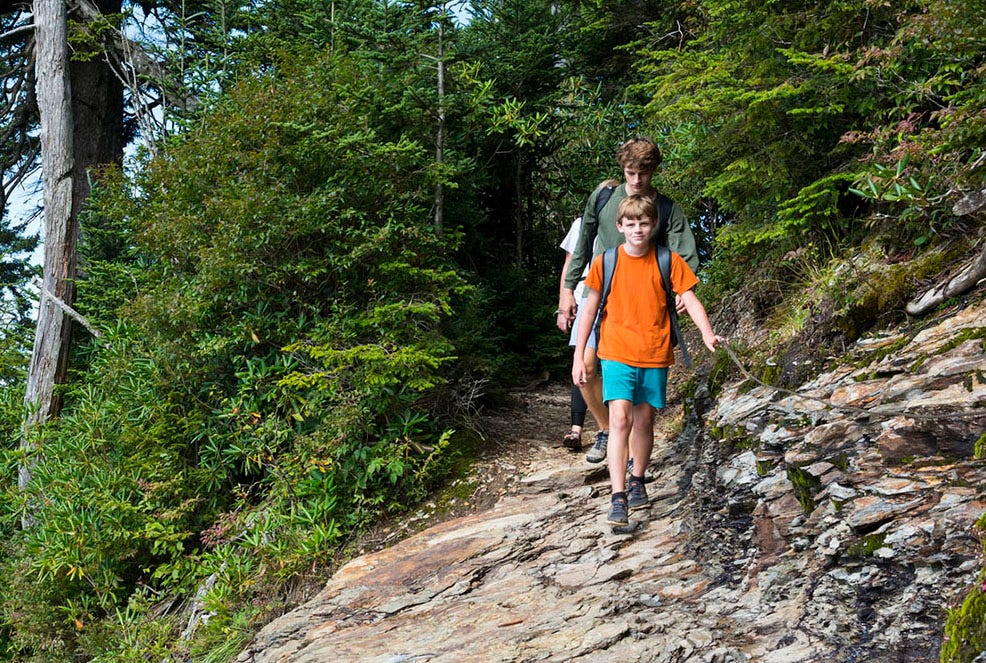
In the Woods, On the Trail
If you see a bear that is not aware of you, do not approach.
Enjoy the moment, then move away quietly.
If a defensive bear approaches, follows or charges you, how you respond will be based on the bear’s behavior. KEEP READING and also download our free Encounters fact sheet.
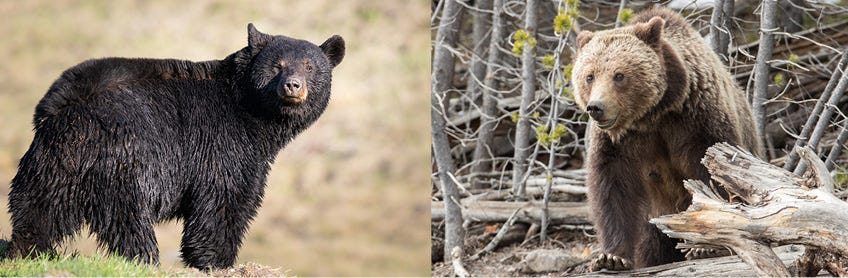
Bear Behavior & Your Response
Defensive Bear
Bears often behave defensively when surprised, feeling cornered or protecting their food or cubs. Their blustery behavior is meant to warn you to stay away. It seems scary, but it’s a sign of stress, not an impending attack.
Surprising a bear at close range is both the most common cause of incidents that result in injuries and the most avoidable.
Bear Behavior | YOUR RESPONSE
If a bear sees you, changes behavior, stands up (this is normal bear behavior):
If you stand still and do not run, you could prevent a defensive response by the bear.
If bear resumes previous behavior, quietly back away.
Huffs, moans, clacks jaws, swats at the ground, ears laid back:
Don’t run. Group together. Stand your ground, but don’t be aggressive.
Talk firmly to the bear. Slowly wave your arms.
Get bear spray ready.
Moves towards you:
Stand your ground. Keep talking.
Be ready to use bear spray.
Keeps approaching or charges:
Use bear spray when the bear is within 30 feet.
If a defensive bear makes physical contact:
PLAY DEAD. Fall to the ground face down, protect your head.
When contact stops, lie still. Count to 500 so the bear knows you are not a threat and leaves the area.
Curious Bear
Young, curious bears testing their boundaries or looking for food sometimes boldly approach people on trails or in camp, and may even swat at you.
Bear Behavior | YOUR RESPONSE
A curious bear openly approaches you:
Don’t run. Stand your ground.
Group together. Yell, throw objects (not food).
Use bear spray when the bear is within 30 feet.
If a curious bear makes physical contact:
FIGHT BACK aggressively with anything available.
Predatory Bear
True predatory behavior is both very rare and very different from the behavior of a nervous defensive bear. The bear won’t bluster, vocalize, charge or try to intimidate you. It will be calm and purposeful, methodically approaching or silently circling or following you with ears erect.
Bear Behavior | YOUR RESPONSE
A predatory bear slowly, deliberately and quietly moves closer, circles or follows you; ears erect or forward:
Behave aggressively. Don’t run.
Face the bear. Group together.
Shout, throw rocks or objects (not food) at the bear.
Use bear spray when the bear is within 30 feet.
If a predatory bear makes physical contact:
FIGHT BACK aggressively with anything available.
Comments
Nothing yet. Say the first thing.
Sign in to join the conversation.