
The month of May meant travel for me. Necessitated by a trip to Europe to visit a beloved, aging aunt who needed some companionship in Denmark, I also spent just over a week in Germany. Seeing my sister and her husband was a bonus, but even more so the opportunity to engage with some of my Suryoye friends and worship with them in Germany. Finally, getting a chance to speak with my spiritual father at length while he was in a clinic for treatment near where I was staying was a huge blessing. Normally, at the monastery, our conversations are more rushed as many people come to see him. I even got to introduce him to Helmut, a decades-long friend from my flying days with Lufthansa. Another Kingdom connection – Lord, bring fruit.
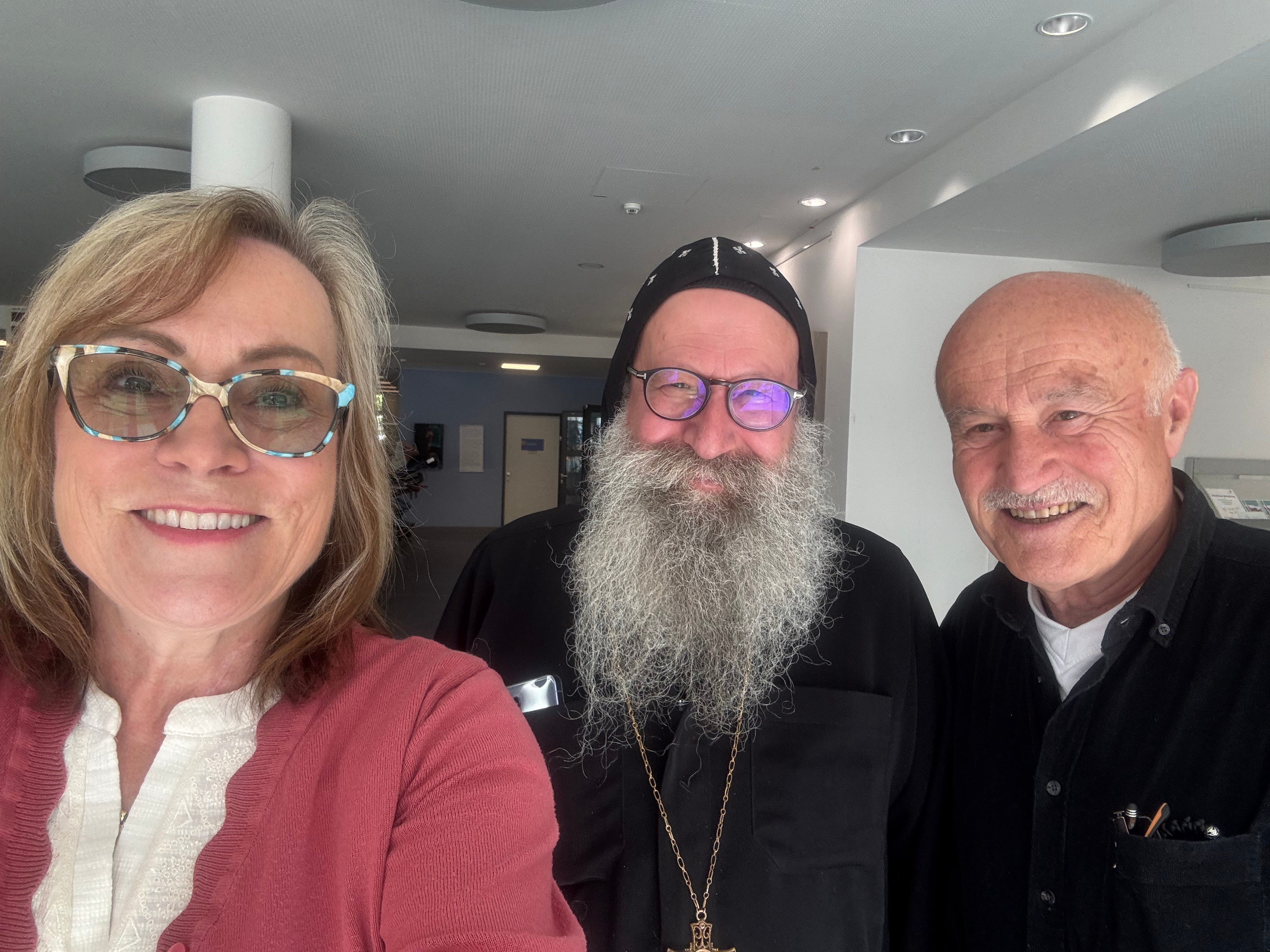
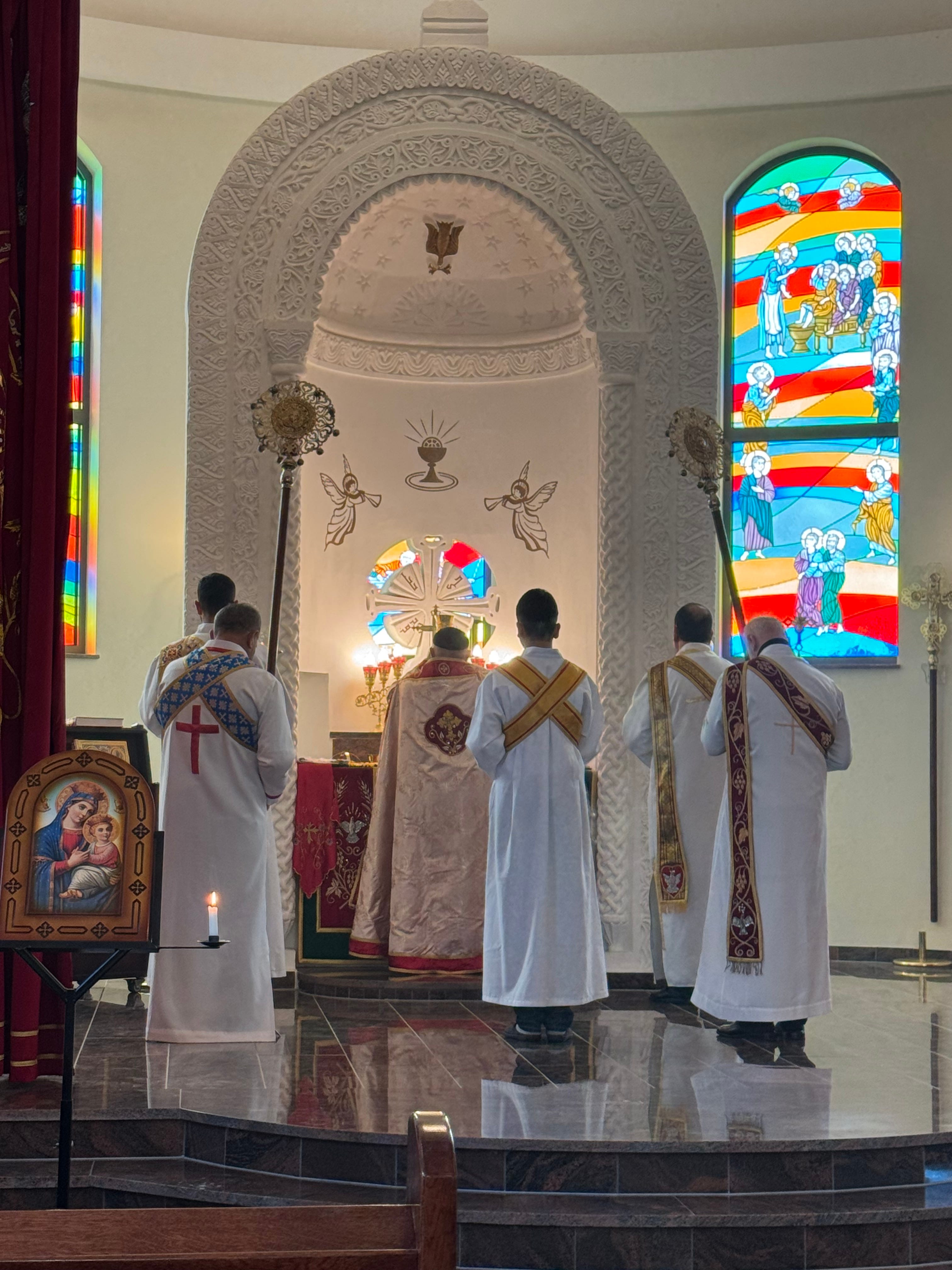
I was able to visit with our archbishop of Germany, His Eminence Mor Philoxenus Mattias. Nayis, and to participate in the Holy Qurobo twice during that time since I unintentionally managed to be there on May 15th, the Feast of the Virgin Mary of the Blessing of the Seeds, and for Sunday worship. In addition, I was able to take part in a regular evening Bible study launched by a friend, which regularly draws a large group of young adult Syriac Orthodox. Unlike other efforts, this one is unique, as it brings together not just one, but four large Syriac Orthodox churches. Since the university city of Gießen in the state of Hesse where I grew up has a large Syriac Orthodox population, I had ample opportunities to visit and to observe.
First, a funny story though: wherever I went, I was asked, “Aren’t you the one who has a social media presence?” I guess I didn’t realize it had spread that far. I also may have to record again. I had slowed down a bit due to work demands and just a feeling that I have so much more to learn about the intricacies and beauty of the Syriac Orthodox faith before opening my mouth too widely. I am grateful, though, to hear my content has helped people. Just recently, I sold an icon from my Etsy shop (syriacicons.etsy.com) to a young man in Switzerland, who told me he put it together after mentioning it to his mother, who listens to my content. Gotta love it. Maybe this is the way we build community in the mid-2020s?
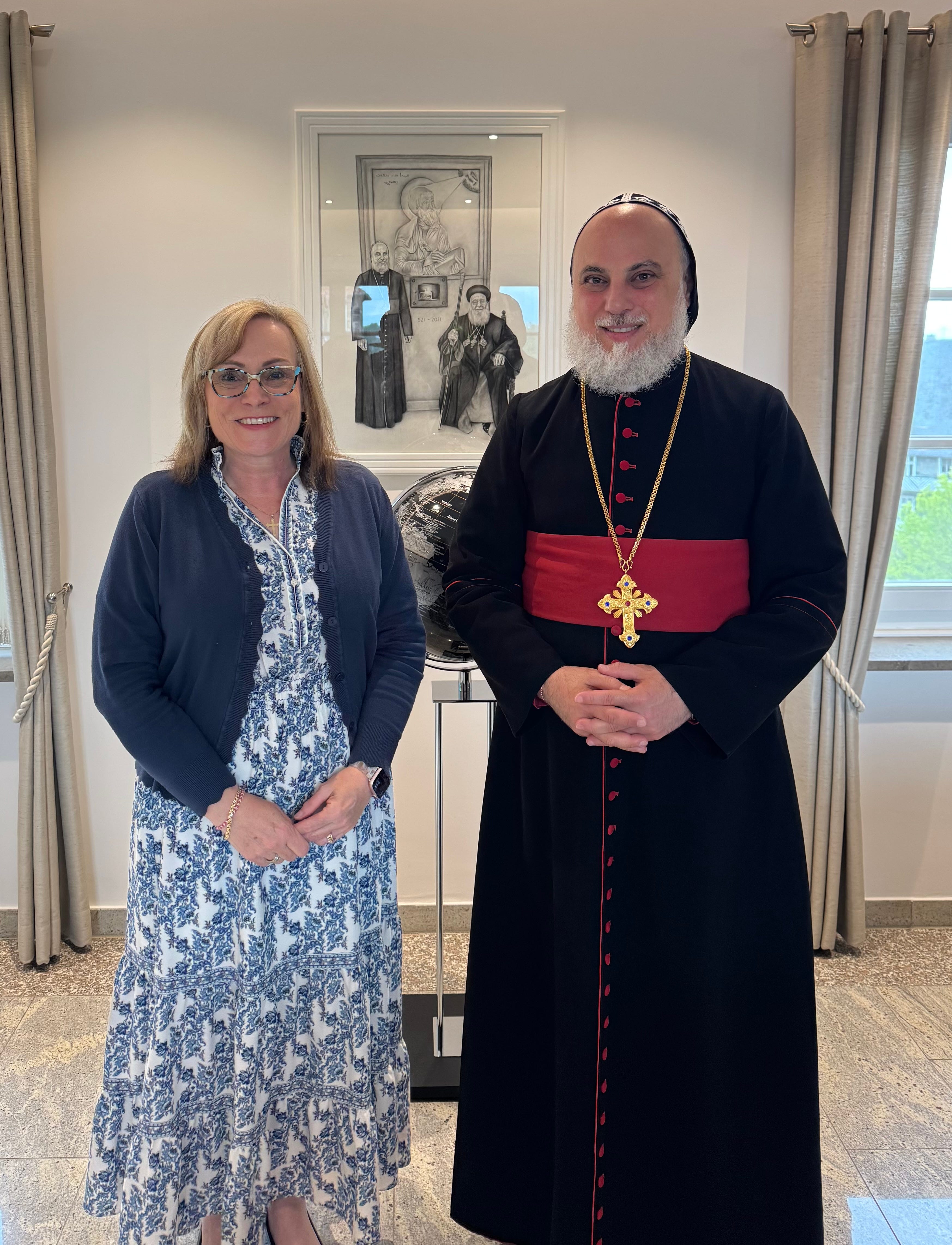
My meeting with Sayedna Mattias was a very joyful reunion. It had been 15 months since my last visit to the monastery, and it is truly a great blessing to be able to visit. We had a very productive conversation about what we are working on in the US regarding an English-language mission model for our Church. He shared with me how happy he was about the collaboration among the four parishes in the Gießen area, which are now working together to hold the bi-weekly Bible study. He commented glowingly on my dear friend Gabriel Durmaz. Gabriel is the brainchild behind this Bible study. I remember telling Sayedna about Gabriel and his heart for Christ, probably almost three years ago. I can’t wait to see where God plans on taking him for His cause.
The evening before, I had the opportunity to take part in the Bible study that week at my home parish of Mor Had Bschabo. It was attended by a good number of young faithful, probably around seventy to eighty. It is absolutely delightful to see the interest in this group to faithfully study the Scriptures. The night I attended, they were studying through a chapter in the Gospel of St. Mark together with Gabriel and Abouna Kenan Be Josef, the priest of Mor Barsaumo in Pohlheim-Garbenteich. This Bible study has gained such interest that an additional study was started for alternating weeks, focusing on 1 John.
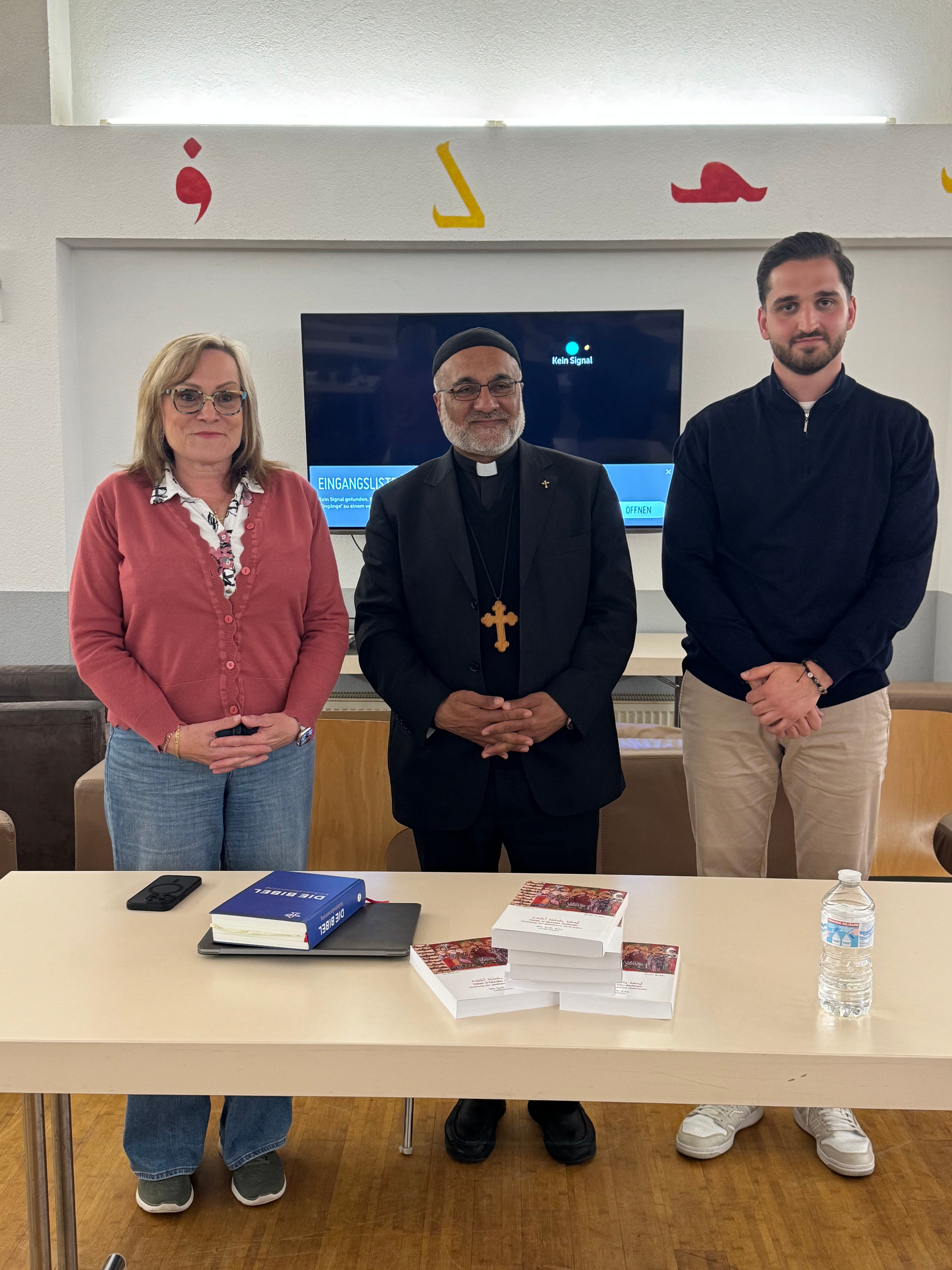
I remember my dear friend Gülcan and I having the conversation with Gabriel to do Bible study instead of just presentations about the Church and her traditions. Gabriel reminded us of the conversation when we spoke after the Bible study. He always has at least one priest with him, and the study is mainly in German with a couple of tidbits of Turoyo thrown in occasionally.
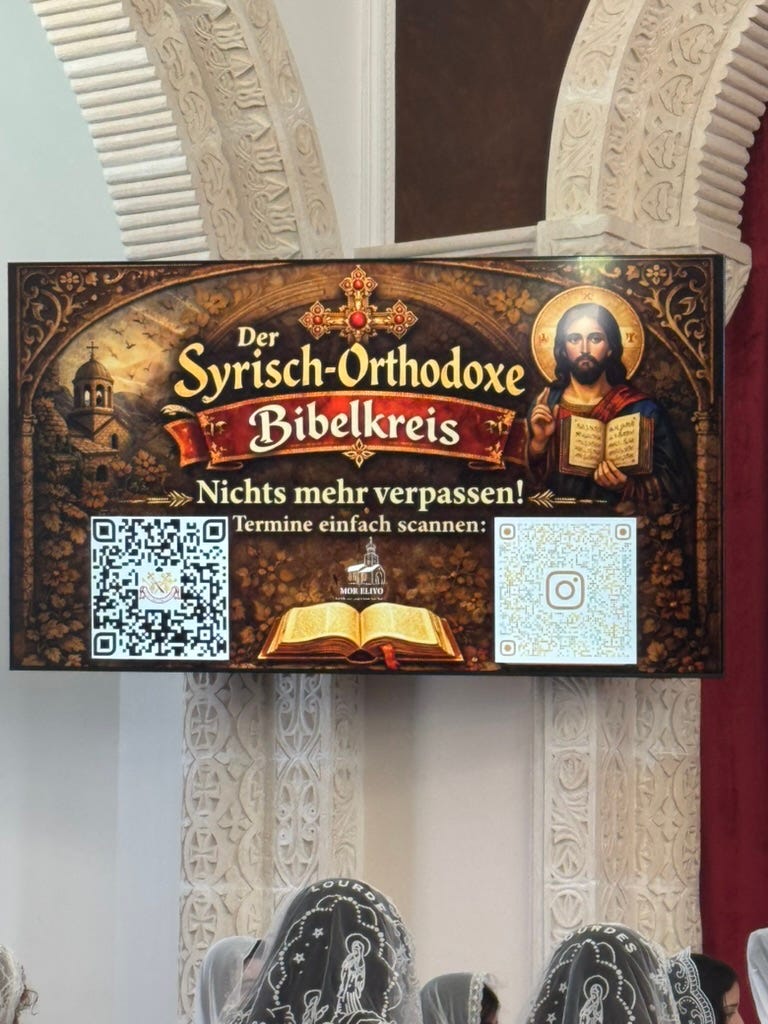
I had one observation about culture and ethnic pride toward the end, when Gabriel shared briefly about his recent trip to Tur Abdin, the ancient home of the Syriac Orthodox Church of Antioch in south-east Turkey. As he spoke, he used the word “Heimat,” meaning “place of origin” or “Fatherland” in English. “Heimat” is a highly emotional term in German with strong connotations of belonging. To me, even more so than using Fatherland in English. And when he used the word repeatedly, I must admit, I felt left out. As a convert to the Syriac Orthodox Church originally from Germany, I was, at that very moment, standing in my homeland, Germany. So “Heimat” was not for me in this use.
I don’t come from Tur Abdin, neither does my family, and while I am dying to go see the churches and monasteries that remain there, I neither speak the language, nor do I feel a particular sense of belonging. Had he just spoken about the sights he saw and the insights he gained talking to monks and priests there, I would have completely engaged mentally and emotionally. As is, I felt emotionally turned off, truth be told. It was a reminder to me of how hard it is sometimes to fit in as a convert in the Syriac Orthodox Church. I love Gabriel, and I hope if he reads this, he understands the emotion I felt.
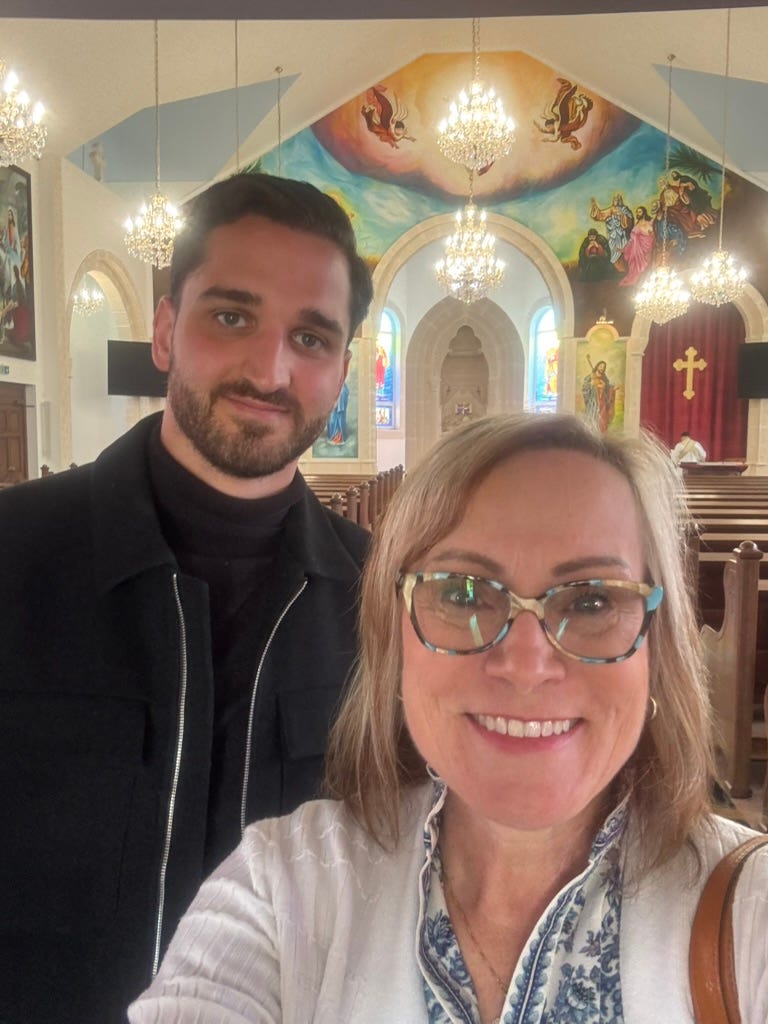
This reminded me of the discussion we have had in the US about an American Syriac Orthodox Church where these parishes would be American in character, not feature Suryoyo or Malayalam heritage per se. Even in the parishes I have seen in the US, Arabic-speaking Iraqi immigrants often outnumber other groups. When I said “Shlomo” to a man in my parish, he answered, “That is Hebrew, right?” Most of the time, conversations are in Arabic. The culture there is, of course, also not the same as in the churches in Germany, especially in my hometown’s four churches. Another observation seems to be that the churches in Germany are clusters of families from the same town in Tur Abdin, as family members would move close to where others had already settled as they came to Germany. This makes it even harder to get in. One man at Mor Eliyo yesterday made a comment of how in years past, no outsider would have been tolerated.
I am always reminded that, just as in the Greek Orthodox Church in the US (and, as far as I know, in Germany), things are changing. As more people discover Orthodoxy and Oriental Orthodox churches, our parishes must adapt to a changing target audience. We cannot continue to live as ethnic enclaves if we hope to attract others to the Christian faith in the context of Orthodoxy. Even in the Greek Orthodox Church, parishes that insist on their Greek ethnicity as critically important are shrinking or even dying. However, the question is, do we want this change, and do we accept that it may mean losing some cultural aspects? I can only ever remind my readers of my husband’s story. He grew up Greek Orthodox as a kid but left as a young adult. He didn’t speak the language. Grandma would give him a candy and say, “Be quiet.” Nobody explained anything about the Divine Liturgy. To him, it was meaningless.
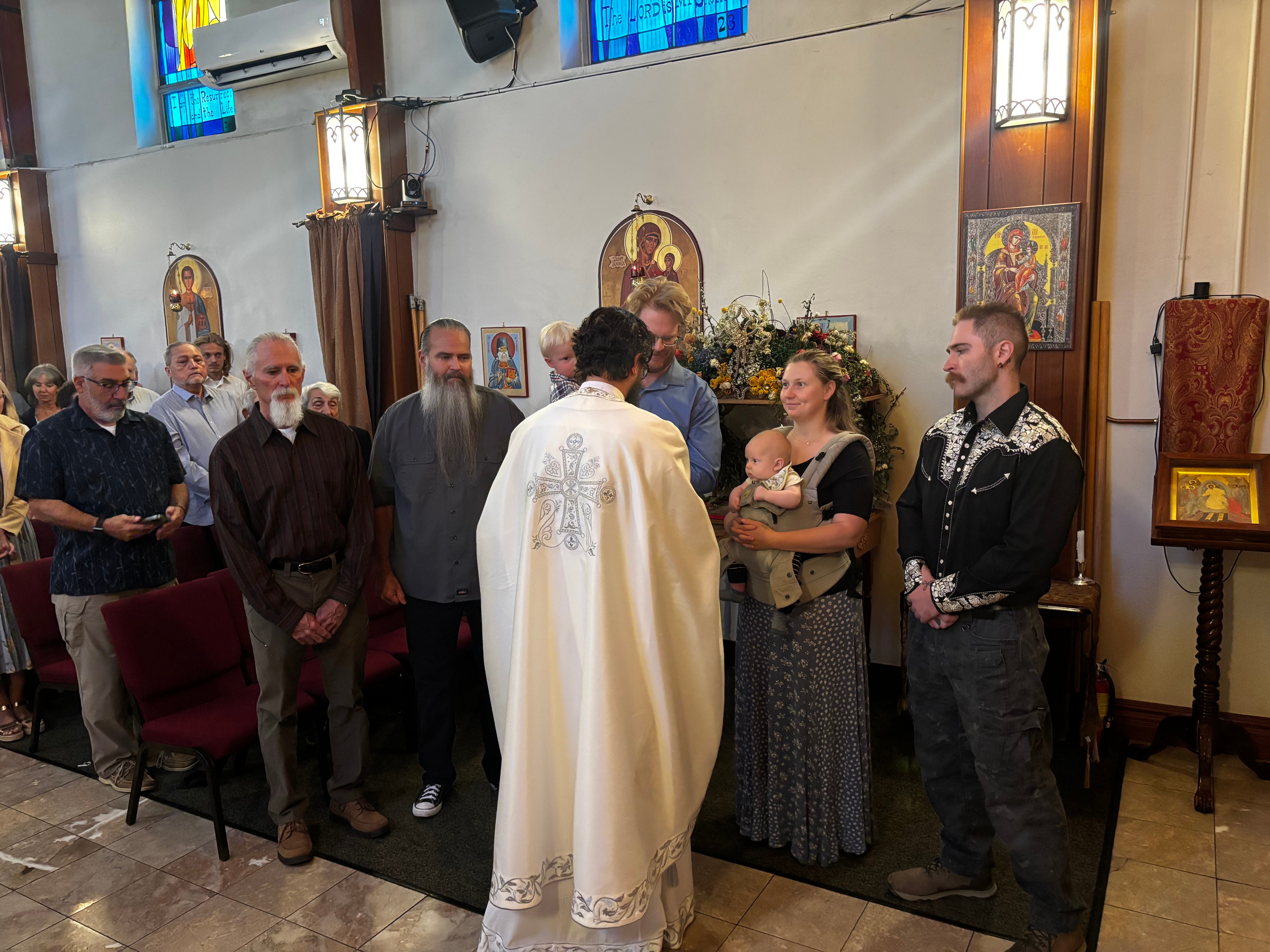
Now, in his older days, his Greek Orthodox church is life to him. He has been taught what happens in the Divine Liturgy and what the sacraments mean. He has been introduced to what it means to seek communion with God, first and foremost, through ascetic practices such as fasting and prayer. He would not have returned to the Orthodox Church had it not presented itself in his heart language, English. He loves praying the Lord’s Prayer in Greek, and he got a huge kick out of listening to the Greek of the series on St. Paisios we watched, as he picked up some prayers he heard as a child. But I can’t say he's suddenly ready to be a full-blown Greek. He worships in English. He prays in English. He reads Psalms and chants in English. He listens to his priest give homilies in English. He is American.
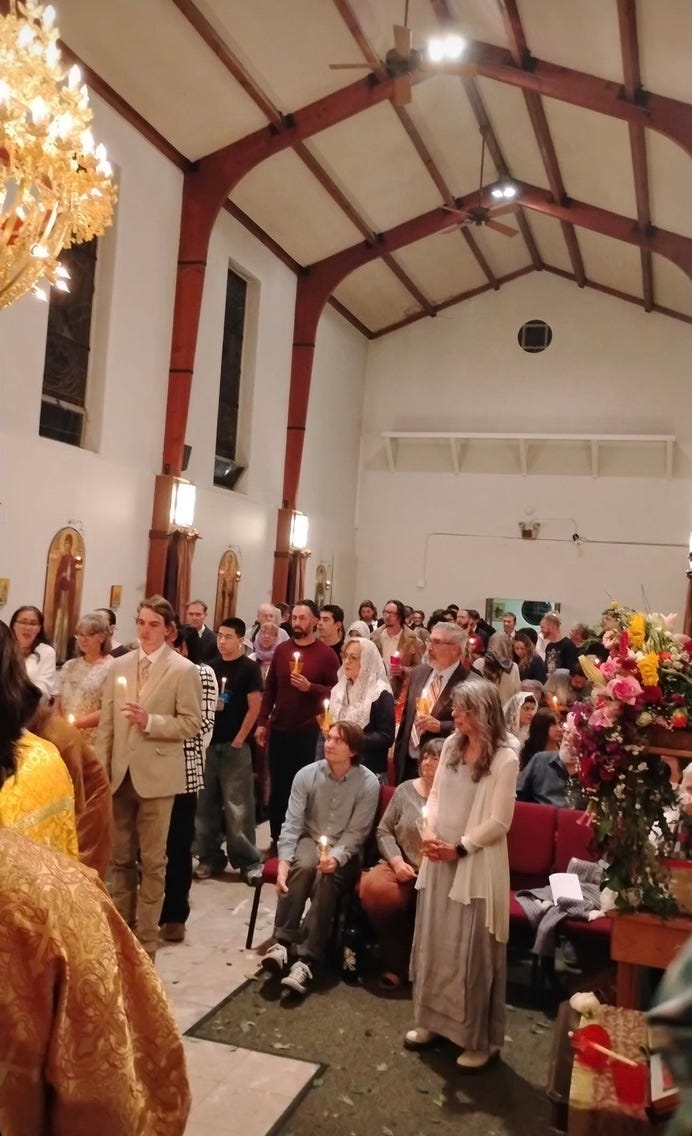
In part two of my observations, I will discuss the iconography and decorations in the churches and monasteries I visited. Please subscribe and tune in. And please, as always, discuss if you have thoughts.
No posts
Comments
Nothing yet. Say the first thing.
Sign in to join the conversation.