
Recently, a young woman in her early twenties in my closer circle of family and friends died. I mourned from afar with the family of Orthodox faith in the Netherlands. During that time, I felt a bit lost because of the cultural differences between a Middle Eastern mourning experience and my cultural understanding of when a death occurs. The way I encounter death is, of course, based on my upbringing in Germany, as well as my experience here in the United States of America for over half my life now.
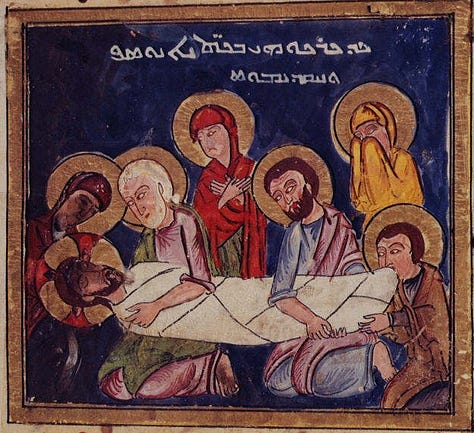
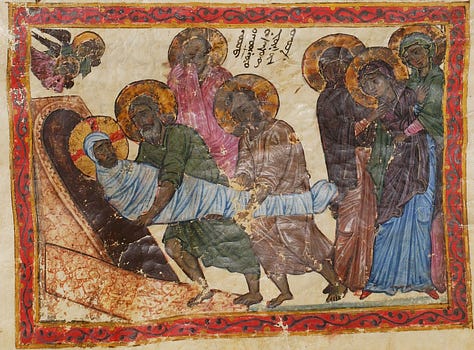
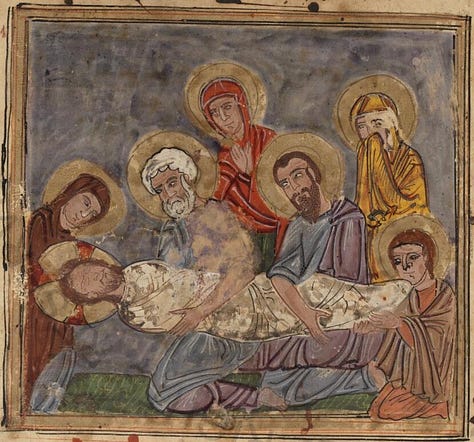
I quickly realized and was comforted by the thought, though, that my perception of death has greatly shifted since I became Syriac Orthodox over three years ago. As an evangelical, my prayers would have been exclusively for the family as they mourned the loss of their daughter and sister. The dead are dead, according to Protestant understanding. Scripture seems to say that: “Just as it is given to people to die once and then after death to be judged.” (Hebrews 9:27, Syriac-English New Testament). The New King James Version puts it even more bluntly: “…but after this the judgment.”
And yet, in our Syriac Orthodox liturgy, the Holy Quorobo, the focus is on the life Christ brings when we sing:
“Lord, grant good remembrance to all the faithful dead;
Thy holy Body they took and Thy Living Blood.
May they stand on Thy right side on that day Thy grace shall dawn.”
We also pray: “The world shall bow and worship you, and every tongue shall confess Your Name. For you are the Raiser of the dead and the Good Hope to those who are buried. Halleluiah.”
In the Service of the Faithful Departed, this prayer is offered:
The quickening King shall descend gloriously from heaven to resurrect the dead and raise the entombed. The dead shall together rise from within the graves to give praise to the Quickener of the dead. Barekhmor...
How glorious is the saying which our Lord uttered in His Gospel: “Whosoever eats My Body and drinks My Blood would not be left in Sheol. Because for his sake I descended and suffered death that he may have eternal life.”
Lord, have mercy on us and help us.
O Son of God, by Your death You have quickened our mortality, raise us up from the dust that we may cry: Glory to you, O God.
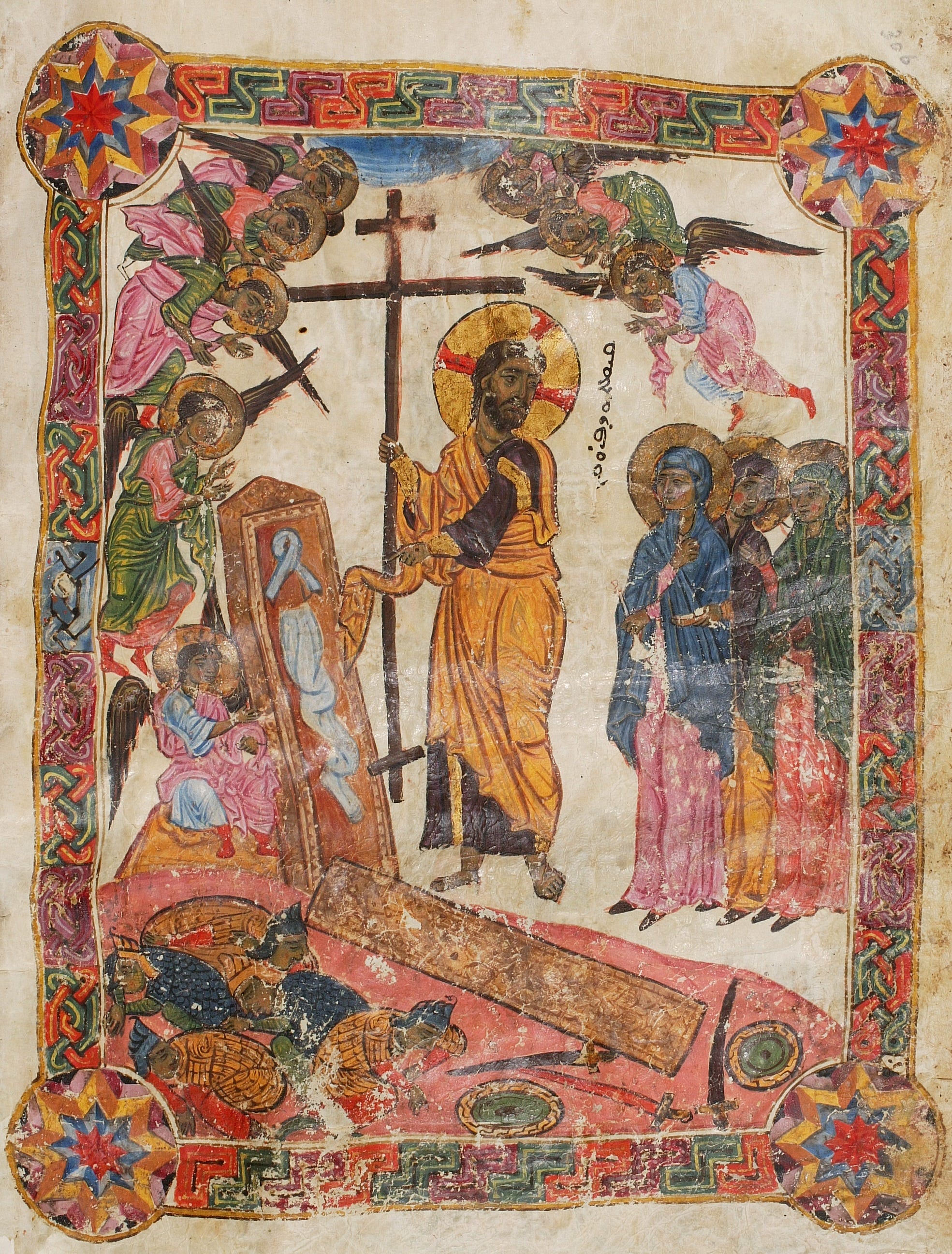
Just from these examples, it is clear that the Syriac Orthodox (and Orthodox in general) understanding of death and dying is very different from that of Protestantism. There is no focus on a juridical understanding of Christ’s death. The focus is on the life Christ brings by conquering death through His death! How beautiful it is to ponder the goodness and love for mankind of God.
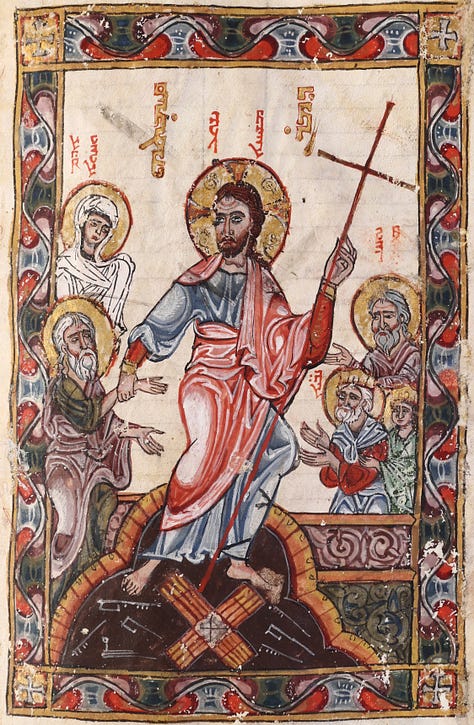
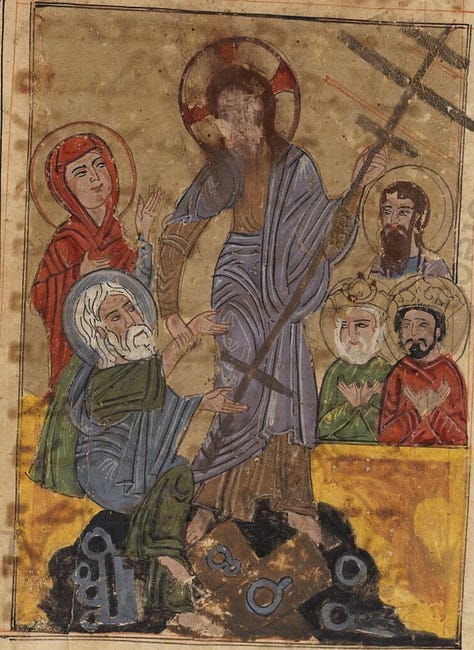
Mention is made every Sunday when we come together to celebrate the Holy Qurobo (and at many other times) of those who have departed. It brings to mind, again and again, that Christ descended to Hades and rescued those held captive there. It teaches that Christ conquered death by His own death - the central understanding in Orthodoxy of the purpose of Christ’s death.
Christ not only conquered death, but He freed the captives in Sheol who were waiting there. Iconography in Oriental Orthodoxy and Eastern Orthodoxy shows Christ grabbing the wrist of the captives. He is forcefully pulling them out! How powerful is this image of the amazing love of God?!?! When I first encountered this imagery, I cried. It was overwhelming for me to realize the different understanding in Orthodoxy of what Jesus’s death accomplished.
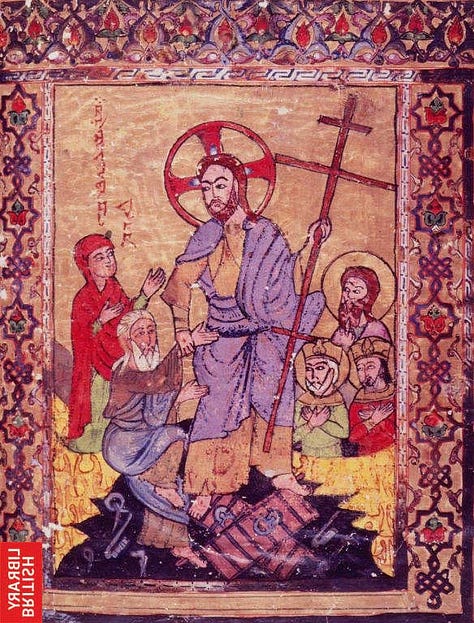
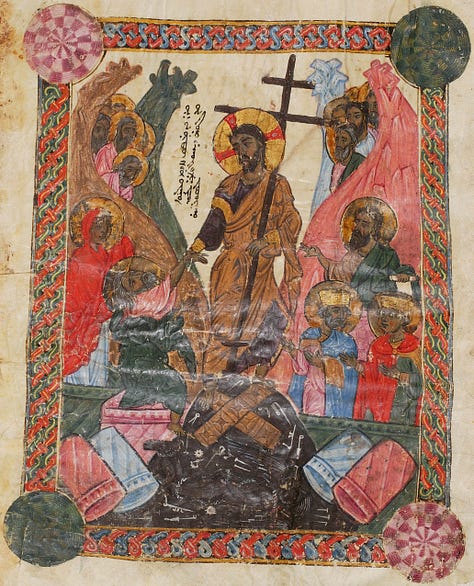
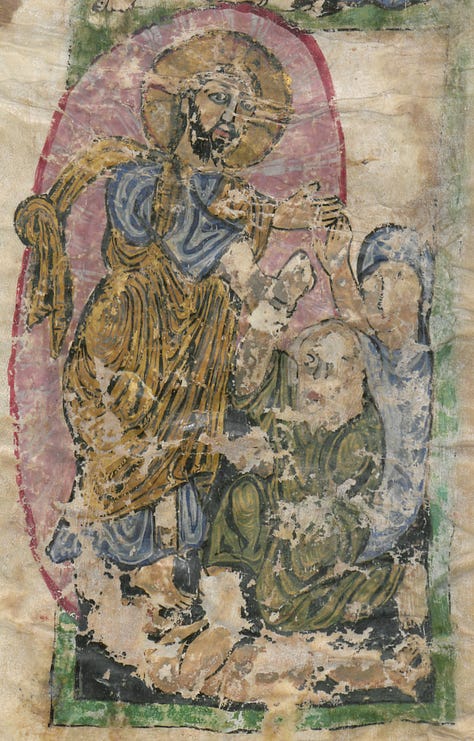
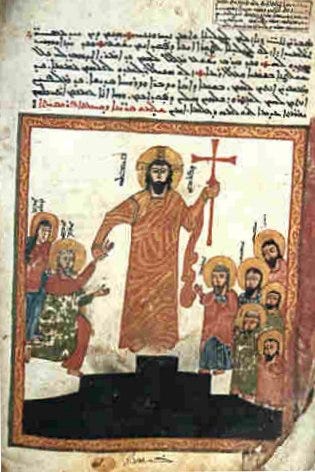
To show just how often we pray for those who have gone before us and what immense hope we feel when we pray these prayers, I’ll conclude with this Sapro (morning) prayer for Saturday from the Sh’himo, the Syriac Orthodox Book of Common Prayer:
An Ordered Prayer for the Departed
Blessed is he who has magnified our resurrection and made firm the hope of our rising again. The blessed Paul is witness, when he refutes the doubter and says: Foolish man, the seed that you sow, if it does not die, does not live, and he showed that the race of Adam shall rise in glory.
Blessed is the rain of life, which descended and shed the resurrection on those who slept in Sheol, and he cried with a powerful voice in the place of the dead, the devourer of generations.
Its high walls were cast down and he laid waste its palaces and its treasures and showed that the race of Adam shall rise in glory.
Praise to the first-born Son, who descended to Sheol and conquered death. Adam saw him and was comforted. He bowed his neck, prostrated himself before him, and said:
Forgive me my fault and let me go forth from here, Lord. Restore me and my children to Paradise, from which I departed.
Make remembrance, Lord, of the departed, who took your body and your living blood, and repeatedly received pardon through it, in the Jerusalem which is in the sky.
When you sit on your throne and divide the good men from the evil ones, let them stand, Lord, with faces unveiled at your right.1
These are the prayers I also offer for the daughter of my beloved friends. May Christ raise her up in glory in His paradise.
Antón Bousquet. 2019. ܒܝܢܬ ܡܓܗ̈ܐ : ܡܥܒܪܢܘܬܐ ܕܨܠܘ̈ܬܐ ܕܫܒܬܐ ܫܚܝܡܬܐ ܒܠܫܢܐ ܐܢܓܠܝܐ= Between the Twilights: An Interlinear Translation of the Syriac Orthodox Breviary, p. 552.
No posts
Comments
Nothing yet. Say the first thing.
Sign in to join the conversation.