
Before we begin, we have a few events to share!
Join us for our Spring Happy Hour and Election Preview tomorrow (Tuesday) May 12 at Little Rebel—we’ll walk through the races we’re watching heading into the June primaries.
Next week—Tuesday, May 19, 8:15-10 AM—join us at New York Law School (185 West Broadway) to hear from the two leading Democratic candidates in the 10th Congressional District primary—Representative Dan Goldman and challenger Brad Lander—who will be interviewed one at a time in front of a live audience by journalist Ben Max, program director of NYLS' Center for New York City and State Law. RSVP Required.
Finally, consider joining us for our Volunteer Kick-Off Zoom Call, May 28 12–1pm, to learn how you can get involved in the upcoming primaries.
Governor Hochul announced a handshake agreement on the $268 billion state budget last week, including a provision to modernize environmental review for housing—something we’ve pushed for as part of the Unlock NY’s Future coalition and recommended in our policy agenda. We will have more to say on the budget as the dust settles, but for now we will share a few stories from last week.
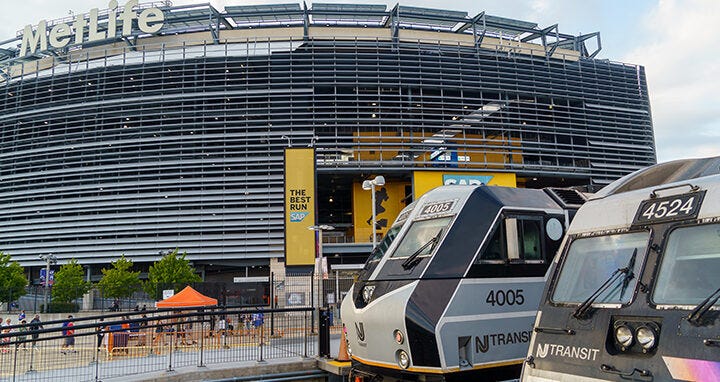
For readers who don’t follow soccer—the World Cup is the most-watched event on earth. More than half the planet watched the last tournament at some stage. In 2018, FIFA named the United States, Mexico, and Canada as hosts for the 2026 tournament. This summer, MetLife Stadium in East Rutherford will host eight matches. Despite having eight years to prepare, the headlines indicate that the region’s transportation system is nowhere near ready.
NJ Transit announced Thursday that it was reducing its round-trip match-day rail fare from $150 to $105, after public outcry. That’s several times the cost of the same train when it runs for Jets or Giants games. Worse, NJ Transit commuters returning to New Jersey will face disruptions leaving New York Penn Station for four hours before each match, and three hours after each match coming back into New York. Given the unbelievable prices and hassle, organizers are in the difficult position of having to explain to soccer fans coming in from much better connected countries that you cannot simply walk to the stadium—even if you have the endurance—because it is not pedestrian connected.
Every once in a while we are reminded that our systems do not work and this is unfortunately one of them. NJ Transit says the high fare costs are to recoup the $48 million in additional labor and security costs for the events. The transportation fiasco is a black eye for the region—we should all want the nation’s largest city to be able to host high profile global events. To do so without burdensome costs and disruptions, we need planning that is less car-centric and infrastructure with the resilience and flexibility to bring people where they want to go—in this case, to the games. And all this before the U.S. national team has even had a chance to disappoint us.
City Council Speaker Julie Menin and budget advocates each released proposals to improve and expand the Fair Fares program last week. Fair Fares, launched in 2019, provides half-price subway, bus, and paratransit rides to adults earning below 150% of the federal poverty line. However, because the application process is duplicative—as it uses the same information applicants submit to other social safety net programs—and in the words of researchers who recently looked into the process, “complicated and slow,” only roughly 40% of New Yorkers who are eligible are enrolled.
The City Council held a hearing last Wednesday to push the Mamdani Administration in favor of the Speaker’s plan, which offers automatic enrollment and fully free rides for current enrollees—free rides for 0-150% of the poverty line and half-price for 150-300%. Riders Alliance, the Permanent Citizens Advisory Committee to the MTA, and the Community Service Society also back this approach, which would be a strong improvement and aligns with our agenda.
Also last week, the Citizens Budget Commission released a report recommending that the Fair Fares program expand to 250% of the poverty line (roughly $82,500 for a family of four), but no free fares. The report makes a number of important points. First, three of four New Yorkers living under 250% of the poverty line who commute take the subway. They would not benefit from the mayor’s free bus plan. Second, free buses could undermine subway ridership and fares, as lower income people may be drawn to a free ride rather than paying full fare and through fare evasion, which the MTA says increases at stops adjacent to free bus lines. Finally, the CBC’s expansion would cost roughly $146 million, a fraction of the at least $900 million that the free buses proposal would cost. The Speaker’s plan would cost about $421 million. Naturally, actual mileage may vary on these estimates.
Given the lack of interest that Albany has shown for the Mayor’s free bus proposal, we think there’s a strong likelihood that the City expands Fair Fares this budget cycle, likely using these two proposals as a template. That would be great news for transit equity in New York.
Last week, The City reported that developers have filed permits for more than 150 buildings with exactly 99 apartments in the past two years under the 485-x tax incentive program—compared to 13 in the prior 15 years combined. It is worth digging into what the publication calls 99 problems for New York’s housing crisis.
In 2024, Albany passed 485-x—the Affordable Neighborhoods for New Yorkers tax incentive—to replace the expired 421-a program and restart affordable housing construction. 485-x offers property tax exemptions to developers who include affordable units in new rental construction, with the benefit tier and affordability requirement scaling with building size. Critically, a wage threshold also kicks in at 100 units—buildings of 100 or more units are subject to a construction wage minimum of $40/hour (rising 2.5% annually); buildings under 100 units face no such requirement under 485-x. Very large projects of 150 or more units in high-cost zones (lower Manhattan, parts of the Brooklyn and Queens waterfront) get a longer tax benefit, but face a steeper wage floor of $63–$72 per hour.
The City reported that one developer who had planned 400-unit towers is now pursuing six separate 99-unit buildings on the same lot: fewer total apartments, higher per-unit cost, slower to build. Labor unions argue—with some justification—that clustered 99-unit buildings sharing mortgages, amenities, and tax lots are legally one building and should be treated as such.
485-x is one of the most important public programs for housing development in New York. Whether developers are gaming the threshold deliberately (or waiting out the wage floor provision) or simply responding to a cliff in the law, the result is the same—less housing, slower builds, and higher prices. Importantly, the wage thresholds may be waived if workers and owners sign a deal—and there is clearly deal space. The evidence of clustering around 99 units strongly suggests that there are projects that might have 100-150 units and pay something less than $40 an hour (but something more than what workers are getting absent any agreement). There’s less reporting on any active negotiations so it’s hard to tell what’s happening behind the scenes. City and State officials are letting things play out for now, but one could see a reckoning coming.
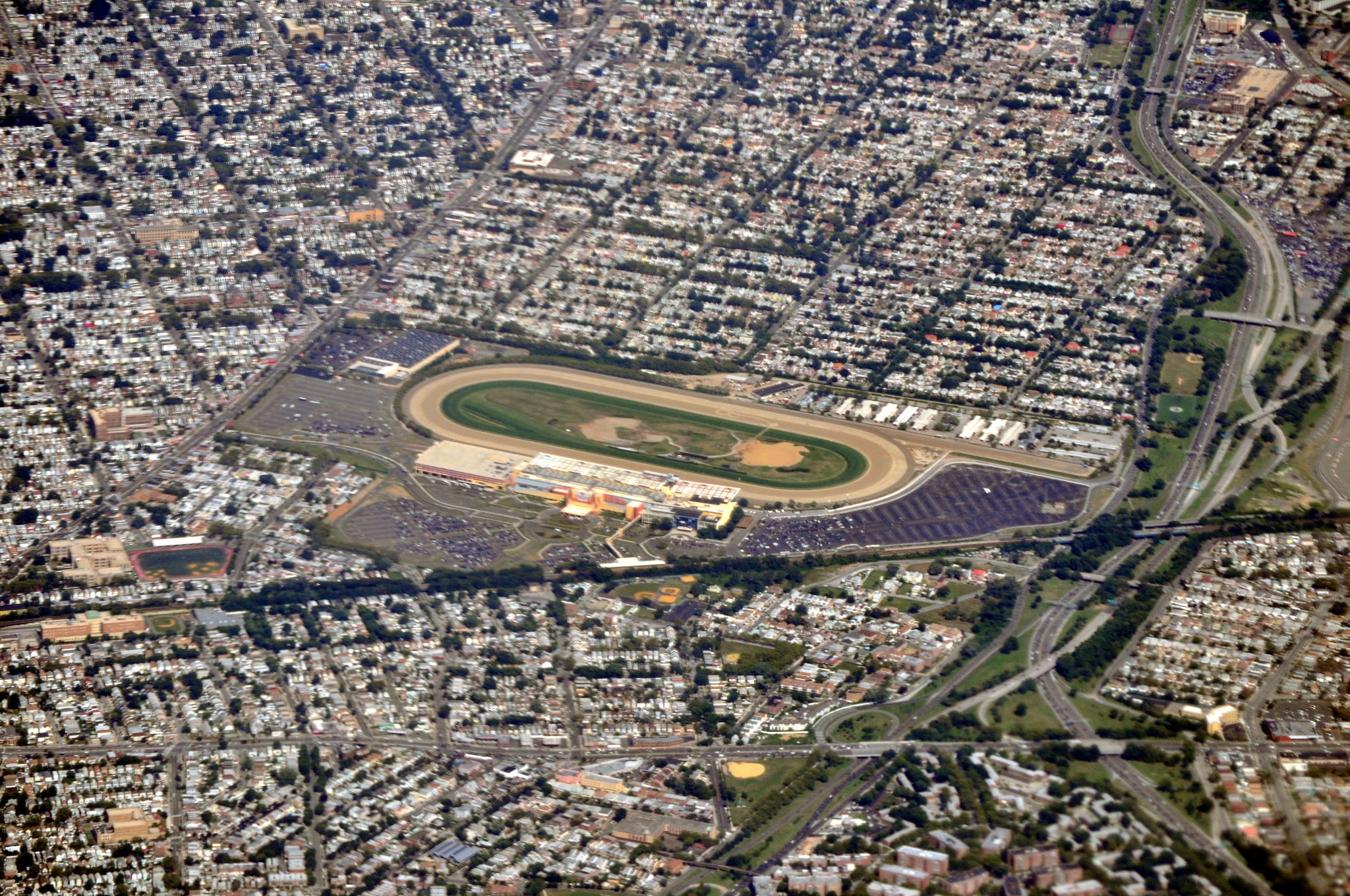
Finally, we are excited that Governor Hochul launched the community engagement process this week for the Aqueduct Racetrack site in South Ozone Park—100 state-owned acres adjacent to the A train. With the last horse races scheduled for next month, Empire State Development, the State’s economic development agency, will lead public workshops through 2026; a Community Master Plan is expected in early 2027, followed by environmental review and competitive RFPs. The Queens Eagle reports that former Council Speaker Adrienne Adams—now Hochul’s running mate—proposed a housing-centered neighborhood here in her 2024 State of the City speech, which may suggest the State’s direction. A truly dense housing neighborhood may require higher-capacity transit—the area is near a subway stop, but that may not be enough. In any case, we hope this isn’t the start of a never-ending process as these opportunities do not come up frequently.
And with that, we will have more to say as the budget deal shakes out and stay tuned for our voter guide, which will come out later this month.
No posts
Comments
Nothing yet. Say the first thing.
Sign in to join the conversation.