
I have trust issues with video game narratives, so many are simplistic at best. This isn’t usually the medium’s strength, given all the other elements pulling attention away from storytelling. So when Clair Obscur: Expedition 33’s first major events happened, I dismissed them as gimmicky.
It took time to feel the depth of what they were building, but close to the end, everything started connecting. I began seeing links between narrative threads and revelations, suddenly grasping the sheer craftsmanship behind this story.
And then the ending dropped.
(Massive) Spoilers ahead.
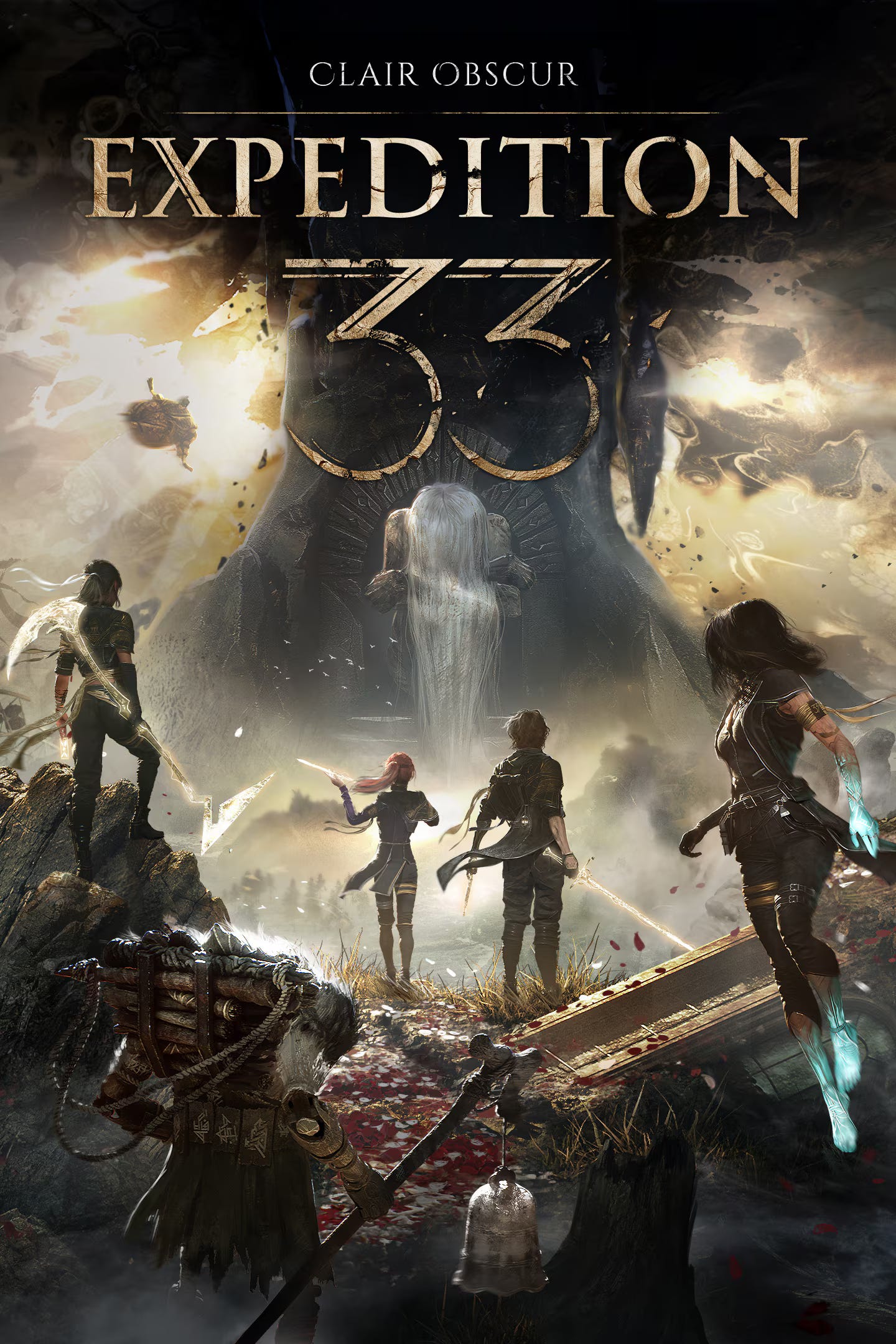
The final dilemma is devastating either way. You can lock Alicia in her grief forever, or free her at the cost of watching everyone disappear. I started by doing the “right thing,” as others online put it : let her move on. But as I fought Verso, watching him slowly grind away at Alicia, I realized I didn’t want him and the rest of the world to go. (My Verso build was terrible for duels, making the fight anti-climactic.) I was doing this for myself, not for Alicia.
So I let myself die and started again, choosing the other path. The one where you preserve the fictional world, which is genuinely dark. Alicia controls Verso as a puppet, representing her withdrawal from reality, binding herself in memories rather than facing the ending. It shows the apparent happiness before revealing the tragedy beneath. They absolutely nailed the unsettling tone of psychological horror.
But the other ending connects brilliantly with what you’re experiencing as a player. The game shows the difficulty of letting go when grieving, and you’re living through that same struggle of letting go of the fictional world. The game is over. You’ve grown attached to these characters, and now you must bid them farewell. You will never experience this story the same way ever again.
Another way to put it is that the diegetic tragedy of the main character saying farewell mirrors the extra-diegetic reality of the player having to say farewell to the game world and all its inhabitants.
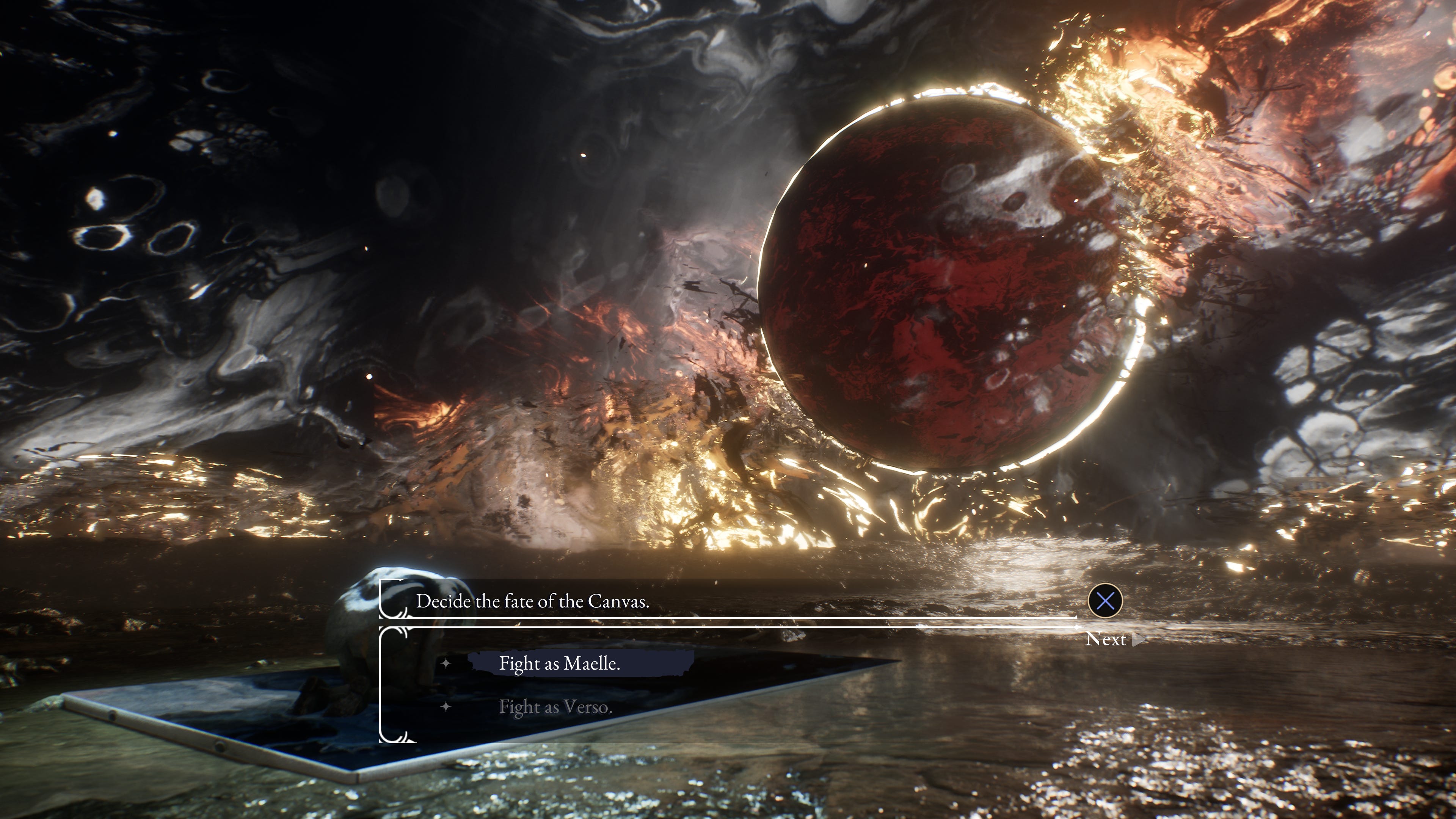
I’m not sure if this was intentional or retrospective, but I experienced interesting foreshadowing on the way to fight the Paintress. Passing through all the environments I’d already seen, I drew connections to the end of the book “The Hobbit”. After the intense action of the Battle of the Five Armies, Bilbo and Gandalf are walking back to where they started. They remember their journey’s milestones as they pass each landmark, until reaching the crossroads where they must part.
The game is about fatality: something that is certain to happen, and you have to accept it. Time moving forward, death coming for all of us, memory fading away. The game is a tragedy, showing how difficult overcoming grief truly is.
There’s one line that captures this perfectly. Lune tells a shaken Gustav: “When one falls, we continue, not if one falls, when.” From the voice acting to the motion capture performance, this moment made me realize this wasn’t just good entertainment but something deeper.
Everything has an end, we know it, yet we continue.
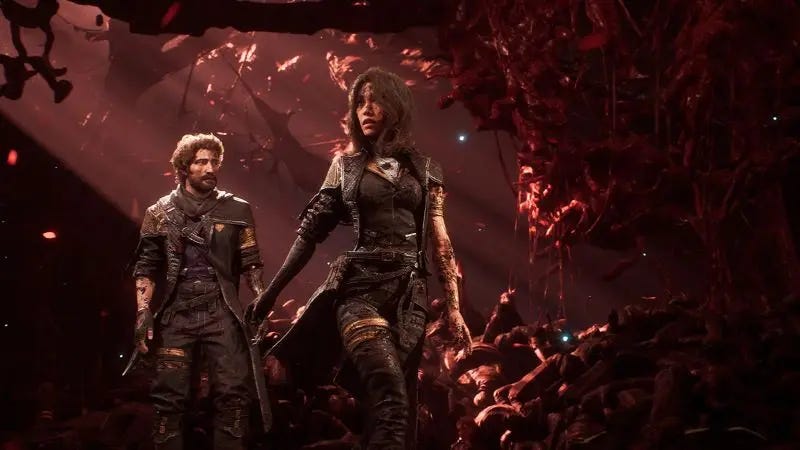
What initially drew me to the game was probably the studio’s story more than the game itself. I heard about a small team delivering something everyone thought was brilliant. Large structural changes are happening in the industry. This felt like a good illustration, maybe an opening to a positive future that contrasts with the layoffs and failures plaguing massive AAA studios.
After finishing, I watched interviews and making-of content. It perfectly illustrated my thoughts on current organizational shortcomings.
The highest cost in video game production today, to which we don’t give enough weight, is alignment, making sure everyone moves in the same direction. Therefore, we underestimate how efficient a tighter team can be, at least in earlier stages of production.
Related to that, their recruitment strategy was interesting too. Instead of focusing on years in the industry, they looked for actual things people made, especially side projects. If you did something creative while working another job to pay bills, that proves your main incentive is a passion for the craft. You also get a better sense of someone’s specific expertise, and can evaluate if it fits your particular project.
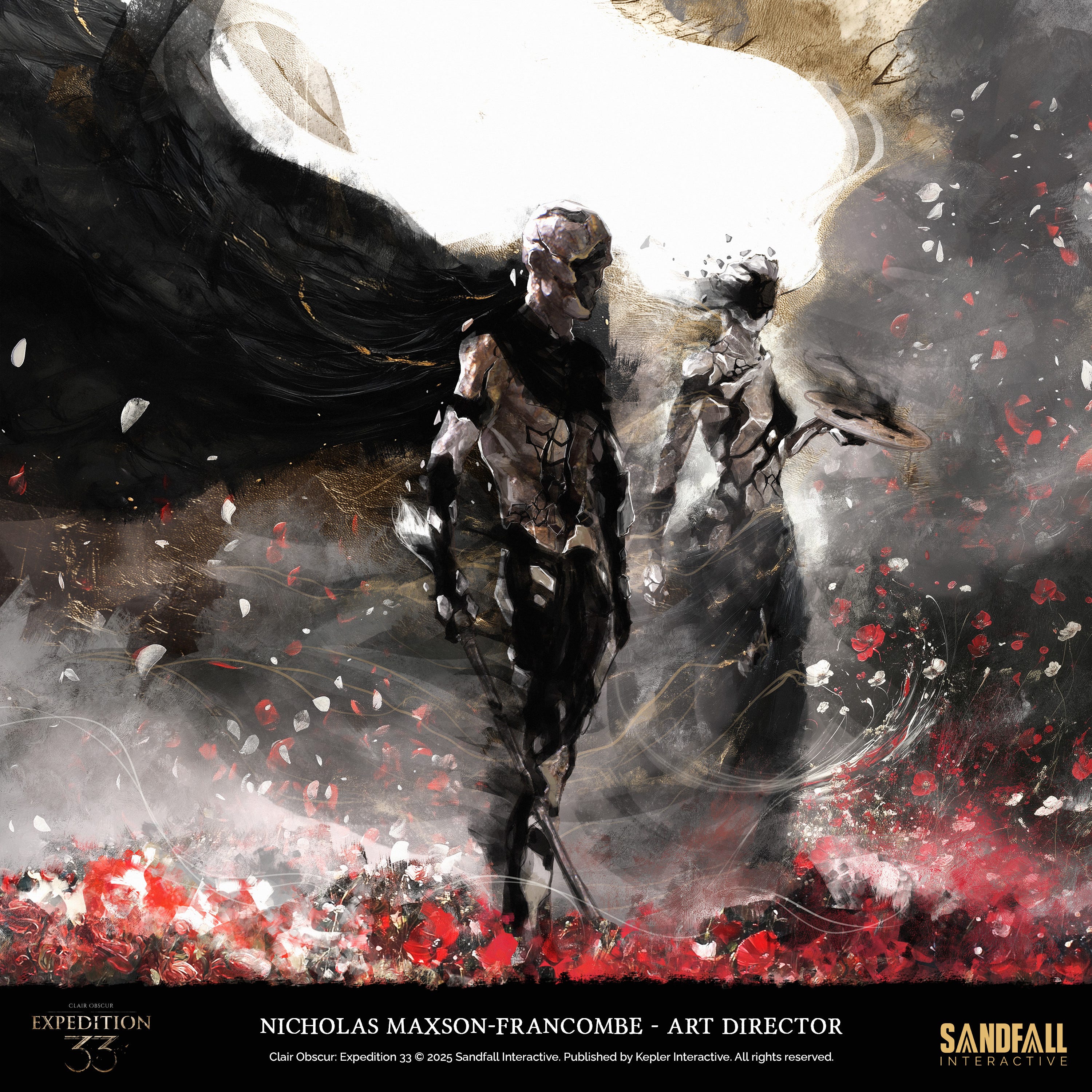
The Sandfall team managed to create a piece of art that touched me in a way cinematic games rarely do. We tend to say “Show don’t Tell”, but this felt like “Play don’t Show”. I lived grief in an era of surface-level storytelling.
Some say the medium is the message, which is true but doesn’t show the full picture. Video games face inherent constraints, narrative diluted by competing priorities. But skilled craftsmen can play with the rules, and a team with a tight alignment can go in uncharted territories.
Now that I’ve written my reflection down, this completes the mourning process... and allows me to say farewell one last time.
PS: After sweeping all the awards at TGA, Sandfall announced releasing a new free update, you might want to check it out if you missed it!
Comments
Nothing yet. Say the first thing.
Sign in to join the conversation.