
I am putting this out now, there may be revisions as I find more to add to this article, but it is too important to get ahead of this before it gains too much traction.

istockphoto.com
The Separatists have been working hard at convincing Albertans that separation will give them Freedom and Money. They started this conversation based on the Alberta Prosperity Project when Danielle Smith first got elected. The people at the center of that conversation were Dennis Modry, Jeffrey Rath, and Mitch Sylvetre. Their main concern was getting the Canada Pension Plan and creating the Alberta Pension Plan.
2023: Roots in Fiscal Autonomy and the Alberta Pension Plan
In 2023 the movement gained popularity around the Alberta Pension Plan (APP) proposal. The United Conservative Party (UCP) government, led by Premier Danielle Smith, explored and continues exploring withdrawing from the national Canada Pension Plan. A LifeWorks report commissioned by the province suggested Alberta could claim up to $334 billion (about 53% of CPP assets) due to its younger workforce and higher contributions, potentially allowing lower contribution rates or higher benefits. It was not true - in fact the report had no authors or contact information to be able to verify any of these claims.
This idea resonated with many Albertans frustrated by federal transfers and regulations hindering the oil and gas sector. They also spread that Alberta sends more money to Ottawa than they get back. The truth is Alberta, the province sends nothing, it is the taxpayer who sends the money to Ottawa. Ottawa collects both Federal and Provincial taxes. Now back to our dive:
The Alberta Prosperity Project, a non-partisan grassroots group founded to promote economic sovereignty, amplified these concerns. Co-leaders included Mitch Sylvestre, a businessman and gun shop owner from Bonnyville, and Dennis Modry, a physician. The APP framed the APP pension debate as evidence of Alberta’s outsized contributions to Canada without fair returns. Jeffrey Rath joined the group.
Other voices emerged, including figures associated with the Take Back Alberta movement and fiscal conservatives. The pension discussion served as an entry point, highlighting grievances over equalization, carbon taxes, and federal environmental policies. While the Smith government pursued studies and legislation requiring a referendum before any APP launch, the conversation quickly broadened beyond pensions to questions of deeper autonomy. TBA took on getting people elected at the grassroots level into schoolboards and then town councils to further their message.
By 2024, the discourse morphed from “sovereignty within Confederation” to explicit independence talks. The first bill the UCP past - Bill 1 highlighted - a Soveriegn Alberta within a United Canada. When Danielle Smith was asked what her back up plan was she replied Dennis Modry and the Alberta Prosperity Project.
The Alberta Prosperity Project increasingly positioned full separation as the ultimate solution to recurring federal-provincial conflicts. Town halls and online campaigns by APP drew growing crowds, emphasizing Alberta’s resource wealth, entrepreneurial culture, and perceived incompatibility with Ottawa’s priorities. Key figures like Jeffrey Rath, a Calgary-based lawyer, joined Sylvestre as a prominent advocate. Rath provided legal perspectives on referendum pathways and constitutional processes. The group began drafting fiscal blueprints, such as The Value of Freedom, arguing an independent Alberta could retain $68–75 billion annually in current federal tax contributions, eliminate certain taxes, and build independent institutions like its own pension, police, and revenue agency.
https://www.albertaprosperityproject.com/wp-content/uploads/2025/11/Value_of_Freedom-DraftFiscal-Plan-10July2025.pdf (44 pages)
www.albertaprosperityproject.com Lots of articles and details on their plan.
Competing or parallel groups appeared. Stay Free Alberta emerged as a petition-focused initiative tied to independence goals. Meanwhile, counter-movements formed, including Alberta Forever Canada, led by former Conservative cabinet minister and Deputy Premier, Thomas Lukaszuk, which organized to oppose separation. Premier Smith’s UCP maintained an official stance against full independence but faced internal pressures from sovereignty hardliners.
The movement benefited from broader political shifts. Frustration following federal elections and ongoing energy disputes helped APP grow its membership significantly. By late 2024, what started as pension advocacy had crystallized into organized calls for a referendum on Alberta’s place in Canada. The APP refined its messaging around “freedom, prosperity, and sovereignty,” courting support from rural communities, energy workers, and libertarian-leaning Albertans.
2025 marked the peak of visibility. In June, the Alberta Prosperity Project, led by Mitch Sylvestre, submitted a citizen initiative petition with the question: “Do you agree that the province of Alberta shall become a sovereign country and cease to be a province in Canada?” They gathered over 300,000 signatures -far exceeding initial thresholds - triggering review by the Chief Electoral Officer. Alleged - the group the Centurion Project bought a list of Alberta Electors and started using an app developed in the US called 10Xvotes aimed at identifying and having conversations to get people to vote for separation. The app was shared with the White House potentially with Alberta’s Electoral List on it. It is out there in cyber space. This is currently under investigation by Elections Alberta and various police organizations.
https://www.10xvotes.com/
https://www.thecenturionproject.ca/
Legal challenges followed. Alberta’s Chief Electoral Officer referred the question to the Court of King’s Bench on constitutional grounds. In December 2025, Justice Colin C.J. Feasby ruled the proposal violated the Constitution. The government responded by tabling amendments to the Citizen Initiative Act, removing the explicit constitutional requirement and halting related proceedings. This move intensified debate over democratic rights versus constitutional limits.
The APP and affiliates like Stay Free Alberta continued aggressive campaigning. They held province-wide town halls and engaged internationally. Between April 2025 and early 2026, APP leaders met with U.S. State Department officials multiple times, exploring potential partnerships. Some voices floated ideas of closer U.S. alignment, though full annexation remained fringe.
Opposition groups mobilized. Let Alberta Decide, led by Keith Wilson and farmer Tanya Clemens, positioned itself as a third-party voice. The Centurion Project and others added layers to the ecosystem. Polling consistently showed firm separatist support around 25-30%, with a larger portion favoring greater autonomy short of full independence. First Nations groups raised legal challenges, citing treaty implications.
Premier Danielle Smith’s government walked a tightrope—opposing outright separation while advancing sovereignty initiatives and lowering referendum signature thresholds earlier in her term. This fueled accusations from both federalists and hardline separatists.
policyoptions.irpp.org
As 2025 progressed, the movement had fully transformed from a pension-focused fiscal protest into a broad sovereignty campaign with referendum ambitions. The Alberta Prosperity Project remained the most visible driver, with Sylvestre, Rath, and Modry as key public faces. Supporting organizations included Stay Free Alberta for petition efforts and various online and community networks.
The debate highlighted deep divisions: economic grievances, cultural identity, and questions of democratic self-determination versus national unity. While independence remained a minority position, the movement succeeded in forcing constitutional conversations, legal reforms, and national attention.Critics warned of economic risks, treaty obligations, and fragmentation, while proponents envisioned a low-tax, resource-driven sovereign Alberta. As petitions advanced and court battles continued, Alberta’s political future appeared more uncertain than at any point in recent decades. The pension debate of 2023 had become a gateway to profound questions about Confederation itself.
theconversation.com
In April of 2025 Separation became the conversation: Alberta Separatist party claims 11 UCP MLAs want to separate from Canada -
Since then it has grown. It has morphed since then and there are many more groups and many more spokespeople. The Let’s Talk group,
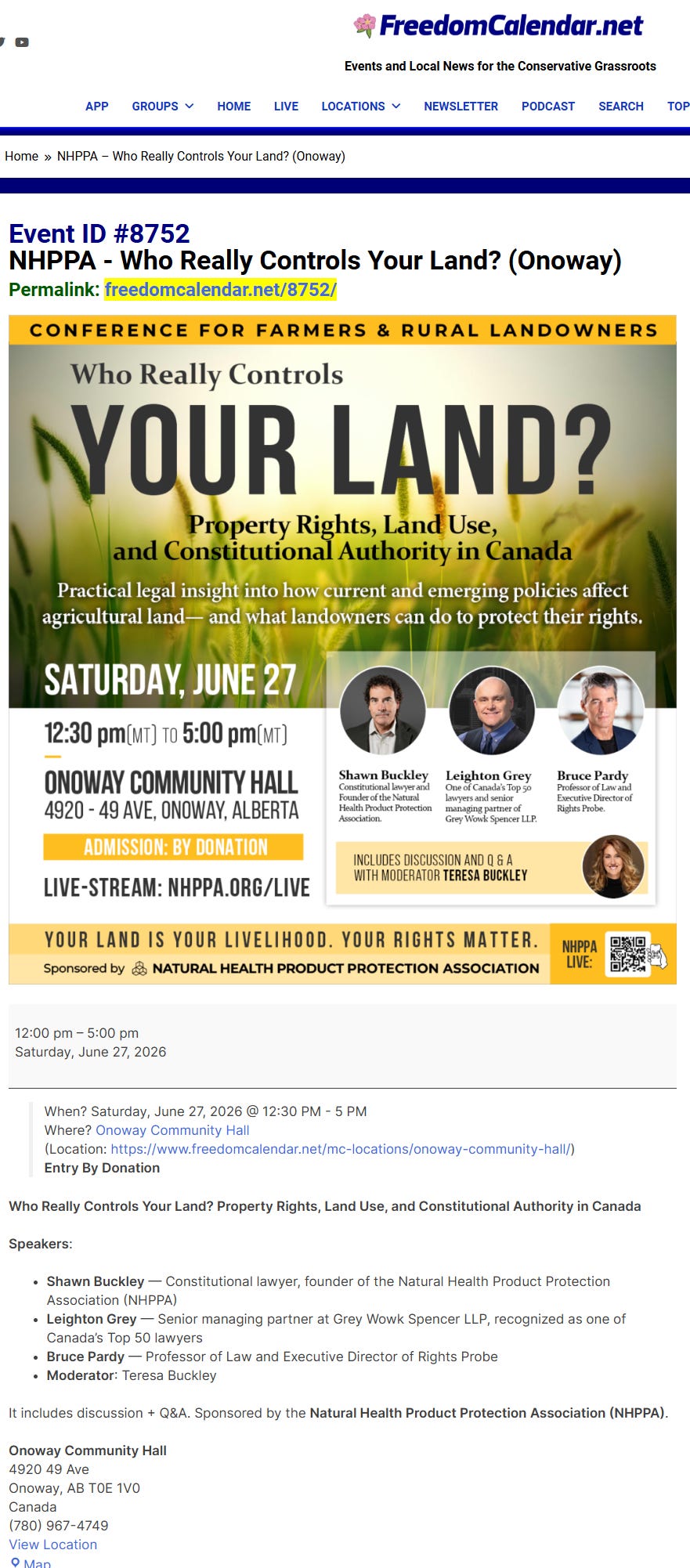
We did a series of articles on the Buck Lake Townhall which included Bruce Pardy, Nadine Wellwood and Jason Lavigne.
At that time separatism appealed to about 25% of Albertans mostly rural Albertans.
Today they are sitting at about 18% popularity for separatism. So they are flipping the script and going after rural Albertans - land owners, using the tactic they know best. FEAR! This event happened on June 27th. There will be more happening as they try to shore up their support and bring more Albertans on Board.
We need to arm ourselves with knowledge to be able to educate Albertans re: the truth. The fact we are not scared of what is happening to Healthcare, Education, Social Services in Alberta while the UCP undermine it right under our noses is one thing - but when they go to activate rural communities over land ownership etc. Let’s work together Alberta - #StrongerTogether.
No posts
Comments
Nothing yet. Say the first thing.
Sign in to join the conversation.