
When Boris Johnson was working out which side to come down on, he wrote out two different speeches. One in favour of leaving the European Union, and one against: Brexit, and Remain.1
For poet John Milton, at Cambridge University in 1632, it was simply a student exercise. Day or night, which of the two is more excellent? Out on the hills enjoying the sunshine: or home alone, writing the story for Substack? A public dissertation on the night side; then another one, slightly longer, putting the case for the day.
Hence, loathed Melancholy,
Of Cerberus, and blackest Midnight born…versus
Hence, vain deluding Joys
The brood of Folly without father bred!Milton, L’Allegro (the Cheerful Guy) and Il Penseroso (the Thoughtful One) 1631.
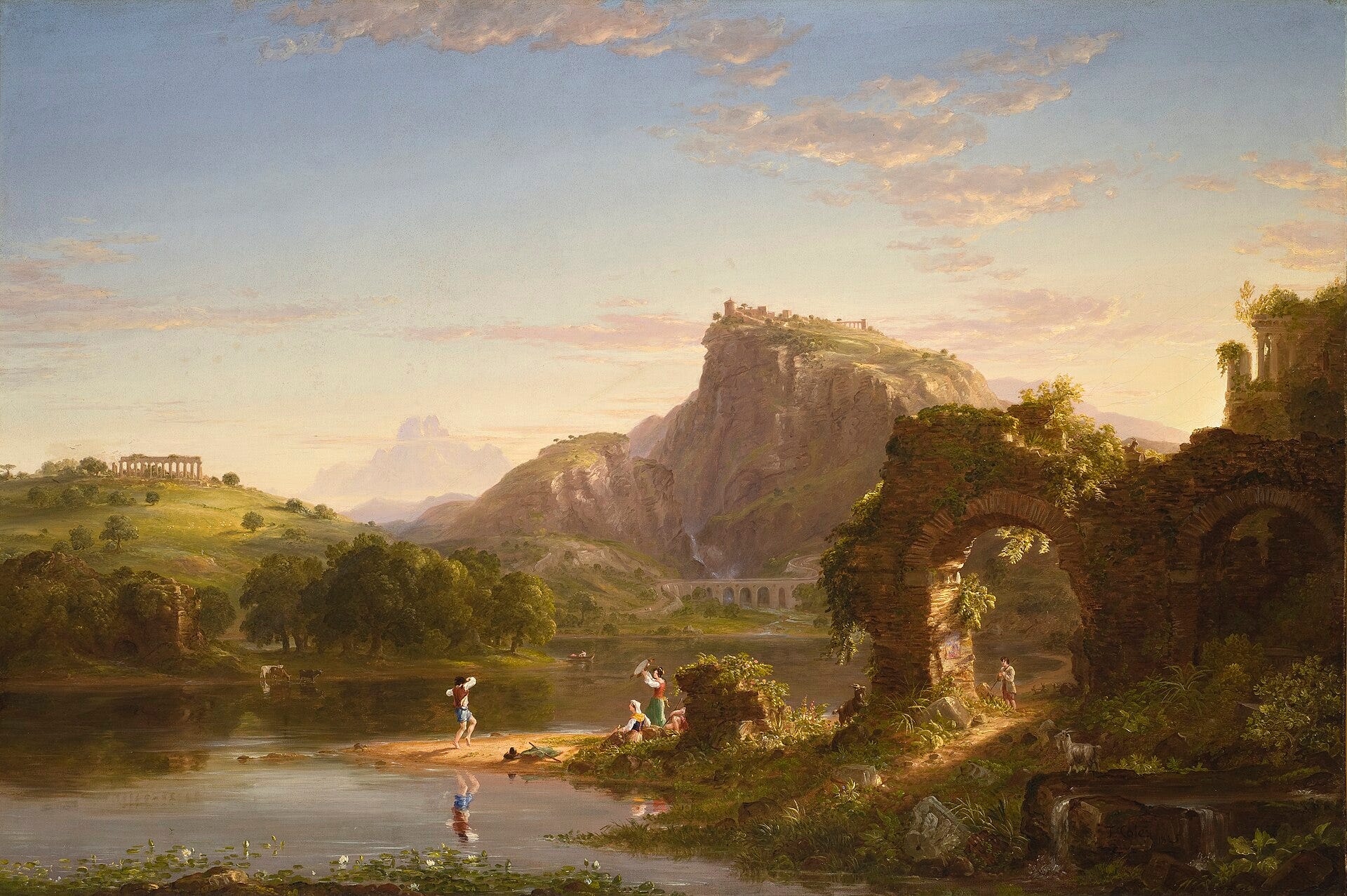
Given their difficulties with ChatGPT, the Faculty Boards and Departments have to be thinking seriously about a return to the cheat-proof exam system of just before the Civil War.
First year’s set test: the Lake District, as against the Yorkshire Dales. Which of the two is more excellent?
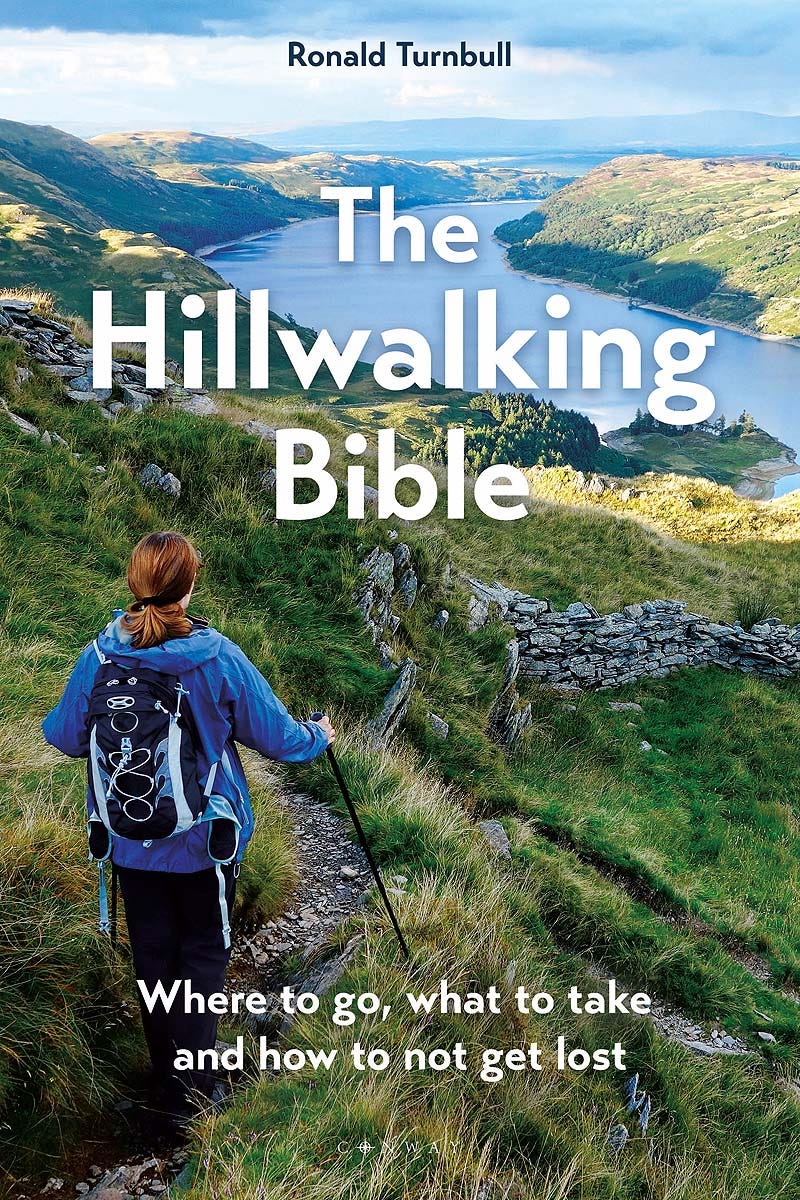
I wouldn’t put Boris Johnson, any more than John Milton, into a proper hillwalking guide. But the rest of this essay is edited extracts from The Hillwalking Bible, published by Bloomsbury: part of the quick roundup of good bits of Britain that’s the second section of the book.
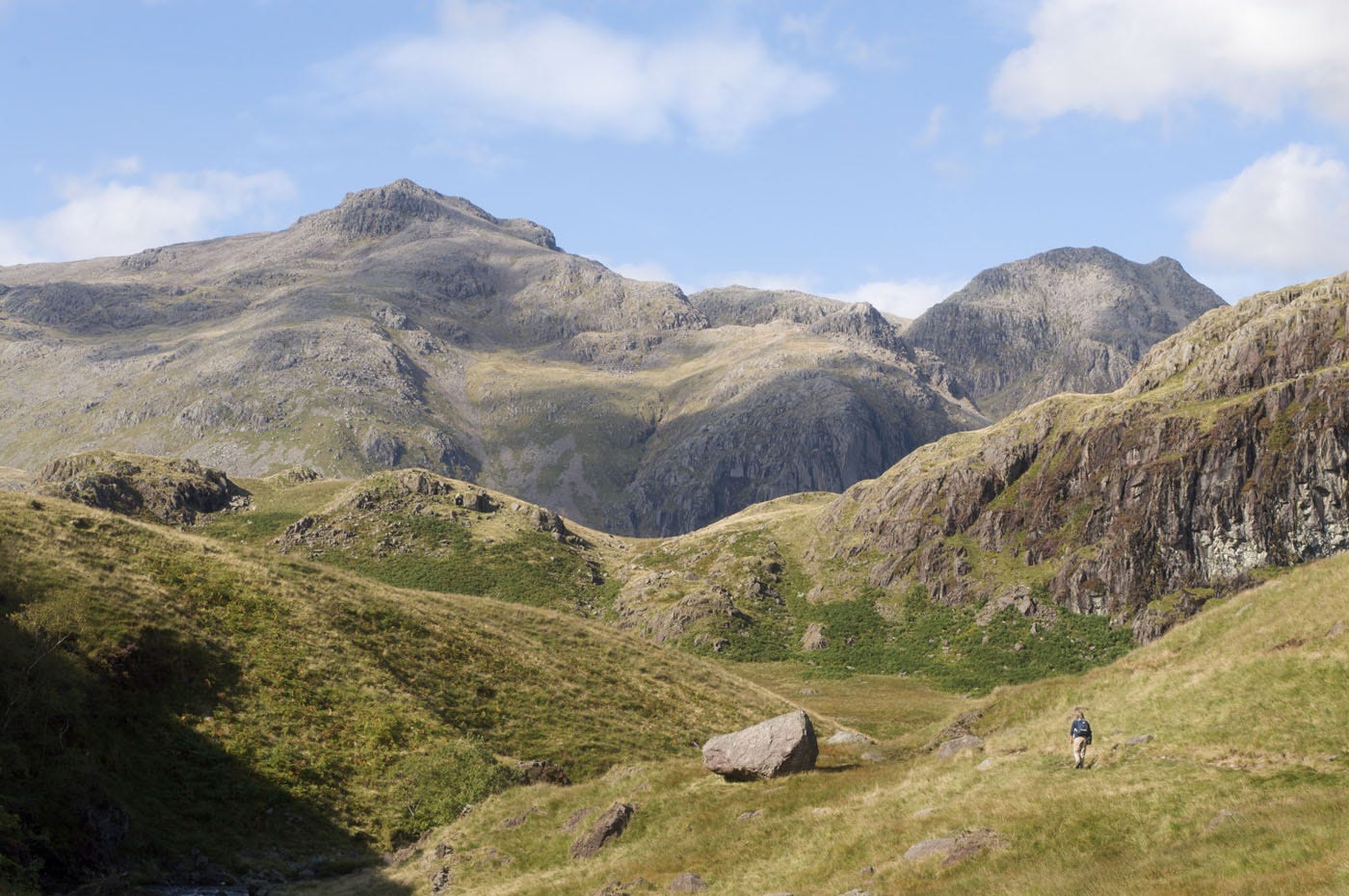
I do not refer to the ‘English” Lake District. The RAF is the original air force; Royal Mail is the first ever postal service and doesn’t need the UK’s name on it. And the country of Cumberland is the original and only Lake District, of which all the rest are Johnny-come-lately imitations.
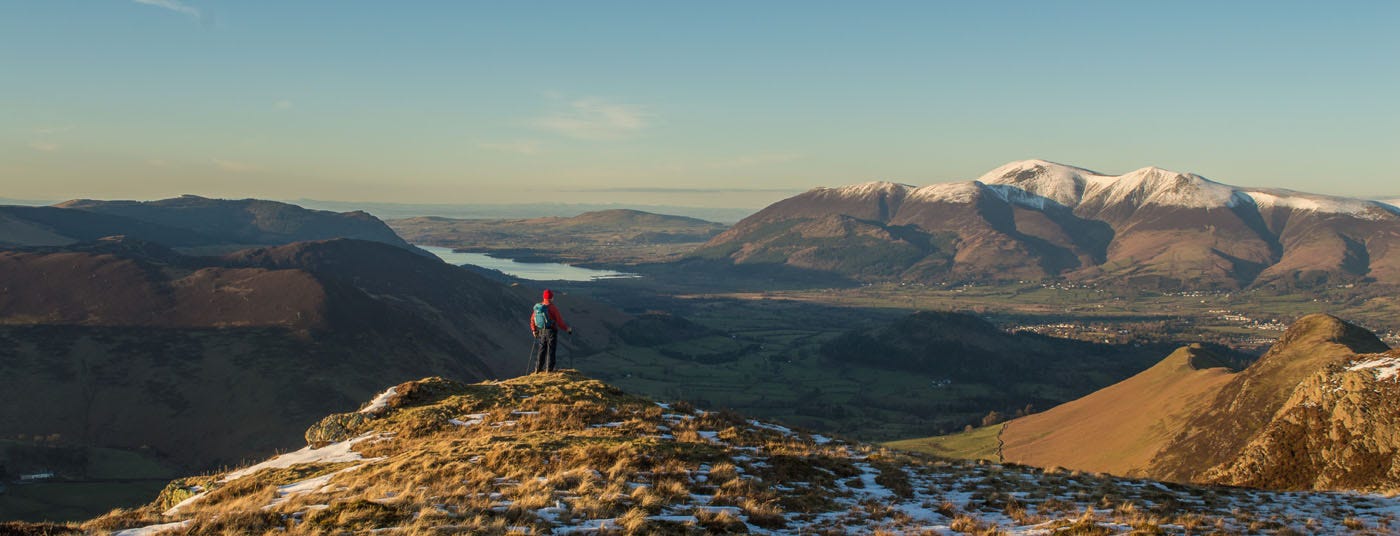
It’s hard to believe that, a mere quarter-millennium ago, people looked at all this and didn’t like it. Indeed, they were disgusted by the useless and ugly precipices, the scruffy oakwoods. Either that or they were scared it was all going to fall down on their heads. It was here in Lakeland, around the year 1780, that it suddenly became cool to stand around in the rain, looking at scenery that included some stones and rocks.
Today, 30 million visitors a year agree with this proposition. The hills here may be small by international standards. But they are splendidly craggy, carved by glaciers and then by the rain into ten thousand picturesque knobs and hollows. The Herdwick sheep, with some assistance from the Swaledale one, has cropped them down to a smooth, lawnlike finish. The streams carve out a hundred romantic little chasms, ancient oakwoods grow along the valley floor, stone walls pattern the fellsides, cottage gardens glow with roses and geraniums. And above all – or rather, below all – the dozen lovely lakes sparkle in the sunshine or hiss gently under the grey and silky rain.
Mountains on whose barren breast
The labouring clouds do often rest;
Meadows trim, with daisies pied,
Shallow Brooks, and rivers wide;
Towers and battlements it sees
Bosomed high in tufted trees,
Where perhaps some beauty lies
The cynosure2 of neighbouring eyes.
Hard by, a cottage chimney smokes
From betwixt two aged oaks.Milton L’Allegro l.73
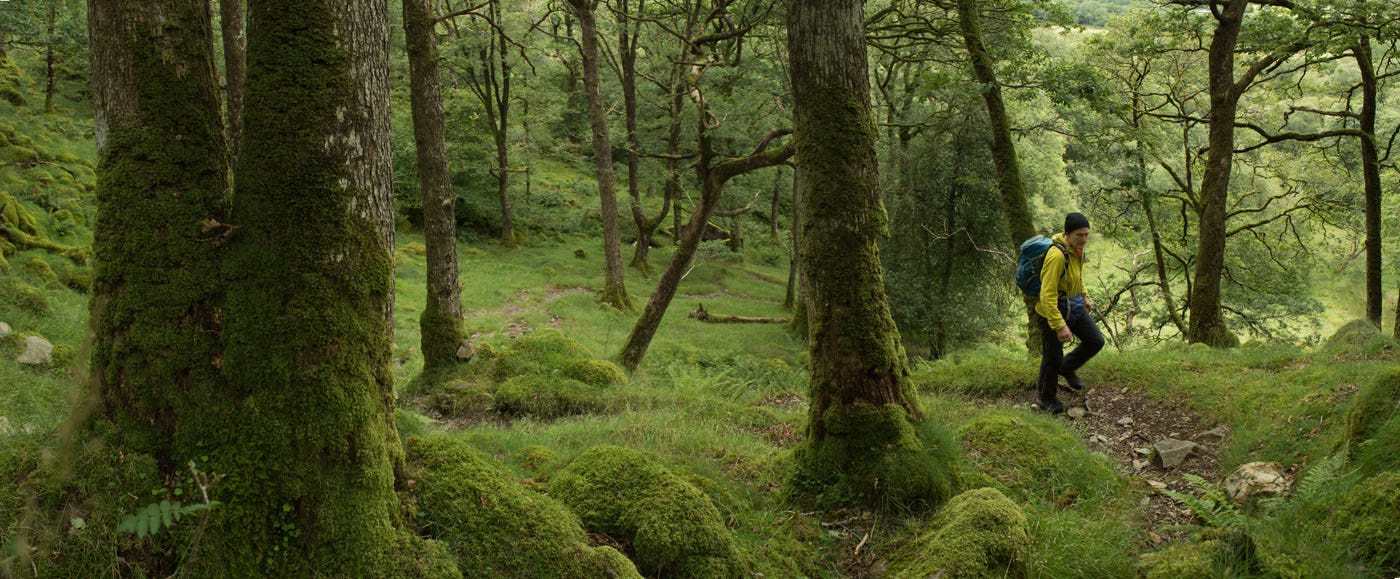
Johnny Wood, Borrowdale
As you get to know it, it just gets better. Down at valley level you’ll find thousands of miles of enchanting walks along the lake shores, under the ancient oak trees, along the cheerful little streams. Up on the fellsides the paths are well used and clear; and while some have been worn down to rubble by millions of feet, many have been neatly repaired with stone cobbles. Felltop views often include the gleaming mudflats of Morecambe Bay or else the sea itself, not to mention a couple of the lakes. The volcanic rocks are rough but firm, grippy underfoot even in the rain, warm like friendly old elephants in the summer sun. (The mudstone ones north of Derwent Water aren’t quite so extremely accommodating.)
The tangle of valleys makes the Lake District seem bigger than it is, it’s actually just twice the area of Greater Manchester. Given that on summer weekends most of Greater Manchester relocates to the Lake District, it can get crowded quite crowded at times. And at other times, it can get very crowded indeed. Those times being summer weekends, and the whole of July and August through the English school holidays.
Fortunately, we don’t need to bother working out which are the good bits. Of the Lake District’s 2,400 square kilometres, every one is a god bit. You could spend a lifetime pottering about in the Lake District, and many people do. Gentle lakeside rambles, exciting cragtop scrambles, relaxing ridgelines, challenging day long expeditions, multi-day treks from village to village via green, secret passes.
Lakeland. Given you’ve only got one lifetime, where else do you want?
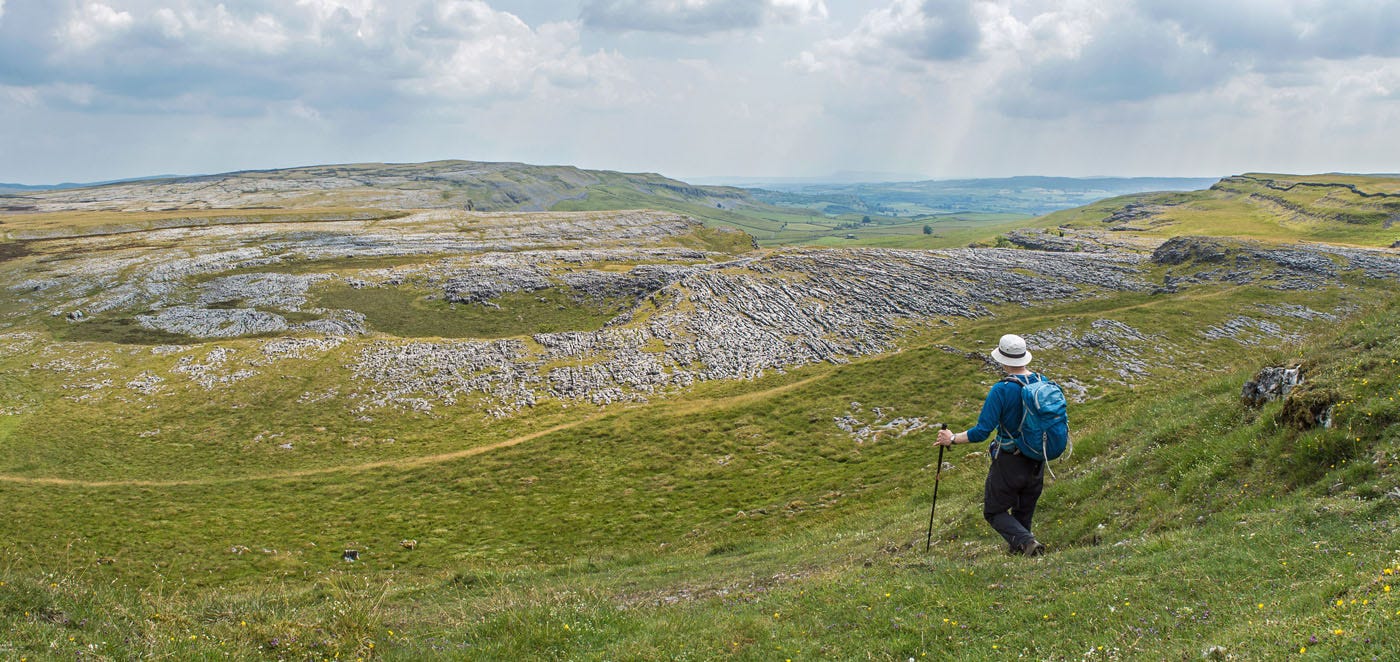
Yorkshire? Do I hear you talking Yorkshire? Because Yorkshire is nothing like the Lakes. Instead of huge vertical crags, Yorkshire has crags which are lying flat on the ground in the form of limestone pavement. Instead of lakes and mountains, Yorkshire has wide green dales with gently winding rivers. Instead of pay and display at £8.50 (just make sure you've got the coins!) you can park for free. And on an early summer evening when the Lakeland pubs had every table reserved, the one in Ingleton hadn't bothered to open the kitchen.
No, Yorkshire is not at all like the Lakes.
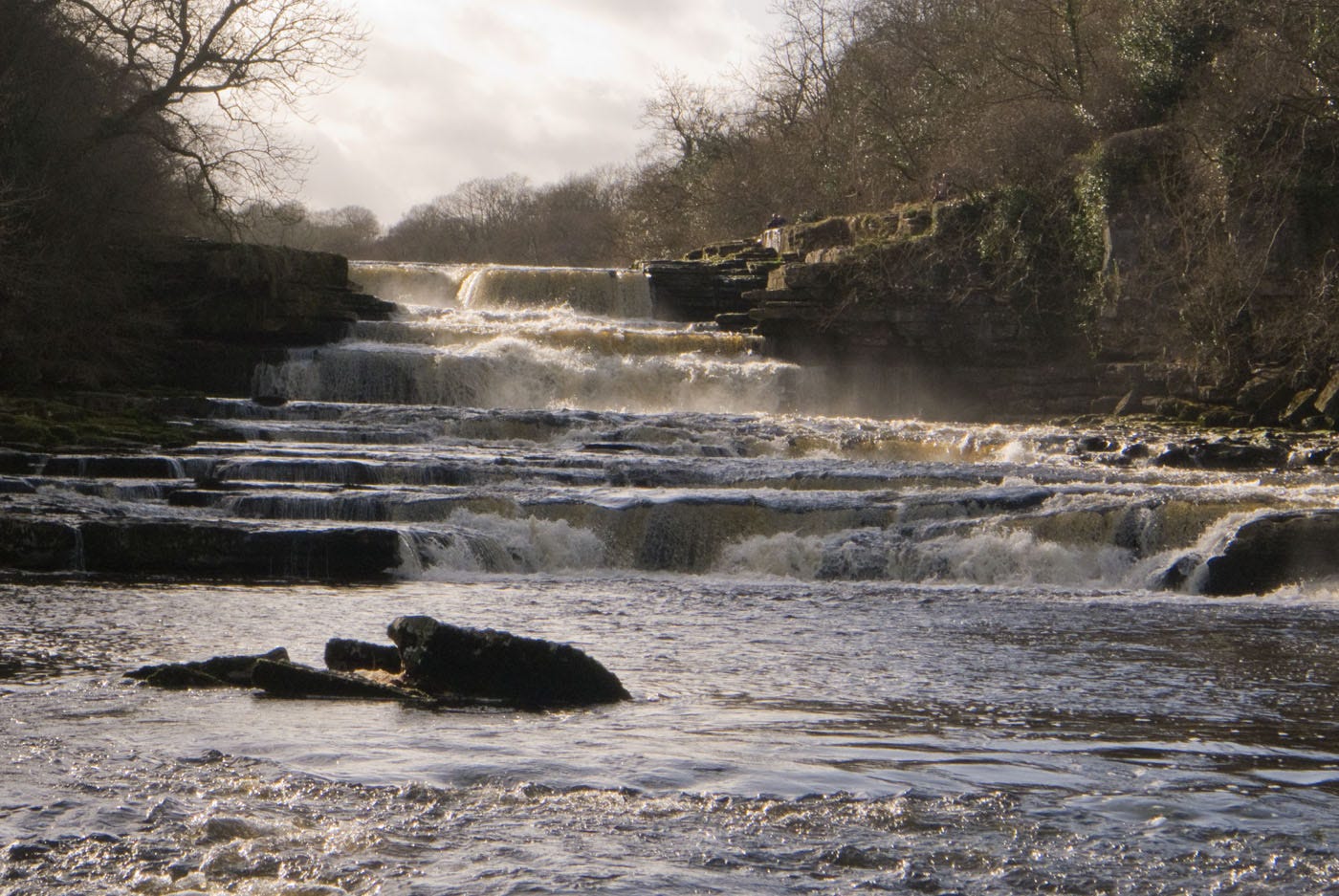
Instead, imagine yourself on the lid of a typical English tin of biscuits. A little sandy coloured village under hillsides as green as mushy peas, field walls of golden stone matching the miniature crags breaking out above in an utterly unthreatening way. Cows knee deep in the stream, a waterfall in the foreground, and below the church spire, men in white standing around playing cricket.
This picture is incorrect. Nowadays, the cricket team wears a colourful outfit in imitation of the Australians; and the people inside it are just as likely to be women. Otherwise, the biscuit tin lid has got it spot on.
Straight mine eye hath caught new pleasures
Whilst the landscape round it measures:
Russet lawns and fallows grey
Where the nibbling flocks do strayMilton, L’Allegro
And they’re quite right to name the place after its valleys. The best walking can be the low bits like Swaledale or Dentdale or Wharfedale. Along the riverbanks counting off the waterfalls, through the pretty villages laid out so suitably for the lid of the biscuit tin; then half way up the valley side along a little limestone scar cliffs that interrupt the flat planes of the landscape.
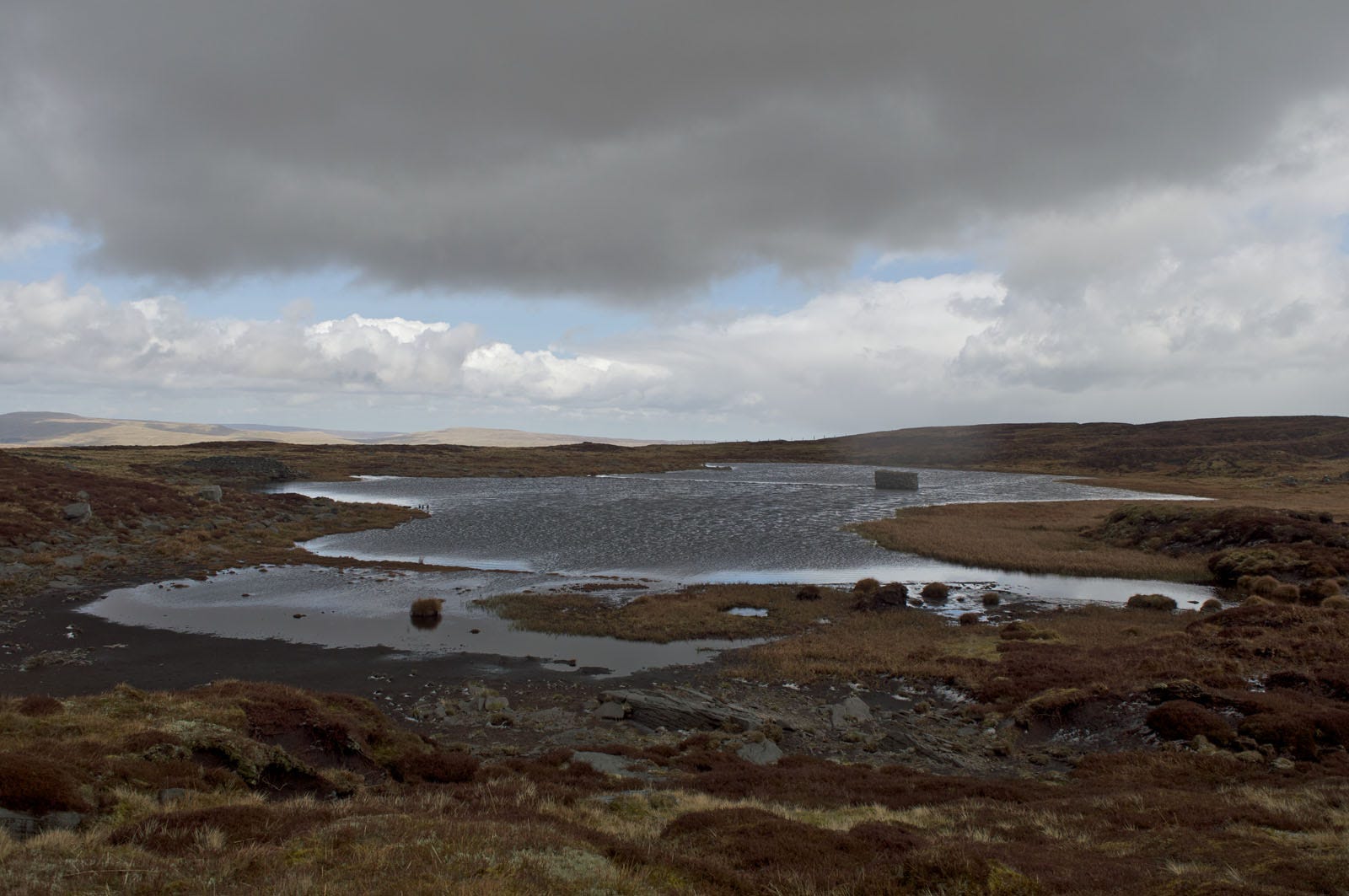
Meanwhile, much of the high ground is wide and empty moorland, criss-crossed with grouse-shooters’ tracks, where a rain-blackened signpost drips in the mist. Some people like wide and empty moorland. And for those of us who go for it, Yorkshire has the proper stuff. Heather stalks topped in late summer with dingy purple: your head up in the heat haze, your feet a foot deep in peat. Little pools rimmed with green sludge. Butterwort and sundew waiting to eat you up, supposing you happen to be a small insect.
So eagerly the fiend
O’er bog or steep, through straight, rough, dense or rare,
With head, hands, wings, or feet pursues his way,
And swims or sinks or wades, or creeps, or fliesMilton, Paradise Lost Book 2, line 947
And then, at the edge of the heather, the grass turns green again, with all the pretty little wildflowers: you come across a patch of grey-gleaming limestone pavement, or a stream that plunges down a hole into airy, dark spaces below.
And did I mention the waterfalls?
So you can have your crags and your gloomy oakwoods. For smiling limestone and gritty grit: it’s Yorkshire, for sure.
They call it God’s own country. And He should know.
The Hillwalking Bible (+ extract)
The Gentle Art of Getting Lost
·
May 20
After the tenth time out on the hills, or maybe the twentieth, you know a thing or two about this maps malarkey. And maybe the weather forecast’s got some little grey clouds in it, but you want to go up Great Gable.
But in the end, it was all about Boris. Brexit gave him a run at being Prime Minister; Remain was blocked by David Cameron and his gang.
Okay, I had to look up ‘cynosure’ too. ‘The thing that everybody looks at’. From Greek Κυνοσούρα, kynosoura, Dog’s Tail, the ancient name for the constellation containing the Pole Star.
Comments
Nothing yet. Say the first thing.
Sign in to join the conversation.