
This Gospel joins two distinct episodes—the second itself a combination of two stories—and jumps over a couple of related sayings of Jesus (on fasting and “wineskins,” vv. 14-17). The two episodes are thus not quite as intimately related as the proclaimed Gospel may sound to the listener, but there are shared themes of purity, sacrifice, and inclusion.
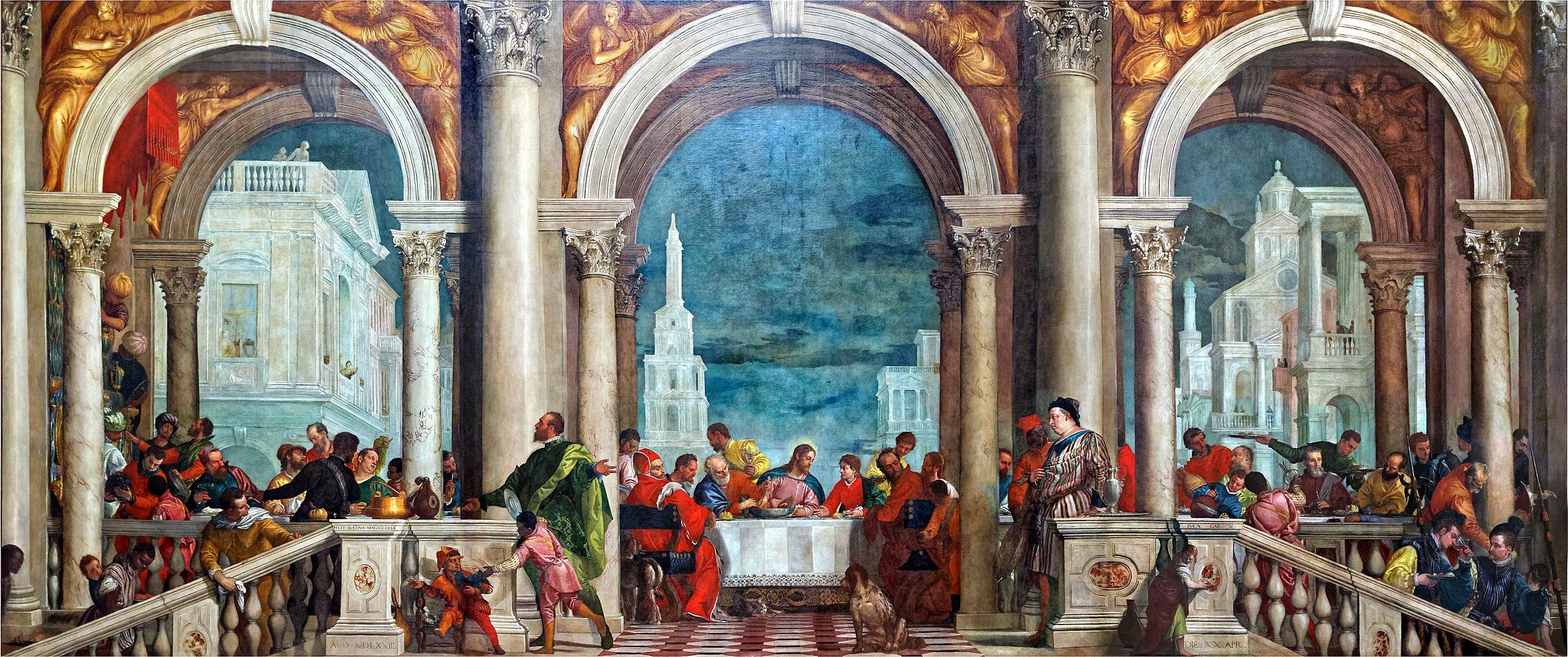
The first episode combines the call of Matthew the tax collector and Jesus’ subsequent table-fellowship with “tax collectors and sinners.” Jesus was remembered associating with people compromised by their compliance with Roman authority and unscrupulous acquisition of wealth. Although some popular interpretations turn this into evidence for his solidarity with the poor and marginalized, this is only partially correct. Jesus is (also) concerned for the poor, but that is not what this particular story is about.
Tax collectors were often despised, and most of all by people concerned for social justice. They were collaborators, even traitors, with a reputation for greed and dishonesty. They enriched themselves—how much of course depended on where they were in a pecking order of exploitation—at the expense of the working poor, and had abandoned solidarity with their compatriots under occupation to serve the Roman invaders and their cronies. The Pharisees who make the complaint are not to be dismissed too glibly as moralists and nit-pickers; as often, they reflect high standards of social and religious duty. Their objection, while it had moral and political dimensions, coalesced around ritual purity; whether because of their Gentile associations or their immoral behavior, tax collectors were “unclean” and hence unfit to offer sacrifices or worship in the Temple. So their status was ambiguous; while cozy with the occupying authorities and often well-heeled, they were religiously marginal.
The curious one-liner Jesus drops into the middle of the exchange, about mercy and sacrifice (Hos 6:6), is a key to understanding this. The purity which was the religious dimension of the Pharisaic objection meant readiness to offer sacrifice in the temple. To say with Hosea “I desire mercy and not sacrifice” is thus more closely related to this controversy than it may appear, because fitness to worship is in the background of all these stories.
Note that Jesus accepts hospitality from the tax collectors, rather than offering it. Another modern trope, about him “welcoming sinners” as an inclusive host does not apply in this instance.1 There are of course other stories—most obviously the miraculous feedings—where Jesus welcomes and cares for the poor, anticipating God’s great wedding feast. However in dining with prosperous sinners, Jesus takes the more vulnerable position of guest. This is not an example of exercising privilege through “radical welcome,” but of relinquishing it and himself being welcomed.
The fact that Jesus is receiving hospitality and willing to eat at the tables of these dubious others is important to understanding both the complaints of the Pharisees and his own mission. Scrupulous, observant Jewish diners would have been concerned about receiving food or drink from those liable to be impure because their own ritual status would be at risk. It was not problematic in the same way to share one’s own (pure) food. So it is Jesus’ acceptance of dubious hospitality, not offering it, that earns the criticism. In the Pharisees’ eyes Jesus was dicing with his own ritual purity by socializing with those who had proven to be permanent enemies of God.
In the second pair of stories, found interwoven in all three Synoptic Gospels, Jesus encounters two women whose lives are impacted by illness and death, and he heals and frees both. These are also situations where ritual purity is central, and where permanent exclusion seems otherwise to be the fate of the characters. The body of the girl whose healing bookends the episode constitutes both an invitation for Jesus to exercise “mercy” but also a threat to his purity (and hence access to sacrificial worship), since contact with a corpse rendered impure. This was true even though such contact might be absolutely necessary as a matter of family or charitable duty—a reminder that impurity is not the same as exclusion. In Matthew’s version of the story, this is accentuated by the clarification that she is actually dead, whereas in Mark’s and Luke’s accounts she is at risk of dying.
The woman with the hemorrhage was also ritually compromised, because while menstrual bleeding was a temporary (and again, usually normal or necessary) impediment to worship, what was otherwise a periodic status had become permanent. The bleeding woman was not, however, an outcast—the consequences of her hemorrhage were not socially profound— but her physical suffering was mirrored in a form of specifically ritual or religious exclusion.2
While purity is important in all these cases, its meaning and effect have sometimes been exaggerated in a problematic way. A Jesus altogether opposed to Jewish purity rules is an anti-Judaic fantasy from later times, not the subject of Matthew’s Gospel. There is an ironic lesson here that tells us about the continuing power of antisemitic tropes, for if we stigmatize others—even ancient Pharisees—in order to build our own edifices of inclusion, we have failed to understand the problem. Neither here nor anywhere else does Jesus oppose purity laws, but confronts forces that distort their application.3 Jesus frees both of these women, not just from illness or death, but for full participation in Jewish worship and its festivals and rituals. Mercy is required more than sacrifice, but it enables sacrifice.
All these stories raise important questions about oppression, inclusion, and justice. Jesus consistently proclaims a reign of God in which all are included, but discerning how and why this works, either in ancient text or in modern life, may require some rethinking of our assumptions. Jesus’ practice grates with ancient Pharisees, and potentially with modern readers concerned for justice, because he associates with those who have habitually colluded with oppression. Yet he has not made himself indifferent to their evil; God’s love and mercy can and must transform even those whom the righteous have given up as hopeless cases.
Mercy—in Hosea’s original Hebrew text this is ḥeseḏ, often translated as something like “covenant faithfulness”—describes the heart of relationship with God, and is placed before purity both by Hosea and Jesus because it changes us. Mercy, Jesus asserts and demonstrates, will make a difference. It is not a tool for analysis, so much as a strategy for change. In the case of tax collectors, Jesus does not show indifference to purity, but situates it relative to justice and compassion, and creates a process rather than merely issuing judgment. Its effect on the tax collector Matthew is as unlikely as the raising of the dead girl or the healing of the chronically-ill woman, but all are changed. And the mere fact of Matthew’s Gospel is of course presented by the tradition as the result of Jesus’ mercy.
While the scrupulous, ancient or modern, might see these cases as hopeless, and the forms of exclusion borne by the characters as permanent—yet might champion one group and not the other—Jesus will oppose oppression and illness wherever he finds them. He will take his uncompromising proclamation of God’s justice even to the counting-tables of those who sneer at it, as well as to the streets and houses of those who have been their victims. The confronting power of mercy will allow all these to worship God.
The phrase is from Luke 15:2; there Jesus “receives” sinners into his circle or social interactions, and “eats with them,” but these are separate activities. The general picture of Jesus’ table-fellowship is of him accepting hospitality, which (as noted in the body of the post) is more remarkable and more dangerous than offering it.
See for instance Charlotte Elisheva Fonrobert, Menstrual Purity: Rabbinic and Christian Reconstructions of Biblical Gender. Contraversions. Stanford, CA: Stanford University Press, 2000.
On this point more generally see Matthew Thiessen, Jesus and the Forces of Death: The Gospels’ Portrayal of Ritual Impurity within First-Century Judaism. Grand Rapids, MI: Baker Academic, 2021.
Comments
Nothing yet. Say the first thing.
Sign in to join the conversation.