
The levels of absurdity in the online magazine The Squeaky Wheel are impressive. Take this article, “Parasquid Games Will Determine Medicaid Eligibility”, for example. It is a fictional story about how the disabled community must take part in the deadly hit TV series Squid Game to earn their Medicaid insurance.
The third paragraph quotes an outrageous comment: “You know – [watching] someone who you can look at and instantly feel like, ‘Wow! I'm glad I'm not that bad!' But even though they are, they still keep living.”
The outcome is the opposite of inspiration porn, and it evokes ableist connotations that disabled people have less value than others. But this is typical content for The Squeaky Wheel, a platform styled like The Onion to satirise the everyday life of disabled people and use humour to challenge ableism and misconceptions about the disabled community.
“I started it about four years ago to talk about disability in a humorous way,” says Steven Verdile, founder and editor-in-chief of The Squeaky Wheel. “I love to make jokes and poke fun at ableism and healthcare and all the wild stuff in society that disabled people have to deal with.”
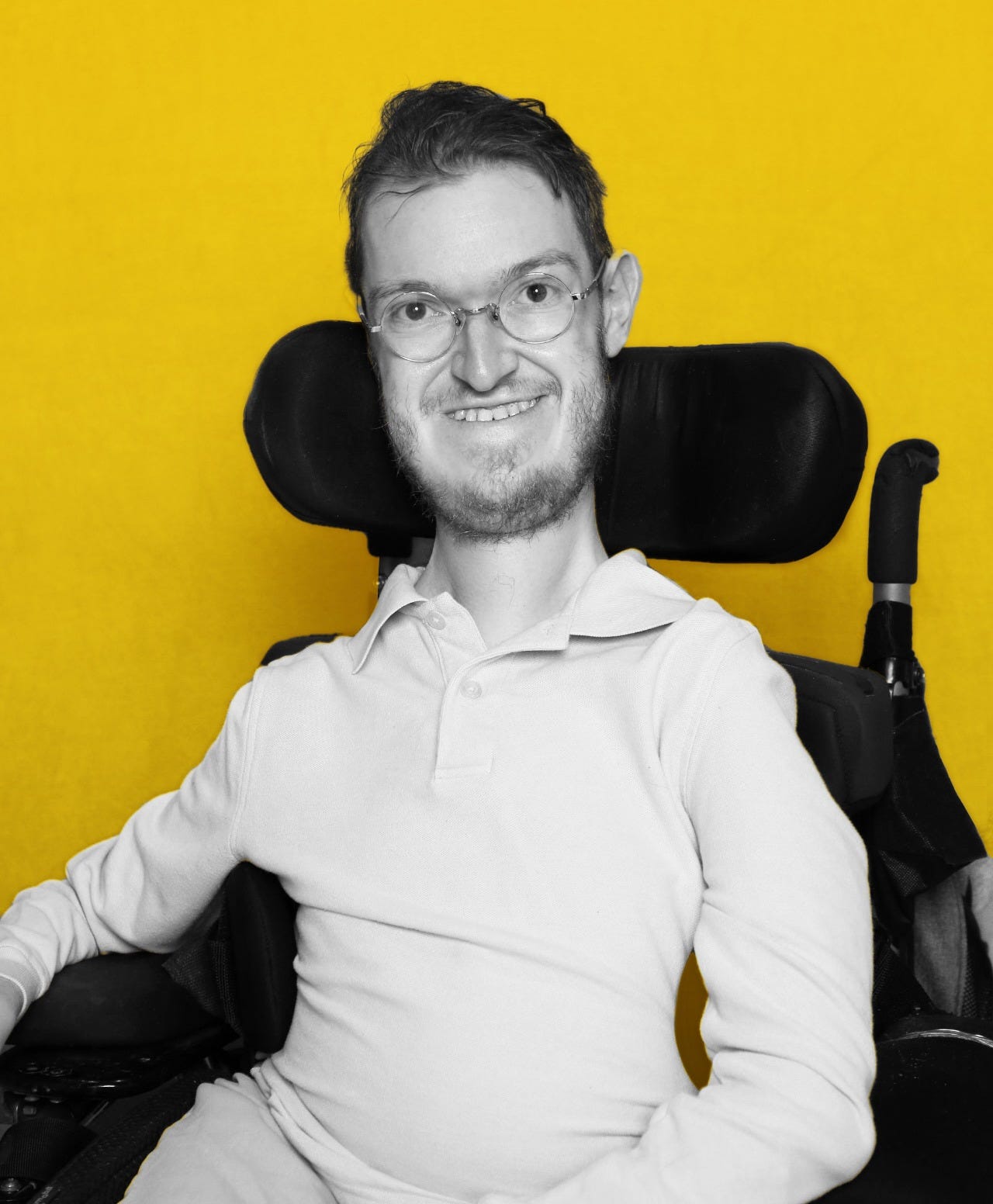
New York-born, raised, and based, Verdile, 27, has spinal muscular atrophy, a genetic condition that weakens the muscles, and is a wheelchair user. Growing up in disability Twitter and Reddit internet communities, he saw disabled people create content which motivated him to start The Squeaky Wheel project in 2021 to build a new community where disabled people could bring humour to their lived experience.
“The majority of the articles are not my own. I've written maybe 70, but I think we have over 300 now,” he says. He attributes a variety of disabled creatives as inspirations for the magazine, particularly comedians like Shannon DeVido, Tina Friml, Josh Blue, and Nic Novicki, who all speak about their health conditions in their comedic material.
“Steve Way is an actor I love and is in a show on Hulu called Ramy,” he adds. “Over the last 10 years, there have been a lot of great comedies that focus on cultural minority groups. Reservation Dogs is such a good example of a very niche demographic that people wouldn't think of having mass appeal. It shows that humour can be very specific but have a broad appeal.”
Verdile channels the disabled “niche” and uses satire to appeal to disabled people by entertaining them through shared experiences and also to the non-disabled so that “the community is more accessible to everyone.” What makes a good piece for the magazine isn’t just humour, though; it comes from teaching the reader something through a hot, new take—preferably on systemic ableism.
“If there's a little bit of education in there, when you talk about healthcare or any of these dense topics, make it fun and teach people about injustice,” Verdile says. He sees this in one of his favourite pieces, “Disabled Monopoly Player Panics as Assets Approach $2000”, which highlights the ludicrousness that disabled people in the US can’t have more than $2000 in their bank account at any time to be able to access Medicaid.
“What's so nice about that is it's so silly,” he says. “It makes no sense logically, but it's educating people about a very real issue. Even if you're someone like me who has a full-time job, private healthcare will never pay for the things that I need [so] I need to be on government healthcare.”
The roster of around thirty disabled writers brings community and diversity to the magazine too, not just in content but also in challenging ableist thoughts of what disability is. “If you ask a stranger to think of a disabled person, they have a sense of someone like me,” Verdile shares. “The symbol for disability is always the wheelchair guy – it doesn’t mean I’m the average disabled person.”
“It's made people so narrow-minded about what disability is. We're bringing in all these different writers [and] when you start incorporating all these different disabilities, different ages and demographics, you start to see that the experiences are similar, and everyone faces ableism.”
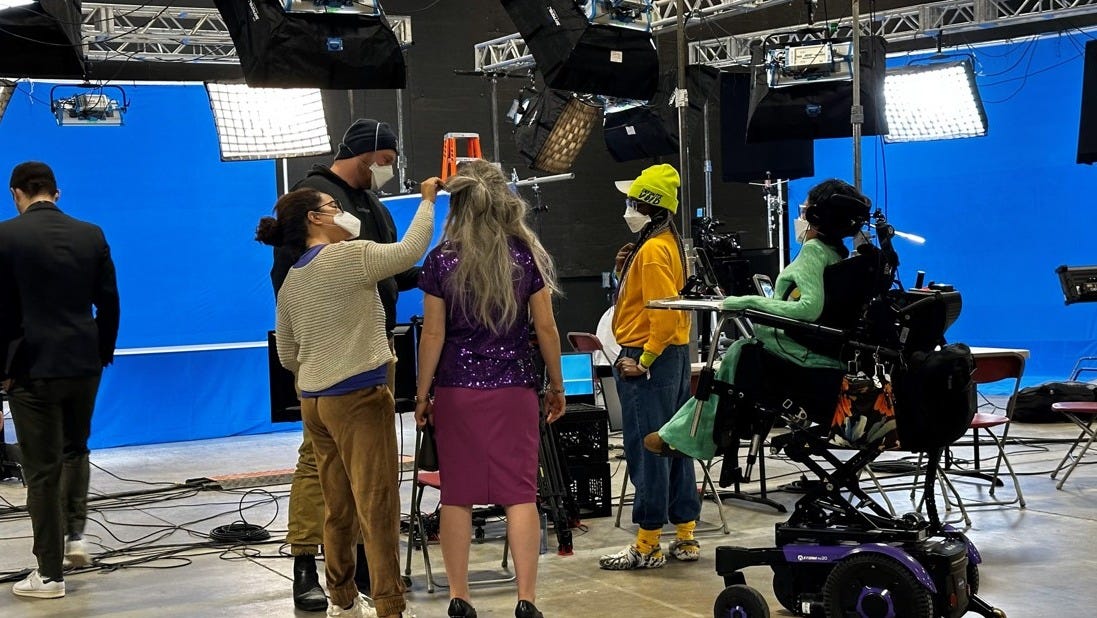
In addition to running The Squeaky Wheel, Verdile has freelanced as an illustrator and graphic designer and is currently Creative Content Manager for media giants NBCUniversal.
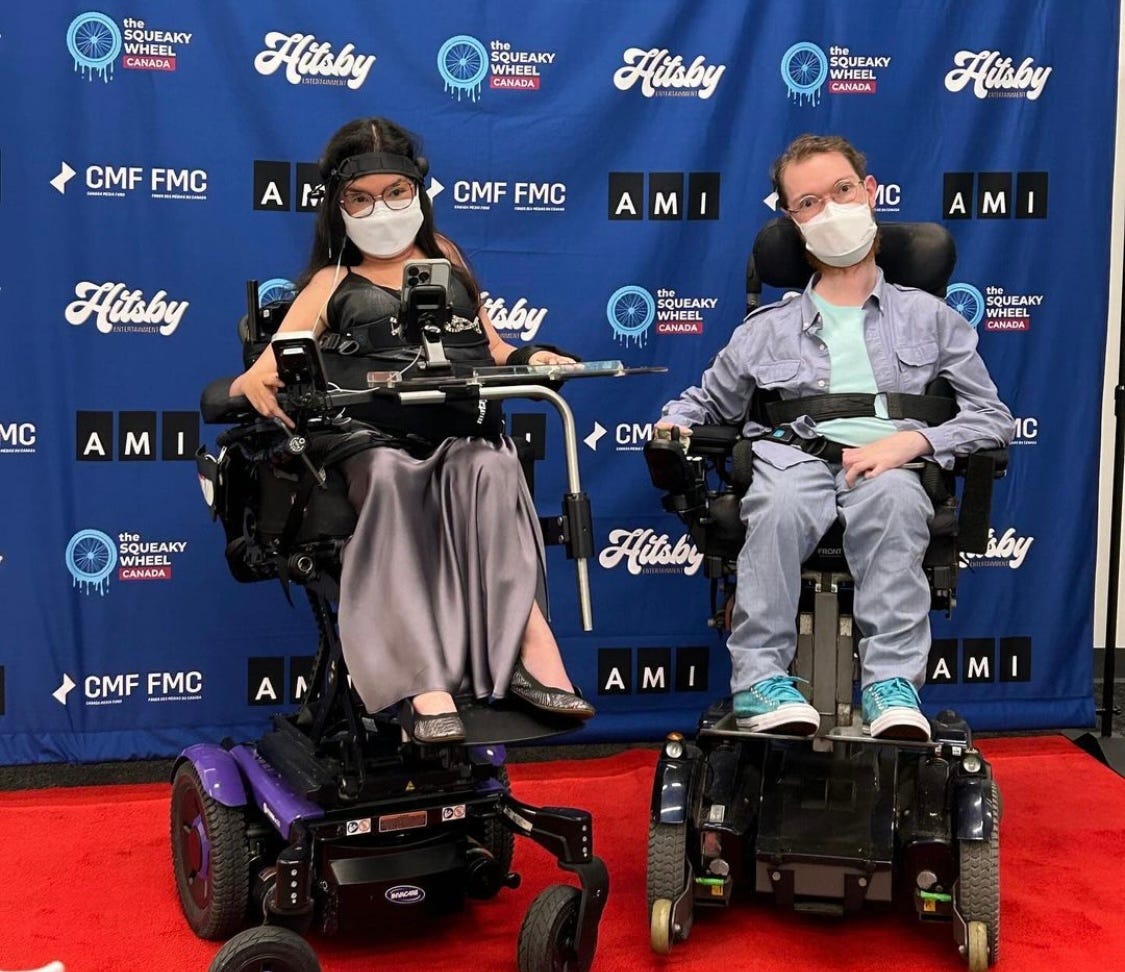
But The Squeaky Wheel’s success has given Verdile a gateway to directly influence and introduce best practices for disabled representation in film and TV. Last year, the magazine was developed into an eight-episode SNL-style series, The Squeaky Wheel Canada, which aired last summer.
His supportive colleagues at NBCUniversal connected him with other media companies to get the show on a network. The obvious choice to partner with was Canadian TV network AMI-tv, as it says it’s the first network to broadcast all content with closed captioning and with audio-description at no additional cost.
Verdile says this level of accessibility was important to honour the magazine’s audience, but it was also reflected in the production process: “A significant portion of the budget for the show was specifically for accessibility and accommodations.
“We knew we wanted to have multiple interpreters on site, we wanted to do things virtual and in person, and we wanted all the sets to be wheelchair accessible. It's the core of the TV network and everything they do for disabled people.”
While greater representation on film and TV of disabled actors has come through in the last decade or so with RJ Mitte’s performance on Breaking Bad, or Peter Dinklage’s lead role on Game of Thrones, Verdile has seen first-hand in his role at NBCUniversal how difficult it is for the industry to embrace diversity and how it’s discussed behind the scenes.
“It's really interesting to see how […] it's so backwards,” says Verdile. “Everything is ten times harder if you're trying to have a minority lead [and] you never see accessibility [for workers] in an initial project. It's always an afterthought.”
He mentions how the casting of Marissa Bode as Nessarose Thropp in the new Wicked film is “a big step forward” as “we’ve been asking for this for years and finally they’re doing it right” after years of non-disabled actors playing the role even though Nessarose uses a wheelchair.
“It's so much better than it was even five years ago, but I would say there's still so much more to go,” he says. “Ultimately, we're still at the point where if there are disabled characters, it stands out to the audience.”
While making the series, Verdile made it “a huge priority” for the creative positions to be held by disabled people and he estimates around 90-95% of those roles fulfilled this, with many never having previous TV or film experience either.
“This is the only [show] we can find that almost everyone involved in the creative side was disabled. When we found people we thought were good and ready, that's all they needed. From day one it was always going to be a disabled show with disabled cast by disabled people.”
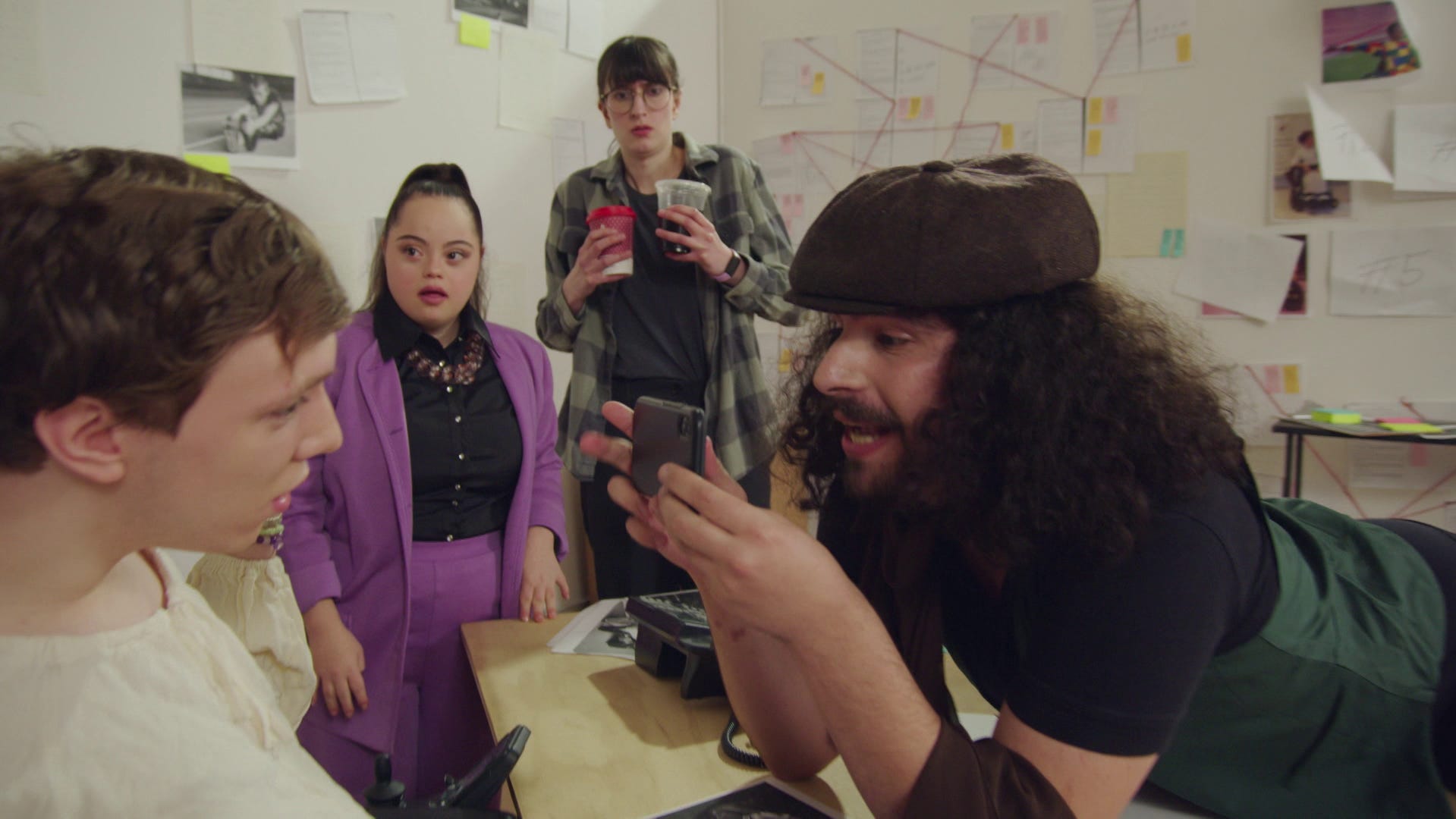
The sarcasm and absurdity you get from the magazine still remains as the show’s two news anchors pivot through news stories that ridicule ableist society. Episode one sees a journalist report from a protest led by a character with spinal muscular atrophy who was attacked.
Despite being a victim, she calls for criminals to work with DEI specialists to ensure they victimise everyone after revealing the criminal stopped attacking her because of her disability. The whole series continues in this fashion, highlighting the ridiculousness of ableism from sketches with invisible disability dolls, to AI chatbots with depression, and characters explaining how inclusion turns them on.
The TV series was nominated for the Mipcom Diversify TV Awards in the ‘Representation of Disability Scripted’ category, but Verdile next wants to make the new series for the US market with hopefully a bigger budget.
“My real dream is to make the show in the US, a bigger style version of the show for a bigger audience but learn from our mistakes. There were some really funny ideas that we could not do because we didn't have the budget. Our team in Canada is working on season two, it's definitely not greenlit yet [but] they're working on it, and I'm optimistic about that.”
Verdile is grateful for the opportunities the show has given to the disabled community and is happy it is pushing disability and issues the community faces into a new realm.
“It’s the core of The Squeaky Wheel [and] the experience of ableism is so universal. Disability is not just being sick. What bonds all of us together is not our health, but our experience. It's an incredible opportunity for me, for the organisation and for everyone involved.”
This post is public. You’re welcome to share it.
No posts
Comments
Nothing yet. Say the first thing.
Sign in to join the conversation.