
This newsletter will be in a different format from our usual fare. A diary review of the last few days we spent at Libros Mutantes - The Madrid Art Book Fair.
Have you ever been to an Art Book Fair? It’s stimulating, inspiring, and overwhelming in equal measure. Able Zine joined 150 other exhibitors from around the world, selling everything from collectable vintage books to independent press, handmade zines, and incredible art. Unfortunately, we were also one of the handful of exhibitors whose publications were detained by customs indefinitely, so we didn’t get to exhibit our printed magazines. Oops. Taking them all in an extra suitcase just didn’t seem as accessible as having someone ship them door-to-door for us, but you live, and you learn. Next time we’ll do it better.
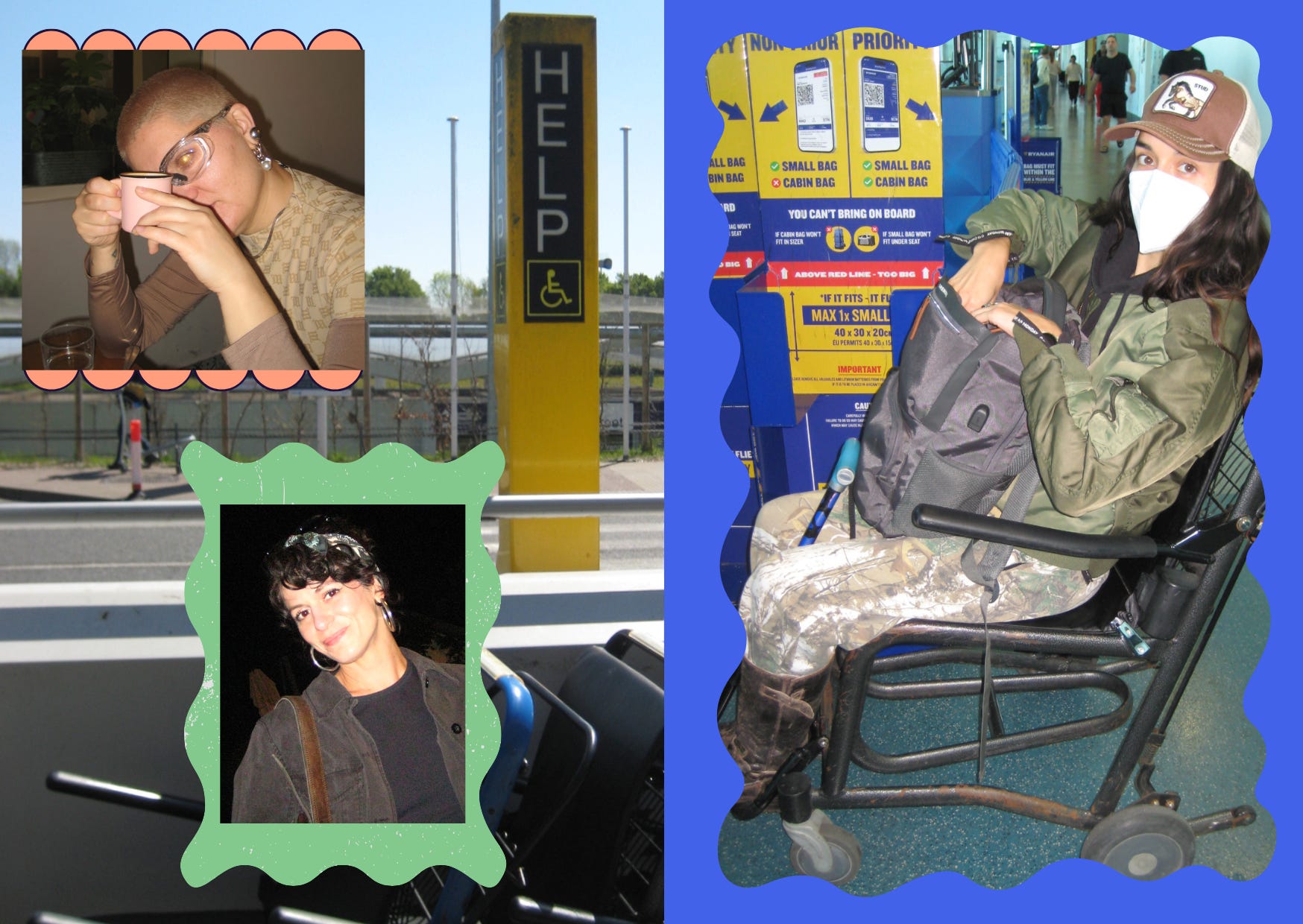
Our trio, Aksana, Elena of FutureKind Studio and me, headed to Stansted to fly with Ryanair. I haven’t set foot in Stansted airport in over 10 years, so I didn’t know what to expect. Fortunately, the special assistance was pretty good, and Elena got to push my wheelchair, so that’s always fun :).
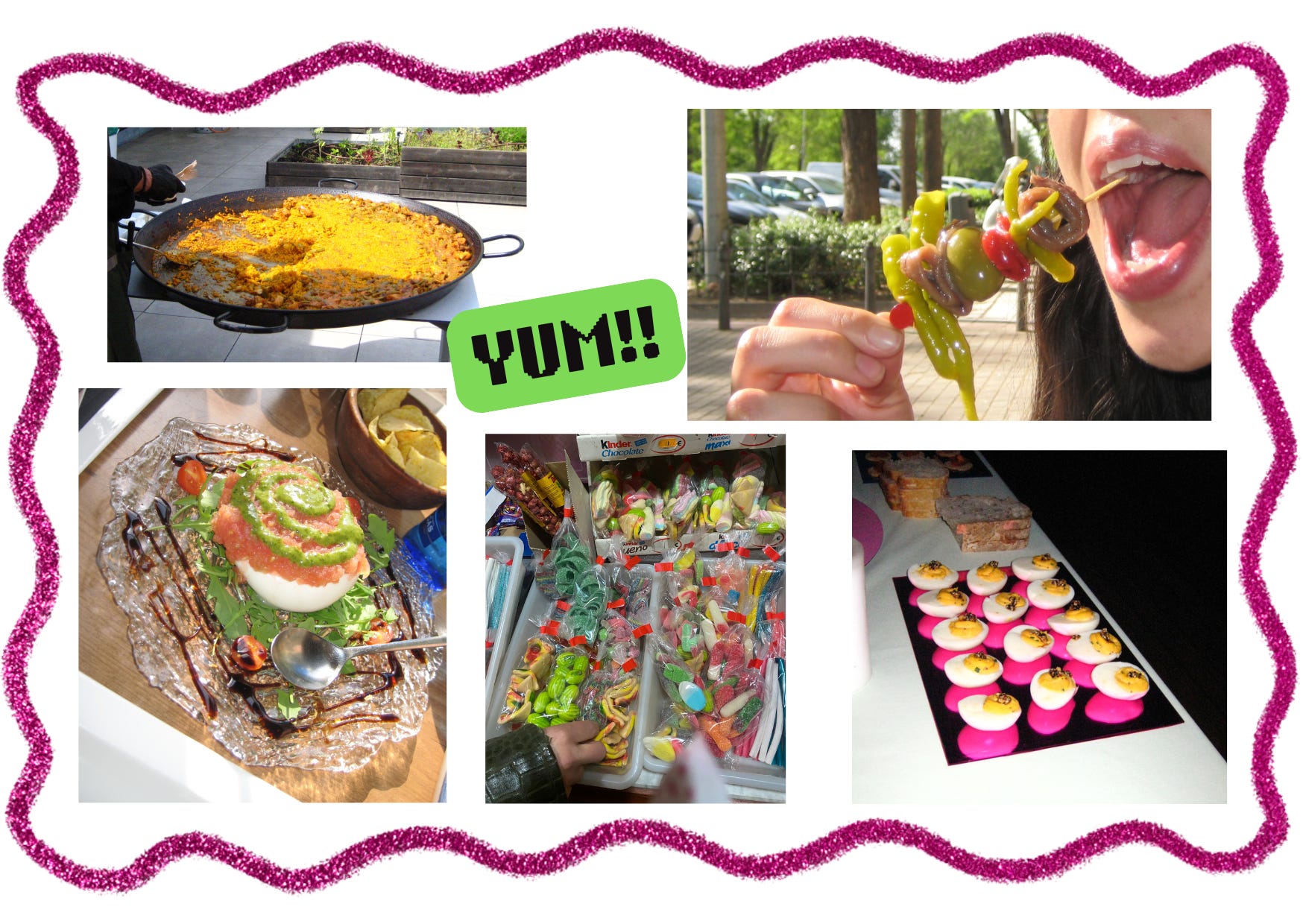
By the time we got to Madrid, my declining executive functioning skills took us to the wrong address. But across the road, we saw a lovely tapas spot with stunning views of the Palacio Real de Madrid, so we allowed ourselves our first taste of Spanish tortilla and sangria. The great thing about Spanish cuisine is that it’s very whole-food, ingredient-based. One of my favourite discoveries was Gilda Pintxo - a traditional Basque treat of pickled guindilla peppers, salty anchovy fillets and green olives held together with toothpicks. I did almost choke to death on one (they are highly acidic), so you’ve been warned.
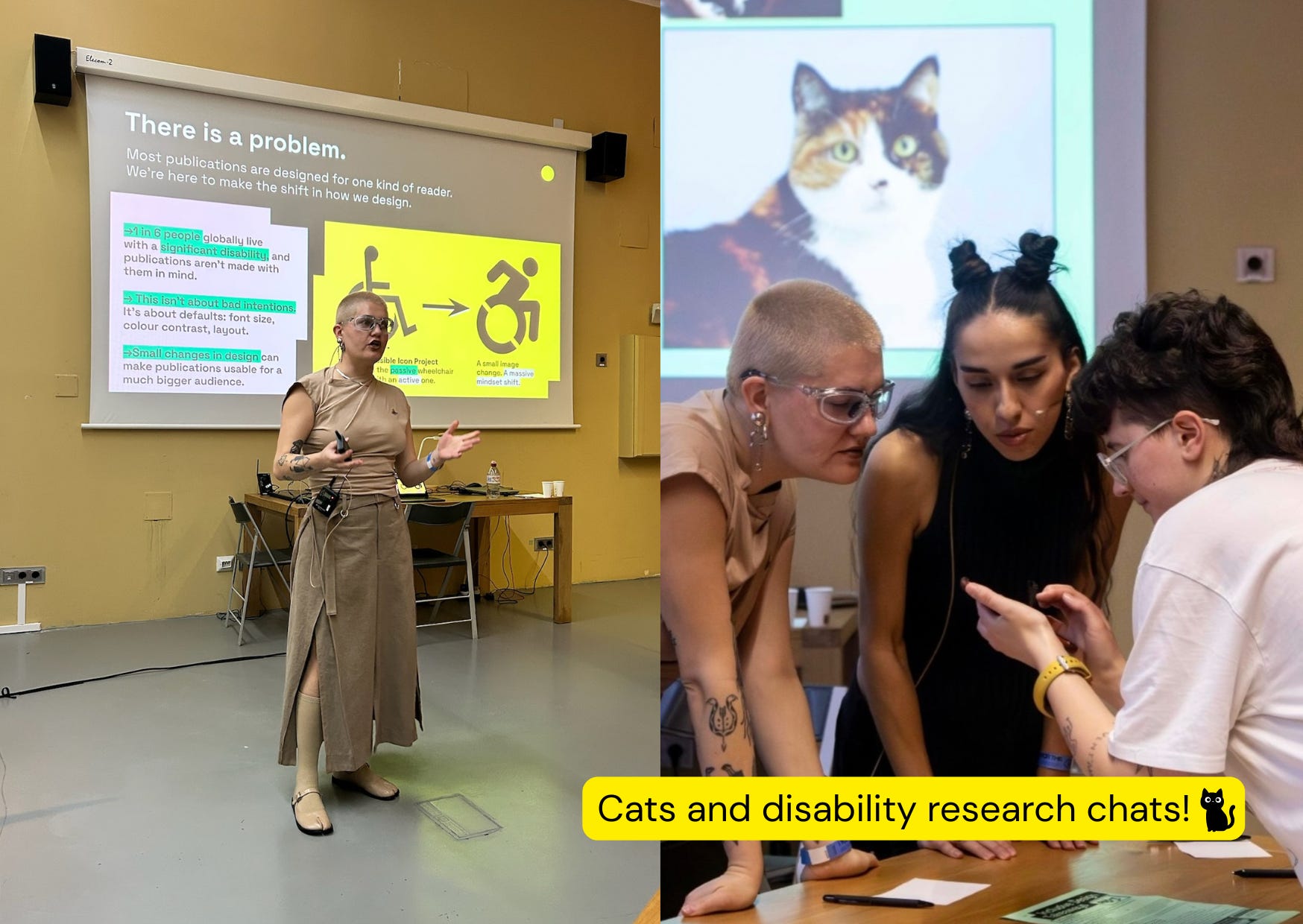
The next day, we familiarised ourselves with the fair layout during setup and prepared to deliver our workshop. Our workshop was called ‘Publishing for All Bodies and Minds’, and we covered the theory through the mismatch model of disability, intersectionality and unconscious bias in publishing. Then we moved into practical design applications by exploring alt text, image descriptions, plain language, typeface legibility, colour contrast, tactility, and alternative navigation methods.
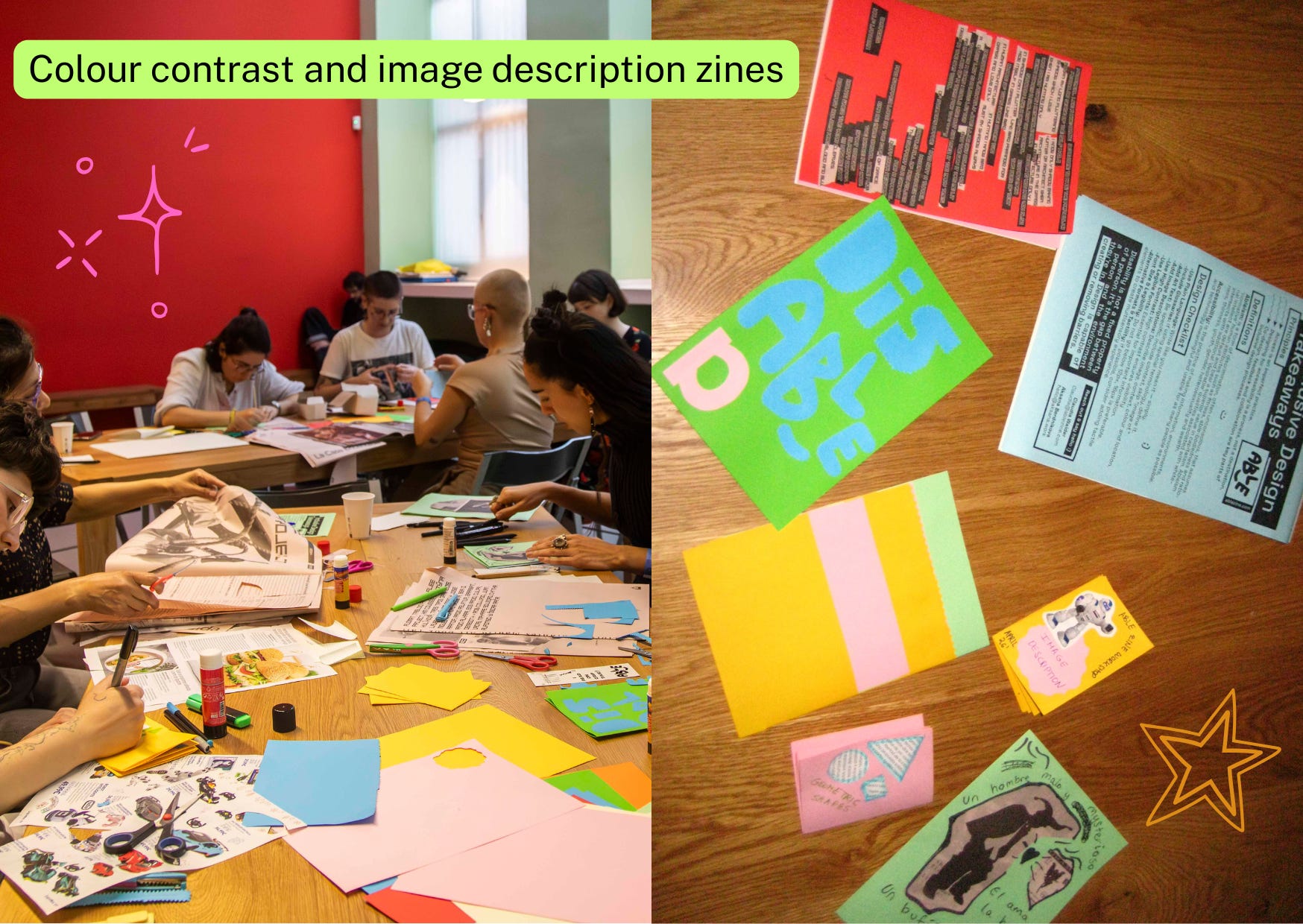
After the presentation, we worked with participants to craft small zines, creatively prototyping ways to experiment with accessibility using readily available materials. We led two groups: the High Contrast Zine group, in which participants were invited to use colour contrast to create increasingly accessible designs, building page by page toward bolder, more legible combinations. And the Image Description Zine group, who prioritised font size and legibility, while describing images bilingually.
What stayed with us most was how deeply participants cared about inclusion and accessibility. Not just interested in the ideas, but immediately thinking about how to apply them to their own practice: be it design work, research, or their own facilitation practice. The kind of energy we had in that room was proof that the community investment already exists; it simply requires the language and tools to be expressive and confident.
It was also a powerful reminder that you don’t need to “be an artist” or “a creative” to generate inventive and interesting work. All perspectives are valuable. Similarly, you do not need to identify as disabled to think proactively about disability or uplift disabled people through your work and your choices. Our intersectional identities are what feed collaboration and co-design outcomes that benefit all.
At our zine stand, alongside the merch we sold, we gave away a free Inclusive Design resource takeaway that other zine makers can refer to for future prints. We connected with other sellers from around the world, including London-based queer poetry publisher Anamot Press, Chilean zine-maker and artist Karo Castro, newspaper print designers The Posttraumatic and Athens-based printing press Kyklàda. There were many more, and the quality and creativity of the publications on display lit a fire in our bellies for future issues and projects.
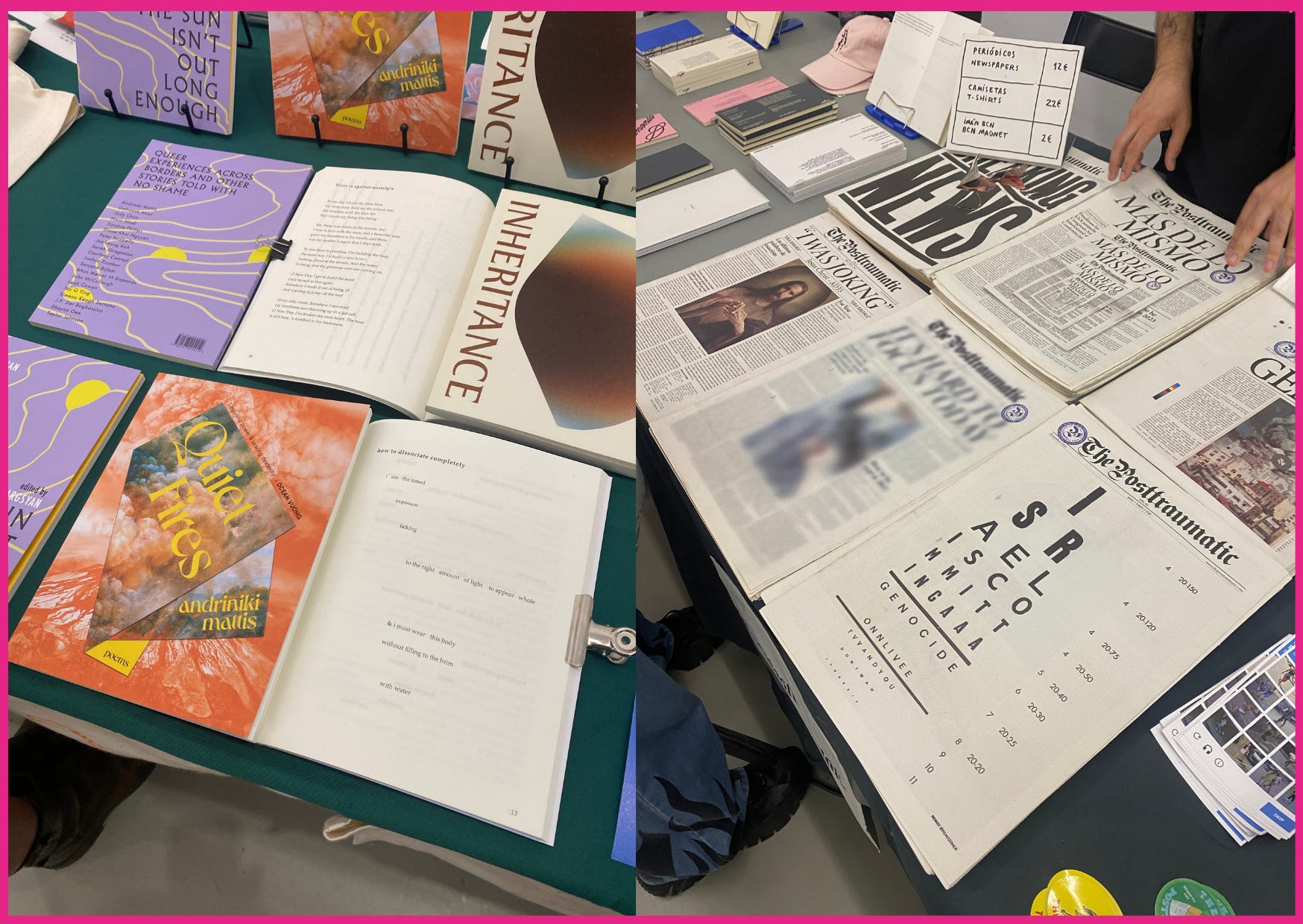
A big thank you to the organisers at Libros Mutantes, Loreto, Ricardo and Sergio. These guys did an amazing job, and we felt very well taken care of.
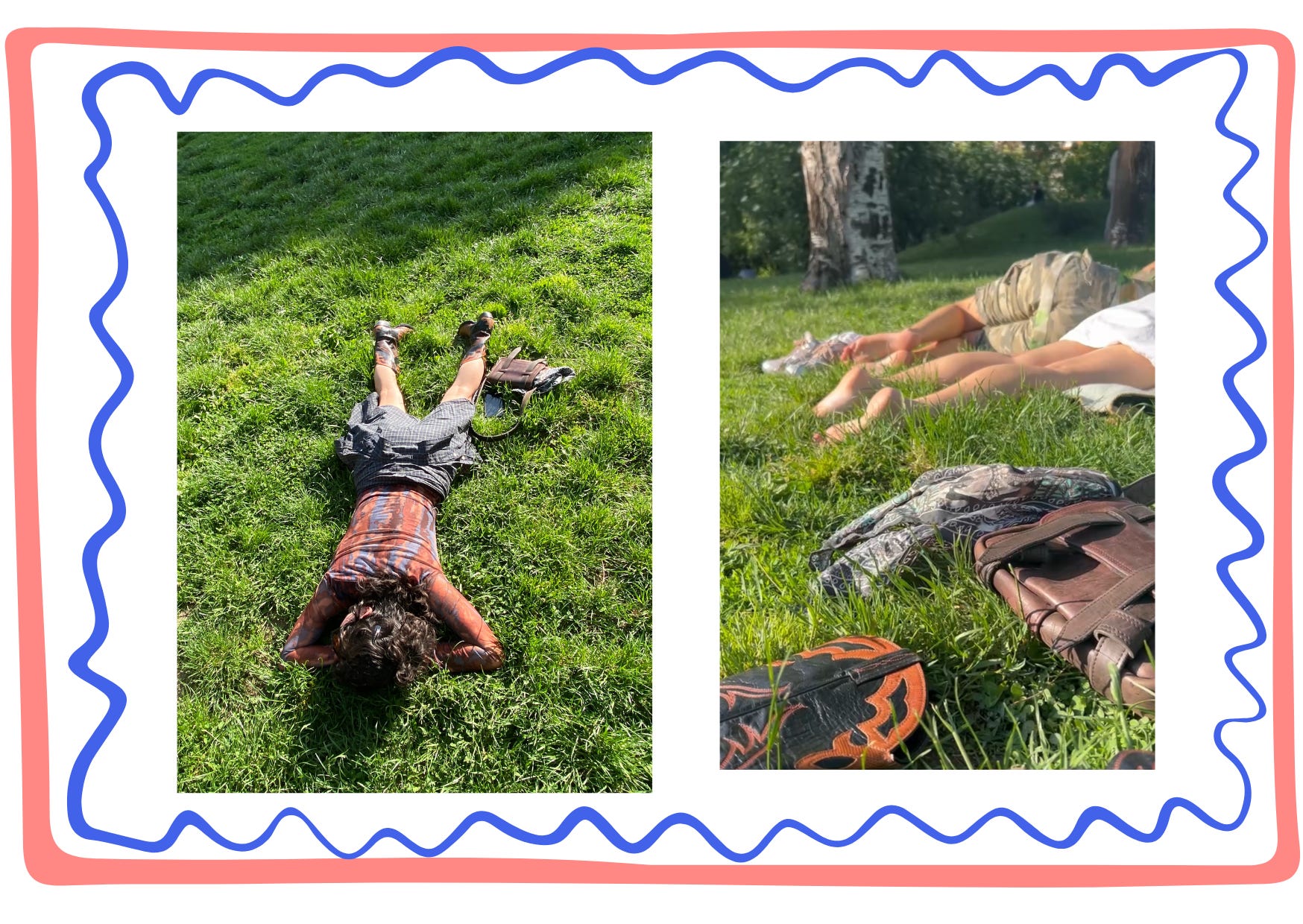
By the end of day three, we were completely shattered to put it mildly. We wanted to have one last tapas binge and enjoy some lovely views of the city. After fried croquetas and burrata, we went to the stunning Parque del Oeste and had some well-deserved time to touch the grass and listen to the birds.
We plan to host our accessibility in print workshop virtually soon and will update you with links to sign up when it’s ready. Until then, stay safe and care for one another.
If you’d like to support Able Zine, you can do so in the following ways: buy us a Kofi or become a paid subscriber. We’re very close to releasing the theme and submission details for Issue 3, so any boost we can get in networking, partnerships, distribution, or hands-on support is very welcome. In the meantime, we are still selling print and digital copies of Issue 2, and would love for you to buy one if you haven’t already. Click here to purchase Issue 2.
Able Zine <3
No posts
Comments
Nothing yet. Say the first thing.
Sign in to join the conversation.