
Hello Readers,
First of all, thank you for being here! We have many new subscribers and would like to extend our appreciation to those who invest in our work and continue to support us.
When Able Zine started in 2018, there was a vacuum of disabled media. Zine-makers have always done their thing, as have disability arts organisations like Disability Arts Online, and podcasts such as Pigeon Hole and Disability Visibility. But in the past 8 years, things have really changed. We’re no longer confined to niche corners of the internet, and countless publishers are promoting and commissioning more disabled writers than ever before. In the media spaces that Able Zine inhabits, it’s nice to have company. It’s exciting to be inspired by others’ work. It’s a relief to share the responsibilities and burdens of publishing with other independent publishers. So in the next few newsletters, we’ll be shining a spotlight on other media-makers doing cool things in the disability space. Show them some love, and hopefully you’ll discover your next new obsession.
In crip solidarity and love,
Claudia
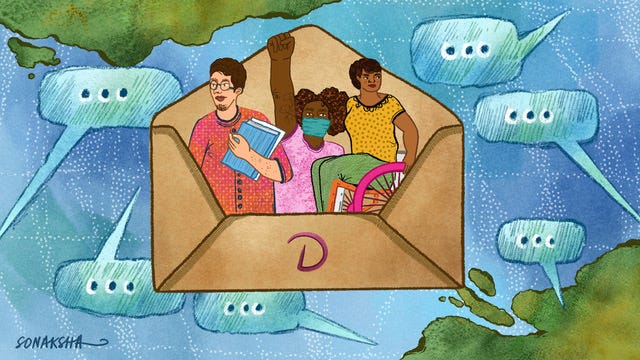
First off in the series is Disability Debrief, an insightful news and writing platform that reports on disability news and stories from around the world. They work with many international writers and illustrators, importantly providing paid publishing opportunities to underrepresented voices. I spoke with its founder, Peter Torres Fremlim, about the project and their current call-out, ‘Dear Diary’.
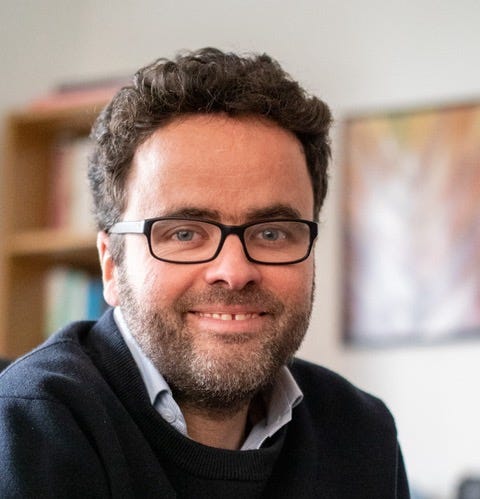
Hi Peter! I’m so glad to be connected with you. What led you to start the Disability Debrief?
Back in 2020, I was working on disability rights in international cooperation. Many countries were changing their policies or trying new approaches to disability, and I wanted to share the latest news with colleagues. I started it as a freelancer, thinking it would be a side project.
How has Disability Debrief evolved over the years?
The audience quickly went beyond just my colleagues, and that showed me that there was a wider interest in a serious, in-depth view of disability news. And as I gradually shared more analysis and also my own experiences, it took me more into reporting and writing about my lived experience. There’s something unique that comes when we can combine these different ways of writing and knowing the world.
What is the mission of Disability Debrief?
The mission now is to explore world news through a disability lens. Disability gives us new ways to know the world, and a disability lens examines the experiences of disabled people and the social and environmental contexts they inhabit.
Why is it important to you to platform news and stories from geographically diverse places, global sources and Global South writers?
It started with an international view from the beginning, and I’ve really worked to get disability news from around the world. So far, I’ve curated news from over 170 countries.
Through that curation, it showed me that there were much fewer stories told directly by disabled people in the Global South. Too often, those perspectives are only shared by a charity that is also telling its own story.
When I commission writing and art on the Debrief, it is to give a platform to stories that aren’t found elsewhere, and so because of that, there’s a focus on writers and artists from the Global South.
Running a newsletter is an intentional form of slow content; it’s a crip-friendly process, I think. In comparison to other media and news organisations, what separates Disability Debrief?
Certainly. I chose the newsletter format because I’ve never been good at or inclined much to post on social media. But now, the Debrief is a weekly newsletter so the pressure of production has increased and doesn’t feel very slow!
But we have quite a few crip processes behind the scenes. We’ve created a space where writers can work without deadlines (until the final moments in the piece’s development).
And in terms of comparison, I’m not sure if the Debrief is like any of the others! Every week is a different subject and type of edition, from a global analysis of the disability movement, to an illustrated essay on anxious nights growing up in Kolkata, India.
We work hard to bring quality and depth, from a very diverse range of authors, writers and illustrators, and they are paid for their work. And all of this is available for free, with no paywall or pop-ups.
You currently have a call-out for submissions and the theme is Dear Diary, can you tell us more about the call out and why you chose this theme?
Our call is for diary entries to share how disability shaped your day. Each entry is up to 500 words, and we’ll publish our five favourites – and give each person published £100.
These open invitations are an exciting way to hear from new people and a wider range of folk to contribute. This theme attracted us just because we’re excited to know more about the day-to-day details and how they look different for each person. And it’s a theme anyone can speak to (whether they have a disability or not!)
How can the readers support your work?
The best way to follow the Debrief is to sign-up to get the weekly newsletter in your inbox!
And then, like any independent media project, the main challenges are visibility and financing. Share it with your friends so others find it. And if you can, take out a subscription. The project is published through a pay-what-you-can model.
There are all these pressures online and in the media that bring out a lot of fake news and clickbait. But the lesson I took from the Debrief is that if we want to see something different on the internet, we can make it ourselves.
The deadline for the Dear Diary call is the 20th July 2026, 11am BST. Apply now via this Google Form link.
No posts
Comments
Nothing yet. Say the first thing.
Sign in to join the conversation.