
Hello Readers,
I’m so happy to bring you the next interview in our Crip Media series, with Alexander Ogheneruemu, fellow of the Disability Justice Project (DJP). Disability Justice Project is a global non-profit promoting disability-led storytelling. Founded by Human Rights filmmaker Jody Santos, the DJP provides training and filmmaking equipment to disabled activists and journalists living in countries where the issues facing local disabled populations are too often ignored by mainstream media. I came across their work last year and was taken aback by their short films on issues surrounding climate change in Uganda and Samoa. I reached out to Jody to discuss the project, and she connected me with Alex, a Deaf documentary filmmaker, writer and activist from Nigeria, about his latest film projects on deafness and disability in the conflict-affected region.
I highly recommend checking out their website or YouTube channel to watch all of the videos they have published, and to discover the incredible array of filmmakers they support.
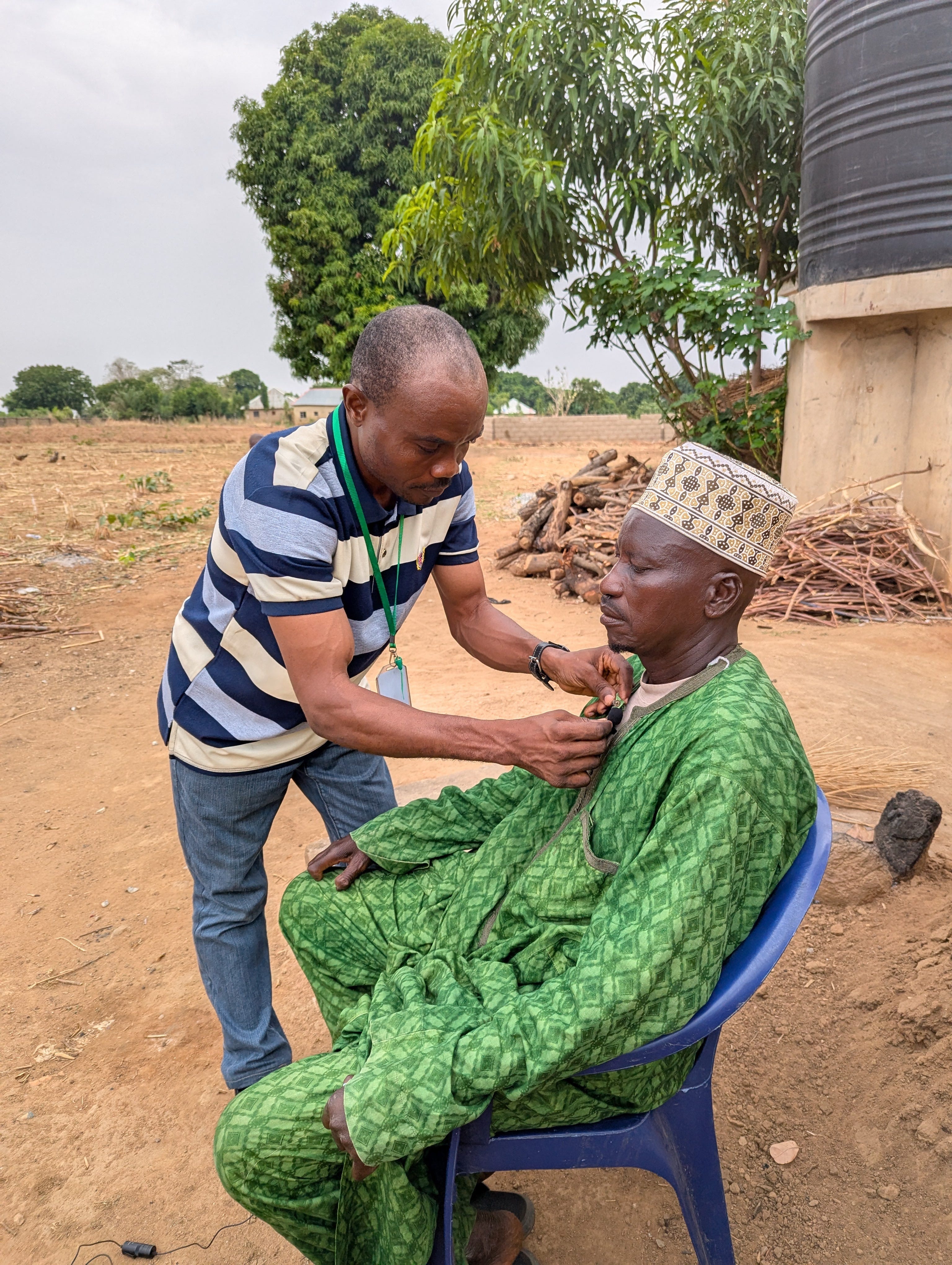
Alexander: Before joining the DJP, I had stints in education, focusing on Deaf learners. I also freelanced for a few online media platforms, including Peter Fremlin’s Disability Debrief in the UK. Much of my writing centred on disability, and I sensed a strong calling there. Meanwhile, I was (and still am) quietly doing disability advocacy in Faith spaces. I actively volunteer with a local Deaf NGO, Voice for the Deaf Foundation, in a Bible translation ministry. We are rendering the bible into native sign language for Deaf folks, and I am in the exegesis group.
Alexander: Each time I think about how I began contributing to the DJP, I see the power of community and connections. It started with my work for Peter, whom I connected with on LinkedIn. We struck a great working relationship, and he made a couple of introductions. One of them was Priti Salian. At that time, Priti managed the Disability Justice Media Network for the DJP, organising workshops and webinars. Priti added me to the group, where I decided to share a personal writing piece which Jody personally complimented. Jody is a beautiful soul to work with – a great encourager and motivator. In a private chat, she shared links to the DJP’s website with an opportunity to contribute. That was my chance, and since then, there has been no looking back. It has been a great experience of learning and growth.
Alexander: Access to the technology, such as the two Google Pixel phones I was able to record the footage and use live transcription with, is certainly one of the biggest benefits. However, it’s hard to rate that above the wonderful working relationship I’ve built with Jody over time – I’m gaining a lot from her editorial oversight and support. It’s hard to put one above the other.
Alexander: Issues around insecurity are a serious concern in Nigeria. It is a complex problem with political, religious, tribal, and economic underpinnings. The issues originated from the northeastern part of the country and have steadily spread across the entire country – nowhere is exactly safe. Insecurity manifests variously through tribal/community clashes, religion-motivated wars, terrorism, banditry, farmer-herder clashes, and increasingly, kidnapping for ransom. Fears heightened when kidnapping, which used to be mostly a northern thing, rapidly escalated in the south. People are being abducted on the road, in their homes, on the farm – even school kids were being kidnapped during raids on schools. A number of the victims are dying in captivity.
At one point, while I was producing the story, I had to avoid travelling to a particular state because it was unsafe. I took a risk travelling a long distance by bus, and there was a scare on the road. One noticeable trend about mass kidnappings is that they increase during build-ups to a presidential election; it has even been argued that politicians use them to score points amongst others. Over the past few weeks, though, the government and security agencies have made some impressive pushbacks, resulting in the rescue of several abducted victims, foiling some kidnap attempts and neutralising bandits.
Alexander: With phones and social media, more people now have access to emergency information. But that’s not to say communicating these emergencies is now fully accessible. For the Deaf person who does not have a phone or cannot read, the danger remains. Emergency communication still largely misses disability needs – especially for the Deaf.
Alexander: Today, compared to over two decades ago, the communication situation has improved in general, as the majority of Nigerians, even in rural areas, now have ready access to mobile phones and internet, along with the advantages of instant communication. This wasn’t the case back then. However, people can still miss out on emergency information due to incessant power outages, inability to afford internet subscriptions, and inaccessible information. In terms of identifying and giving warnings during a crisis, communication has not been disability-sensitive, and provisions are rarely made for access needs of disabled people. However, disabled people consistently leverage both the improvements in communication systems and camaraderie to help themselves. We largely rely on community connections. Ayoade, Tina, and Festus in the series hinted at this.
For example, during my trip for this story, I read online that there was a curfew in an area I was visiting, but some of the Deaf people I was meeting weren’t aware of it. The meeting offered an opportunity to share awareness.
Alexander: Unfortunately, there’s no official data on this. However, it’s clearly higher in the northeastern BAY states. There’s still a lot of work to be done in this area, and it’s something I’d like to do with the right support or collaboration.
Alexander: There is a wide berth in the living standards between the two. Especially with access to infrastructure, education, healthcare and other support systems. Villages are more isolated and easier targets for bandits and terrorists. Many people with disabilities in these areas are engaged in farming (which is often their only source of livelihood); however, the current security crises have led to abandonment of farmlands, pushing people further down the poverty line.
Insecurity in Nigeria is an endemic problem, so of course, both disabled and nondisabled are affected. However, as I explored in the story, disabled people are more prone, and it does not help that we are not addressing how these already vulnerable people are further impacted, or gathering disability specific data on this issue.
Alexander: It could have been pretty hard, but my connections helped a lot. In terms of avoiding conflict, the leaders in Kwara, for example, were always giving me updates on happenings in the area. However, there are many case studies I didn’t include in the project due to time constraints.
Alexander: Next up, I am about to begin a story about living with Spina Bifida and Hydrocephalus in Nigeria. Going forward, I feel the need to explore conflict-related disability more, including gathering data. I’d also like to produce films on Deaf women and healthcare access and disabled street kids. I will say there are many untold stories out there that need someone with the eyes, heart, and, of course, support to tell.
Alexander: To show support, please head to The Disability Justice Project.
To receive new posts and support disabled media, subscribe and share this post.
No posts
Comments
Nothing yet. Say the first thing.
Sign in to join the conversation.