
I’ve gotten interested in these very little, subtle things you usually don’t see in movies, very quiet, tiny, little moments that you see in life and which are very difficult to put into a movie. I watch people a lot and look for those moments.
When an actor dies, they’re often cited for their most acclaimed performance. The award-winner, the blockbuster breakthrough, the critically hailed revelation. These roles act as a shorthand for memorial in headlines and social media posts in effort to generate emotional connection, ensuring the best odds of a scrolling viewer’s recollection. A morsel of context lobbed into an ever-spinning digital whirlpool before the next death occurs.
But for some reason, when I hear news of an actor’s death, I often recall small cameo performances. A guest star appearance that most have likely long forgotten. Memory is funny that way. It’s like Noonan himself says — it’s the quiet, tiny, little moments that so often stick with me.
And Noonan always seemed to be showing up in things I liked. A real hey, it’s that guy! kind of actor, he became a familiar face over the course of my life, as I’m sure he did to many of you. The kind that starts to feel like an old friend whenever you see them on the cinematic street. Rest in peace, Tom.
When I first heard that he left us last month, the role that came to mind was his appearance in the pilot episode of a ’90s show called Early Edition: a Chicago-set Kyle Chandler drama about a guy who gets tomorrow’s newspaper today.
Early Edition begins with an ending. Chandler’s Gary Hobson has just been unceremoniously dumped by his wife and decides to quit his job as a stockbroker. He’s at a turning point, but will he seize this opportunity to build a new life from scratch? The mysterious newspaper appearing at his hotel room door with tomorrow’s headlines might just be arriving at the perfect time.
Each morning, Gary accepts those headlines as a cosmic assignment and ventures out to do his best to prevent bad things from happening to the people of Chicago. And so Gary embarks on the solitary path of everyday superhero. In letting go of one dream — a nuclear family, a stable 9-to-5 — he embraces the possibility of another way.
Noonan’s character, Frank Price, enters as Gary is still in the process of unraveling this new life; tomorrow’s Sun-Times introduces Frank through a front-page headline. Recently laid off from his job, Frank is desperate, and he’s decided to rob the bank that denied him a loan. Innocent bystanders will lose their lives in this future robbery gone awry — unless Gary can stop him.
Gary shows up at the bank without much of a plan and ends up on the roof with Frank and his gun, trying to shift the headline away from its promised tragedy. In the end, Gary does this by relating to him; he opens up the opportunity for Frank to tell his story. After all, Frank is far more than the one-dimensional villain of a headline; in the valley of his desperation, he was about to make a terrible mistake not at all true to who he is.
At one point, Frank asks, “What do you know about losing everything you thought you ever had?” The viewer knows, of course, that Gary feels as if he has lost his whole world: his wife, and the life they were building together. The two men are able to bond over their shared feelings of loss, even though the origins of their pain are different.
We may have all lost different things in our lives, but the feeling of loss is universal — that black-hole sense of What am I supposed to do now? Too often we become immersed in the details of our own personal tragedies and lose sight of the universality of that loss, but Gary Hobson has a knack for making that connection.
What came to mind when I heard the news of Noonan’s death was the expression on Frank’s face the last time we see him, after Gary prevents him from making that terrible mistake: a soft smile as he bids silent farewell to the stranger who saved him. Another quiet, tiny, little moment — Noonan’s specialty.
Early Edition’s opening credits tease this idea of “What if you knew what was going to happen tomorrow?” But the thing is, those morning headlines only ever show Gary a version of the future — the one that will happen if he stands by and does nothing. If he gives up before he starts; if he never even tries at all.
At times this can be a heavy burden to bear, which plays out in Gary’s conversation with a friend in that same episode:
Gary: Let me tell you something: I didn’t ask for this thing. I don’t want it and I don’t need it. Give the damn thing to somebody else.
Marissa: Gary, you don’t need to be a hero to make the best of what you’re given. And you’ve been given this.
Gary: What am I supposed to do with it?
Marissa: You’re supposed to do whatever you can.
A big question throughout the series is where the paper comes from, and why it comes to Gary. But the where and the why don’t matter as much as what he does with it. Even if Gary can’t be sure he’ll change a thing, he still has to try — because that’s the kind of person he is.
One of my favorite musicians has a quote attributed to Joe Strummer tattooed across his chest:
The future is unwritten.
It’s easy to think that we know what will happen. To write a situation off as hopeless, to give up before we start. We may not know for sure whether the things we do will be a success, or make a difference, or change anything at all.
But what if we tried anyway?
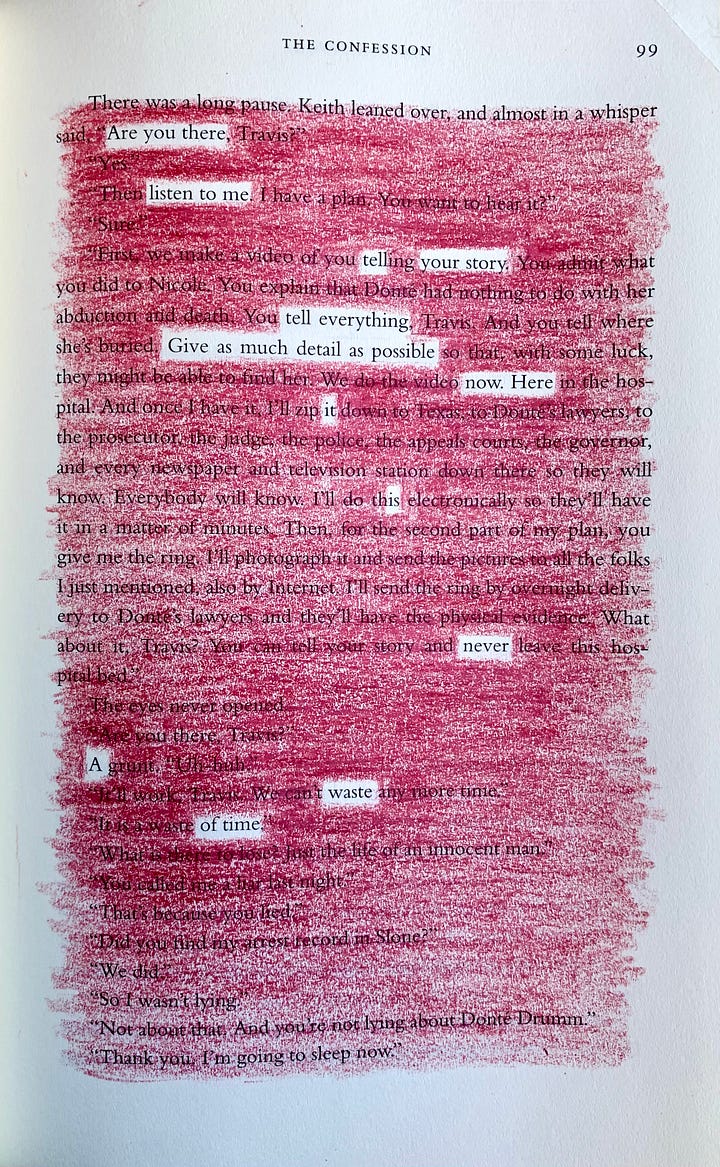
Newspaper Blackout: These days Austin Kleon’s best known for his Creativity Trilogy, but his first book was a collection of blackout poetry crafted from newspaper pages!
Paperboys: Have you seen your favorite director’s short films? I’ve loved Mike Mills’ work since watching Beginners at my favorite (now closed, RIP) arthouse theater. This month I checked out Paperboys: his 2001 documentary short that compiles interviews about everyday life with a group of Minnesota paperboys. (If you’ve seen his film C’mon C’mon, this might sound familiar!) Twenty-five years have passed since the film was released, so this slice of life made for quite a nostalgic time capsule. Favorite part was hearing the paperboys speculate about the future. Where are our flying cars?!
Wikipedia rabbit hole of the month: The Wikipedia page for newspapers makes an excellent launch point for a hundred other rabbit holes (and also provides fascinating historical context when you think about the journey the newspaper has taken to get to the present day).
Personal newspapers? This Reddit thread asks: What if we replaced social media posts with handmade zines sent to friends in the mail? I’m especially intrigued by the idea of the newspaper as a formal variation of a traditional “perzine,” or personal zine. I love the style of The Evan Times, which Erin Dorney highlighted in her zine roundup a few months ago, and I’m hoping to check out similar projects if anyone has recommendations!
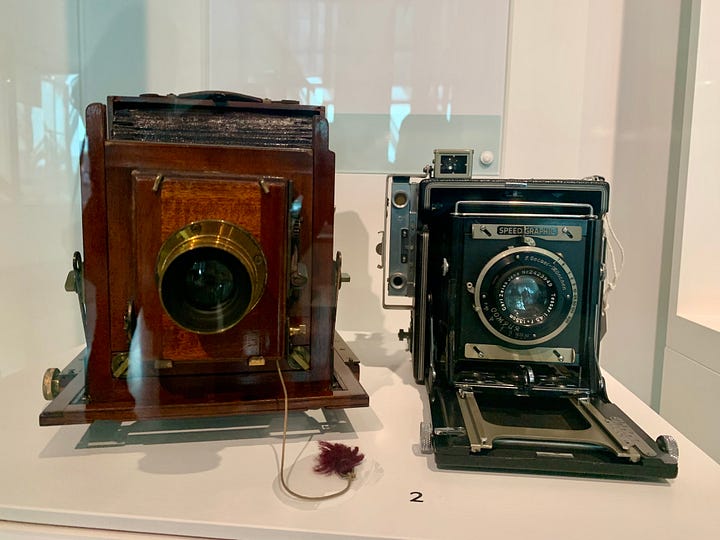
A beloved Connecticut film studio needs your help! Just last week, Norwich Camera Company suffered a devastating darkroom fire. Thankfully all humans (and cats!) are okay, but they’ve lost the the machine they use to develop film and cleanup will be a serious undertaking. On a personal note, January’s Microfascination about photography and the magic of the viewfinder never would have been written without NCC, and they developed the photos I included in that issue. If January’s newsletter resonated with you and you have a few bucks to spare, please consider donating to their rebuilding efforts! They are doing tremendous work to preserve the art of film photography and unite the people who love it.
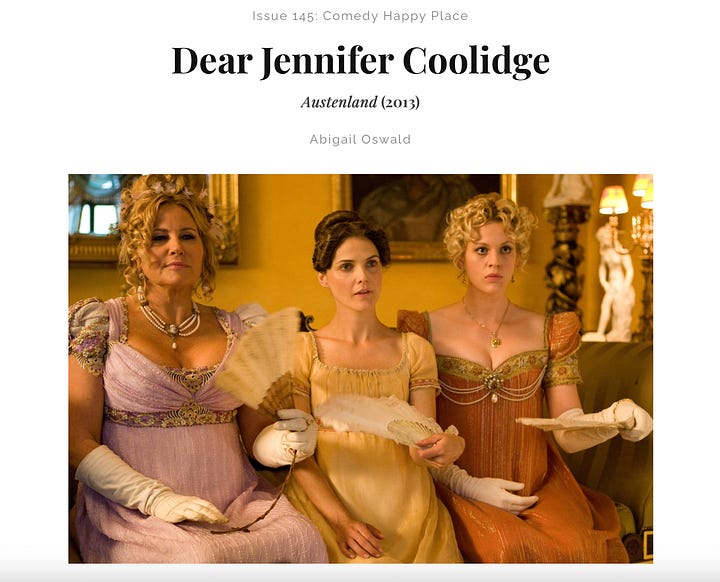
A letter for Jennifer Coolidge: For Bright Wall/Dark Room’s Comedy Happy Place issue, I wrote an epistolary essay about my personal hero Jennifer Coolidge and Austenland, a movie I love very much.
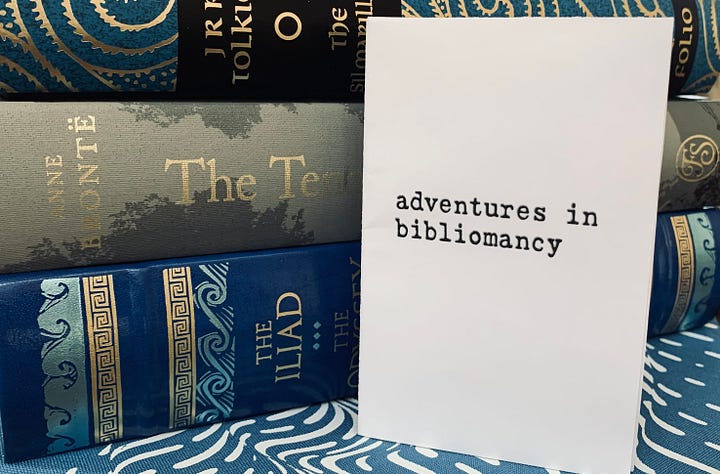
Adventures in Bibliomancy: What if a book on your shelf right now holds the answers you’re looking for? My latest zine is a guide to bibliomancy basics, including steps, prompts, and variations!
April events: In celebration of National Poetry Month, I’m hosting a free Blackout Poetry Workshop at Wesleyan RJ Julia Bookstore on April 6! I’ll have a new how-to zine to share, my John Grisham blackout project on display, and a bunch of different texts to work with — plus, you’re invited to bring your own as well (an email, a speech, a text conversation…). If you can’t make it to the workshop, our regular monthly write-in is on April 20!
See y’all again next month!
No posts
Comments
Nothing yet. Say the first thing.
Sign in to join the conversation.