
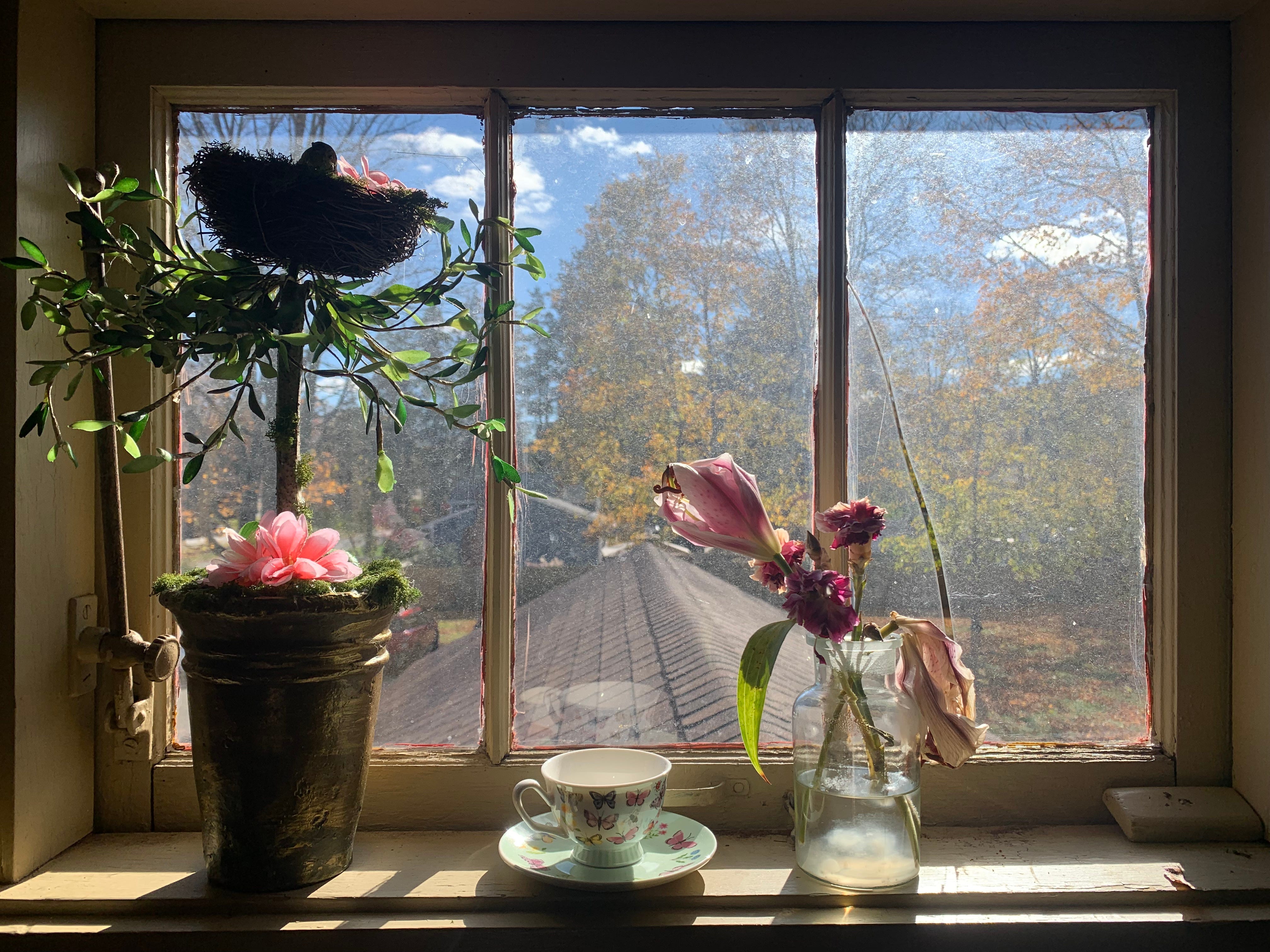
Did anyone else’s brain break a little this month?
I’m sure I don’t have to recap a litany of headlines, weather events, and other assorted daily catastrophes to relate why I’ve felt a tad scattered — I know you’re all living so much of it right along with me.
Instead I’ll say that whenever I feel a little lost, nothing gets me back on track like writing. Whether you’re a recently resurrected teenage girl, the brooding protagonist of a thriller, or just a person trying to exist in 2026, a diary can be a way of gluing your reality back into place, one sentence at a time.
Maybe Joan Didion wasn’t doomscrolling on her iPhone when she wrote “I write entirely to find out what I’m thinking, what I’m looking at, what I see and what it means. What I want and what I fear,” but I feel like the sentiment rings truer now than ever. This month I’ve been writing to put my thoughts in order.
September 23, Journal Entry One:
I’m Liz Parker, and five days ago, I died.
After that, things got really weird.
So begins a goofy and earnest teen show about falling in love with the alien who goes to your high school. Think My So-Called Life meets Smallville back in 1999: Roswell.
A lot of things happen to protagonist Liz Parker very quickly in the first episode; she gets shot, she dies, her crush brings her back to life, and then she finds out he’s from another planet. (Well, initially he just points toward the sky when she asks where he’s from, but it gets the point across.)
Teen shows have a special knack for capturing the emotional extremes of something happening to you for the first time, and I love that Liz turns to the page to make sense of it all. Her world actually ends, starts up again, and promptly turns upside down in ways that are terrifying and exciting and after all that, she can still write. (For years I’ve had it in my head that the show opened with Dear Diary, I died today — a false memory, it turns out, but same energy!)
This reflex — turning to the page to record, to problem-solve, to literally make sense in places where it feels like none exists — leads me think about how language can act as a container for even the most extreme events. It’s oddly comforting to think that the wildest thing that’s ever happened to you can still be held within twenty-six letters. The diary is a container for anything we throw its way.
On the other end of the spectrum from the teen girl diarist is Paul Schrader’s “man in a room.” This man is “a character who is often left alone, with nothing but his thoughts… lonely, introspective, living in but also strangely detached from the material world.” Just a dude with his notebook (and usually some sort of alcohol).
I think A LOT about First Reformed in particular, starring Ethan Hawke as a tormented minister trying to make sense of the world he lives in. I have decided to keep a journal, he writes:
Not in a word program or in a digital file, but in longhand, writing every word out so that every inflection of penmanship, every word chosen, scratched out, revised, is recorded. To set down all my thoughts and the simple events of my day factually and without hiding anything. When writing about oneself, one should show no mercy. I will keep this diary for one year; 12 months. And at the end of that time, it will be destroyed. Shredded, then burnt. The experiment will be over.
His plans to destroy his record at the year’s end emphasize the importance of process in the diaristic habit. Sometimes the result matters less than the act of its creation and what it meant to its creator.
A diary is a classroom in which we learn how to sit with discomfort, a dressing room for trying on different ideas, a laboratory for self-experimentation, or simply a workshop for trying to make sense out of the wild glorious mess of your life. You can choose whatever room you want.
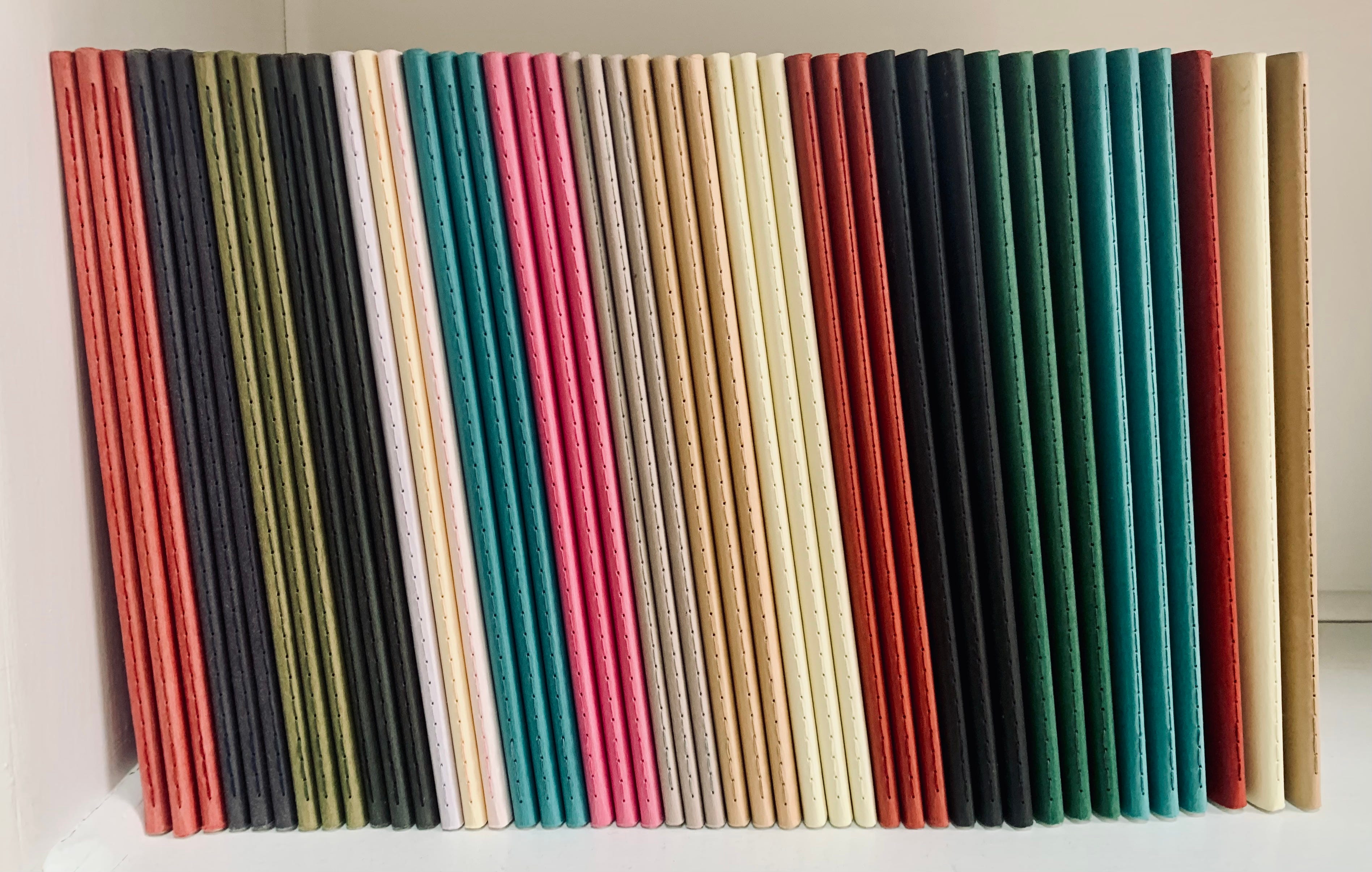
Once that process is complete, what else might our notes and scribbles offer? Many paths exist. You might publish them, like writers I admire; you might shred and burn them, like a Paul Schrader character; you might lug them around from one living space to the next, like I have for so long.
I’d considered destroying them a few times over the years — it was tantalizing to imagine that catharsis, its consequent clean slate. But something always held me back, like there was one more thing I needed them for. Turns out I was right.
I’ve been going through those old notebooks for a writing project recently, and the experience is akin to searching for clues within my own past. After all, a detective must stay aware, make connections, and take notes — because you never know what small detail might end up unlocking the whole mystery later on.
Other People’s Diaries: A Reading List
Beware! I’ve written previously about my complicated feelings around posthumous publication, specifically regarding Alan Rickman’s diaries. What I wrote then is just as true now: “In short, it never hurts to do your research when a book is announced after the writer’s death.” Questions worth asking before you read: Did the writer intend for the work to be read? Why wasn’t it published during the author’s life? Who profits from the publication? This dilemma came to mind again last year when Joan Didion’s therapy diary, Notes to John, was published after her death. As I’ve considered the ethics around this topic more over the years, there are a number of published diaries I feel increasingly uncomfortable recommending. (Please just burn my notebooks when I die, y’all!)
Books: May Sarton’s Journal of a Solitude is a diary I do often recommend. Sarah Manguso’s Ongoingness: The End of a Diary is an excellent memoir about the diary-keeping habit. And Suleika Jaouad’s The Book of Alchemy is an absolutely incredible collection of essays from a variety of writers paired with prompts for diving into journaling yourself. (There’s even a gorgeous companion journal!)
Zines: I recommended Vanessa B, Age 9 — the unmissable publication of Vanessa Brewster’s 1993 diary — in last year’s zine roundup. Serendipitously enough, an email from Katie Mae Hafner of Chatterbox Press dropped in my inbox just a few days before I sent this; turns out she’s embarking on a project to publish her diary for five consecutive years.
Wikipedia: As y’all know, I’m a big fan of the Wikipedia app. Some bookmarks to save for later perusal if you’d like to join me in those rabbit holes: German Diary Archive + List of longest diaries.
A bonus writing prompt: What if every time you went for your phone, you wrote a sentence in your Notes app first thing? Plenty of books are being written on iPhones these days. (Lauren Elkin’s No. 91/92 and Gauraa Shekhar’s Notes both come to mind!) As I always say, technology isn’t inherently BAD — it’s more just being intentional about how we use it.
Updates + News
A Mad Lib essay experiment: What if an essay could be a collaboration between the writer and the reader? Last year’s Godzilla Mad Lib adventure inspired me to see if I could write an essay in the form of a Mad Lib; Pearl Jam provided the perfect opportunity. “Mad Lib of Longing” is an essay about wishing that’s only complete with the reader’s input. I’m so grateful to the March Xness team for giving this one a home!
March event: Another write-in coming up on March 16th at Wesleyan RJ Julia—CT folks, come join us! These’ll be on the third Monday of each month going forward.
See y’all again in March!
Comments
Nothing yet. Say the first thing.
Sign in to join the conversation.