

I’ve always been a sucker for the strange and unusual, and a book about the world’s most unsettling corners with a big fat warning not to go there was exactly why I picked up Ocker’s newest book. His writing about the dangerous and most sinister of places is thorough and charming. You can tell he genuinely enjoys the macabre, which my dark side found quite soothing.
After finishing it, I had a few questions for him about the research, the places that stuck with him, and what it’s like to spend so much time thinking about locations most people would rather (and maybe should) avoid.
Here’s what he had to say.
1. Your previous books explored things people actively seek out—like cryptids, witch history, and cursed objects. What inspired you to pivot to an “anti-travelogue” advising readers not to visit these locations?
I seem to like hiding the “travelogue” part of my travelogue books. My book on cursed objects looks like a paranormal history book, but it’s also an entreaty for people to visit those objects (90% are on display in museums). My cryptid book wasn’t just a folklore book, but an opportunity to introduce readers to cryptid towns, which celebrate the monsters of their pasts with museums and festivals and installations. Don’t Go There was a more obvious travel book because it focused on places, so I guess I had to obscure it by making it an anti-travelogue.
2. The book’s title is Don’t Go There, yet learning about these places inevitably ignites a deep sense of morbid curiosity. Do you view this book as a practical warning manual for extreme dark tourists, or is it more of a tool for armchair exploration from the safety of home?
I always try to make it both. Going to a place certainly makes history more real and expands our perspectives. So, I want people to do that. But reading from the comfort of our hearths is also legitimate for widening our worlds and, in many cases—such as with the sites in Don’t Go There—a wiser option.
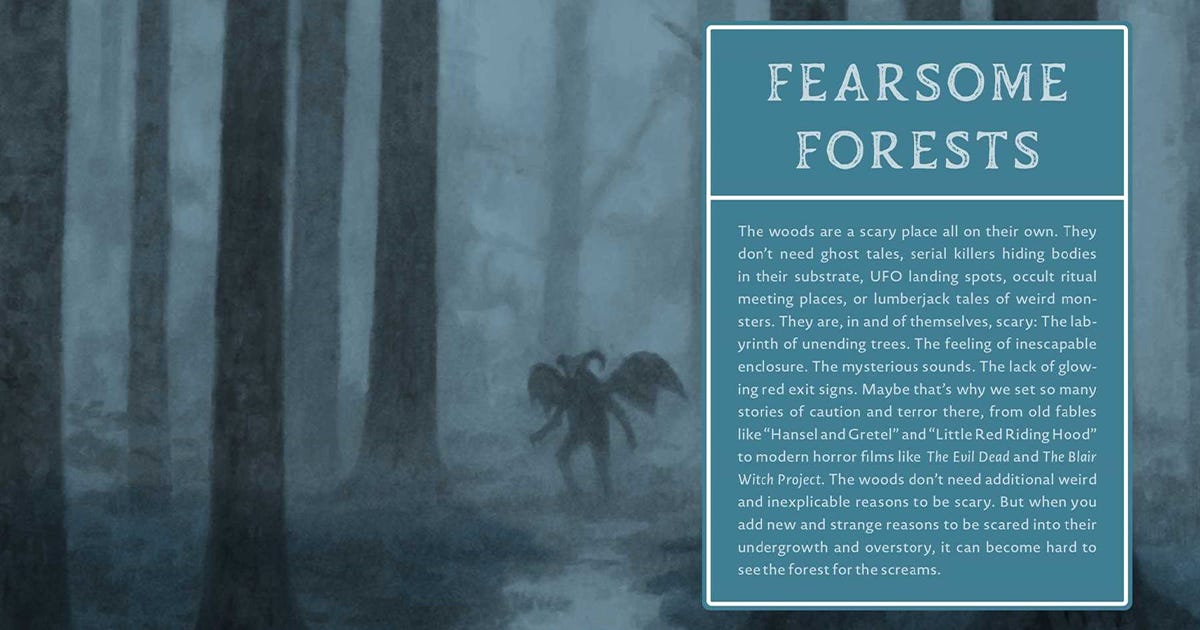
3. You organized the book into six distinct terrain types, ranging from Fearsome Forests to Spooky Snowscapes. When you were researching these 30 locales, did you notice a difference in the vibe of the legends based on the geography?
Oh yeah, the ghosts and monsters and physical dangers of a salty maritime site are far different in tone from, say, desert sites or icescapes. Look at any Scooby Doo episode. The costumed creep must always dress appropriate for the vibe of the environment they’re trying to spook people away from. In the book, I even included a sidebar on the least spooky type of environment on the planet (spoiler: grasslands).
4. You feature some incredibly haunting places, like Roopkund (the Himalayan lake full of skeletons) and Canada’s Nahanni National Park (the “Valley of the Headless Men”). Of all the sites you uncovered, which one felt the most genuinely dangerous or inhospitable to you?
All the sites in the book have body counts, so they’re all genuinely dangerous to some degree. Fortunately, most of them are difficult to get to without a death wish and some serious skills. So, I think I’ll go with the Salton Sea in California for the answer. It’s one of the places I actually got to visit, so I felt it firsthand, and it seemed extremely inhospitable, like it wanted to annihilate anything near its shores, on its surface, or in its depths.
5. Many of these spots blend supernatural folklore (like the Jersey Devil in the Pine Barrens) with very real, terrifying human history (like pirates and the mafia). How do you approach balancing the fun, campfire-story myths with the sobering, real-life tragedies associated with these places?
My specialty! Jokes about tragedy and taking fable seriously. It’s really just a matter of respecting each as a story, though, whether true and awful or fanciful and fun. That doesn’t mean you can’t joke about it (in fact, it often means that you should), but even the jokes must be in service of the story.
6. You write about places that people simply cannot stay away from despite the bad vibes. What do you think it says about human nature that the more a sign screams “Keep Out,” the more desperate we are to cross the boundary?
Probably a few reasons. The simple gut reaction of bristling at being told what not to do that every child is born with. The suspicion that something good is being kept from us that we all have. The desire to face risk and death when life feels bland and purposeless. Or you just hate signs. Like that Five Man Electrical Band song.
7. For a place like Mount Shasta, which has attracted everything from cults to UFO and Bigfoot sightings, how does a single location become such a massive magnet for so many different flavors of the bizarre?
It’s pretty traceable. It always starts locally with word of mouth and people interested in the stories of the place they call home. Then, if it’s interesting enough, it spreads to newspapers both near and far, and it goes to the lore keepers to collect, document, and (often) exaggerate, until enough stories are gathered that it reaches critical mass in culture.
8. You have a massive background in tracking down everything from historical oddities to local lore. When you decided to dig into the locations for Don’t Go There, what did the initial excavation look like? Where does one even begin to uncover the history of a place that people are actively trying to forget or ignore?
After a couple decades doing this kind of work, I’ve a very long to-do list of the strange places I want to visit and write about. So, I always have a bit of a head start on projects like this. After that, it just takes pure, dogged search and research across all media to excavate my own ignorance in the field.
9. A huge part of your nonfiction research often involves digging through old local newspaper archives to capture the exact moment a town or region experienced a bizarre phenomenon. How much of Don’t Go There was built on these micro-histories and local journalism, rather than just widespread internet folklore?
All of it starts with looking at local journalism of the time along with other original sources. It’s the closest to the raw events and firsthand experiences. It’s where people have an actual stake in the story.
10. Researching things like cursed objects, sinister terrains, and dark history requires engaging with a lot of heavy material. How do you maintain your sense of wonder and characteristic humor without getting completely dragged down by the unsettling nature of your subjects?
Oh, easily. The horror is a part of the wonder. A big part, really. Being mind-boggled by a sky full of stars is also to be horrified by the empty, hostile depths of space. The same with the appreciation of, say, a shark or a desert or humanity itself. Awe is awful.
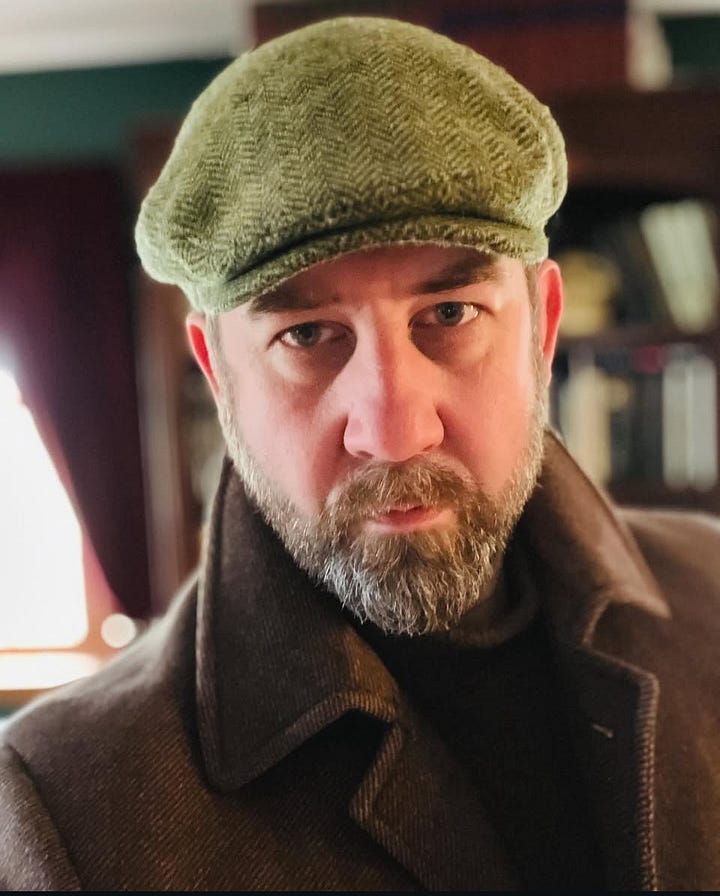
11. As an Edgar Award-winning travel writer who runs the Odd Things I’ve Seen blog, you’ve put a lot of miles on your boots. How many of the 30 spots in Don’t Go There have you personally set foot in, and did you experience any unexplainable “bad vibes” firsthand?
About a third of them. And while I didn’t find anything inexplicable in any of my visits, I certainly caught the bad vibes. I mentioned the Salton Sea already (it also tried to swallow me whole at one point), but I also panicked on Thrice-Cursed Island in Connecticut--although that was probably more the ticking clock that was the disappearing tombolo connecting it to the mainland than its triple curses. I remember the first time I went to Centralia, Pennsylvania. I experienced vertigo thinking that every step would open a sinkhole beneath me. That said, I had a lot of good times with those bad vibes.
12. Were there any sinister locations that you researched for this collection but ultimately had to leave out because they were just too dark or didn’t fit the vibe of the book?
Yes, for sure. They were always places of evil at scale—war and genocide, that kind of stuff. Though fascinating, they didn’t fit the feel of the book.
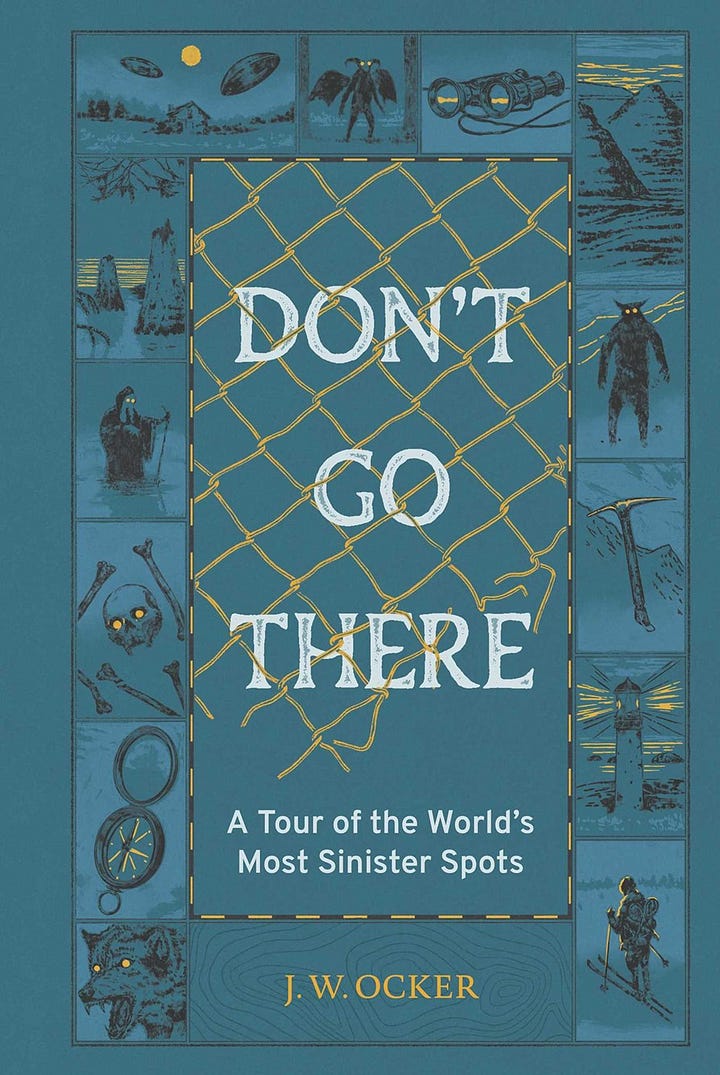
13. The visual design of the book, with its moody blue palette and monochromatic illustrations, adds a beautiful, eerie atmosphere to the reading experience. How closely did you work with the design team to make sure the aesthetics matched the tone of your writing?
Other than ensuring that the content of the illustrations was accurate, I didn’t have to do anything other than email them stuff like, “That looks amazing!”, “This is great!”, “Perfect!”
14. If a reader finishes Don’t Go There and ignores all your warnings to go find a spooky adventure anyway, what is the one golden rule of dark tourism you hope they remember?
Tell people where you’re going. Or maybe bring a granola bar with you. One of the two.
15. For fun, if you had to relocate to one of these locations, which one would you choose? And why?
Gaiola Island in Italy. Sure, it’s cursed, but it’s a mansion on a Mediterranean rock within swimming distance of the beautiful Naples coast. I’d risk it.
Thanks so much, J.W. Ocker, for taking the time to answer all my questions. You didn’t skip one, and I love that! Talking about the places you’re not really supposed to go with someone who clearly loves them is especially fun.
Don’t Go There: A Tour of the World’s Most Sinister Spots is available now from Quirk Books. Whether you treat it as a warning, an invitation, or just a really good excuse to stay home with the lights on, it’s well worth the trip.
Special shoutout to Mark Sanderlin for narrating the audiobook version; I found it relaxing and really made Ocker’s writing personality shine!
Order your copy of Don’t Go There from our indie bookshop!
Follow on Instagram, TikTok, and Substack.
Author Website: oddthingsiveseen.com
About the Interviewer
Mandy is currently reading:
Heart of Glass by Jennifer Hillier
Please heart this page to help others find me!
Comments
Nothing yet. Say the first thing.
Sign in to join the conversation.