
If you’re new here, Welcome! 🌷
These musings are meant to be reflections that are unfiltered, non-refined, and as much as possible, non-reviewed. The goal is to write authentically, and not to think too much about ‘audience’, but about ‘ideas’. You’ll read some weirdly structured sentences, but English as a second language, and a refusal to “refine” thoughts to the extent they don’t become genuine, are not things I am interested in..
This is a boring one to my heavily American-skewed audience, but bear with me please. 🙃
I’ve always thought of football as a reflection of our politics, and as one of the last equalizers in this life once the starting whistle blows. Reading ’s recent essays on the crossover between politics and football, and coinciding with me reading Eduardo Galeano’s “Football in Sun and Shadow”, I felt a need to evangelize(!) a little bit to more people about how much I love football
Note: I’m finishing this while there’s a football game on TV between Fiorentina and Roma in Italy.
So many societies and groups use sport as a tool to push and advocate, and the fall of South African apartheid regime was largely due to the isolation that was created by banning the regime from participating in the global areas of sport. I hope we see this ban repeated for Israel and its genocidal state.
We can also talk about how football offers a glimpse of reprise for nations who face massively oppressive regimes. Maradona gives us the glimpses of these moments, with his Che Guevara tattoo, and his meetings with Fidel Castro, and his anti-imperialist opinions, all of which are heavily documented1. Maradona also was singlehandedly the man who provided happiness to millions of people in difficult times in Argentina.
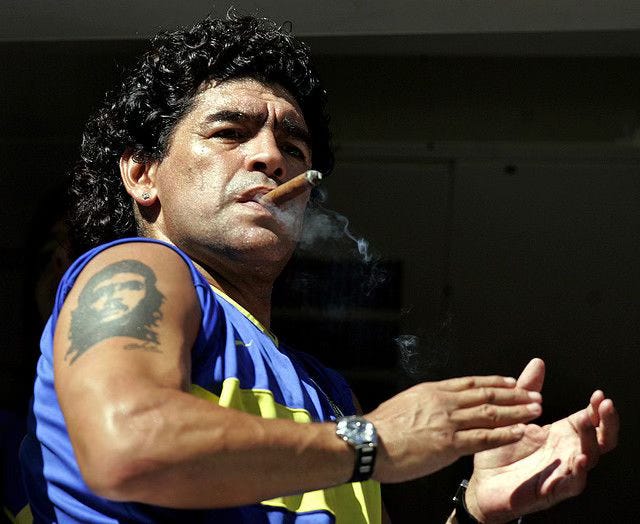
But football crosses all these borders where the people do not meet, and forces us to meet around a green rectangle. Those of us who studied in the Oxfords and Harvards, and those of us who didn’t finish middle schools.
If you look at Brazil for example, you’ll see in its history a ‘teenage watermelon seller’ who became the World Cup winner, and some kid who used to ‘paint the pavement’ become someone who is watched by hundreds of millions every week. This equalizing effect is what Galeano refers to in his book.
On the other hand, Pelé - possibly football’s first global star, and possibly all of sports - talked in his documentary about being used as a propaganda tool, and how the pressure he was under to keep him playing and ‘keep people happy’, has led him to receive lots of criticism. Pelé was also one of the first global black stars or celebrities we’ve ever known.

“In the global social pyramid, blacks are at the bottom and whites are at the top. In Brazil, where this is called “racial democracy,” soccer is one of very few democratic venues where people of color can compete on an equal footing—up to a point. Even in soccer some are more equal than others. They all have the same rights, but the player who grew up hungry and the athlete who never missed a meal do not really compete on a level playing field. At least soccer offers a shot at social mobility for a poor child, usually black or mulatto, who had no other toy but a ball. The ball is the only fairy godmother he can believe in. Maybe she will feed him, maybe she will make him a hero, maybe even a god.
Misery trains him for soccer or for crime. From the moment of birth, that child is forced to turn his disadvantage into a weapon, and before long he learns to dribble around the rules of order that deny him a place. He learns the tricks of every trade and he becomes an expert in the art of pretending, surprising, breaking through where least expected, and throwing off an enemy with a hip feint or some other tune from the rascal’s songbook.” - From Mutilation to Splendor, Eduardo Galeano.
Football, with is hundreds of millions of spectators on a weekly basis gives us the equivalent of the modern colosseum2.
It is such an immensely important unimportant thing, and to borrow from a Pope, John Paul II:
“Of all the unimportant things, football is the most important.”
Maradona, after visiting the Vatican while he was playing in Italy and meeting the Pope said:
“I’ve been to the Vatican and seen the gold ceilings. And then I hear the Pope saying that the Church was concerned about poor kids. So? Sell the ceilings, mate!” - El pibé de oro, Diego.
sidetracking for a few seconds:

At the victory carnival in 1970, General Médici, dictator of Brazil, handed out cash to the players, posed for photographers with the trophy in his arms, and even headed a ball for the cameras. The march composed for the team, “Forward Brazil,” became the government’s anthem, while the image of Pelé soaring above the field was used in TV ads proclaiming “No one can stop Brazil.” When Argentina won the World Cup in 1978, General Videla used the image of Kempes, unstoppable as a hurricane, for exactly the same purpose. Soccer is the fatherland, soccer is power: “I am the fatherland,” these military dictators were saying. Meanwhile, Chile’s bigwig General Pinochet named himself president of Colo-Colo, the most popular club in the country, and General García Meza, who had taken over Bolivia, named himself president of Wilstermann, a club with a multitude of fervent fans.
Soccer is the people, soccer is power: “I am the people,” these military dictators were saying.
Football started a war, a real war between two countries.
Football has also ended a civil war.
For that, football also remains one of the strongest ways in reflecting our societies. And our love for this game. To Galeano, football is the world:
The ball turns, the world turns. People suspect the sun is a burning ball that works all day and spends the night bouncing around the heavens while the moon does its shift, though science is somewhat doubtful. There is absolutely no question, however, that the world turns around a spinning ball: the final of the ’94 World Cup was watched by more than two billion people, the largest crowd ever of the many that have assembled in this planet’s history. It is the passion most widely shared: many admirers of the ball play with her on fields and pastures, and many more have box seats in front of the TV and bite their nails as twenty-two men in shorts chase a ball and kick her to prove their love.
Because football reflects, and has always reflected the societies we live in, we also see things such as:
where people use the green rectangle to bring to further light the injustices that people face around the world. From St. Pauli in Germany, to Egypt fan uprisings, and the role of fans in demanding social justice; all are well-documented histories of peoples.
And because apartheid regimes cannot face their societies when they’re not able to join the people of the world, you see Eric Cantona leading the voices of footballers and fans around the world in calling for isolating the modern apartheid genocidal regime from the world of football.
“We have power, you have power, and football fans around the world have power” - Eric Cannot
And you know football is important when FIFA is threatened by agent orange, and it rises to this level. Football being part of the global culture is too critical for the genocide regime to be further isolated. Cultural boycott is one of the biggest forms of ending oppression, and this is manifesting in more than 1000 artists who blocked their music from being played on streaming platforms in genocide lands.
People for a very long time questioned the effectiveness of BDS movements, and now the effect is so visible that oppressive regimes are criminalizing people practicing culture, be it a BDS culture, or a culture of isolating wrongdoers, be it in societies, states, or people. Because our culture is more important than what states decide is important, football is an essential part of our global culture.

Albert Camus, who was a football fan, playing as a goalkeeper in Algeria, said: “Everything I know about morals, I owe to football.”
He also said:
“I learned that the ball never comes where you expect it to. That helped me a lot in life, especially in large cities where people don’t tend to be what they claim.”
In his book, Galeano’s prose paints and illustrates how magical this sport is, and how its history is intertwined with the histories of the societies and the people it glorified, immortalized, and disgraced as well…
- I was trying to form a concluding thought here, but I failed.. Not the first time, and I don’t think it’ll be the last time either.. -
Until the next one friend, remember: Free Palestine, always. 🇵🇸

📷: Sometimes the iPhone produces photos that are remarkable with little control. This is one of these.

📚:
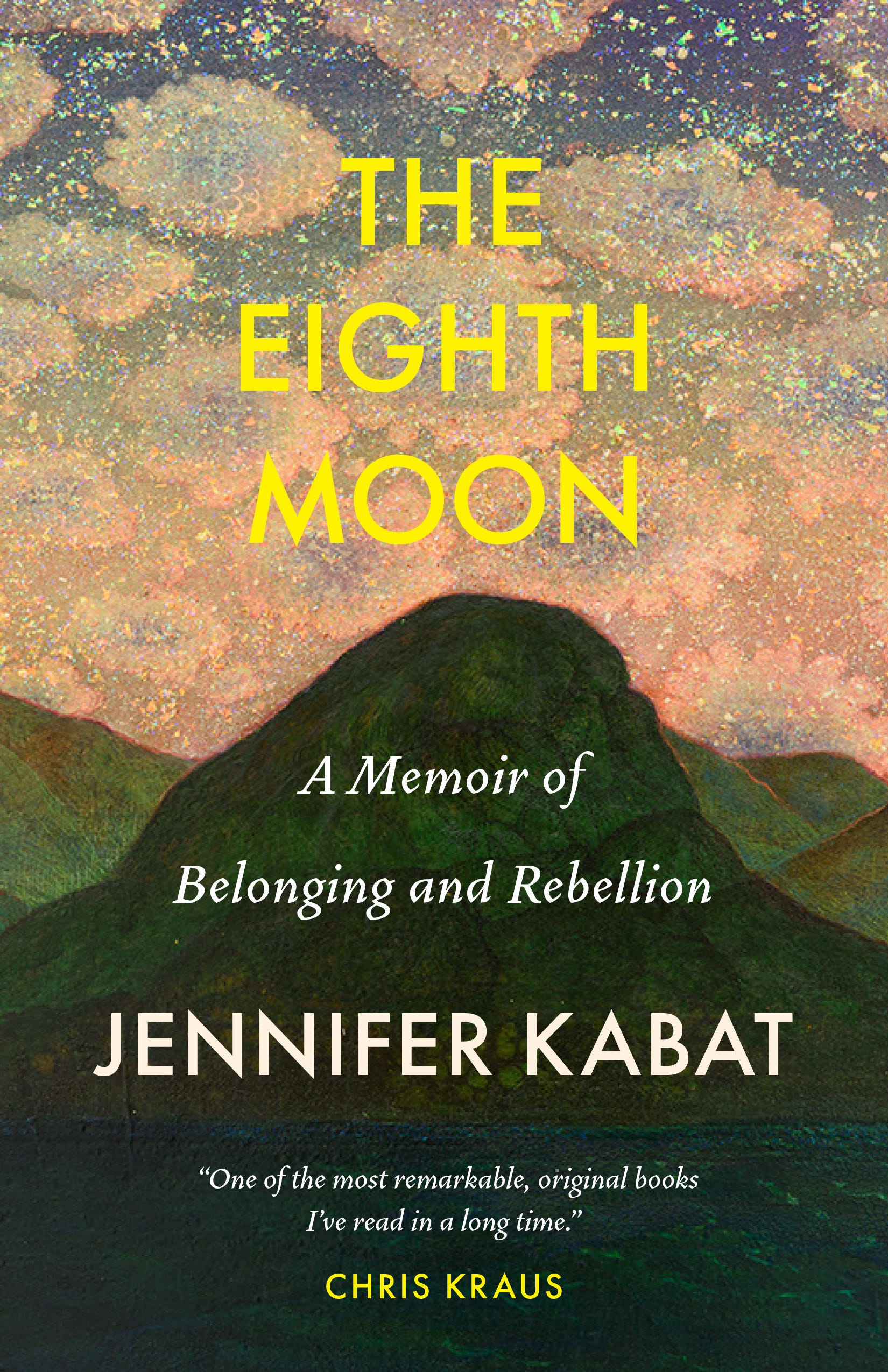
- I believe I started this tradition too late, but last year I was in the Catskills of New York, and I wanted to grab a book about the place I’m visiting, be it in fiction or non-fiction, and I was recommended ’s “The Eighth Moon”, and I realized I should’ve started this tradition 10 years ago, and I would’ve had books from Fiji, Zambia, Liberia, and Korea.. Here’s to hoping the travels keep going..
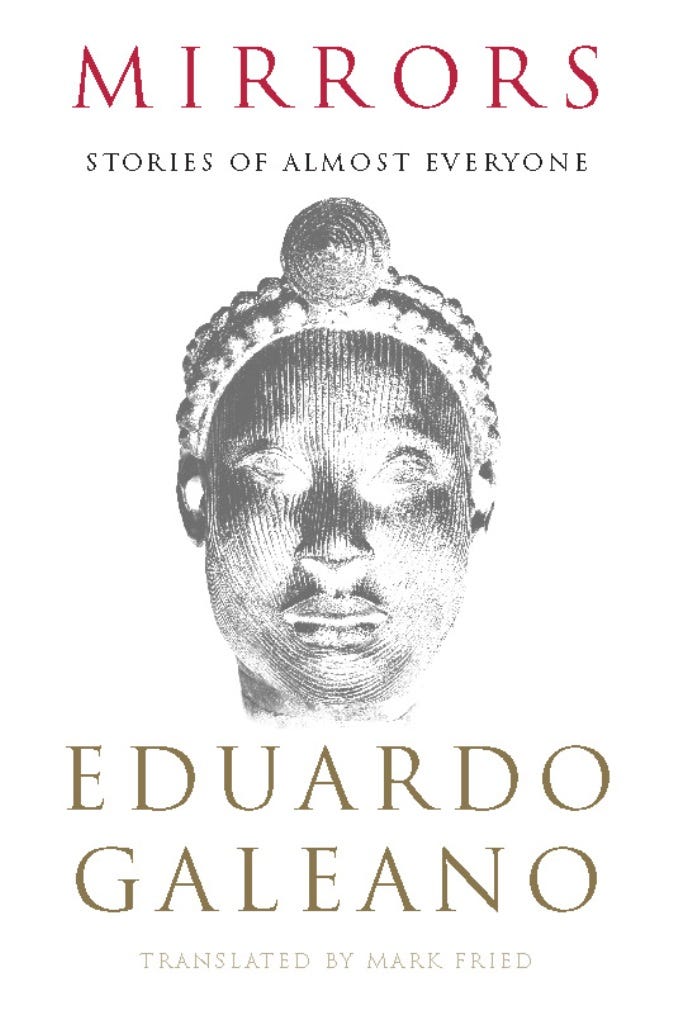
- Keeping with Galeano, I also purchased his other famous book: Mirrors, which is described as a “mosaic of humanity’s forgotten history” in short form essays.
📰 :
I read this article a long time ago, but I find it really interesting:
Why Are Immigrants From Tropical Countries Coming to This Arctic Outpost?
This article draws the comparison between both.
Comments
Nothing yet. Say the first thing.
Sign in to join the conversation.