

I was discussing with my friend Isaac the concept of “rest”, which we have been investigating together for a while now, and I remembered part of the prophetic tradition when he said: “Your body has a right over you, and your soul has a right over you..”1
And it is not this specific aspect that I seek to magnify here, the fact that we see ourselves outside of ourselves, but the notion of Trusteeship. In other variations of that saying, there are: “your spouse has a right over you” and “your friend has a right over you” or even “your eyes have a right over you”.

This has been a culmination of multiple areas of intersect in the last week, where being entrusted has shown up to me in various forms and formats:
Listening to Abdul-Malik Merchant’s essay on being entrusted of the money we receive, and “when provision passes through our hands, and the heart is asked to remember its place.”
Also listening to Antonia Malchik, on being guardians of the earth, and each other.
Reading Nicholas Carr’s talk about “AI at all costs”, and how there is a notion of “Maximization is necessary”..
Discussing with my friend Salman about our mutual work struggles, and how we behave from a different mental point of view and paradigm about work and success.
So, I’ve been thinking again of Taha Abderrahmane, the philosopher. I read many of his books, and many of his essays, and I keep returning to him for knowledge and wisdom.2
Although I need to be reminded myself, I tend to think of all the aspects where looking through the glasses of trusteeship, and being a ‘guardian/custodian’ of All, rather than owner of All.
When I first remembered the phrase “your soul has a right over you”, I felt I needed to expand on that, so I spent a good time thinking of how my relationship and our relationship with things and beings would change if we developed that moral responsibility paradigm. Mental health, physical health, relationship health, and financial also professional health would all change under this paradigm. If I examined my relationship with my friends not only from a ‘personal’ perspective looking outwards, rather than a trust perspective, this will change my behavior towards them from a utilitarian motive into adapting a collective selflessness. If I see my friendships not through “what can I get?” rather “how can I nurture this trust?”, one can only imagine how easier things would look.
Into my conversation with my friend Salman, we were thinking of being “vessels for good”, which reminded me of what I was listening to in “it’s not my money”, and how shifting our perspective from ownership to responsibility changes the way we look at things, both personally and professionally. In the American work culture, you’re encouraged to “claim wins” and “celebrate achievement” and this is in contrary to “I’m the means in which this good thing is happening right now” shifts our understanding from ownership and domination into preservation.
Looked at life through this prism of trusteeship, the moral implications embedded with in it, and its emphasis on the notion that trusteeship is not ownership, one can expand this from the simplistic and essential “not wasting food”, to the expansive and encompassing transience of all life. The contentedness one develops from developing the moral standard that responds to the level of “trust” that he is being shown with all that he is given, it helps us translate and maybe transform how we see our daily walks, our mental health breaks, and even the text we send to a friend to check on them.
I think I would love to live a life where I think of things are beings around me from that prism, where I feel a sense of obligation towards preserving that trust, by preserving that which I am given.
I think of this, and I think if the people in power thought of the power they have as a responsibility they’re entrusted with, rather than in control of. If we expand this even further to one’s position in their community, what would the position be if our starting points become: “What am I entrusted with, being in this community? and how can I preserve this trust?”.
Until the next one..
Sometimes, I wish there are more resources on this in English as it is in Arabic for me to share, but this is the closest I could find.
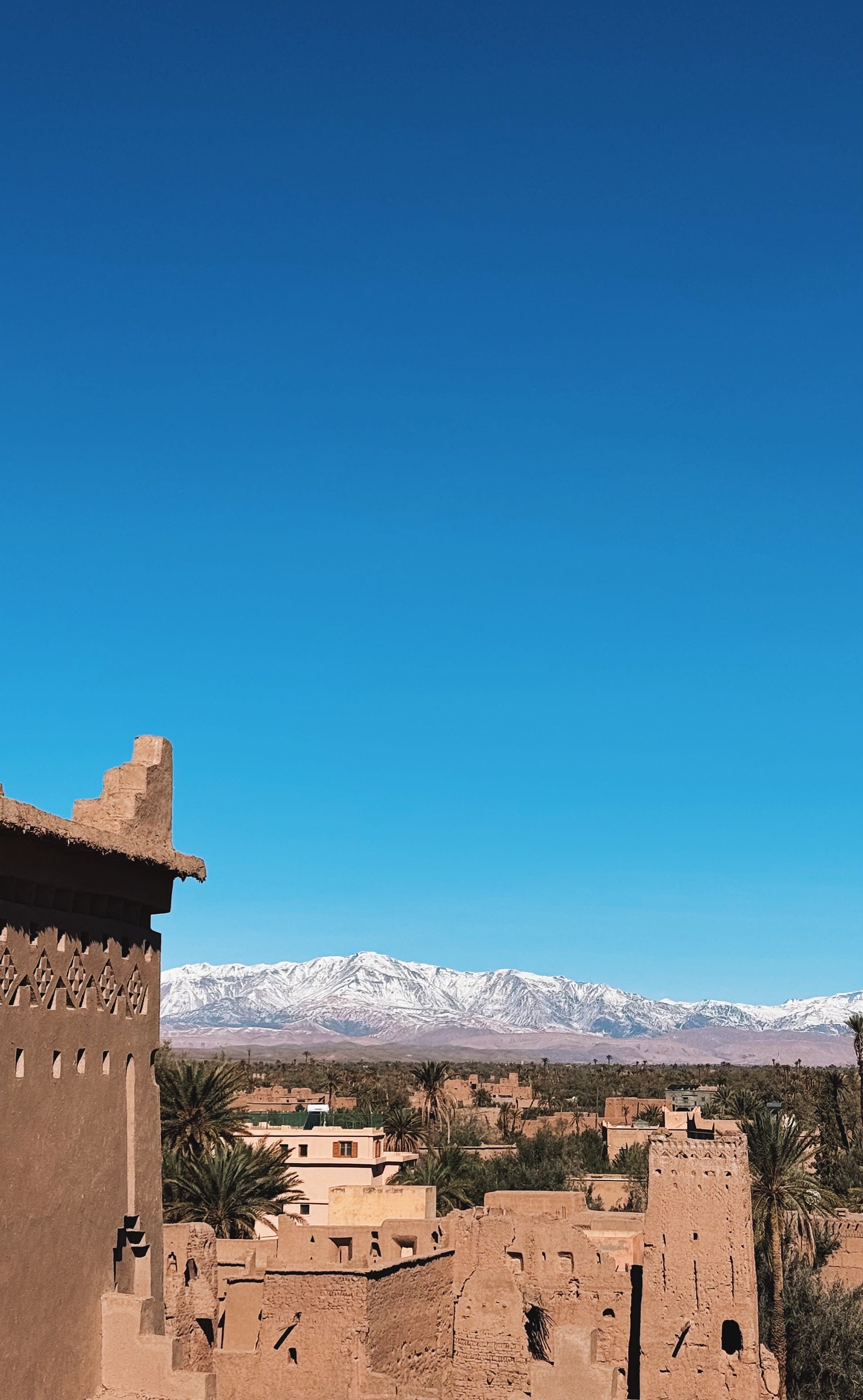
📷: I was in Morocco for two weeks in January, and the place surprised me beyond what I was expecting. Maybe more will be coming on that trip alone..
📚: I’m also reading for a Moroccan novelist called Abdelkarim Jouaiti, who has been shortlisted numerous times to the Arabic Booker prize, and specifically from his “Who completes the General’s face?”, which is a novel about a disgraced Russian general who gets sent by the French to fight in Morocco, and can’t seem to find someone to complete a painting he commissioned for him while he was in Russia. A historical novel that engages with the history of war, humanity, and definitely has the shades of Dostoevsky in it.
This is part of a larger saying, or “Hadith” where the prophet ﷺ saw someone engaged in constant worship, and he asked him:
“Do you not like what I practice? - Verily, I sleep and I pray, I fast and I break my fast, Have piety, O Uthman, for your family has rights over you and your guest has rights over you. Verily, your own self has rights over you, so fast and break your fast, pray and sleep.”
This incident/saying is actually usually categorized in the “moderation” sections of islamic books, which is interesting in itself.
For more on his theory of trusteeship: https://traversingtradition.com/2023/01/24/abderrahmane-taha-a-sublime-life-of-tajdid/#:~:text=Taha’s%20project%20centers%20on%20trusteeship
No posts
Comments
Nothing yet. Say the first thing.
Sign in to join the conversation.