

Jonas Piet is a founding partner of InWithForward, and currently works as a Design Pioneer at ING Group Strategy & Innovation.
Q: This week we are exploring ‘D’ is for Delight, and the ways in which a designerly perspective can bring about delight. I feel like my first introduction to the world of design & delight was through you so I’m excited for our conversation. But, to start with, let's do some introductions. Imagine an alien lands in Palermo and bumps into you. How would you introduce yourself to this creature?
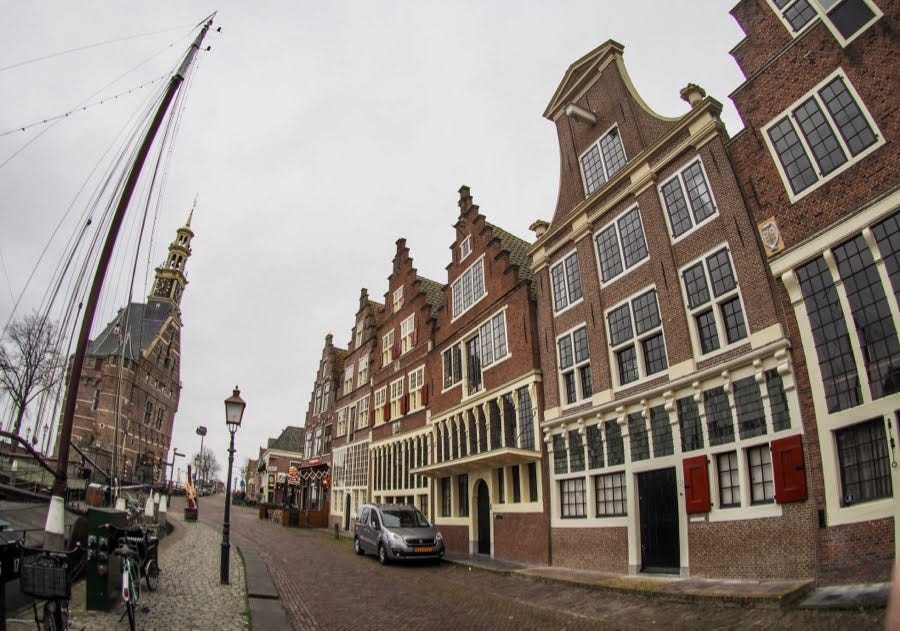
Jonas: I’d go back to where I was born and where my life started. That’s a small city called Hoorn, in a small country, the Netherlands. I would talk about my upbringing. I grew up with two parents who were both teachers -- and really teachers by heart. They always loved what they did. I think that’s where I got this idea of passion, of finding something that you really like doing, and then doing it with pleasure. I would also introduce myself as a designer. And then I'd have to explain what a designer is and does, which I think is all about coming up with ways to address real-world problems in ways that make people’s lives a bit better. Finally, I'd talk a bit about the different places and people that left a big mark on my life. You [Sarah] would certainly be one of them. And that would be enough for an introduction. I’d want to ask the alien the same question and hear from them.
Q: How did you first discover design and how did that identity become so important to you?
Jonas: I think design was an activity I did as a child without knowing to call it that. I had boxes full of Lego that I always, always played with until I got to university and no longer had the time. I also had an uncle who was a carpenter and spoke a lot about Scandinavian design and what made well designed objects and pieces. I think that’s probably where I first heard about design. I always loved creating things, whether drawing, arts or crafts, or building things. But I also enjoyed math. It was all about problem-solving. It was also the subject I was best in. That all came together when I went to university to study industrial design engineering. The philosophy of the design faculty was that it was all about making products for people, and it combined four subject groups: (1) the human perspective, including ergonomics and human behaviour (2) the cultural perspective, including aesthetics and design history; (3) the technical part of engineering and building something; and (4) the business and economic side of it all.
It was during university where I got more and more interested in the earlier phases of design. I found it way more interesting to figure out what you're going to design, who for and why, than starting with a brief that's already fixed and that you just have to execute. The next big influence was moving to London and being introduced to social design and service design, which I had not recognized I had been doing to some extent. Many of my projects weren’t really product focused. In London, a lot of things fell into place and shaped how I approached design, and further amplified how I was seeing the world.
Q: What for you is the relationship between design and delight?
Jonas: Well, maybe I am egotistical, but I want to delight myself with the solutions I am finding. I would hate to produce and produce and produce solutions to problems that do not give pleasure or delight to anyone.
What motivates me is finding elegant solutions that make sense in multiple ways, and that have something a little bit special; that personal touch. I also think that's important for people who use the solutions. There is so much stuff in the world, so why not add something a little special, you know?
Of course it is more fun for yourself to be working on something that has some delight. In the context of InWithForward, I think there was a lot more space, freedom, and perhaps the urge to add delight. But, even in my current work at a bank, I will try to stick jokes into the PowerPoint slides that go up to senior management. Even if nobody sees it, I am still a little delighted. And sometimes people do see it, and I love that.
Q: I like what you said about design as an unexpected interaction: something personal or intimate. When we first started working together in London, on a project about young people, I watched as you brought this sensibility for delight into the work. One of the first things we prototyped was a different way to do training. We rented a theatre. We hung all of these triangular pyramids with short stories from the ceiling, and created a giant carpet for adults and youth to move on. They took off their shoes. We played music. It sparked quite a lot of laughter. We could have done that interaction in far more functional ways, using PowerPoint slides, but we intentionally chose a more fun way.
Jonas: Yes! I remember every single bit of that interaction. I remember what we designed, how we designed it, and operationalizing the concept. We put this giant paper carpet on the floor, like a game board, to literally walk people through the different interactions that made-up the new service. The night before I remember we were staying in this hotel with a lot of noise and putting together these paper pyramids to hang from the ceiling. It was a lot of work, but it was joyful.
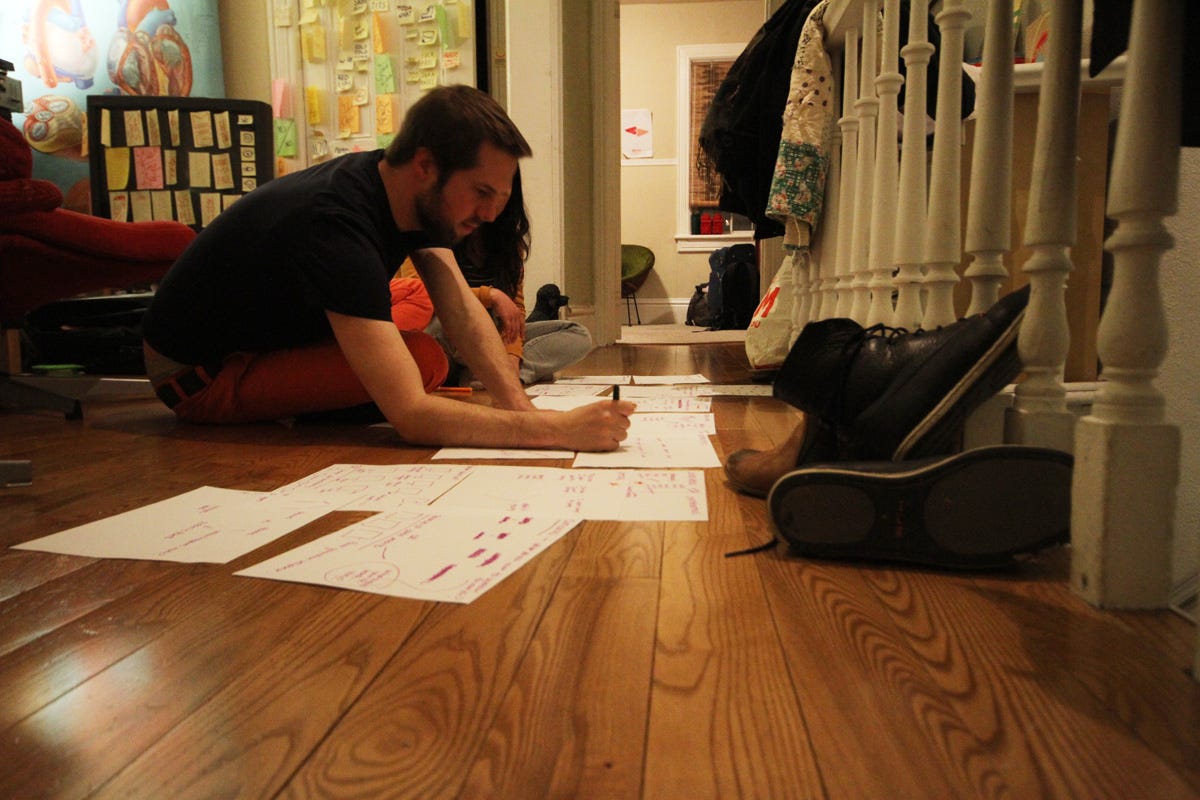
Oh yes, and remember us bringing the printer with us in a black cab from London, and trying to print along the way?
Jonas: Yes, when you look back at even that moment, it was delightful. It was unexpected. And we tried to do that every step of the way. Even with how we articulated the ideas. We tried to write all of the material from a young person’s perspective; to tell an interesting story, not just share information.
Q: How do you foster delight through design?
Jonas: First, I think you need to actually enjoy what you are doing. It’s a bit of a vicious circle: if you enjoy it, then I think it comes naturally to bring delight in. If you don’t enjoy the work you are doing, if you see it as boring, difficult or pointless, then it is really hard to come up with something delightful, let alone functional. It’s also hard if delight isn’t appreciated at all. Many of the designers I work with currently don’t put a lot of effort into delight. But, a few people I work with do. They bring a lightness, a joy into their interactions that sets them apart. It can be as simple as bringing humour into the board room.
Q: Delight, etymologically speaking, has a lot in common with light, with brightening. But, delight isn’t a common word used in the corporate or social sector world. Why do you think that is? Is it not valued?
Jonas: I don't know if it's not valued. I think it's not recognized. It’s not part of the vocabulary. It’s not even on people’s radar screens. We default to thinking that everything should be fully functional; that we cannot put resources into anything beyond functionality or minimum viable product. When the focus is on scaling things as quickly as possible, or hitting target numbers, delight isn’t often on the table. But I actually think, if you want to enable a product or service to take off, to go big, a bit of delight can go a long way. Just thinking about the bank I work for now. Our visual identity, up until a few months ago, was really the opposite of delightful. It was boring. It was plain. Now, we have a new visual identity with some really nice colours, and we are encouraged to put them on top of each other in crazy contrasting combinations. It’s small: but now I feel some delight in working with the brand. It changes how I engage with it, how I create, what I want to do.
Q: Why do you think we prioritized delight so much at InWithForward?
Jonas: The work of InWithForward is very much about human connection. In your prototypes, you are always needing to establish that connection. Delight can contribute to that. Especially in a social services context, when people have so much going on in their lives and there is so much information coming at them, people aren’t expecting delight. A lot of interactions are the opposite of delightful. So if you want to make a connection, you need to do something different. You need to do something a bit more intimate, a bit more personal. I’d say the same is true in financial services where most interactions are quite transactional. Delight can help establish a different relationship, and create some openness for behaviour change in a way that might work better for people and the institution.
Thanks so much, Jonas. What a treat to walk down memory lane and talk about delight with you.

Comments
Nothing yet. Say the first thing.
Sign in to join the conversation.