
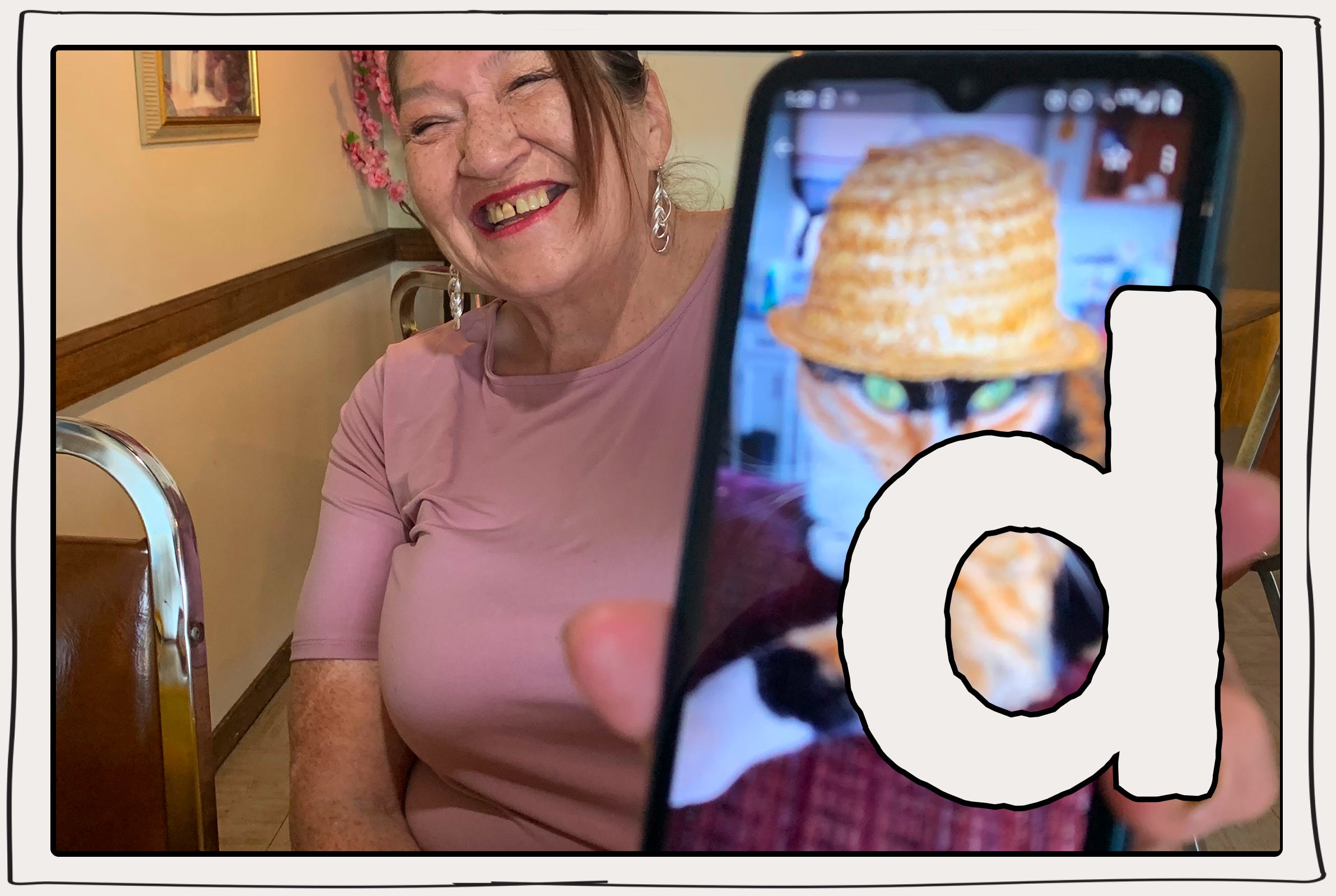
On a gloomy day
She knows my order and holds
The door well past close
Delight is a coffee delivered to my table without ordering. It’s an unexpected conversation about cats with hats at a greasy spoon. It’s unwrapping a leftover meal from first class long after economy cabin’s meal service has wrapped. Delight adds a pep in my step. It reaffirms a sense of human goodness. It shifts a terribly routine transaction into a moment of connection. Delight is an encounter that draws surprise: it momentarily contorts a norm or expectation, bringing a ray of warmth to an otherwise impersonal interaction.
“Fleeting encounters provide opportunities to be drawn out of ‘one’s secure routine to encounter the novel, the strange, the surprising’ or to explore different sides of ourselves (Bigby and Wiesel, 2019).”
Delight doesn’t often show up as a goal or success indicator in social policy and social service delivery. Customer or client satisfaction frequently makes an appearance. The two are not the same. Satisfaction is all about meeting base expectations. I am satisfied when Service Canada performs as it should; when it isn’t a bureaucratic hassle, but a straightforward enough experience. Delight positively twists expectations. Imagine if you were greeted by a barista, rather than a security guard at the entrance to Service Canada, who offered a complementary coffee and some friendly banter?

But, why ought social policy & services prioritize delight? Given ever present resource scarcity within the social sector, surely delight is a frivolous add on, at best, or incentivizes service use, at worst? Because many social services are costed under the assumption that there will not be full take up, or operate with budgets that cannot meet demand, there can be little appetite to make services more attractive.
And yet this depressive ‘race to the bottom’ thinking can prevent positive engagement, good will, and trust — the very ingredients required to meet people’s needs, minimize complaints, and pre-empt or de-escalate conflict. While our health and social care systems were designed in the wake of World War II with mass production logics, human beings are messier and more complex than widgets on a line.
Positive engagement is generally a precondition for movement. To tackle social challenges like unemployment, houselessness, addiction, chronic health, mental health, and child welfare, the humans living these issues must be partners in the change process. Heavy handed approaches — be it involuntary addiction treatment or child removal — are last resort options, and carry big costs. Data shows they burn trust, reduce future help-seeking, and perpetuate adversarial relationships between people and systems.
An orientation towards delight recognizes the crucial role emotions play in our day-to-day experiences. Feeling anxiety, anger, shame, and embarrassment shuts down space. Feeling surprise, joy, pleasure, and gratitude opens up space. Perhaps we pause instead of carry on with our usual routines. Perhaps we listen to an offer for support that we might have otherwise declined. Perhaps we absorb information that we usually would ignore. Perhaps our curiosity is piqued and we find ourselves ready to say ‘yes!’
One of my biggest frustrations with social policy is how little room it makes for people’s feelings & experiences — they can be summarily dismissed as ‘subjective data’ rather than as a critical indicator of engagement, buy-in, and collaboration. So when I first learned about design as an alternative approach to social problem-solving — one that centred feeling and experience — I was so intrigued. Design educator Nigel Cross describes designerly ways of knowing as:
• Designers tackle ‘ill-defined’ problems.
• Their mode of problem-solving is ‘solution-focused’.
• Their mode of thinking is ‘constructive’.
• They use ‘codes’ that translate abstract requirements into concrete objects.
• They use these codes to both ‘read’ and ‘write’ in ‘object languages’.
He goes on to cite an urban designer named P.H Levin,
“The designer knows (consciously or unconsciously) that some ingredient must be added to the information that he already has in order that he may arrive at a unique solution. This knowledge is in itself not enough in design problems, of course. He has to look for the extra ingredient, and he uses his powers of conjecture and original thought to do so …”
I’ve come to see delight as one of those special ingredients — a sensibility towards making solutions that don’t simply meet technical or functional requirements, but which look and feel unique, and creatively bring alive abstract ideas -- be it a sense of home, purpose, hope, imagination, etc.
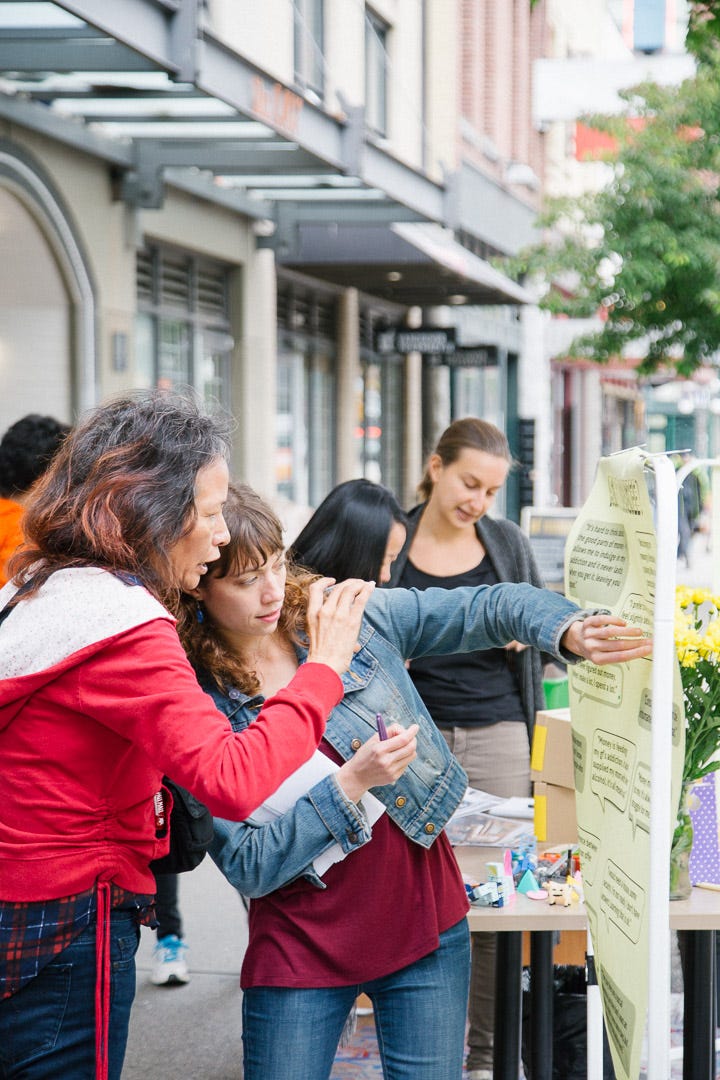
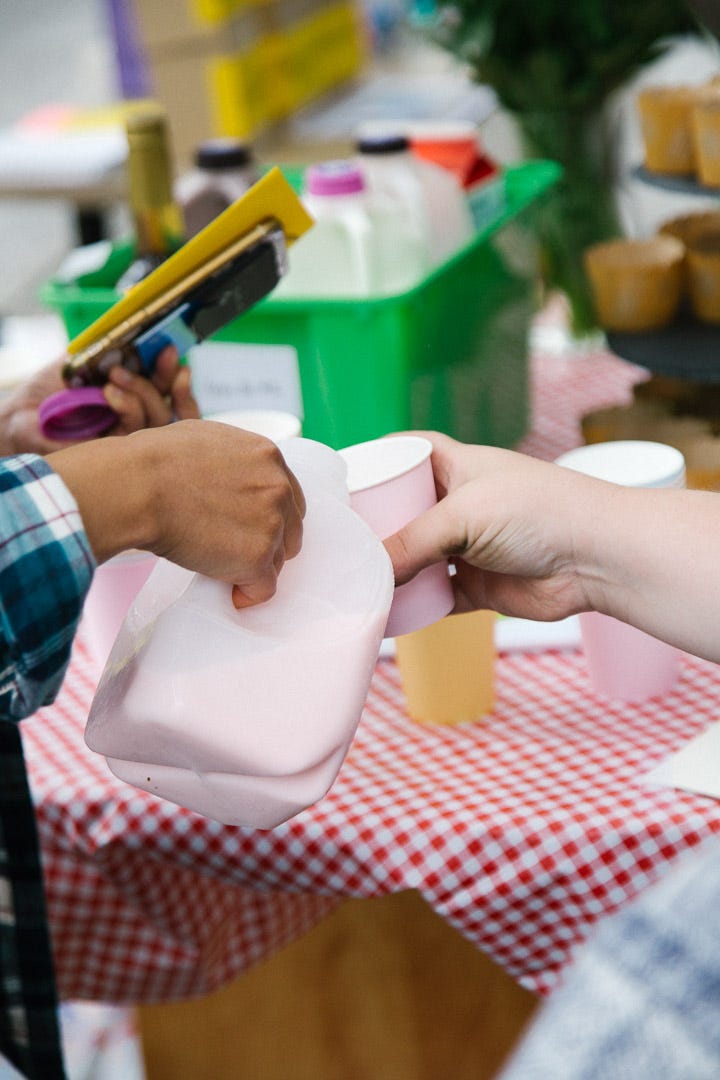
As pat of a project on Vancouver’s Downtown Eastside to explore long-term unemployment we hosted a series of pop-up activations, offering folks a glass of chocolate milk and Oreos. On a street full of bodies, belongings, and food lines, the activation stood out. We invited strangers to sit at kitchen tables and share the stories they heard about work from their parents and grandparents. We could have stood outside with clipboards and a survey, or passed out flyers announcing yet another research study, but that felt boring; just more of the same. A dash of delight cut through the noise of the everyday, sparking interest and desire. More than 50 people invited us into their lives to keep learning and collaborating.


In project after project, I have seen that the success of a new policy or service comes down to the quality of participation; to how people show-up and bring themselves into the process. And I am convinced that a little bit of delight goes an extraordinarily long way.
Of course, you can’t manufacture and mass produce delight — at least not at the level of human interactions. What makes a human interaction delightful is that sense of intimacy: it’s personal; it’s unexpected; it’s not business as usual. We’ve found that as soon you try and engineer delight, turning it into a one-size fits all feature (eg. all community members will get a standardized card on their birthday), you’ve lost some of the pizzazz. Instead, we’ve found it is about identifying points in a process to interweave delight, offering many starting points for delight, and fostering a team culture attuned to beauty and delight.
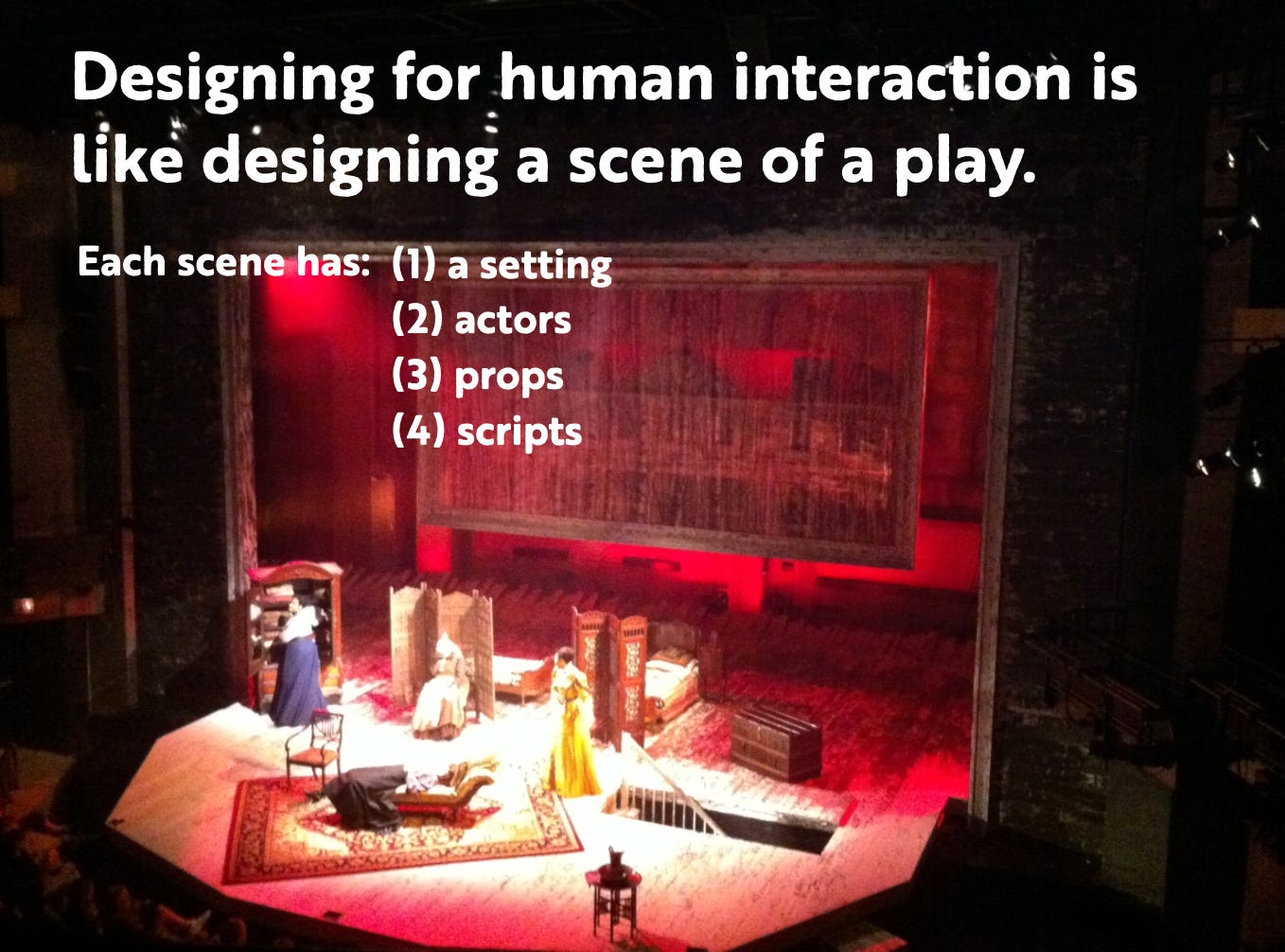
We like to say that every human interaction is made-up of four parts: what people do (their roles), where people are (the setting), the objects and materials on hand (the props), and the language & sequence of events (the script).
Delight can come from ….
Bringing in props that are out of place. For example, hauling living room furniture to a street corner.
Going big or small, playing with colour & texture, leaning into metaphor. For example, hanging oversize posters from the ceiling rather than using a staid PowerPoint presentation. Or turning a hotel ball room into a river with blue fabric and adding stones to prompt reflection.
Choosing food & drink that spark fond memories. For example, setting-up an open fire & s’more roasting pit at a busy transit station.

Using everyday language, rather than corporate speak. For example, we might make posters that say: ‘Are you pissed off? We are too. Cussing allowed.’
Flipping the usual order we do things. For example, offering layered chocolate cake at the start of a formal meeting to introduce a metaphor about layers of support. Or hosting a dance party in the snow with neon bracelets & hot chocolate as folks head out of a homeless shelter at 6am.
Prioritizing roles that are all about listening, and enabling the people who inhabit those roles to bring their own flair. For example, in our prototype Auricle, we’ve developed a role called the Local Listener, who spends time on transit collecting stories of wellbeing — not as a social worker with a job to intervene, but just as a neighbour who cares.
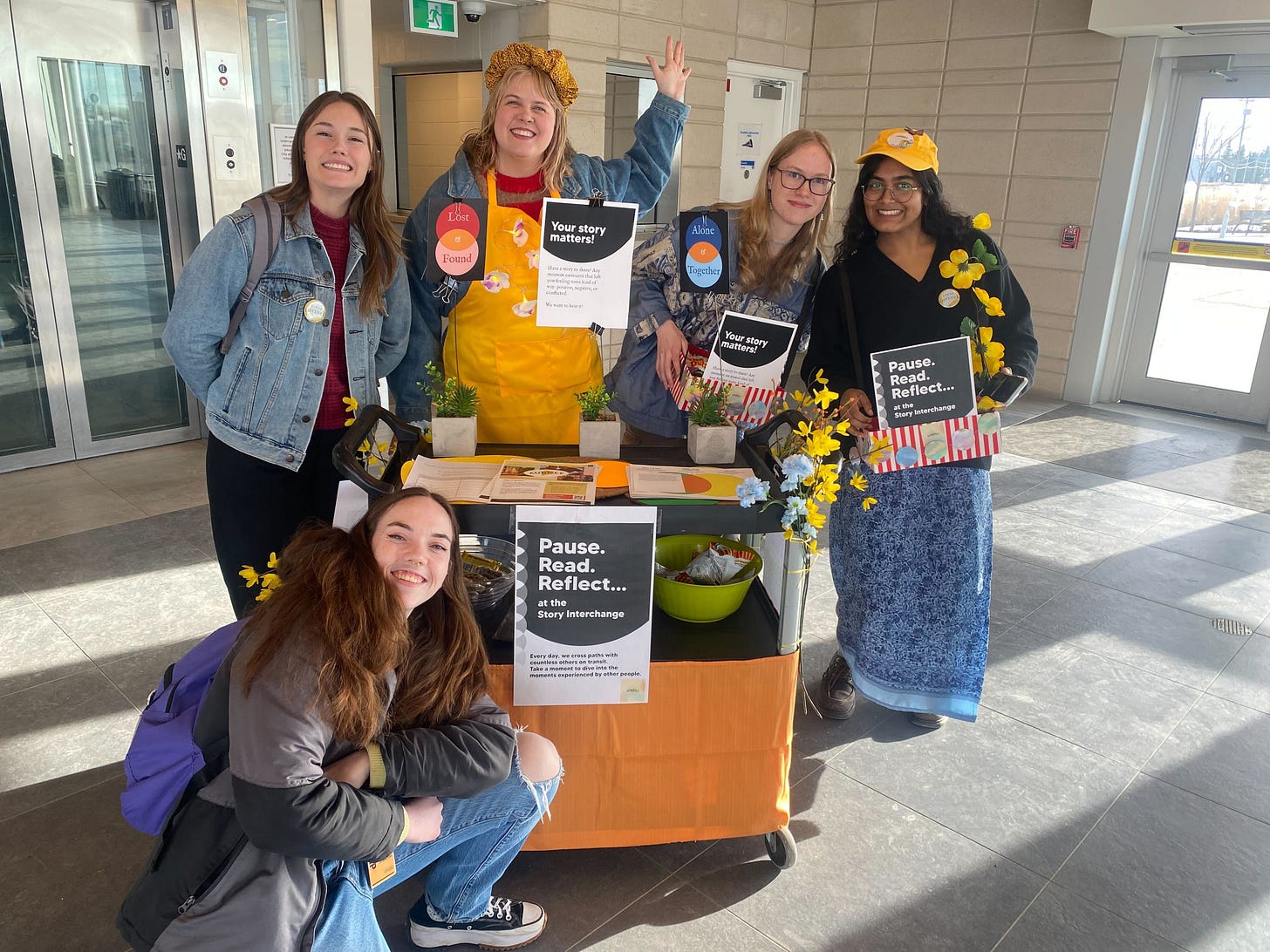
The fab Local Listener Team, 2025 Bringing in roles that add play, imagination, harmony, [enter desired feeling here]. For example, inviting a comedian to open a board meeting; bringing in a balloon artist to visualize data; asking a concert violinist to play in a drop-in centre for the houseless
Supporting a relational ethic of care, rather than a one-size fits all code of conduct can be critical for allowing special, out-of-the-ordinary moments.
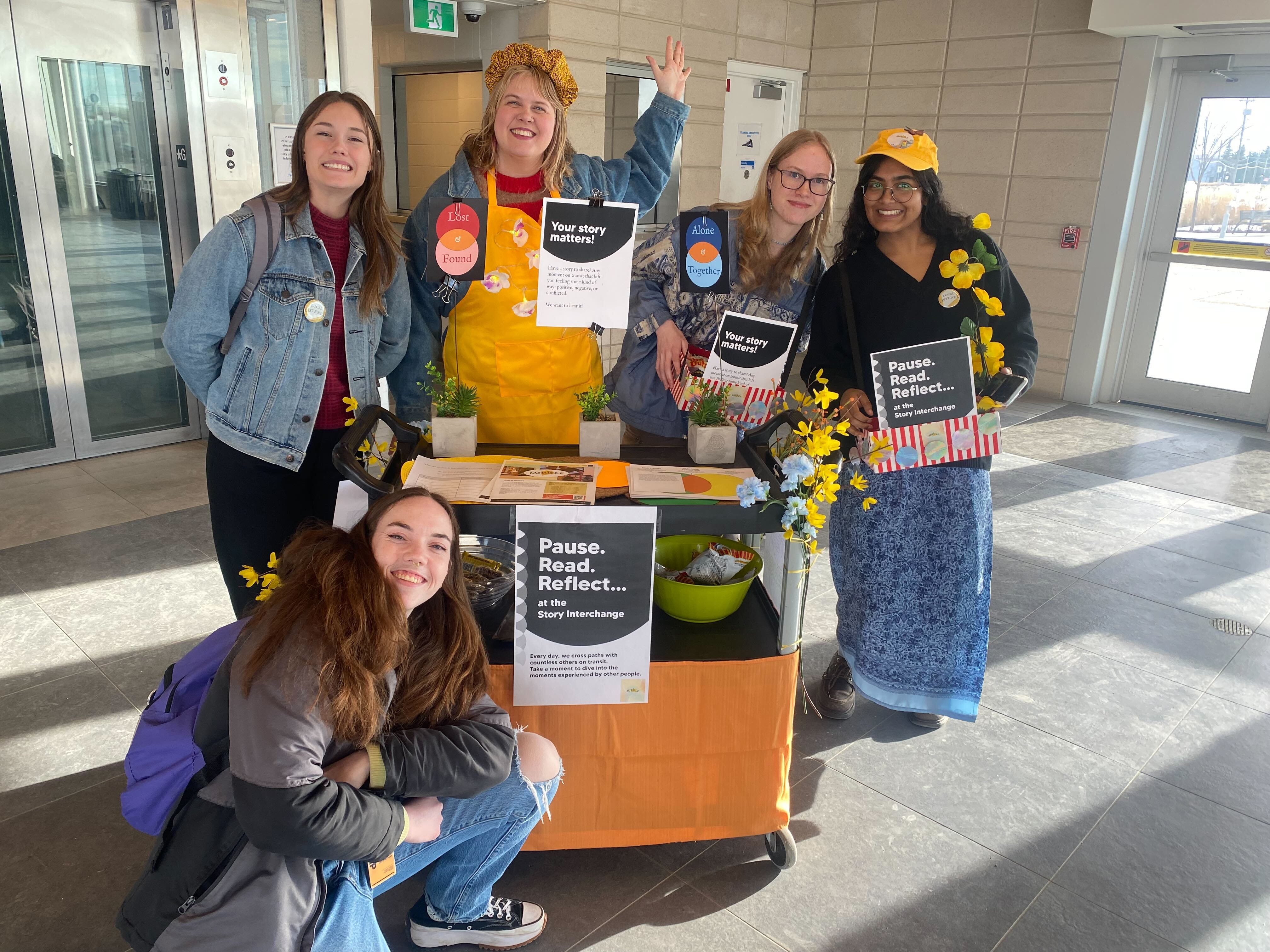
Sourcing informal spaces for conversations. Rather than hosting conversations in tired looking board rooms or office buildings, going to where people feel most comfortable — be it McDonald’s, on the bus, or outside in a park.
Changing the lighting of a space. For example, turning off all the overhead lights and engaging by candlelight.
Bringing different voices into a room, literally. For example, playing soundscapes and interviews with people can bring emotion to the surface.
In our practice, design and delight are intertwined. Delight is the door opener. Design, or at least good design, enables us to literally make our way through a problem and collectively rehearse an alternative future.
On our team communication channel, we celebrate what we call ‘The Big D’ — that marriage of Delight and Design. When you spot delight in the wild or experience delight through design and share it, you are greeted with a congratulatory note. Here’s some of what has been described as delightful this month:

What would go on your list of delights this month? Check out this week’s prompts, and join us for an open practice call Thursday, May 15th from 2:30-3:30pm PST on this zoom link.
Delight is pleasure from the unexpected, joyful, engaging, and hopeful moments with others, objects, and environments. As the Professor Omar Sosa-Tzec says in an interview, “When we experience high pleasure and arousal, that is delight. We connect with the present. Delight makes us feel that we are alive, and that our lives are good and make sense. Delight participates in the creation of memories. Those remarkable moments of high pleasure and arousal stay in our memories and heart, and become reflective instruments that help us make decisions — where we want to be, with whom with want to co-exist, how we want to intervene in the world we live in.”
Design isn’t on the radar of most social policymakers or service deliverers because the focus tends to be on what is most functional.
And yet, delight does serve an important function. It helps build trust, good will, and opens the door to meaningful engagement, which is necessary to reach many of the outcomes policies and services are after.
Rather than frame delight as an expensive add-on, we can re-introduce delight as a helpful (and fun!) tool to shift tired dynamics and open-up space for good feelings, out of which comes new desires, behaviours, and relationships.
You do not have to be a trained designer to bring a designerly lens to your work: identify the different interactions that make-up your role. For each interaction, you can identify roles, props, scripts, and settings where you could interweave delight. What could it look like to bring a dash of delight to your everyday?

Comments
Nothing yet. Say the first thing.
Sign in to join the conversation.