

Today, like most days, I am reminded just how far we live from utopia. Kids are starving. Autocrats are wreaking havoc. Policymakers are slashing public sector budgets. Conspiracy theories are dominating airwaves. Oh, and my fourteen-month-old has decided to stop sleeping through the night.
Utopia: An imagined space or state of things in which everything is perfect.
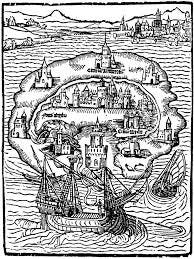
The English philosopher and judge Thomas Moore coined the concept in 1516, drawing on two Greek words, no and place, to underscore that our ideal social, political, and economic systems simply do not fit in the real world.
For much of InWithForward’s history, we positioned ourselves as helping to close the gap between what is ideal and what is real. We’ve long framed our partnership with Burnaby Association for Community Inclusion, Kinsight, and posAbilities as closing the gap between meaningful inclusion and the isolation so many individuals with cognitive disabilities experience. And yet, after a decade of work, the gap remains gaping. Rather than toil towards an out-of-reach utopia, lately, we’ve dabbled with a different strategy: build intentional heterotopias, real-world spaces, on the edge of the mainstream, where we can welcome otherness and embrace the non-conforming parts of ourselves. In other words, the focus is less on trying to fit people with disabilities into the mainstream as it is to create edge spaces where we can encounter each other as the misfits we all are, and in doing so, learn to be in more authentic relationship with one another.
The French historian and philosopher Michel Foucault first described heterotopia in a 1967 lecture. He argues:
“There are also, probably in every culture, in every civilization, real places — places that do exist and that are formed in the very founding of society — which are something like counter-sites, a kind of effectively enacted utopia in which the real sites, all the other real sites that can be found within the culture, are simultaneously represented, contested, and inverted.”
Think prisons, psychiatric hospitals, care homes, cemeteries, cruise ships: real spaces inhabited by individuals whose behaviour deviates from expected norms; places where ideas about morality, idleness, illness, contagion, and play are at once reflected and defied. For better and worse.
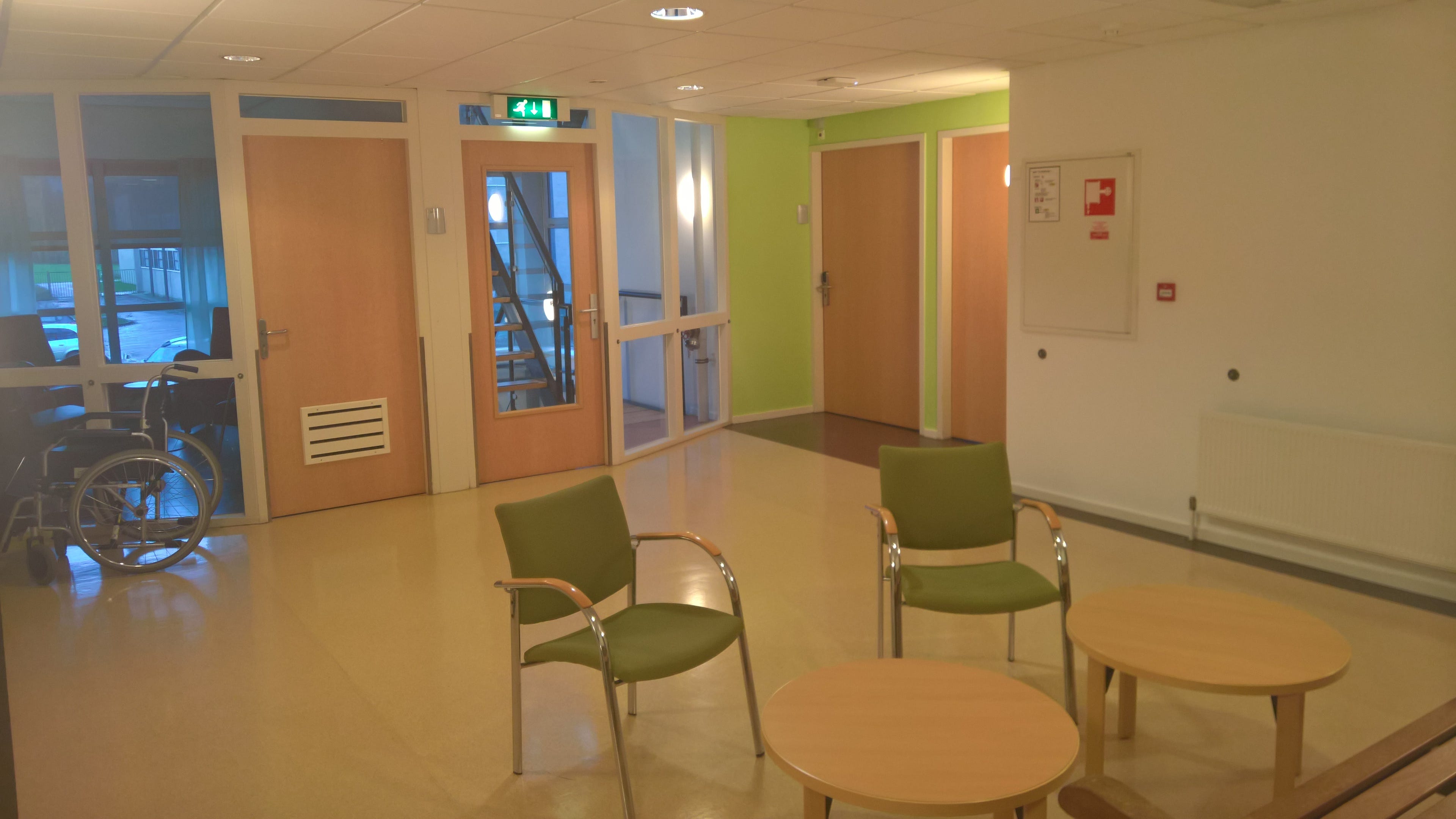
Prisons, psychiatric hospitals, care homes, cemeteries, and cruise ships are intense, often disturbing spaces. I can still smell the locked psychiatric ward I observed ten years ago. The antiseptic odour. The bare walls. The sticky plastic chairs. The sandwich cart with piles of ham sandwiches sloppily thrown to colourless patients. And yet, even within a space of marked exclusion there were micro-sites of inclusion — smoke breaks, card games, and the exchange of contraband snacks.
Contradiction is inherent to heterotopias — they are both connected to and incompatible with the places and spaces we spend most of our lives. And therein lies their transformative potential. They can help us to spot society’s inconsistencies; to juxtapose different realities; to play with our mutual strangeness.
Professor Herman Meininger uses the concept of heterotopia to re-imagine inclusion for people with intellectual disabilities. His paper — Inclusion as heterotopia: spaces of encounter between people with and without intellectual disabilities — sounds terribly academic. But, it’s a paper that has inspired so much of our practice over the last few years. He writes,
“Often, the concept of community is based on an imagined community or an idealized view of the good life…But the question is: do people labelled as having intellectual disability really meet, connect, and associate with other people? In what kinds of places does this happen?”
He goes on to suggest that
“The concept of heterotopia opens up a new space of encounter. This new space is a social space consisting in a continuing dialogue between the ‘normal’ and the ‘abnormal,’ the familiar and strange…
It is a space where people with disability can meet others in such a way that the prejudice and resistance invoked by the mutual strangeness can be faced up to. In such a space an interaction can occur in which the uniqueness and strangeness is recognized. Their dialogue is not subjugated to the yoke of general ideas like ‘ordinary everyday life’ ‘normal existence’ or ‘independent living.’
It is the space where life stories are told, where they can connect with one another and create a new moral space. As a consequence, a transformation in thinking, speaking, and acting can occur that invokes new meanings and a new way of acting in life and society by all those involved. Uniqueness, strangeness, and communality can then develop into a configuration in which one dimension does not overshadow the other.”
I’ve seen Meininger’s words in action: how different it feels to create a space where people with and without disabilities revel in their mutual uniqueness, strangeness, and communality versus bringing people with disabilities into mainstream spaces where ‘abnormal’ behaviours are prefaced, tolerated to a point, and then, managed. The former looks like an impromptu Disney sing-along for everyone at a park. The latter looks like life skills training at a mall.
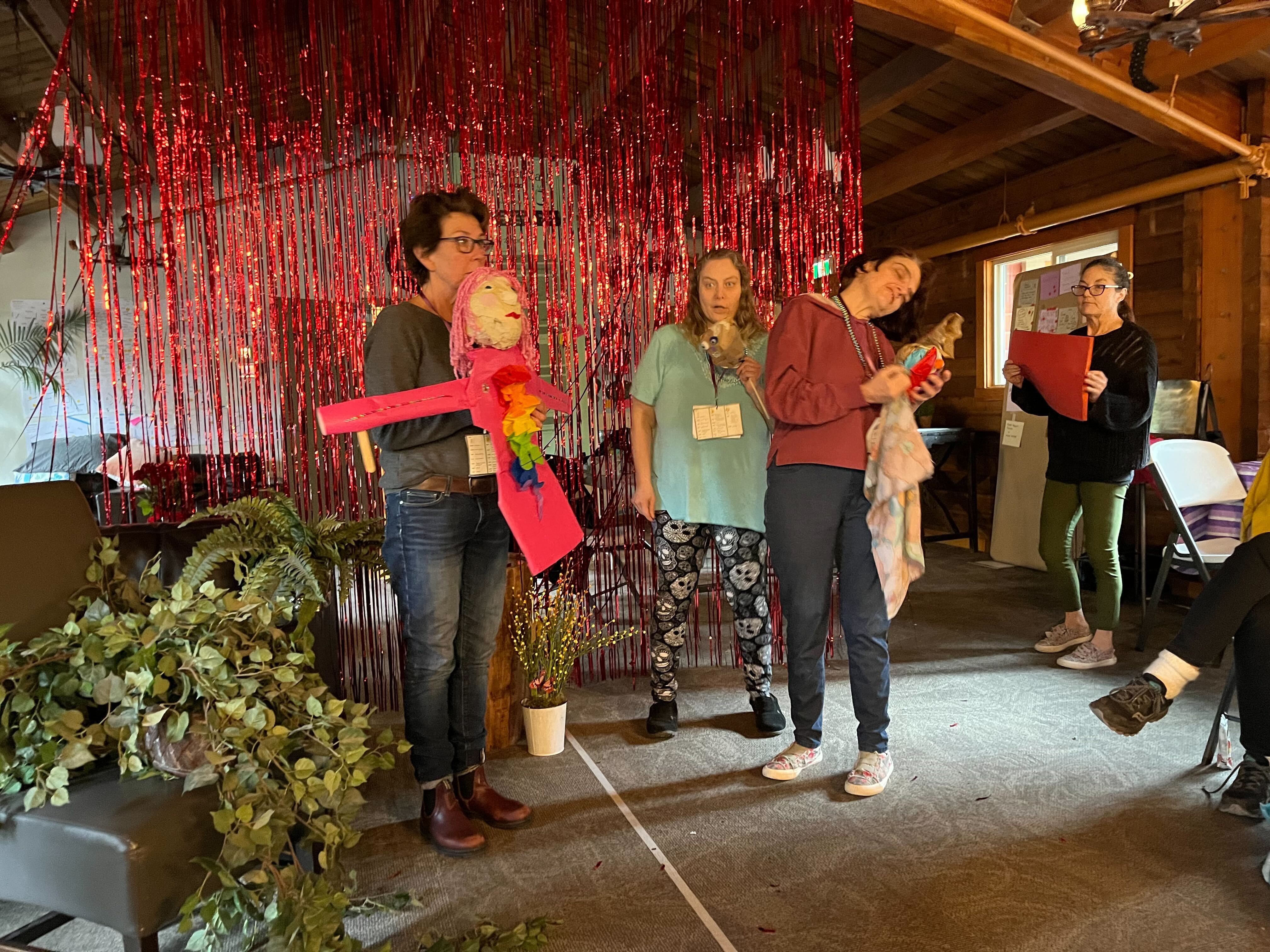
No matter how much we badge these mainstream spaces as ‘inclusive,’ they are still operating within the rules and conventions of the everyday. Rarely do these everyday spaces invite all of us - those with and without disabilities - to dance with the normal and abnormal parts of ourselves.
But, the more we can get comfortable with the normal and abnormal, the familiar and the strange, the more we might inch mainstream society towards an inherently messy and imperfect version of inclusion. That is a version of inclusion that permits us to wrestle with, rather than fear, sanitize or exclude difference.
You might ask yourself: What are the normal and abnormal parts of yourself? What differences do you feel comfortable versus uncomfortable with?
The still idealistic, utopian part of myself has to hope that the more we humans gain the capacity to engage with instead of eschew otherness, the more we dampen the momentum of autocrats, pariah states, and conspiracy theorists. We just have to hope.
Edge or Other spaces - real worlds within real worlds — where everyday norms are contorted. They can be intense, contradictory, and transformative.
We are far from the ideal state. Too many people are excluded and overlooked. One change strategy is to try to close the gap between current reality and the ideal state - between the way things are and utopia.
Another strategy is to accept utopia, by its very definition, is unreachable. Instead, we can find and create edges spaces - heterotopias - where we can embrace difference, otherness, and play with what is familiar and what is strange - both in ourselves and others.
Reflect on the parts of yourself that you find ‘abnormal’ and ‘strange.’
Explore ideas of what is normal, abnormal, strange, and familiar with your social network and the people you support.
Try setting-up physical spaces where you can play with expectations, norms, and conventions. Rather than talk about inclusion and independent living and social skills, co-create experiences where people across lines of difference are able to be different, swap stories, and engage in ways where our collective weirdness is embraced.
Watch a puppet show introduction to Heterotopia

Comments
Nothing yet. Say the first thing.
Sign in to join the conversation.