
If you spend enough time in urbanist circles, you start to hear the same ideas repeated: incremental development, local ownership, building wealth in neighborhoods. They’re powerful ideas, but they can also start to feel a little abstract.
What does this actually look like on the ground? For me, one of the most compelling answers to that question is Mike Keen.
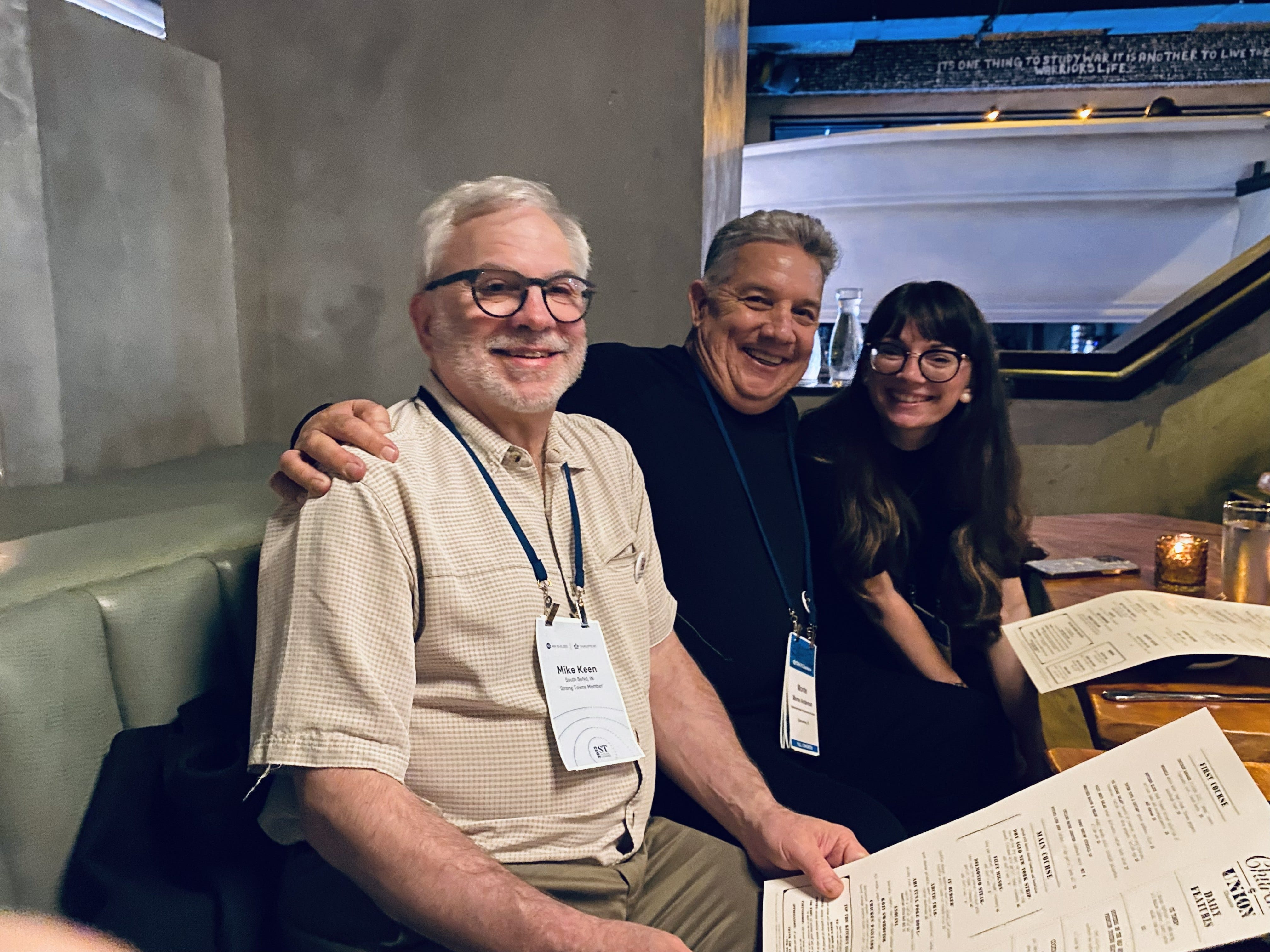
I first met Mike through the incremental development world. The same orbit of people who are trying to figure out how to rebuild neighborhoods from the inside out. Like many people in this world, Mike wasn’t trained as a developer. He was a professor. And then, in 2016, he left academia with a simple goal: to put into practice the things he had been teaching.
He didn’t have a master plan. He didn’t even know how to build a pro forma. What he did have was his own neighborhood in South Bend, Indiana that needed attention and a willingness to take responsibility for it. So he bought a vacant lot. Then another. Then an old vacant flower shop.
He didn’t necessarily have a grand vision to scale a development company or do anything flashy. It was a much more simple intent translated into action.
What’s happened since is one of the most interesting neighborhood revitalization stories in the country. Mike often calls himself an “accidental developer,” but that framing undersells what he’s actually built. Over the past decade, he’s helped cultivate an entire ecosystem of small-scale developers in South Bend.
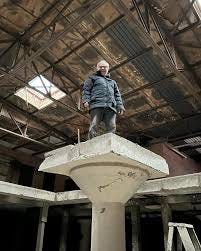
What began as a handful of people quietly working on houses has grown into a network of dozens of developers, supported by hundreds of collaborators, like contractors, lenders, city staff, and neighbors, all working in concert. Together, they’re now responsible for tens of millions of dollars of reinvestment, much of it happening in neighborhoods that conventional developers had long written off.
This isn’t happening through big, top-down projects. It’s happening through what Mike calls “distributive development”, or many people doing small projects, over time, in places they care about.
One of the ideas that stuck with me most from our conversation is something Mike calls “finding your farm.” It’s a pretty simple idea: instead of thinking like a developer who moves from deal to deal, you commit to a place. You draw it on a map. You learn it. You invest in it over time. You don’t just build something, you build somewhere.
The shift from project-based thinking to place-based commitment is subtle but it changes everything. It changes how you evaluate risk. It changes how you define success. And it changes how you show up in a neighborhood.
And then there’s Portage Place.
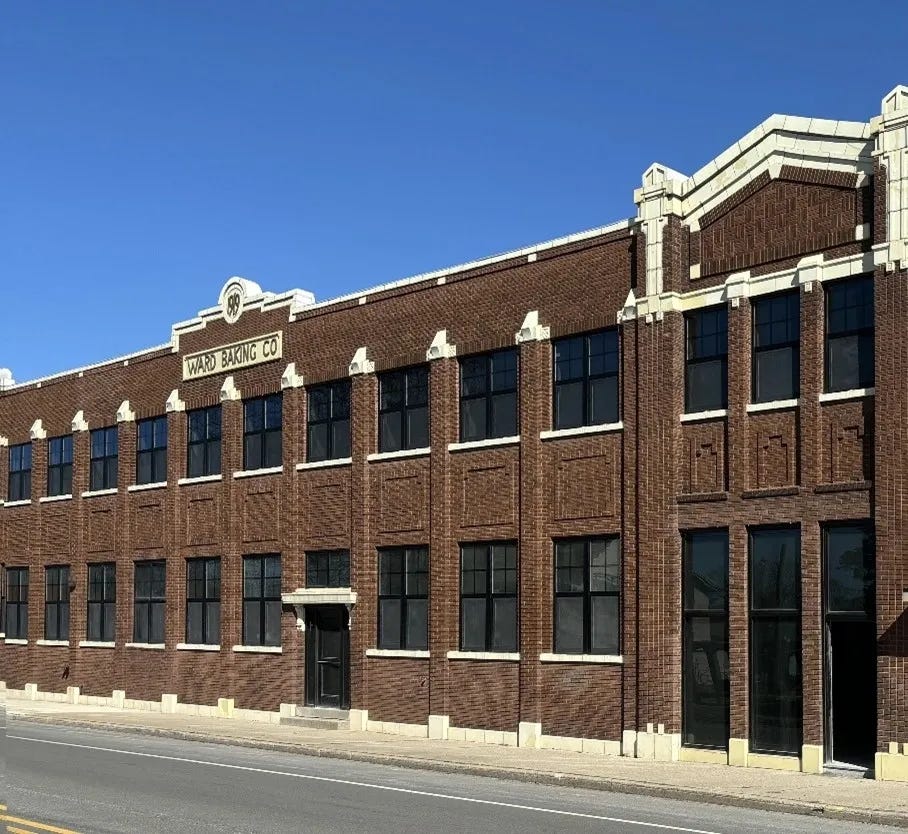
If the early years of Mike’s work were about small, incremental steps, Portage Place is what happens when that momentum starts to compound. It’s a 56,000-square-foot former bakery… vacant for years, roof collapsing, trees growing through the structure, actively dragging down the surrounding neighborhood. By his own admission, this is exactly the kind of project he never imagined taking on. But through years of smaller projects, relationships, and trust-building, he and his partners developed the capacity and the ecosystem to try.
What’s fascinating is that even at that scale, the approach is still incremental. They didn’t try to do the whole building at once. They stabilized it, opened a portion of it, and are working toward cash flow before expanding further. It’s the same philosophy applied to a much bigger canvas.
There’s a moment in our conversation where Mike describes the 12 Steps to Town Making as a kind of “recovery program.” Not just for individuals, but for cities. A recovery from decades of disinvestment, over-engineered systems, and development models that extract more than they give back. The “steps” themselves aren’t complicated. They’re grounded in things that feel almost obvious:
Get to know your neighbors. Learn how money works. Start small. Build a team
Stick with it. Share what you learn.
None of that is revolutionary on its own, but together becomes very powerful. It creates what the Neighborhood Evolution team calls “the flywheel effect”.
Mike’s story is about what happens when someone decides to take responsibility for a place and then just keeps going. If you’ve ever looked at your neighborhood and thought, someone should do something about this, this conversation is really about what happens when that “someone” becomes you.
Learn more:
https://www.neighborhoodevolution.com/12-steps-to-town-making
No posts
Comments
Nothing yet. Say the first thing.
Sign in to join the conversation.