
We, the hungry humans that we are, have been living beyond our environmental needs for quite some time now. Six of nine planetary boundaries had been breached due to high-impact human activity, that is, until 2025, when ocean acidification was added, bringing the total to seven of nine. These are life-supporting natural systems that keep humanity safe and operating.
In 2015, the Paris Agreement was put into place as a collective action to keep the earth below its fatal overshoot temperature of 1.5 degrees C above preindustrial levels, an irreversible tipping point. Scientists now say global surface temperatures exceeded that “tipping point” temperature in 2024.
Yes, we’ve reached a tipping point. Changes are happening, though they might not always be obvious from a secure home-vantage point. But if you live in the arctic, you may notice the precarious rate at which snow caps are melting away, if you live in the savanna climates of Africa, you might notice unusually long hot and dry spells, if you live in the Amazon, you might be affected by a loss of forested land, if you live in coastal Southeast Asia, you might have had to adapt to the rising occurance of floods.
Shifts in the environment vary in degree and specificity across the world. So sometimes, the best way to understand it all is to see it. While traveling to other parts of the world is inherently impactful, it also has the potential to turn the eager traveler into a caring environmentalist.
Unexpectedly, this is one of the greatest gifts traveling to other countries has given me. It can change you in ways deeper than self-enlightenment, in ways bigger than yourself, in ways that could, paradoxically, add value, despite its innate impact… but only if you let it.
Physically going somewhere (AKA traveling) shows you not just experience for experience's sake, but actually gives you context for the world. How people move about in it, their values, their habits, and all the economic, political, and social factors shaping those choices in people. You also have the chance to see how other people rely on the environment in different ways. How they interact with it, and how they adapt to the one thing that we all share: an Earth that is undeniably getting hotter.
Learning about cultures of the world in school or from reading is one thing, but seeing that with your own two eyes is powerful. I haven’t been to all of the wild corners of the world. I haven’t been to the Amazon Rainforest or the Arctic. However, I did have a particularly impactful experience seeing some of the northern and western coast of Africa while traveling across the Sahara Desert.
Moving through coastal desert towns that are uniquely located on a convergence of arid desert and wet ocean is a geographic spectacle. These areas are also a place for climate vulnerabilities - along an ever-rising coast, and in a dry and hot climate that keeps getting drier and hotter. Some communities are forced to adapt by moving farther away from the coast, implementing water management systems, or building a Great Green Wall to combat degrading dry lands.
I didn’t move along the coast through these communities to insert myself as some environmental hero. I just passed through, observed, and let it all sink into my curious heart. But here’s what the simple act of seeing and being there did to me: new climates, new ecosystems, new weather patterns, all reacting and interacting in distinctive ways with a warming earth, all with their own climate risks.
Being there, I can see how all of those risks are possible. Yes, it’s hot and dry. Yes, the ocean is right there with fishing boats providing a vital food source, but a source that is not limitless, and if too much fishing occurs, it could be depleted.
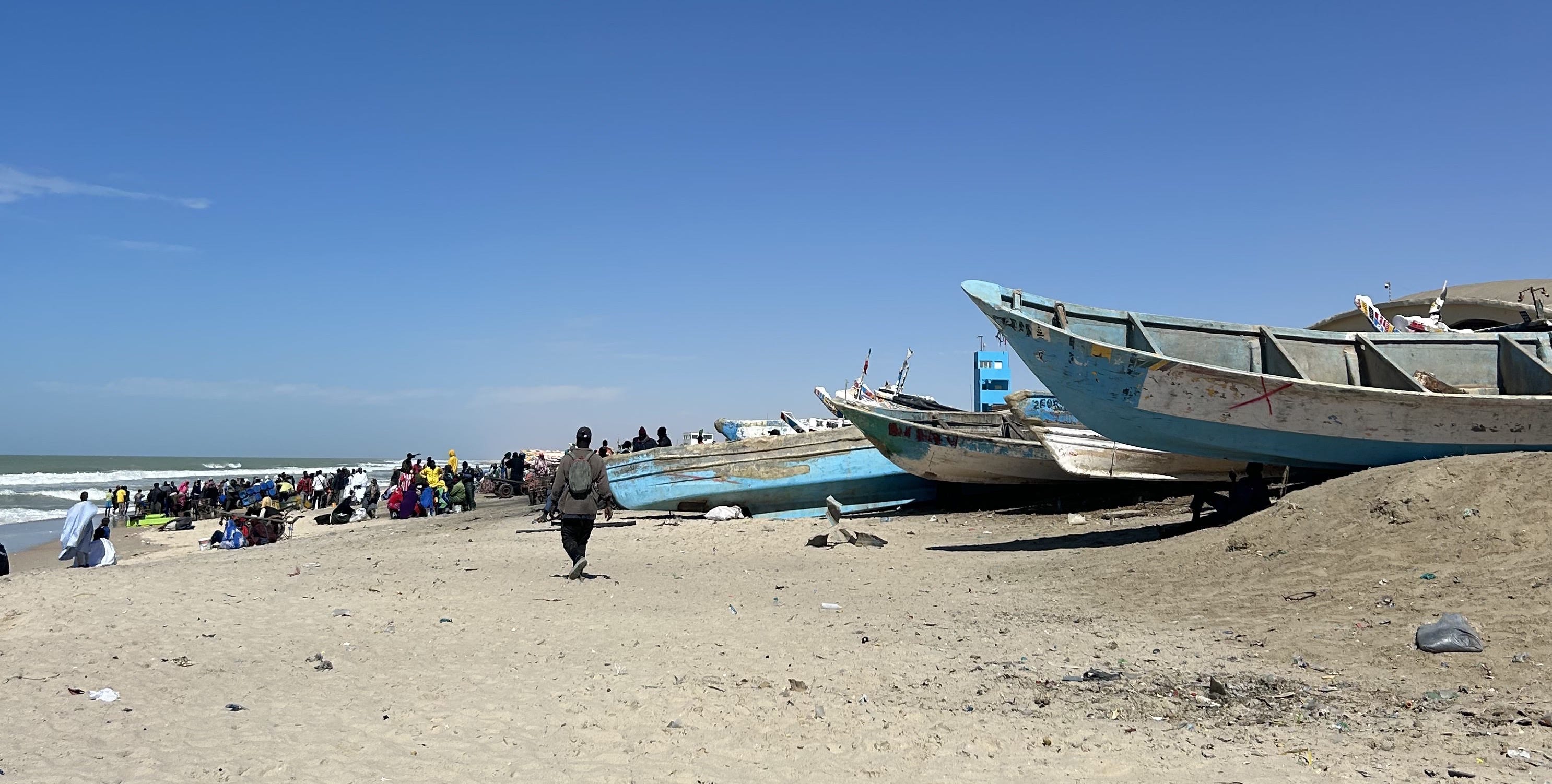
I can see other ways of life, real lives with real regional dependencies on a stabilized Earth. I can also get a grasp on not just the vulnerabilities, but on the resilience and adaptability of these regional communities as well. By seeing all of this, travel turns into something much deeper than just a geographical change.
Traveling is a predominantly human-focused activity. Interacting with and learning more about others than we ever would if staying at home. Because of this, it opened me up to the more human-side of environmentalism. Of course, saving the environment simply for the sake of enviornment and nature is important. As someone who has always loved the outdoors, that’s never been a hard commitment for me to follow. But then I traveled, away from people and lifestyles I was used to, and I saw…. other people! Other lives! Other gorgeous traditions and cultures that rely on certain environmental services being intact, and whose traditions and cultures may be at risk if those services are destroyed.
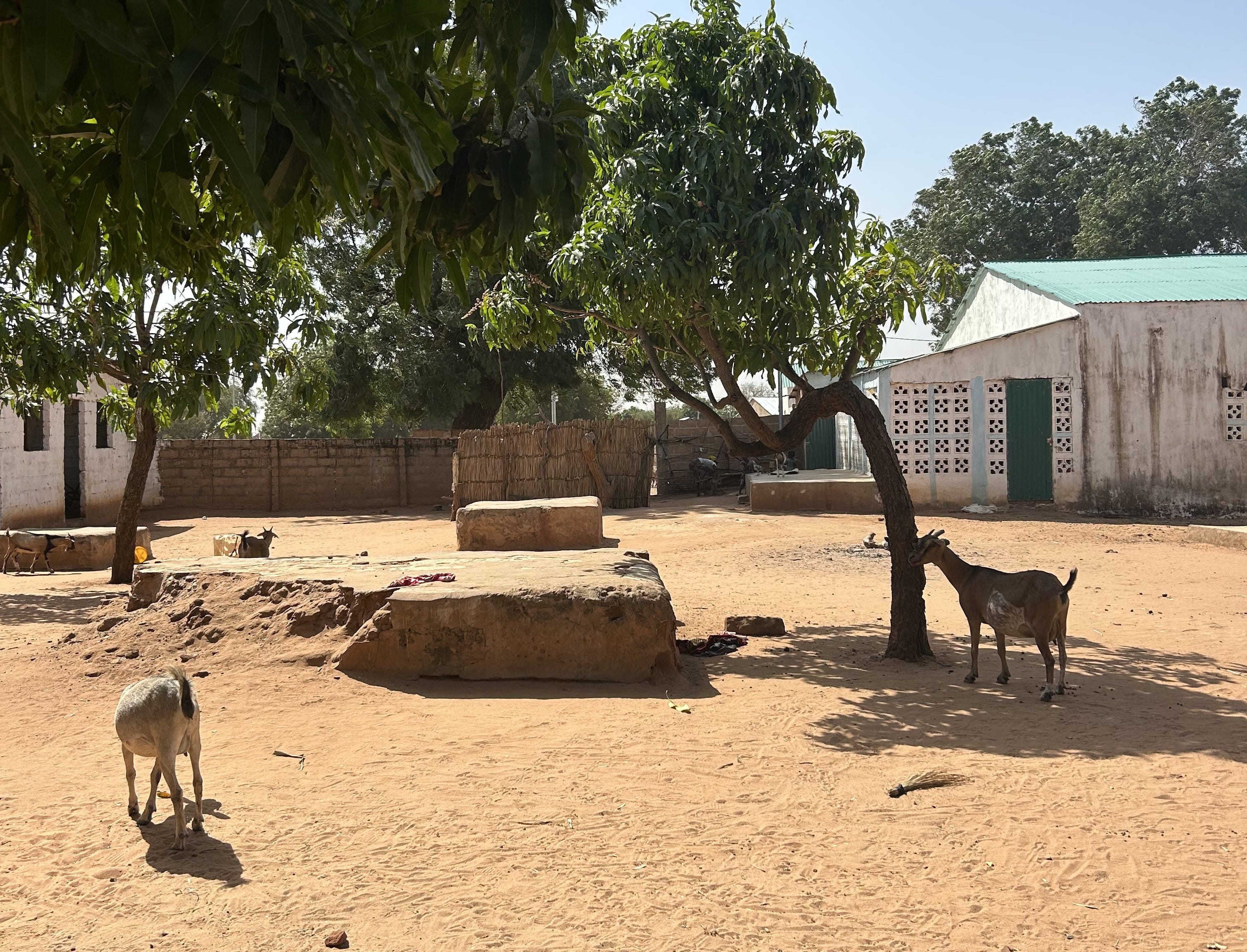
Last winter, I had the amazing opportunity to stay a few days in The Gambia at a family’s small rural compound. A friend of mine was living there for the Peace Corps, and she and her Gambian family graciously let me stay with them. It was a family of 19 kids, full of energy and playfulness. I got to go to the community school and help teach a classroom lesson on making “cootie catchers” craft to the kids (those paper-made fortune teller things that are so fun!!).
Back at the compound, I watched the grandma of the family sit outside next to piles of peanuts, deshelling one after another in her swift, efficient one-person system. Throughout my short stay there, I was surrounded by scenes of tight-knit community, resourcefulness, locally-sourced produce markets, baobab trees for shade, and harvesting. Nature and people were powering each other in a mutualistic relationship. Healthy nature and land provide healthy livelihoods - a fact of our existence.
But without people, there’s no one to harvest those nuts and no one to appreciate the shade that baobab trees give them. These human lives are the ones who put the beauty of the world into motion, who give it all meaning, who define a culture and make it their own.
A plunge into another culture is awkward. It’s naturally uncomfortable. But forming friendships with new people from different cultures around the world makes everything, every impact, every consequence, real. Now I want to coddle and protect them all, as I do with any of my other good friends from home.
That is something you cannot solely learn by staying home.
Different politics, geographies, and community-based needs make it impossible to slap one large band-aid solution across the planet and call it effective. Any environmental intervention needs to be considered on a community-level basis. I learned the importance of this before my abroad journeys, during an Environmental Institutions class I took in graduate school.
Each week in class, we’d be given a scenario of an environmental problem affecting a community somewhere in the world. Palm tree oil deforestation in Indonesia, mercury pollution from artisanal gold mining in the Brazilian Amazon, etc. For each case study, we’d establish the desired environmental outcome: what is the observable state of the world you seek to explain, or the outcome you hope to achieve? Then, we assessed who was involved and what rules, or lack of rules, determined how they are involved: what actions are available to the relevant players that relate directly to the outcome of interest? It was basically a holistic assessment of how an environmental problem can be addressed within a specific community, considering the institutions, goals, and trade-offs. In the end, any environmental outcome comes with people who are better off and people who are worse off - winners and losers.
The application of this stuck with me. In theory, I agreed with all of it. It felt globally relevant and useful - prescribing environmental regulations is not an isolated solution. A successful reformation plan in City A may not work the same in City B.
Taking this class was an initial expansion of my single-minded environmental perspective, laying a foundation for cross-cultural thinking. Though after that class, I’d go on with my American life, with American conveniences and American policies and proposed solutions towards tackling global warming.
It wasn’t until I traveled that my foundation of understanding began to evolve into something more fully realized. Interacting with other cultures and lifestyles and seeing how wildly complex environmental problems are, I understood that it’s not as easy as saying, “all agriculture should be organic!” Some small subsistence-based communities simply can’t afford the upfront costs for a transition into organic agriculture. Some communities can’t easily and quickly acquire a “sustainable” certification or a large-scale waste management plan. My American-focused view on environmental policy and outcomes was challenged. It imploded as it was forced to tilt and to consider that, oh, maybe it’s not that easy. And seriously, environmentalism is NOT that easy.
So, it’s not that easy… Because of this, traveling encouraged me to rethink what environmentalism actually is to me. Before, I’d say it was about preserving nature and ecosystems and working towards worldwide solutions to protect them. Now, I more clearly see that slapping a singular “green” solution onto all parts of the world is neither pragmatic nor productive. Instead, traveling shaped my approach to SAVING THE PLANET (I swear one day we will) to first be grounded in caring and understanding the things at risk that are bigger than me and my home country.
Understanding what is at risk, as well as what is resilient and beautiful and real, allows us to operate from a place of empathy. Then, hopefully, we can be more intentional with our relationships to the planet. More intentional with our consumption, eating, waste, and human interactions.
Generally, I’d say traveling the world deepens one’s ability to empathize. On an existential scale, how could you travel far and wide to wild corners of this planet and NOT want to do your best to ensure it all remains healthy and thriving?
Amid my long reflections and discernment of my future travel approach (see older post on When the Thrill of Traveling Wears Off), I’ve landed on this: I see travel as an opportunity to challenge my assumptions, uncover unexpected avenues of connection with new people, and use that connection to learn about the different ways in which everyone survives and adapts to their environments in extraordinary ways I wouldn’t fully grasp unless I saw with my own eyes.
There are indomitable communities all around the globe, drawing upon a set of knowledge and wisdom that is unfamiliar to me, but that teaches me how there are a hundred more ways than one to live this life and a hundred more ways to appreciate and interact with the land we live on.
In all my mushy gushy, I am seriously grateful for the way traveling has exposed me to more tangible experiences that have strengthened my environmental responsibility. Travel is an exercise in empathy. Environmentalism innately assumes empathy for all living creatures and their homes. By traveling, therefore, we can become better environmental stewards. Not perfect ones. We can’t ensure zero impact.
But maybe the value we can add through our traveling is indirect - one that we carry with us forever, and we ricochet back onto the world a beam of care and respect and love across borders, and a personal dedication to helping and supporting when we can, where we can, and it will probably never feel like enough, but at the very least, we have now developed that emotion to advocate.
Xoxo
No posts
Comments
Nothing yet. Say the first thing.
Sign in to join the conversation.