
Something I’ve been wrestling with lately is the praise and excitement of a seemingly pure secondhand market. Resale is surging. Industry reports from ThredUp, Business of Fashion, and McKinsey tell us that secondhand and resale markets are expected to reach $360 billion by 2030, showing a growth rate 3x faster than the primary clothing market. This has been the constant good news of sustainable fashion, the sturdy thread holding a struggling industry together with hope. While investment, scaling, and business integration with sustainable fashion goals are not yet where they need to be for large-scale change, at least people are catching on to resale!
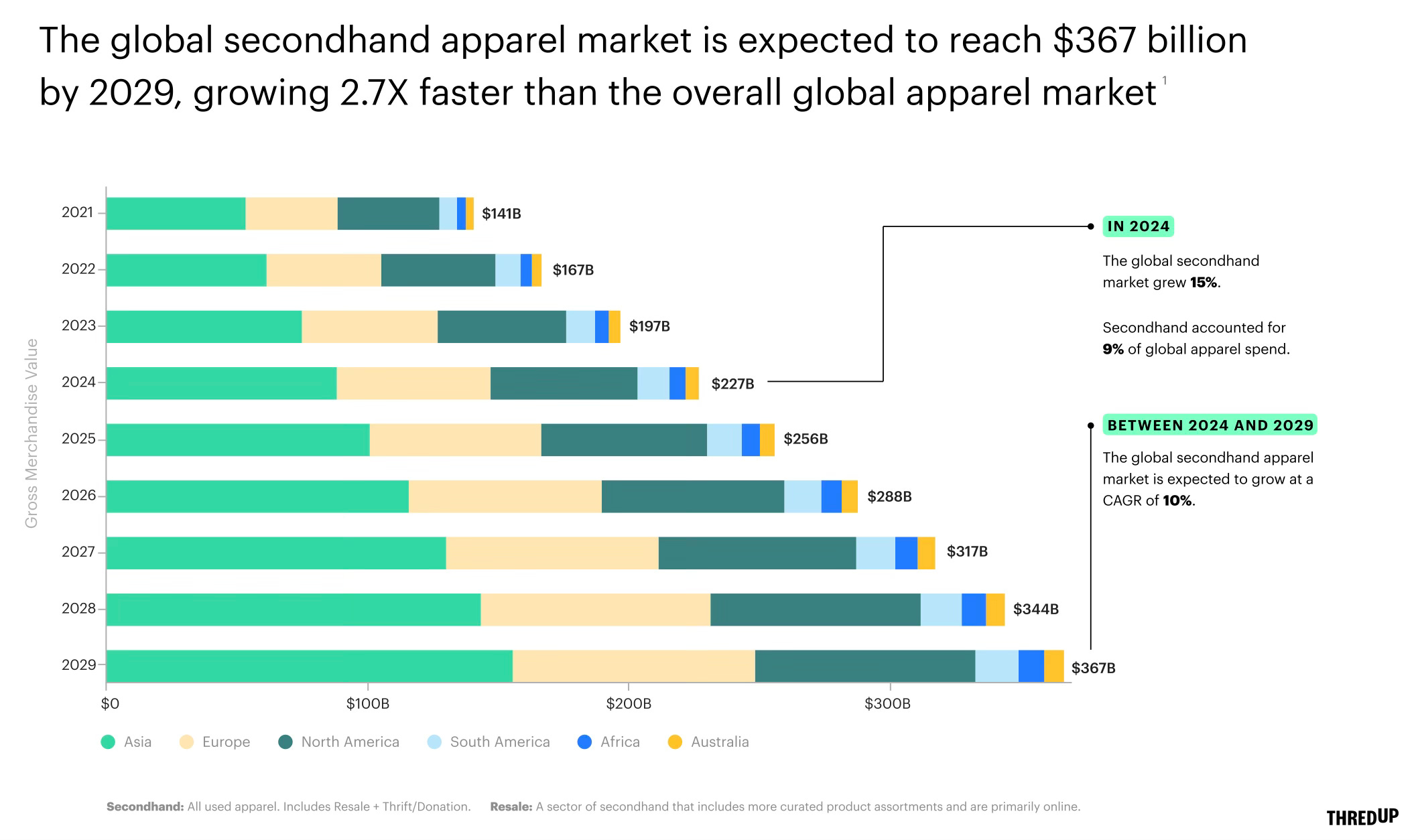
Data clearly shows that shoppers are no longer resistant to secondhand clothing, and any previous stigma regarding it as ‘used’ and ‘dirty’ is quickly vanishing. Rather, it’s become a sweeping trend, a lifestyle. Thrifting and vintage shopping are cool, hipster, and edgy ways to shop for your unique style. In a conglomerated and impressionable world where everyone is hungry for individualism, secondhand has become attractive.
Don’t get me wrong - an increasingly popular secondhand clothing market is a crucial part of the circularity puzzle. But it’s not a perfectly sustainable solution, and it alone is not going to solve our fashion climate crisis.
Because there are still underlying, non-sustainable truths hiding beneath the surface of the secondhand clothing industry.
I want to believe that, by now, it is a collectively frowned-upon thing to throw away unwanted clothes directly into a bin. But even with every intentional method of clothing purchasing and disposal, there’s still a large disconnect between a consumer and their understanding of exactly what may happen to the clothes after they’re gone. The second it’s out of our hands, it’s usually out of our minds, and not our problem. Unless you can physically (or virtually) witness your old clothes hopping from home to home, staying in a cycle of use, then we can never know the true fate.
Let’s take a donation, for example. Often praised as a method of ethical clothing disposal, promising a mutualistic exchange between giver and taker. But thanks to our increasingly ubiquitous production of low-quality clothing, many of those donated clothes are deemed unsellable or unusable in our market, and their fate turns into a cross-Atlantic trip to the Global South. Here, they’re stuffed in large bales and distributed to new markets in countries such as Chile, Ghana, Kenya, and Nepal.
It’s estimated that around 45% of donated clothes from the Global North end up sent to countries in the Global South. In theory, this is a mostly good situation: unused clothes from the US and Europe are sent to Sub-Saharan African countries to be resold in their secondhand markets, ultimately supplying local vendors who depend on the industry. It’s an accessible, low-cost way for other communities to purchase clothes and buy trends that may not be primarily sold in their countries, all while powering a crucial economic industry.
There are real benefits for both parties - but there are also costs. Because our fashion markets rely on the overproduction of cheap clothing, the amount of clothing shipped to other countries is enormous. Too much to handle, really. These imported bales consist of poor quality, worn-out clothing, around 30-40% of which is unsellable. Clothes that cannot be resold become waste in countries that lack the infrastructure to recycle or process this excess at scale. Those clothes end up in soggy piles along beaches or incinerated into toxic waste fields, and suddenly, that clothing that was once our responsibility is now posing environmental and human harm to another country.
In 2021, over 900 million items of used clothing were estimated to been exported to Kenya, and of that, around 450 million were estimated to become waste, and 300 million to have plastic/synthetic materials. So, the well-intentioned redistribution of our clothes also transfers a waste burden to a country that isn’t responsible.
This shows the large disconnect between our choices in the US and Europe, and the ripple effects those choices have on the rest of the world. It also illustrates how a global overflow of clothes, even used ones, can exemplify environmental injustice and global inequality.
Cool upcycling & education organization - The Revival - in Kantamanto Market in Accra, Ghana:
A large debacle within the secondhand/resale industry lately is due to new data that suggests secondhand shopping behaviors may mirror, and even exacerbate, fast fashion behaviors. A recent study found that secondhand clothing consumption is positively correlated with primary purchases, meaning that while the secondhand market is growing, the primary market also continues to grow. This is problematic because if a surge in secondhand shopping is occurring without any tangible change in normal clothing consumption, then it may not be as promising a replacement as we thought.
The study explains two psychological theories behind the findings of consumer shopping behavior: the rebound effect and moral licensing.
The rebound effect is a pattern in which a percieved environmental or economic savings leads to more consumption, therefore undercutting the initial expected sustainability gain from that saving. It’s like when new cars come out with increased fuel efficiency, but how environmentally beneficial are they if everyone ramps up the amount of driving they do just because they think that owning that “fuel-efficient” car is enough?
In the context of fashion, the study argues that consumers use the percieved benefits from secondhand shopping to justify additional purchases elsewhere. Therefore, serving as an underlying cause for the secondary market growing in tandem with the primary market, not in replacement of it.
Moral licensing theory is also at play, a pattern giving people the perception that if they engage in one ascertained ethical behavior, it permits them to engage in future, less ethical behaviors. It’s a moral justification for consumers buying secondhand to go crazy and buy as much of that as they want, because it’s “sustainable,” right?
But this does not address the underlying root of the problem. Overproduction and consumer shopping behaviors are not changing. Even if a consumer buys secondhand, but does it often, they still retain that same type of “disposability” mindset towards clothing that fast fashion displays. Thrifting can be inexpensive and trendy, just like fast fashion, but if shoppers still mindlessly buy and get rid of clothes, then the point is missed.
If secondhand purchases don’t displace new clothing purchases and merely supplement them, then their sustainability impact is useless. If behaviors don’t change, then resale and secondhand might just reinforce overconsumption, rather than mitigate it (all suggested by this study).
Of course, this data is new, and I don’t think we’ll be able to assess the full extent of the displacement vs. production impact for a few more years.
Secondhand shopping is great, but it shouldn’t take away from the conversation pushing towards eco-design. Clothes must be made better and made less.
Within just 20 years, clothing production has doubled, while the utilization of that clothing has decreased by 36%. This means that more clothes are being made in the world than ever, but the amount we wear or use them is way lower, causing extreme excess. The rate at which we wear, love, and resell clothes cannot keep up with an industry that produces 150 billion items of clothing each year.
Low-quality clothing is also the root of an impossible end-of-life disposal. Of the 150 billion items of clothing made each year, around 60% of those are made with synthetics, like polyester, nylon, or acrylic. These are petroleum-based materials that will remain in the environment forever if thrown away, or they will release toxic chemicals if incinerated. Wearing them can even pose hazards, as common chemical finishes on clothes like formaldehyde and phthalates can absorb into the skin and cause respiratory issues.
Even pre-loved clothes flooding thrift stores - many of them still a product of mass production, comprised of these “forever materials”. Check the labels of the clothes hanging in your closet, and I guarantee most of them will consist of at least some percentage of a synthetic. It’s nearly impossible to get away from. I know I still have many polyester “ghosts”, in my closet which I dive into more in one of my past essays - Confessions of an Ex-Shein Shopper.
Again, it’s a systemic problem of overproduction and reliance on cheap material inputs (plastics). Right now, most clothes are not built to last or be deconstructed; they are built to be low-cost, sold quickly, and satisfy a trend.
If clothes were made to be recycled, composted, or biodegraded, then that would help address the end-of-life problem. If clothes were made with only recycled or existing materials, that would help address the extractive beginning-of-life problem. Though textile-to-textile recycling and upcycling are both entirely separate, multi-layered topics that I will not get into now.
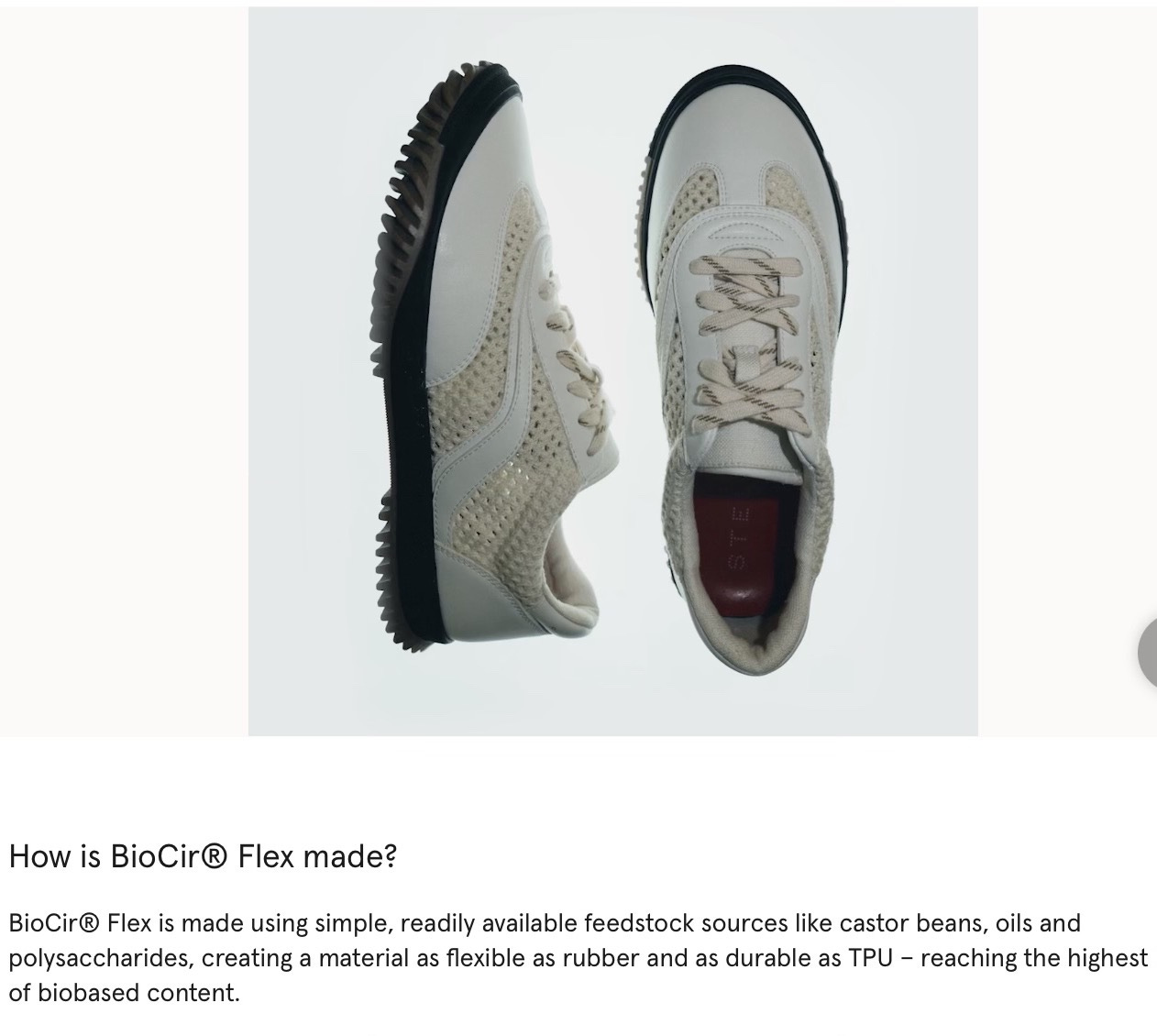
Lastly, on this note, ensuring long-term durability of clothing can encompass two things: the way the clothing was made and the care the wearer gives to the clothes. One avenue may not be in your control (design phase), but all of us sure can control the care we give to the clothes we already own. (Proper care and love for your clothes is an entirely other topic as well, but this substack article covers it well!)
A final overlooked pitfall of the secondhand clothing market is the unequal access to good secondhand options. This may seem more or less obvious or insignificant, but it really takes into account different geographical perspectives on secondhand shopping.
Access to quality, usable secondhand clothing is not uniform throughout the world. Not even throughout the United States. Some regions have fewer secondhand stores, while others are flooded with endless vintage shops and consignment stores. Affluent neighborhoods will likely have easier access to the desirable world of fashionable secondhand than will less affluent neighborhoods. Finding quality, stylish, and even sophisticated secondhand pieces in NYC is way easier than trying to find the same type of secondhand pieces in a small rural town in Iowa.
Even online secondhand markets like Vestiare and The Real Real are still geared towards an affluent consumer base, albeit more cost-friendly than original luxury, but still not “cheap”.
All of this isn’t to shame and bash the secondhand clothing industry. I love it, I support it, I participate in it, but I also recognize it is not the silver bullet, perfect solution that will fix an industry fractured in a much deeper way.
As of now, resale and secondhand are not bringing total global production down, at least not enough to see a seismic change. It does not yet fix the overproduction problem, it doesn’t fix the design problem, it doesn’t fix the waste accountability problem, and, as the recent data shows, it doesn’t fix the shopping addiction problem.
We still need it, but it needs to accompany a societal mindset shift and a change in intention. Clothing needs to be seen as a gift, treated like an heirloom we want to last forever. I can’t say I’ve always done this, but it’s a work in progress to retrain a mind that’s been built to engage with an unsustainable system.
In the spirit of the topic of sustainable fashion, I want to highlight some of my favorite recent newsletters & writers in this space, but there are so many good ones!
Donatela Bellone writes her weekly newsletter, La Purpose Brand, giving the latest insights into sustainable fashion news, industry developments, and brand spotlights. She is the founder of her own start-up, working to solve the transparency issue in fashion supply chains, Alu AI! You will want to subscribe to her for all of the trends shaping the sustainable fashion industry; she’s always ahead of the curve!
Tiina Nyman is the powerhouse of circular fashion news, writing her weekly newsletter, Circular Fashion News, every Monday! She never misses a beat and has a special knack for filtering through the noise to pick out the most important topics and updates, all written in clear, compelling ways.
Chloe Grant writes Making Sustainability Sexy, a newsletter I just discovered, but I am so excited to keep up with! She’s an apparel designer and recently wrote a beautiful piece about the sustainable designs she saw at an exhibition, noting African fashion brands, designers, and upcyclers who draw from tradition and turn waste into beautiful, unique fabric collections.
No posts
Comments
Nothing yet. Say the first thing.
Sign in to join the conversation.