
This is part THREE of a series in which I explore how we can reshape our relationship with clothing, drawing on cultural wisdom from around the world. This post focuses on finding inspiration in a traditional Thai textile dyeing technique to reshape our relationship with color.
We love to talk about carbon. Decarbonize this, net-zero that.
In graduate school, I worked on my capstone project with the brand Everlane. They came to us, outsourcing help to quantify not their carbon footprint, but their water footprint. At the time, carbon footprints were the talk of the town, every brand was doing it, and methodologies were pretty fleshed out. But water was the less-concerned about metric in the industry. Even while doing the preliminary research for the project (mind you, this was just in 2022), it was challenging to find existing brands that had done a water footprint. Few and far in between, and trust me, I did the tiresome hours of benchmarking.
But one thing was clear: water impact in apparel is egregious. Fashion alone accounts for 4% of all global freshwater withdrawal and is among the top water-intensive sectors. The processes responsible for that consumed water are mainly agricultural (cotton growing) and dyeing.
Ah yes, the color that blankets our clothes and allows for funky patterns and vivid style is a major contributor to global water withdrawal. Dyeing textiles consumes a bunch of water, and it also pollutes water with heavy metals and phthalates, which are discharged from factories into waterways. Not great news for surrounding communities, as I’m sure you can imagine (water pollution with carcinogens, mutagens, and other nasty things).
Large-scale textile dyeing is responsible for 20% of global industrial water pollution. And if the water is being extracted and polluted in regions prone to water scarcity, well then that really is a problem.
But what can we do? Color is a vital part of fashion! Color is beauty and expression. Without it, we’d all be way more likely to dress the same, and the vibrancy we love to show off through style would go bleak. Color, clearly, is not something we should forego in fashion. But it’s also become such a given in our clothing without consideration of the costs behind it.
Our relationship to color in clothes is one of assumption and expectation. We expect clothes to be offered in colors that we like, but often, without questioning how that color came to be on that fabric. In turn, it’s created a normalized relationship of underappreciation.
Most avenues of slow fashion attempt to cultivate mindfulness and intention behind our clothing choices, and dyeing and coloring can be viewed through a lens of slow, or at least intentional.
Elsewhere, this is already happening and working.
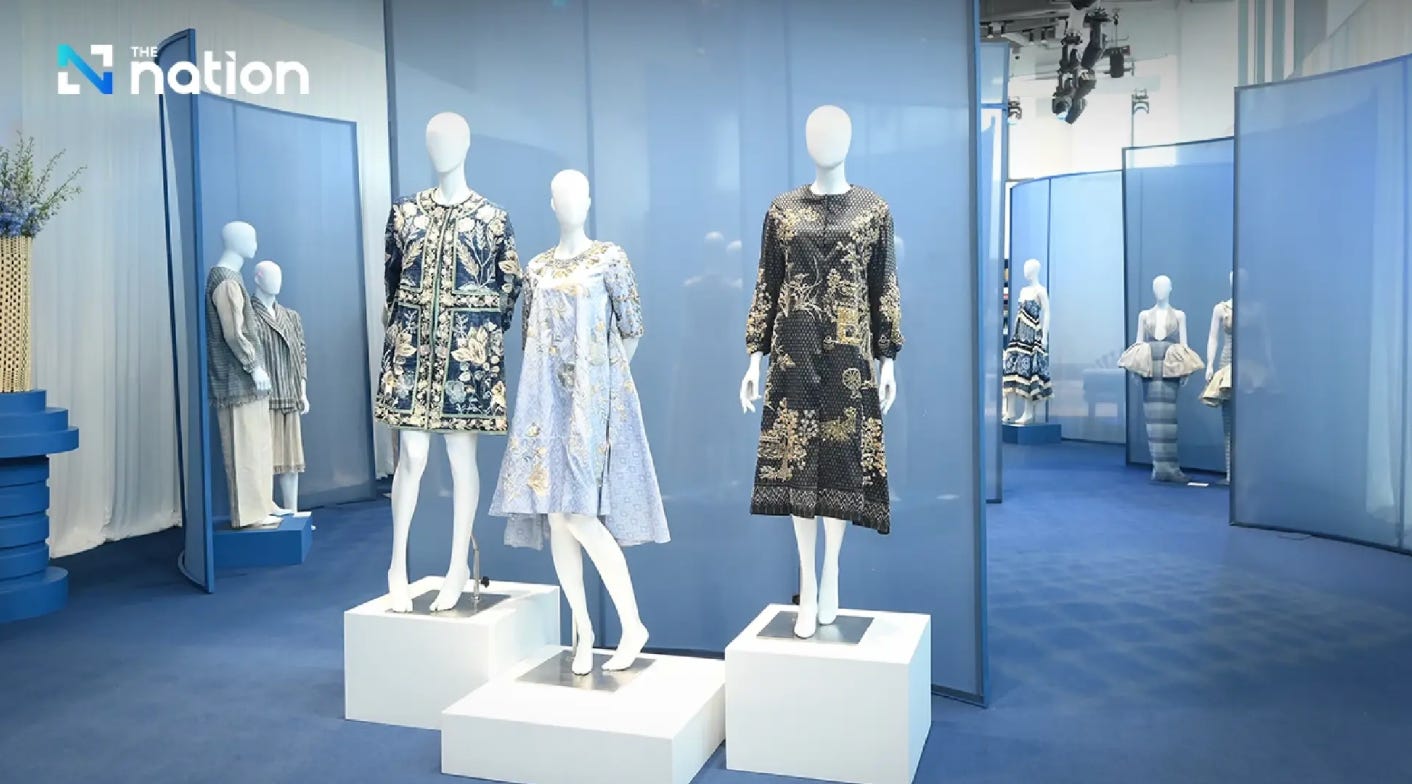
In traditional Thai textiles, the process of Indigo dyeing is rooted in harmony with nature, culture, and generational knowledge. One such valued pigment comes from the khram Indigo plant, a native plant species that grows in Northeast Thailand. Extracting the indigo pigment from the plant is far from mindless and industrialized. Special care and attention are required throughout the entire indigo dyeing process to produce the pigment in its most revered form.
For example, the harvest conditions need to be precise: Harvest must occur before sunrise while morning dew still glistens on the leaves. If the harvest occurs when the leaves are too dry, the pigment won’t be as bright and beautiful a blue. Pressing, cooling, and fermenting the plant in a vat must be tended to carefully to ensure dye quality and prevent degradation. When working with plants, we are working with nature’s delicate timelines and conditions. It is a difficult and labor-intensive process. But it is carried out in humility and consideration of the plant’s services.
When the process is finished, the outcome is a natural, earthy, nontoxic blue pigment. Less water, fewer washes, fewer synthetic chemicals, and a deep respect for the process. This method is also a testament to broader Thai values of adaptation to nature, resourcefulness, and heritage preservation. Textiles dyed this way live in a state of reciprocity with the land, and not a one-sided extraction. Practices like this have been passed down for thousands of years. Garment dyers are now experts in indigo color, and the industry helps preserve the environment while also adding value to the economy.
Doesn’t that all sound so much more heartfelt than thinking of a poor garment going through the industrialized processes of scouring, bleaching, batch dyeing, and final chemical finishing and plastic coatings?
Fashion grounded in identity, heritage, and connection points to the difference between preservation and commodification.
And you know I always love to highlight some modern-day innovations that are putting these values into action.
One such coloring innovation that caught my eye recently is the company Tintte. Tintte is a biotech innovator blending microbiology with design to create regenerative processes in textile coloring. Instead of conventional reliance on petrochemicals, Tintte generates vibrant colors from bacteria. In their natural environments, bacteria produce a wide range of colors, and that color can be extracted and applied through a controlled growth process, as Tintte is doing. Its mission is to detoxify industrial processes while reducing the consumption of water. And there’s a potential to scale. The microbial technique supposedly integrates easily into the regular industry processes, so it’s less hassle and less remanufacturing of the supply chain. Plus, there’s no shortage of bacteria in the world.
Amphico is on a similar journey, attempting to detoxify fashion, specifically performance gear. They want to show that switching away from heavy metal, PFA-reliant coloring doesn’t mean sacrificing function and design. Using machine analysis, Amphico can predict how color will look on woven yarn before any production actually begins. Then they use their waterless coloring process to apply the dye. The overall process reduces palette iterations (less waste, less time) and also reduces water and chemical intensity.
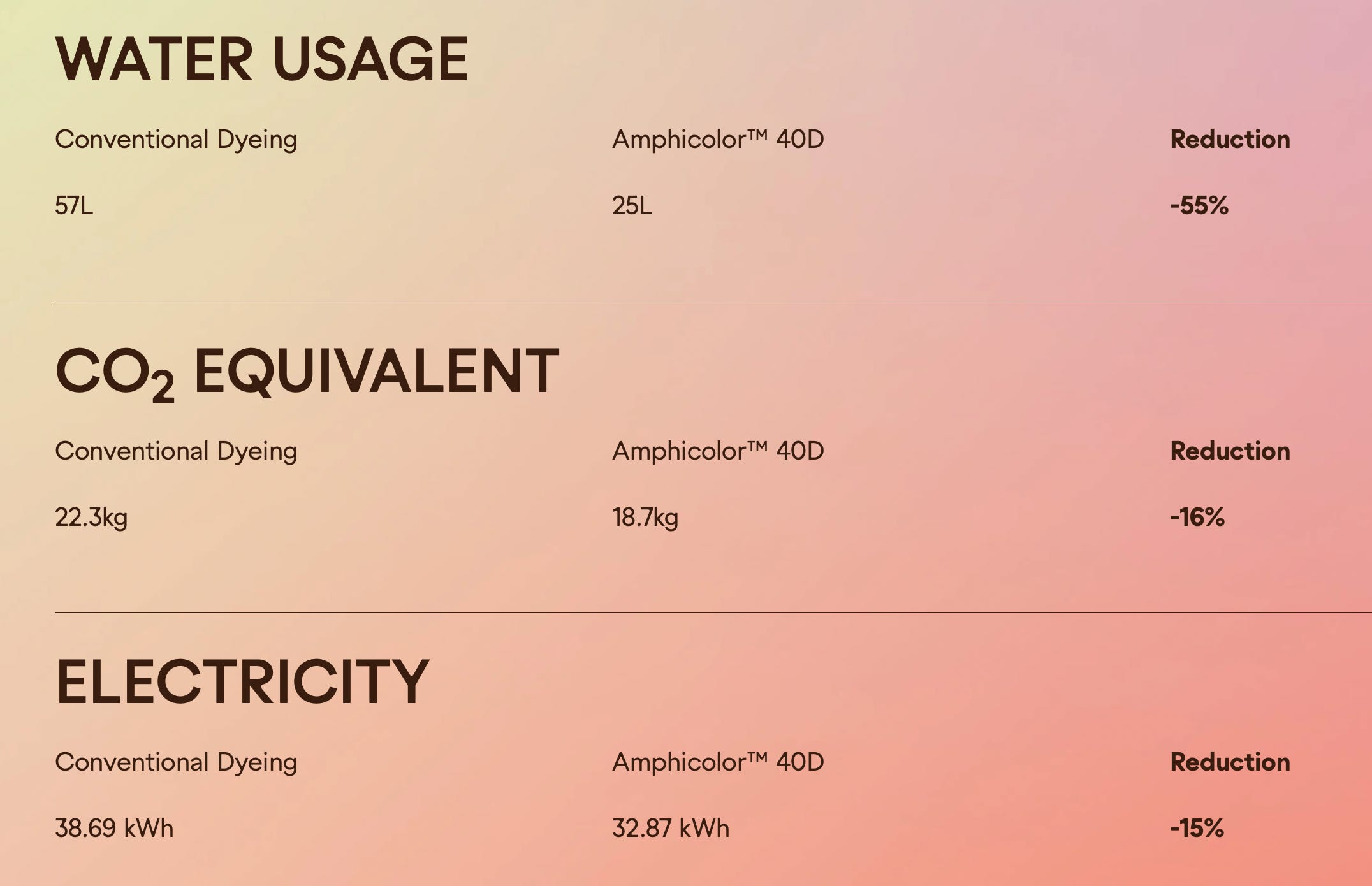
Since Amphico claims to deliver environmentally responsible color while also speeding up development cycles, it offers the type of edge that these innovations actually need to gain buy-in. Outside of just saving the earth, how can it help the brand optimize, reduce costs, or increase revenue?
I personally find color much more fascinating when its origin is thoughtful, ethical, or culturally symbolic. But as it stands today, the normal relationship to clothing color and dye is not something that usually beckons a second thought.
I’m wearing a mustard yellow sweatshirt right now, and while I love the color (a motivator for my purchase), I’ve never really stopped to think about how that color was conceived and infused into this sweatshirt (until now).
Where on earth does a mustard yellow textile color come from? I wish I could say it came from a plant, or bacteria, or even a predictive color intelligence platform. But I have no idea, and most likely, it didn’t. Most likely, a lot of water was used in the making and dyeing of this sweatshirt, and more than one petrochemical was probably released into the land in the form of wastewater effluent. I can’t be sure, but most likely.
When we think of repairing our relationship with clothing, it’s important not to overlook color. Without it, fashion would be extremely boring. And maintaining respect and care for color can contribute to a more emotionally resonant relationship with our clothes. I can still marvel at this sweatshirt's color. Even if it contains some mysterious unidentified chemicals. Even if by wearing it, I am boasting a significant water footprint. I hope we’ll learn from the bacteria one day. I hope we’ll learn from the Indigo plants and the Thai culture.
But as for now, appreciating the mustard yellow is better than not appreciating it.
Xoxo
(While you may not have control over the large scale water impact of textile dyeing, what you CAN do is dig around a bit into brands you shop. See if their impact or sustainability claims mention anything about water footprint, recycling water, wastewater treatements, natural dyes, any type of philanthropic water program?? If they do, that’s a green flag!)
Thanks for reading! Check out the other two posts in this series exploring more about how we can use cultural wisdom around the world to help reshape our relationship with clothing.
How to be more emotionally connected to your clothes (and therefore, personal style):
Are you emotionally connected to your clothes?
·
Mar 7
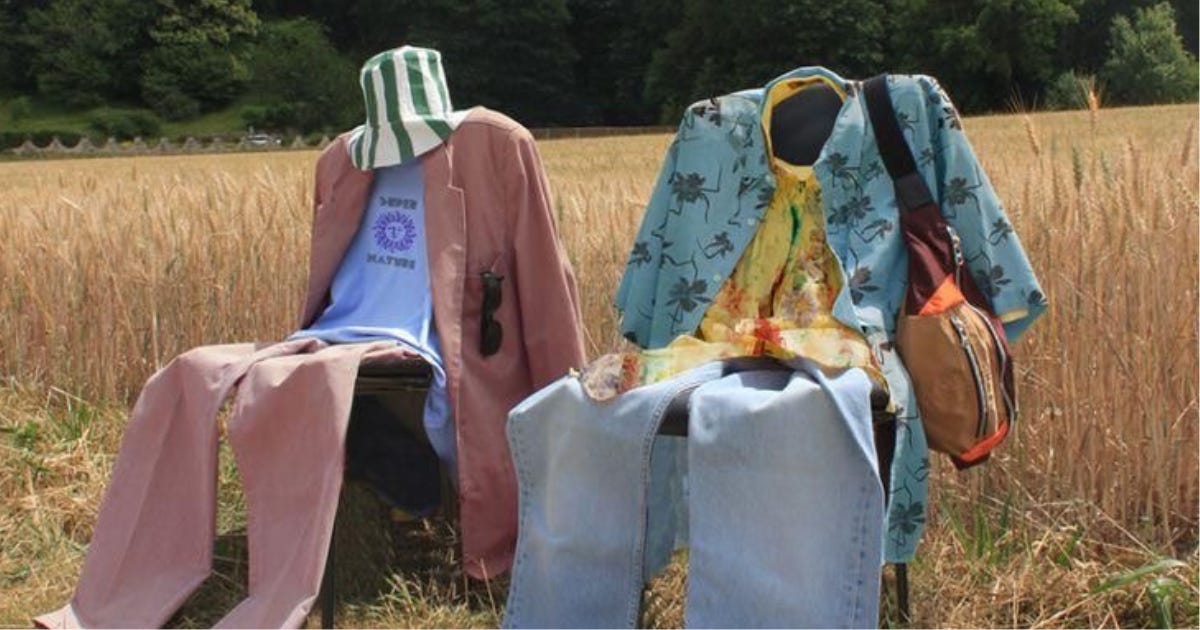
This is part TWO of the series in which I explore how we can reshape our relationship with clothing, drawing inspiration from cultural wisdom around the world. This post focuses on finding inspiration in a Japanese cultural concept to reshape our relationship with how we connect emotionally to our clothes.
How being resourceful can help us love and appreciate clothing more (and how chocolate may be a promising alternative to textile fibers):
The art of using everything: cultural wisdom of resourcefulness in fashion
·
Feb 20
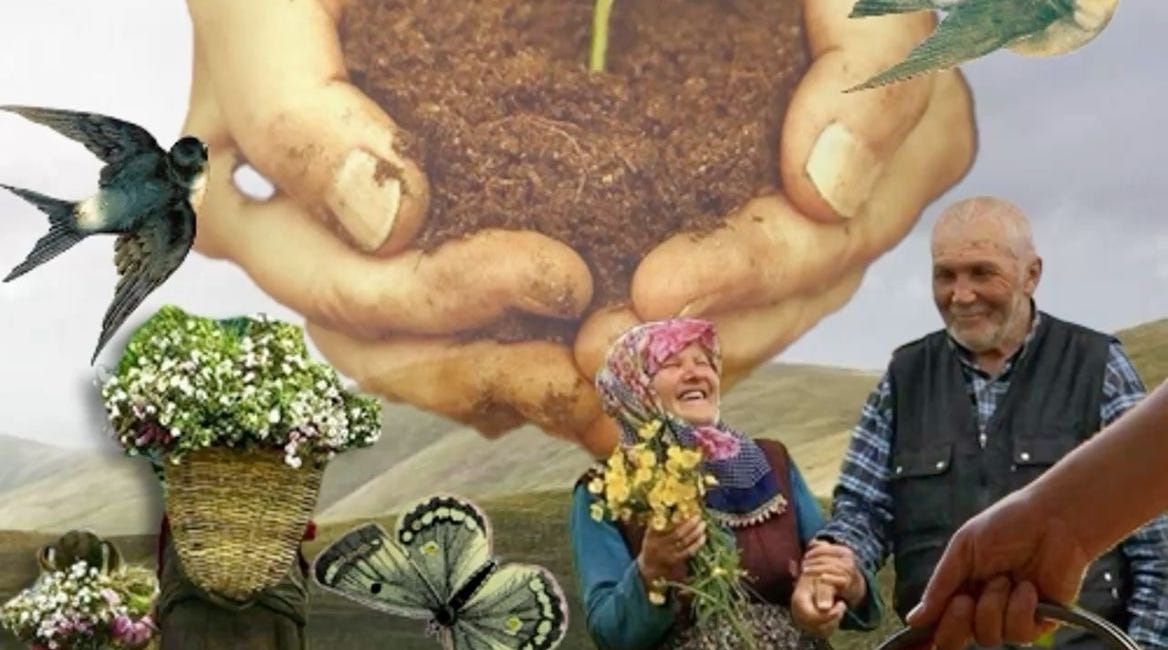
This is the start of a new series I’ll be sharing, exploring how we can reshape our relationship with clothing, drawing inspiration from past and present cultural wisdom around the world. This first post of the series focuses on finding inspiration in cultural practices of resourcefulness to reshape our relationship with waste in the fashion industry.
No posts
Comments
Nothing yet. Say the first thing.
Sign in to join the conversation.